Adoptive Muscle Memory Superpower Guide
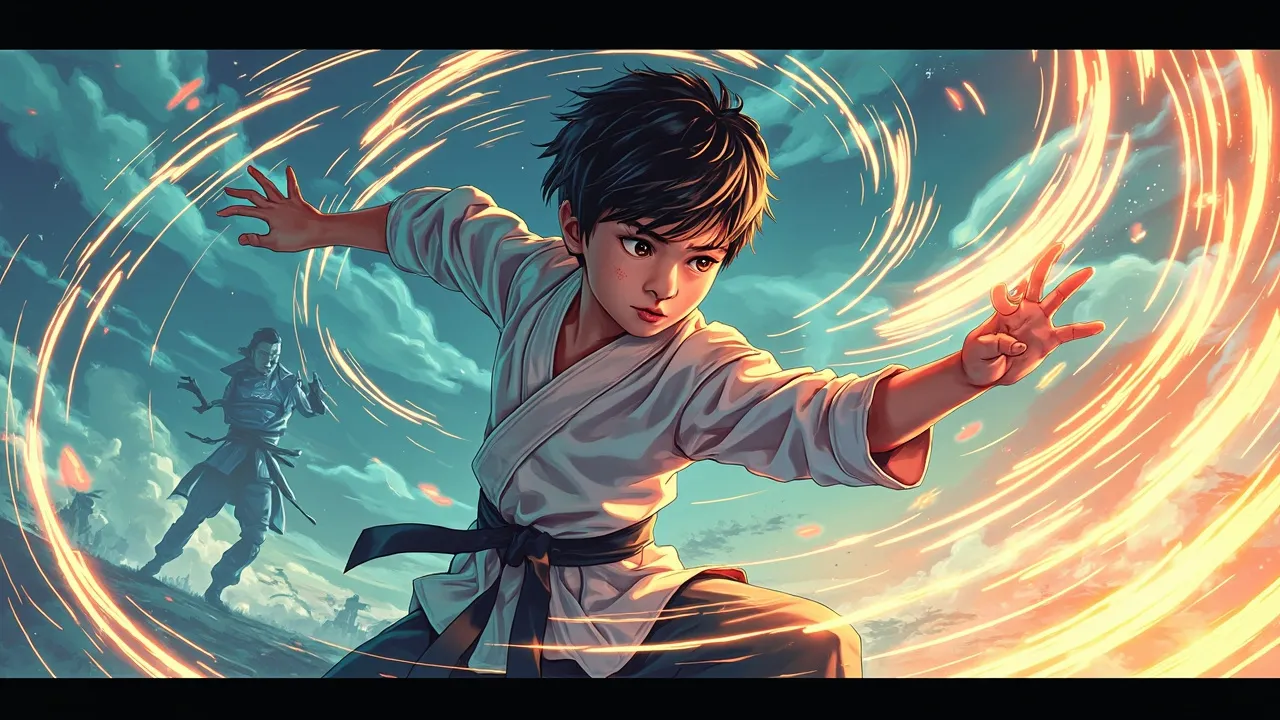
Adoptive Muscle Memory Video Demo 🎬
Table of Contents
- Adoptive Muscle Memory Video Demo 🎬
- What Is Adoptive Muscle Memory?
- Core Abilities of Adoptive Muscle Memory
- Application / Tactical Advantages in Combat
- Level: Level 1 🏙️, Level 2 🌇, Level 3 🌃
- Limitations of using Adoptive Muscle Memory
- Weakness against what other superpowers
- Synergistic Power Combos
- Known Users
Adoptive Muscle Memory is a superpower that allows a character to copy any movement flawlessly after seeing it once. Whether it is a complex martial arts combo, a graceful acrobatic flip, or a delicate lock-picking technique, the user’s body “records” the motion instantly. This form of movement replication, often compared to photographic reflexes, turns observation into immediate action.
What Is Adoptive Muscle Memory?
Adoptive Muscle Memory is the ability to translate observed motion directly into physical skill. Instead of spending months or years training, the user gains a skill after a single clear demonstration. The body behaves as if it has practiced the move thousands of times, even though it has only just seen it.
In many stories and games, this power appears under different names such as photographic reflexes, instant skill acquisition, kinesthetic mimicry, or combat mimicry. Regardless of the label, the core concept is the same: the character’s nervous system learns at superhuman speed.
Within a broader universe of abilities, this power fits neatly alongside other skill-based or technique-based gifts that appear in the superpower wiki. It is especially popular in tactical, martial, and spy-themed settings.
Core Abilities of Adoptive Muscle Memory
Adoptive Muscle Memory can manifest in several core capabilities:
Instant movement copying
The most basic feature is the instant copying of any single movement:
-
Punches, kicks, grapples, and throws
-
Gymnastic flips, rolls, and landings
-
Weapon swings, reloads, draws, and disarms
-
Simple everyday actions like handwriting or using tools
The user only needs to see the action performed once, and their body can reproduce it with near-perfect timing and precision.
Complex sequence replication
More advanced versions allow entire sequences to be copied, not just isolated movements. This includes:
-
Full martial arts katas or combinations
-
Choreographed dances
-
Parkour routes across rooftops
-
Musical performance techniques (fingerings, bowing, drumming patterns)
The user’s brain stores these as detailed “motion files,” which can be replayed at will.
Style absorption and hybridization
Over time, the character’s body becomes a library of styles and techniques. This can lead to:
-
Combining multiple fighting styles into one hybrid, unpredictable form
-
Switching between stances learned from different masters in mid-combat
-
Adjusting copied techniques to match the user’s own height, strength, or weapon of choice
This is more than simple copying; it is adaptive learning, where movement is absorbed and then optimized.
Efficiency and refinement
Because the user has perfect recall of motion, they can analyze what works best:
-
Identify flaws in an opponent’s technique after copying it
-
Refine movements to use less energy or avoid injury
-
Automate complex skills so they become effortless reflexes
In some universes, this also blends into superhuman motor control, giving the user near-perfect balance, timing, and coordination.
Application / Tactical Advantages in Combat
In combat, Adoptive Muscle Memory provides dramatic tactical benefits.
Immediate counter-techniques
After observing an enemy’s attack once, the user can:
-
Replicate the same move to match their rhythm
-
Reverse the motion into a counter, using the opponent’s style against them
-
Predict follow-up attacks based on the structure of the copied style
This makes the user a nightmare for specialist fighters who rely on rare or signature techniques.
Rapid learning of weapons and tools
Give the user a weapon they have never seen before, and as soon as they watch someone else use it:
-
They can copy the handling, stance, and strike patterns
-
They can mimic reloads, safety tricks, and maintenance actions
-
They can adapt the new weapon into combinations with all previously learned styles
This applies equally to mundane tools—lock picks, climbing gear, or even alien interfaces—if the operation is based on observable motion.
Adaptation to new environments
In unfamiliar terrain, such as zero-gravity, underwater, or low-visibility spaces, the user can:
-
Observe how locals or specialists move, then instantly mirror that adaptation
-
Turn environmental challenges into advantages by copying optimal movement patterns
-
Quickly learn evasive maneuvers for vehicles, mounts, or exosuits
The power essentially compresses trial-and-error learning into a single observation.
Non-combat utility
Outside combat, the same ability opens many narrative and gameplay options:
-
Sports and athletics: mastering any physical sport after watching one match
-
Performance arts: becoming an instant virtuoso dancer, stunt performer, or stage fighter
-
Espionage: impersonating another person’s walk, posture, or body language
-
Skilled labor: copying artist strokes, crafting motions, or surgical procedures
For players or writers looking for more ways to mix and match abilities, the random superpower generator can pair adoptive muscle memory with other talents to create unique characters.
Level: Level 1 🏙️, Level 2 🌇, Level 3 🌃
Level 1 🏙️ – Reactive Copycat

At Level 1, the power is impressive but limited:
-
The user can copy simple moves and short combinations after seeing them once.
-
The copied movement is accurate but only within normal human physical limits.
-
Complex sequences may require repeated viewing or slow motion to capture.
-
The recall is mainly short-term; unused moves may fade over days or weeks.
At this level, the character is still vulnerable to very fast or obscure movements that are hard to see clearly.
Level 2 🌇 – Versatile Mimic

At Level 2, Adoptive Muscle Memory becomes a core combat and utility power:
-
The user can copy complex sequences, full fighting styles, or complete routines.
-
Memory retention is long-term, forming a growing personal library of techniques.
-
The user begins to refine moves, making them more efficient or better suited to their own body.
-
They can switch between multiple learned styles fluidly in the middle of a fight.
Here, the character starts to feel like a living archive of motion—capable of standing toe-to-toe with trained masters in many disciplines.
Level 3 🌃 – Master of Motion
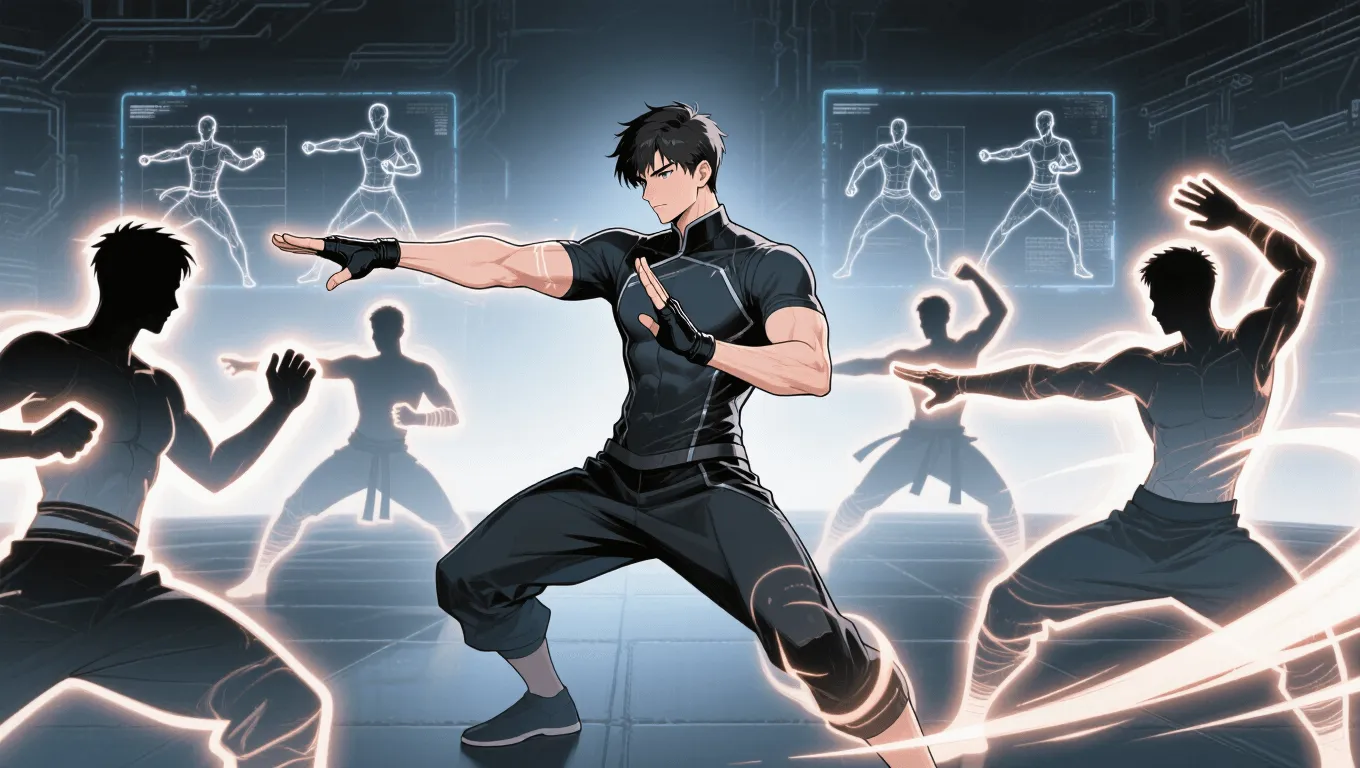
At Level 3, the power reaches near-legendary levels:
-
The user can copy movements even when seen only briefly, at high speed, or from partial angles.
-
They can adjust copied techniques across different body types and even different environments.
-
The power integrates with their perception, allowing prediction of follow-up moves based on style patterns.
-
The user can combine fragments from dozens of techniques into entirely new, highly efficient forms.
While still bound by physical limits unless supported by other powers, a Level 3 user is almost unbeatable in technique-based contests.
Limitations of using Adoptive Muscle Memory
Despite its strength, Adoptive Muscle Memory has clear limitations that keep it balanced.
Requires observation
If the user cannot see the movement, they cannot copy it. Problems include:
-
Fighting invisible opponents or foes hidden in darkness, fog, or illusions
-
Attacks performed off-screen, behind walls, or at superluminal speed
-
Subtle internal motions (like precise muscle tension) that are not visible externally
The power works best when the movement is clear, direct, and unobstructed.
Does not grant raw power
Copying a movement does not replicate a superhuman body. Limitations include:
-
If an opponent’s strike is powered by super strength, the user can copy the form but not the force.
-
If a move requires wings, tails, or extra limbs the user does not have, it may be impossible or dangerous to attempt.
-
High-impact maneuvers can still injure an unenhanced body, even when reproduced perfectly.
This keeps the power grounded in technique rather than raw statistics.
Cognitive and physical overload
Recording too many techniques in quick succession can cause:
-
Mental fatigue, headaches, or sensory overload
-
Muscle strain from attempting moves beyond current conditioning
-
Confusion in combat when too many styles conflict with each other
Some versions limit how many “active” styles the user can keep ready at once.
Vulnerability to deception
Because the power depends on observation, it can be tricked:
-
Foes can demonstrate fake techniques designed to bait a bad reaction.
-
Illusions and holograms can show impossible motions that injure the user if copied.
-
Shape-shifters may use body structures that simply do not translate to the user’s form.
Smart enemies treat the user like a mirror that can be distorted instead of feared.
Weakness against what other superpowers
Adoptive Muscle Memory is especially weak against certain types of superpowers:
-
Illusion and perception manipulation: False visuals lead to useless or harmful copied motions.
-
Invisibility and stealth: If the user cannot see the movement, the power cannot activate.
-
Teleportation and spatial warping: Jumps that ignore normal motion give no movement to copy.
-
Time control: Faster-than-perception attacks or time skips bypass observation entirely.
-
Probability manipulation and chaos powers: Highly random, non-repetitive actions reduce the value of copying.
-
Power negation or fatigue-inducing abilities: These can shut down the user’s enhanced learning or physically exhaust them before copying is useful.
In short, any power that hides, scrambles, or ignores physical motion disrupts the advantage of adoptive muscle memory.
Synergistic Power Combos
Adoptive Muscle Memory shines brightest when combined with complementary abilities.
Enhanced perception and reflexes
Powers like heightened senses, bullet-time perception, or precognition allow the user to:
-
Observe even hyper-fast movements clearly enough to copy
-
React immediately with the newly learned technique
-
Predict the rest of a style after seeing only the beginning of a sequence
This turns motion copying from reactive defense into proactive dominance.
Physical enhancement
Super strength, durability, speed, or agility amplify copied techniques:
-
Grapples and joint locks become far more dangerous with extra strength.
-
Acrobatic evasions become nearly untouchable with super speed and balance.
-
Powerful jumps, flips, and throws become both impressively cinematic and tactically devastating.
Here, the power acts as the “software” to incredibly strong “hardware.”
Mental and analytical powers
Genius-level analysis, battle intuition, or tactical foresight help the user:
-
Break down complex styles into exploitable weaknesses
-
Devise counters immediately after copying a move
-
Refine borrowed techniques into something even better than the original
These combinations create characters who are not only skilled but strategically terrifying.
Other power-related abilities
In a setting rich with abilities, interesting combos include:
-
Power Detection: identify what kind of superhuman enhancement supports a move, and adapt safely.
-
Power Augmentation: temporarily boost the user’s physical limits so copied moves hit harder.
-
Power Replication: copy not just the motion but the underlying power, turning technique mimicry into full ability duplication.
Such combinations blur the line between simple skill mimicry and full-spectrum superpower mastery.
Known Users
Several well-known fictional characters have abilities similar to Adoptive Muscle Memory, even if the exact term is different:
-
Taskmaster – A mercenary who can perfectly mimic any physical movement he observes, from fighting techniques to athletic feats.
-
Echo (Maya Lopez) – A martial artist and performer whose photographic reflexes allow her to learn music, combat, and movement at a glance.
-
Cassandra Cain – A martial artist who reads body language so well that combat becomes a form of instant learned language.
These characters showcase how adoptive muscle memory–style powers can create fighters who are defined not by one single style, but by their ability to learn from everyone they encounter.