
Amalgamation Superpower Guide
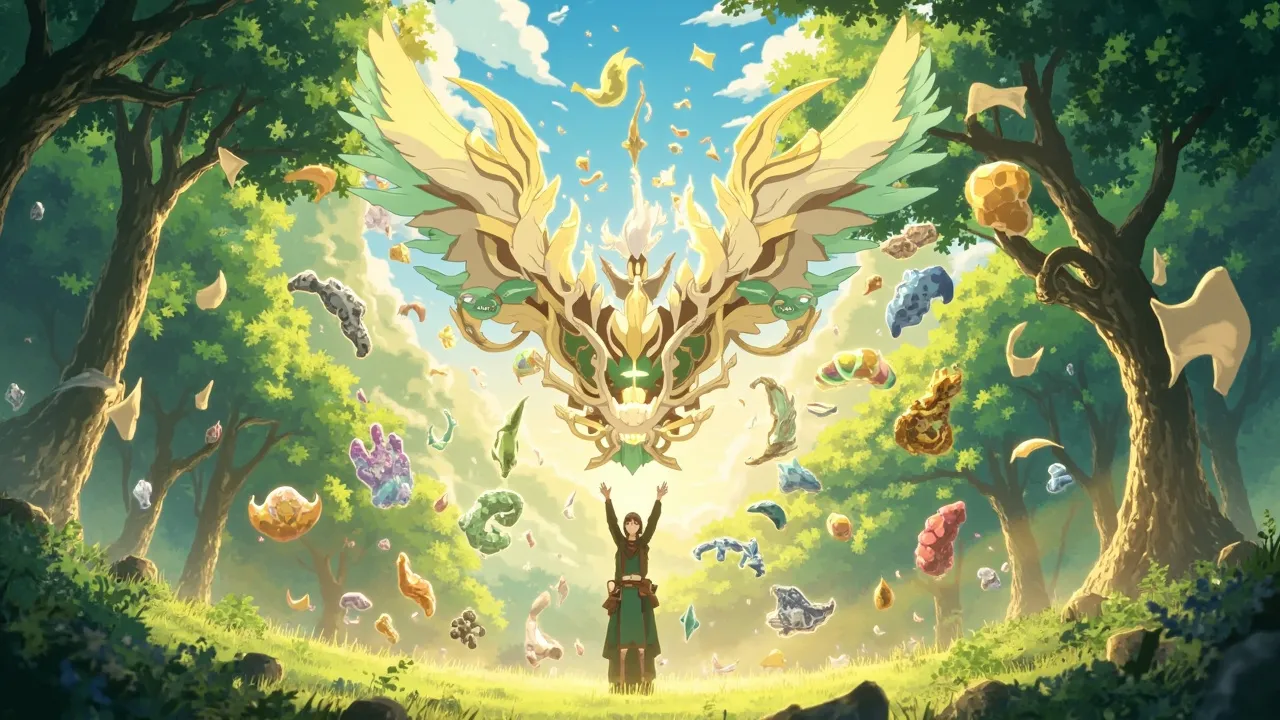
Amalgamation Video Demo 🎬
Table of Contents
What Is Amalgamation?
Amalgamation is a superpower that allows its user to blend existing creations into new hybrid forms. Instead of creating matter from nothing, this ability takes what already exists—objects, organisms, technologies, or even magical constructs—and fuses them into unified, functional entities. These fused hybrids can inherit features, strengths, weaknesses, and even abilities from each component, often resulting in combinations that are more versatile or powerful than the original parts.
In many fantasy, superhero, or RPG settings, Amalgamation sits somewhere between fusion, power combination, and creative crafting. It can be used to merge weapons into a customizable arsenal, combine creatures into chimera-like allies, or synthesize technology and magic into unique devices. Because of its creative breadth, this power is especially attractive to tacticians, inventors, and support-focused characters who want flexible tools for any situation.
For worldbuilders and game designers, Amalgamation also offers rich narrative hooks: hybrid monsters built from battlefield debris, improvised gear created on the fly, or fused superpowers that redefine how abilities interact.
Players and creators who want to pair Amalgamation with other abilities can explore the wider catalog of powers in the superpower wiki or let fate decide with a roll from the random superpower generator.
Core Abilities of Amalgamation
While each setting can define details differently, most versions of Amalgamation share a few core abilities and themes.
Structural Fusion
At its most basic, Amalgamation lets the user merge physical objects into a single, coherent structure. Examples include:
-
Combining a shield and sword into a single bladed buckler.
-
Fusing armor pieces from different materials to balance flexibility and durability.
-
Blending tools—like a grappling hook, flashlight, and scanner—into one multipurpose device.
The key is that the resulting hybrid is not just glued together; materials and mechanisms reconfigure so the new creation works as a unified whole.
Biological Hybridization
More advanced applications allow the fusion of living beings or biological traits. This can include:
-
Combining animals into chimera-like creatures with multiple abilities.
-
Temporarily fusing allies into a single, more powerful combat form.
-
Granting a person hybrid features such as wings, gills, or armored skin by merging them with compatible organisms.
Depending on the setting, this may be temporary and reversible, or permanent and risky.
Power and Trait Blending
A sophisticated version of Amalgamation can merge not just bodies or objects, but also traits and powers:
-
Fusing elemental weapons (fire and ice) to create a vapor or steam-based hybrid effect.
-
Combining a speed enhancement with a strength boost to create explosive, momentum-based attacks.
-
Merging magical artifacts so their enchantments stack or interact in novel ways.
This “power fusion” aspect is particularly potent in RPG systems where abilities have distinct mechanics that can be recombined in creative ways.
Reconfiguration and Refinement
After fusion, the user may be able to refine or reshape the hybrid:
-
Adjusting the ratio of each component’s influence (more durability, less weight).
-
Tuning how abilities manifest (longer range vs. higher impact).
-
Reconfiguring a hybrid between multiple forms, like a modular weapon that can switch modes mid-battle.
This makes Amalgamation feel less like a one-time crafting action and more like ongoing customization.
Selective Separation
A critical core function is the ability to separate fused components:
-
Safely dismantling hybrids back into their original parts.
-
Peeling away corrupted or unwanted elements from a fusion.
-
Extracting only specific traits to keep, while discarding others.
Without some form of selective separation, Amalgamation becomes extremely high-risk and much harder to balance in a story or game.
Application / Tactical Advantages in Combat
Amalgamation is extremely tactical, especially in encounters where the battlefield is cluttered with items, terrain features, or defeated constructs.
Offensive Applications
-
Improvised weapons: Fusing debris, metal, or fallen weapons into a single massive hammer, cannon, or blade.
-
Adaptive damage types: Merging fire, lightning, or poison-based gear to bypass resistances or defenses.
-
Hybrid minions: Creating amalgamated creatures that combine speed, flight, and brute strength to pressure enemies from multiple angles.
Because hybrids can be designed on the fly, the user can constantly adapt offense to the enemy’s vulnerabilities.
Defensive and Support Uses
-
Layered shields: Blending barrier tech, magical wards, and physical shields into a reinforced, multi-layer defense.
-
Emergency armor: Fusing nearby scrap, clothing, or gadgets into protective exoskeletons for allies.
-
Battlefield repair: Merging broken structures or damaged vehicles into temporary but functional shelters or transports.
Support-focused users of Amalgamation can turn failing equipment into new lifelines for their team.
Mobility and Utility
-
Configurable transport: Combining vehicles or mounts into hybrid transports with increased speed or terrain versatility.
-
Environmental tools: Fusing ropes, platforms, and debris into bridges, ramps, or siege constructs.
-
Problem-solving: Merging tools and materials to bypass locks, cross gaps, or neutralize hazards.
In skill-based campaigns, this power rewards lateral thinking and resource awareness.
Strategic Advantages
-
Resource efficiency: Using battlefield junk and discarded items to constantly upgrade gear.
-
Unpredictability: Enemies may be unprepared for the constantly changing arsenal and hybrid constructs.
-
Scaling threat: As more materials and powers appear in a fight, Amalgamation’s potential grows.
Properly played, this power turns every environment into a toolbox.
Level: Level 1 🏙️, Level 2 🌇, Level 3 🌃
Level 1 🏙️ – Basic Object Fusion
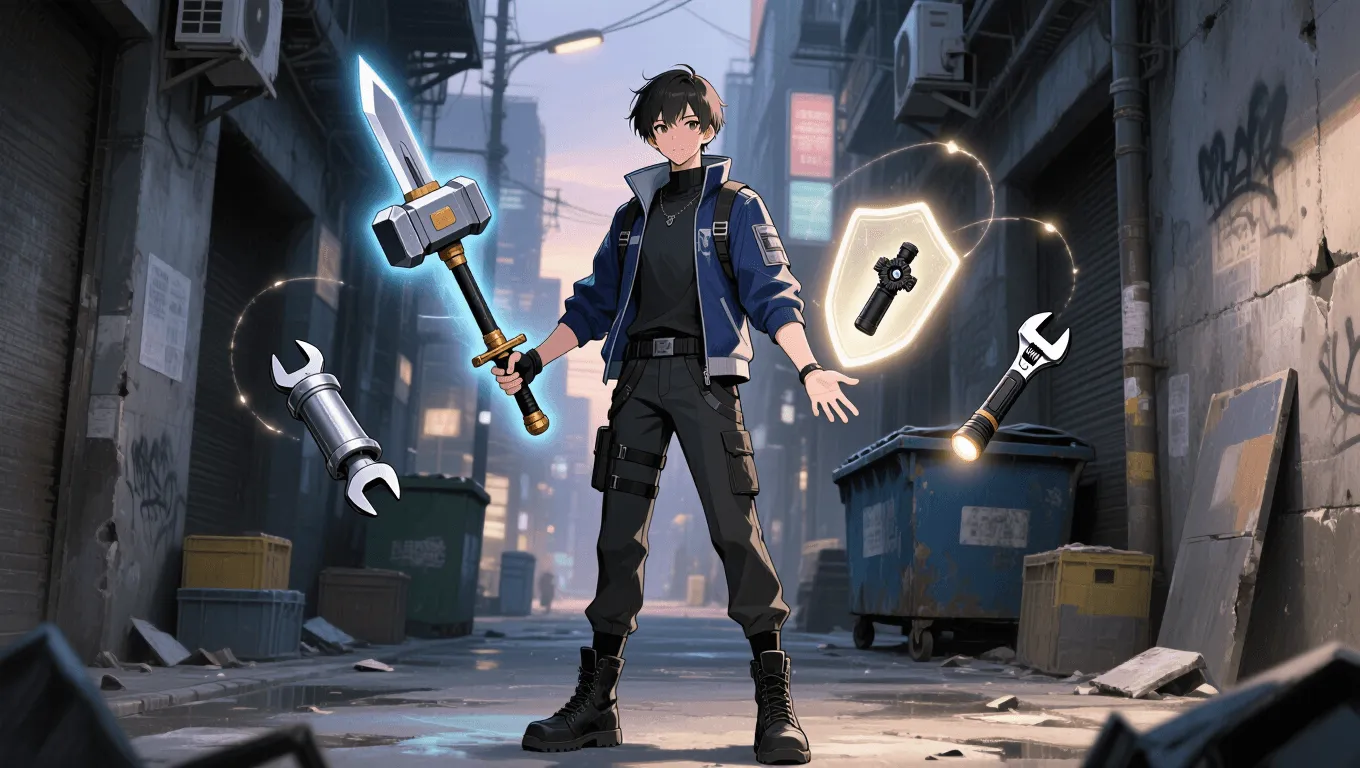
At Level 1, Amalgamation is limited to non-living objects and simple traits:
-
Can fuse small to medium objects (weapons, tools, armor pieces).
-
Resulting hybrids mostly combine physical properties (weight, hardness, shape).
-
Fusion is usually temporary and reversible with concentration.
-
The number of components is limited—often two or three items at a time.
This level fits street-level heroes or early-game RPG characters who are learning the fundamentals of hybrid creation.
Level 2 🌇 – Living and Trait Hybridization
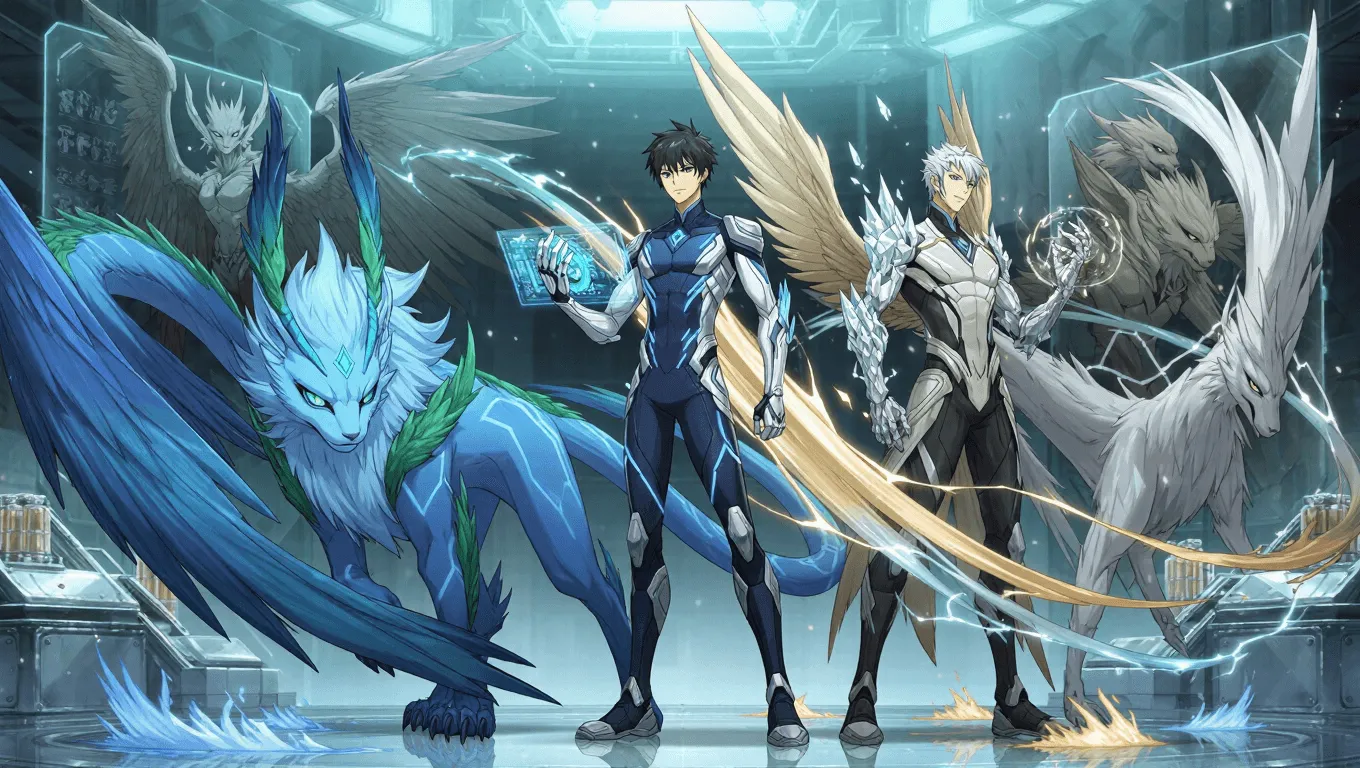
At Level 2, the user begins to affect living beings and abstract traits:
-
Can merge biological organisms under controlled conditions.
-
May temporarily grant hybrid features to allies or themselves.
-
Traits like elemental damage types, resistances, or mobility powers can be blended.
-
Hybrids may persist after the user’s direct focus, but require upkeep or energy.
This stage greatly expands tactical possibility, but raises ethical and stability concerns.
Level 3 🌃 – Complex Power Amalgamation
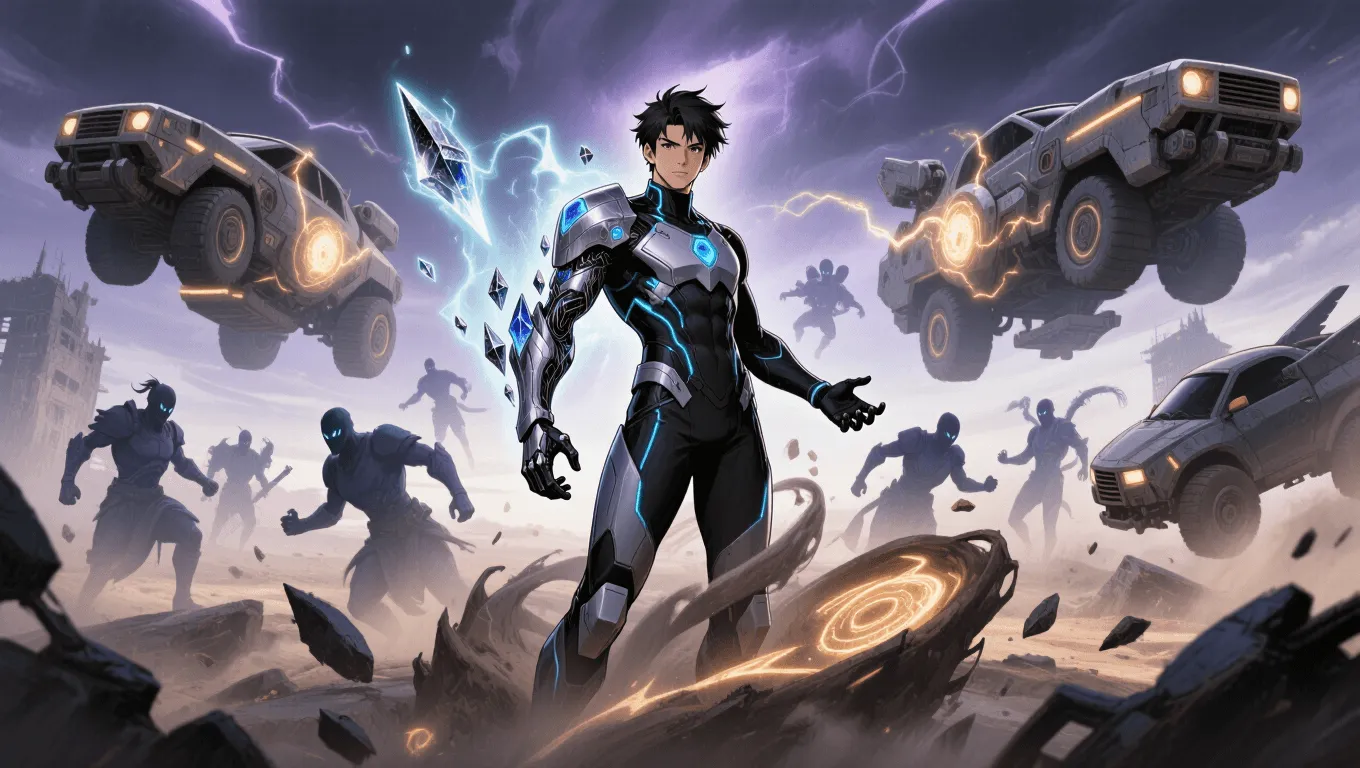
At Level 3, Amalgamation reaches its full, high-tier potential:
-
Can fuse multiple powers, artifacts, and beings into complex constructs.
-
Hybrids may exhibit emergent abilities not present in any single component.
-
Fusion can occur on a large scale—vehicles, buildings, or entire squads.
-
Separation becomes delicate, requiring mastery to prevent collateral damage.
At this level, the user can reshape battlefields and narratives, so strong limitations and story consequences are crucial to keep it balanced.
Limitations of Using the Amalgamation
Despite its versatility, Amalgamation comes with important constraints:
-
Dependence on available components: The user cannot create hybrids without raw material. In a featureless void, the power loses much of its impact.
-
Complexity overload: The more components fused, the harder it is to maintain stability and control. Complex hybrids may backfire, malfunction, or turn hostile.
-
Energy and focus cost: Large or intricate amalgams may drain stamina, mana, or mental focus. Overuse can exhaust the user mid-battle.
-
Compatibility issues: Some materials or powers resist fusion or clash violently, causing unstable or explosive results.
-
Time requirement: High-quality hybrids might take preparation time, ritual steps, or careful design rather than instant casting.
-
Ethical concerns: Biological amalgamation raises moral questions, especially if sentient beings are fused without consent.
These limitations help prevent Amalgamation from overshadowing all other abilities in a setting.
Weakness Against What Other Superpowers
Certain superpowers naturally counter or undermine Amalgamation:
-
Power negation or nullification: Abilities that shut down other powers can unravel hybrids or prevent fusion altogether.
-
Separation and disassembly powers: Skills that cleanly separate matter or deconstruct objects can dismantle amalgams with surgical precision.
-
Molecular or reality stability fields: Powers that enforce a “true” state of matter can reject attempts to blend components.
-
Time reversal or temporal manipulation: Rolling back events can return fused entities to their pre-amalgamated state.
-
Precision targeting: Snipers or pinpoint damage dealers can aim at critical junctions in a hybrid, causing catastrophic failure.
-
Corruption and infection: If an enemy can infect one part of a hybrid (with a virus, curse, or mind control), the weakness may spread rapidly through the fused whole.
Smart adversaries who understand Amalgamation will target the structural or energetic seams of any hybrid creation.
Synergistic Power Combos
Amalgamation shines brightest when combined with complementary abilities.
Matter Manipulation and Transmutation
Pairing Amalgamation with matter manipulation or alchemy allows:
-
Pre-shaping materials for better fusion.
-
Upgrading the quality of raw components before blending.
-
Fixing or purifying unstable hybrids mid-battle.
This duo turns the user into an unparalleled battlefield engineer.
Shapeshifting and Biomancy
With shapeshifting or biological control:
-
The user can safely fuse with compatible organisms and adapt on the fly.
-
Hybrids become more stable as cellular structures are consciously directed.
-
Healing and regeneration can repair fusion-related damage.
This combo is ideal for characters who become living amalgams themselves.
Technopathy and Gadgeteering
For tech-focused settings, technopathy synergizes extremely well:
-
Connected devices in a hybrid can share data, power, and targeting systems.
-
Complex mech or drone amalgams can be controlled as a single networked unit.
-
Broken tech can be repurposed instantly into new machines.
Together, these powers allow rapid prototyping of war machines or support drones in the middle of combat.
Summoning and Conjuration
Summoners can call forth extra materials and creatures to be fused:
-
Temporary constructs can be blended into powerful composite guardians.
-
Conjured objects provide safe test components for experimental hybrids.
-
Summoned beasts can be joined into chimera squads tailored to specific threats.
This combination guarantees that the Amalgamation user is never short on raw material.
Known Users
Amalgamation-like abilities appear in various forms across comics, games, and animation, even if they go by different names such as fusion, hybridization, or combination powers.
-
Characters who can merge with or absorb technology resemble an Amalgamation user focused on tech fusion. For example, the DC character Cyborg embodies the union of human biology and advanced machinery, though his state is usually fixed rather than continuously recombined.
-
Some heroes and villains blend multiple powers or forms into composite beings. A notable example of power-combination and mutation themes can be seen in Kevin Levin, whose changing forms echo the chaotic side of uncontrolled amalgamations.
-
In many RPGs and tabletop systems, artificers, engineers, or bio-mancers function as archetypal Amalgamation users, specializing in combining items, creatures, and enchantments into custom-built hybrids.
These examples show how flexible the concept of Amalgamation can be. Whether framed as a careful craft or a wild, mutating force, the power to blend existing creations into new hybrid forms remains one of the most creative and tactically rich abilities in any superpowered setting.