
Anatomical Liberation

Anatomical Liberation Video Demo 🎬
Table of Contents
- Anatomical Liberation Video Demo 🎬
- What Is Anatomical Liberation?
- Core Abilities of Anatomical Liberation
- Application / Tactical Advantages in Combat
- Level: Level 1 🏙️, Level 2 🌇, Level 3 🌃
- Limitations of Using Anatomical Liberation
- Weakness Against What Other Superpowers
- Synergistic Power Combos
- Known Users
Anatomical Liberation is a superpower that allows a character to detach parts of their body and control those parts independently. Arms, legs, eyes, hands, even the head can separate from the main torso while remaining alive, mobile, and responsive. This power turns the user into a walking swarm of autonomous body parts, capable of surrounding foes, scouting ahead, or escaping danger in unexpected ways.
For worldbuilders and players building a hero or villain roster, Anatomical Liberation sits comfortably alongside other strange abilities in a full superpower wiki and is a natural fit for characters generated through a random superpower generator.
What Is Anatomical Liberation?
Anatomical Liberation is the controlled separation and remote operation of a living body’s own parts. Unlike simple regeneration or shapeshifting, this power keeps each detached piece active and coordinated. A liberated hand can crawl across the floor, an eye can fly or roll ahead as a scout, and a head can talk from a separate vantage point while the torso fights elsewhere.
Key features of Anatomical Liberation include:
-
Voluntary detachment of body parts without injury or blood loss
-
Continued life, mobility, and function for each separated part
-
Ongoing mental or nervous system link that keeps all parts under one conscious control
-
Reattachment that seamlessly restores the body to its normal state
This makes the character function less like a single solid figure and more like a modular organism, rearranging their own anatomy as needed.
Core Abilities of Anatomical Liberation
Voluntary Detachment
The central function of Anatomical Liberation is detachment on command. The user can:
-
Pop off limbs, hands, feet, head, or other components without harm
-
Decide how clean the break is (e.g., at the shoulder, elbow, wrist)
-
Detach multiple parts at the same time for split-body operations
In many interpretations, the separation point is smooth and sealed, preventing bleeding or organ exposure. It is more like disconnecting living modular pieces than tearing flesh.
Remote Control and Coordination
Detached parts remain under direct control, often as effortlessly as controlling one’s own fingers:
-
A hand can run, climb, or manipulate tools
-
A foot can kick independently, trip opponents, or operate pedals
-
The head can continue speaking, screaming commands, or biting
-
Multiple parts can act simultaneously, enabling complex multi-angle attacks
This remote limb control turns the character into their own small squad, allowing flanking maneuvers and surprise attacks from unexpected directions.
Sensory Sharing
In most versions of Anatomical Liberation, sensory input flows from each detached piece back to the user’s mind:
-
Detached eyes or heads can see and hear from remote locations
-
Hands or feet can feel vibrations, temperature, and textures
-
The user can switch focus between perspectives or process several at once
This creates a natural scouting and surveillance ability. A palm placed on a wall can listen for footsteps; a head tucked in a ventilation shaft can watch guards pass by while the rest of the body waits elsewhere.
Regrowth, Reassembly, and Durability
Anatomical Liberation often includes enhanced durability and reattachment capabilities:
-
Detached parts can snap back into place, reconnecting nerves and muscles instantly
-
If a part is destroyed, some users can regrow it over time
-
The main body may be more resistant to shock when parts are separated, since damage is distributed
In some settings, parts can even fly or telekinetically return to the main body, further increasing survivability.
Application / Tactical Advantages in Combat
Stealth, Reconnaissance, and Surveillance
Anatomical Liberation offers extraordinary espionage potential:
-
A detached eye or head can scout corridors or peek around corners
-
Tiny parts like fingers or ears can slip under doors or through vents
-
Detached pieces are easier to hide than a full-sized body, ideal for spying or eavesdropping
Because these parts are living, they may be harder to detect by tech that scans for artificial drones, making this power a natural counter to security systems.
Multi-Angle Assault and Crowd Control
In combat, the user can become an entire team:
-
One arm grapples from behind while another throws weapons from the side
-
A leg sweeps the enemy off their feet while the torso charges forward
-
Detached parts can harass and distract multiple opponents at once
This turns every battlefield into a three-dimensional puzzle for opponents, who must track several moving targets that all share the same will.
Deception and Unpredictability
Anatomical Liberation makes feints and misdirection simple:
-
The “body” that runs into a trap may be only a torso or decoy, while other parts lie in wait
-
A severed head can play dead, then suddenly bite or shout a warning
-
Parts can hide inside bags, walls, or other objects, springing out to ambush foes
The psychological impact is significant. Many enemies are unsettled by fighting an opponent whose limbs refuse to stay attached, breaking their focus and morale.
Defense, Escape, and Survival
The power is just as useful defensively:
-
If restrained, the user can slip out of bindings by leaving a limb behind
-
In dangerous situations, the main consciousness may retreat into a single hidden part while the rest of the body is abandoned
-
Parts can be sacrificed strategically to escape, then regrown or recovered later
This makes Anatomical Liberation a hard power to permanently neutralize without understanding its limits.
Level: Level 1 🏙️, Level 2 🌇, Level 3 🌃
Level 1 🏙️ – Beginner Disassembly

At Level 1, the user’s Anatomical Liberation is clumsy but functional:
-
Can detach a limited number of major parts (usually one limb or the head at a time)
-
Range is short; parts must remain within the same room or line of sight
-
Sensory feedback may be foggy, with delayed reactions or reduced precision
-
Reattachment requires focus and a bit of time, leaving openings in combat
This level fits street-level heroes or side characters who are just learning to live with their strange, detachable anatomy.
Level 2 🌇 – Advanced Modular Fighter
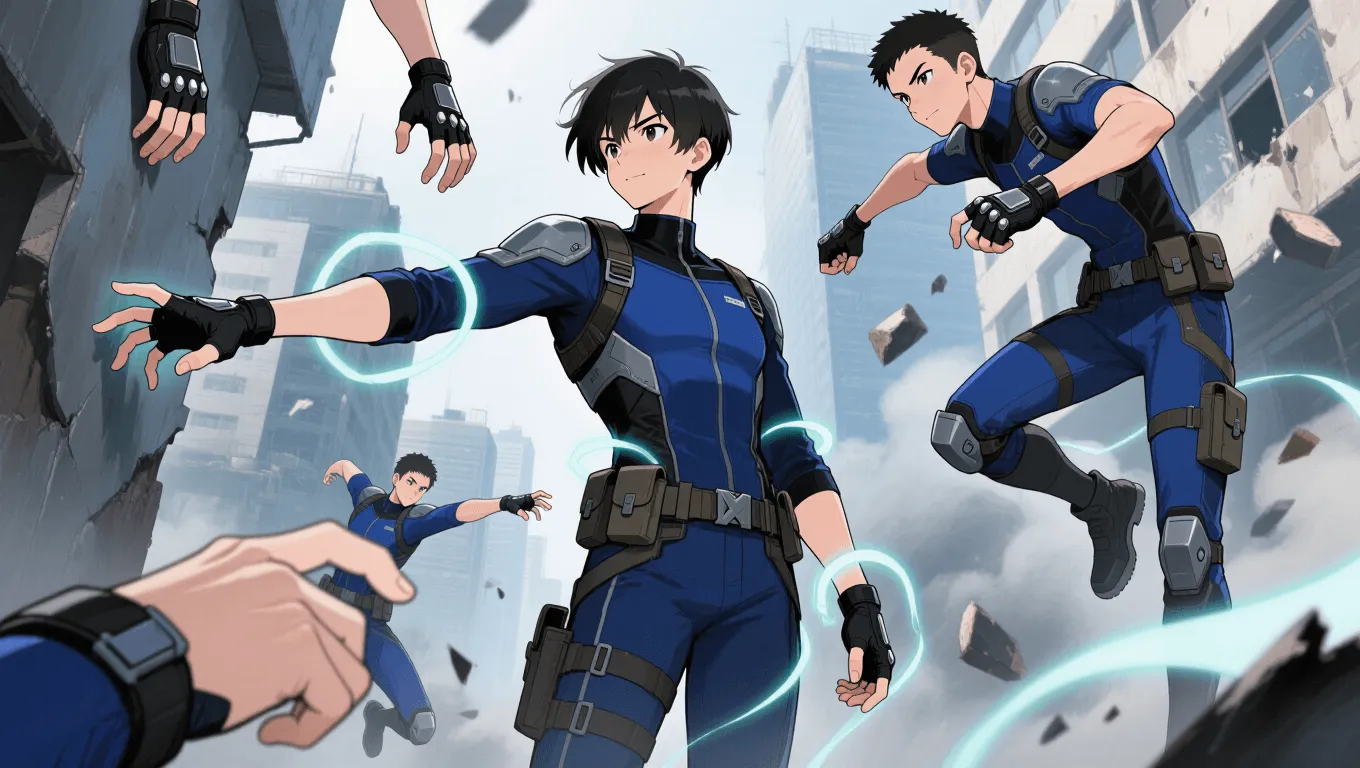
At Level 2, the power becomes strategically powerful:
-
Multiple parts can be detached and controlled at once
-
Range expands to cover a building or small battlefield area
-
Sensory clarity improves, allowing the user to track several perspectives
-
Reattachment becomes quick and almost instinctive, even in mid-fight
-
Detached parts gain improved mobility (crawling, hopping, limited gliding or rolling)
Here, Anatomical Liberation supports complex tactics, infiltration missions, and creative combat choreography.
Level 3 🌃 – Master of Living Fragments
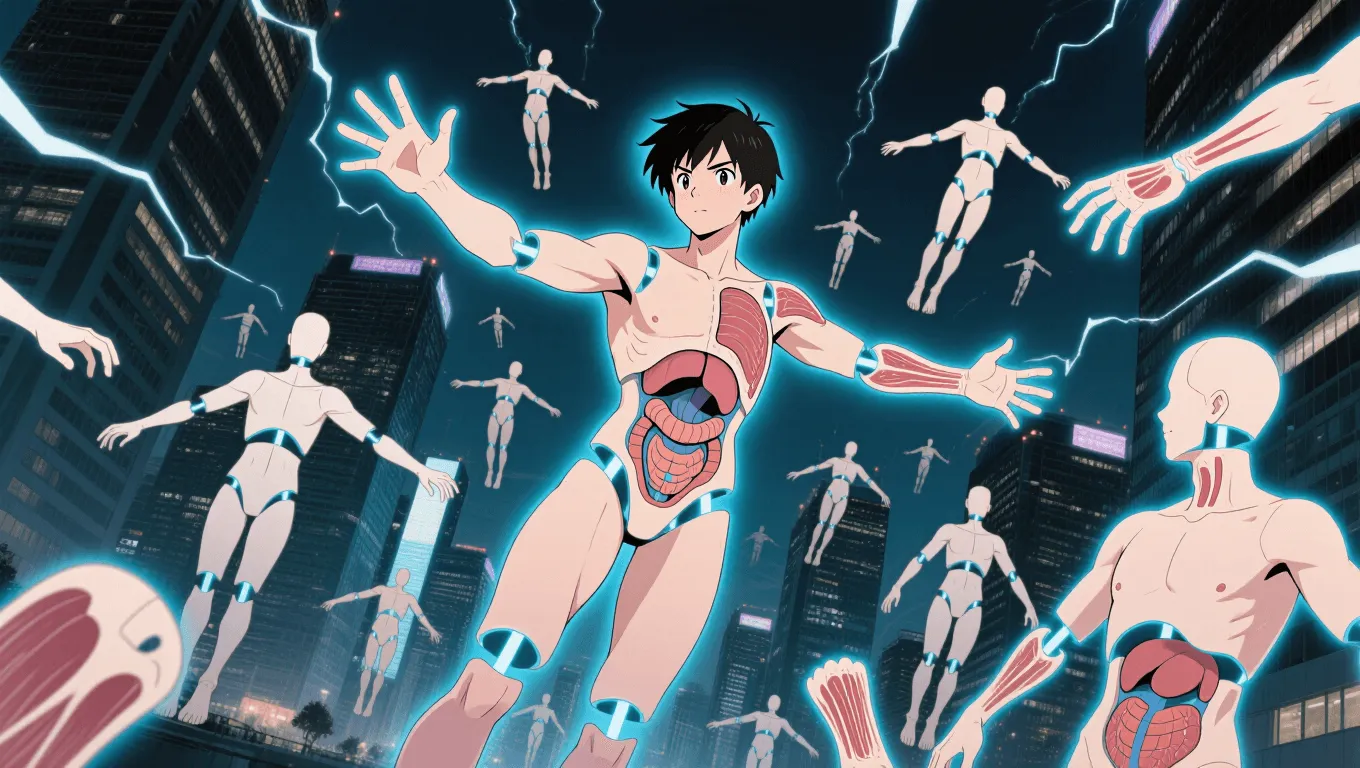
At Level 3, the user is a true master of anatomical freedom:
-
The entire body can disassemble into dozens of small pieces, all working in concert
-
Range may extend across city blocks or longer, depending on narrative needs
-
Sensory processing allows simultaneous, clear awareness of many parts
-
Parts can hover, fly, or be drawn back magnetically or via bio-telekinesis
-
Severe damage to the main body no longer guarantees defeat, as consciousness can reside in any surviving piece
At this level, Anatomical Liberation becomes a high-tier, almost horror-like power that can dominate large-scale encounters or complex infiltration operations.
Limitations of Using Anatomical Liberation
Despite its versatility, Anatomical Liberation comes with meaningful drawbacks:
-
Vulnerability of Detached Parts: Each piece is smaller and easier to destroy. Losing a critical part, like the head or heart (in settings where those can detach), can be extremely dangerous.
-
Cognitive Load: Coordinating multiple autonomous parts can tax the user’s mind. Extended multi-part operations may cause fatigue, headaches, or decreased reaction time.
-
Range Limits: Most versions impose a distance limit. If a part moves too far, control weakens, senses fade, or the piece becomes inert until retrieved.
-
Reattachment Risks: Reassembling while under heavy fire or while parts are damaged can lead to pain, misalignment, or temporary dysfunction.
-
Dependence on Physical Form: Unlike pure energy or shapeshifting powers, Anatomical Liberation is still tied to a biological body. It can be countered by abilities that disrupt physical matter, such as molecular freezing or encasement.
These limitations help keep the power balanced and prevent it from becoming an instant win in every situation.
Weakness Against What Other Superpowers
Anatomical Liberation has clear counters in a world full of other superhuman abilities:
-
Telekinesis and Force Manipulation: A telekinetic opponent can grab detached parts mid-air, pin them, or hurl them away from the main body, effectively disarming the user.
-
Gravity or Magnetism Control: Powers that bend gravity or create fields can cluster or immobilize scattered body parts, preventing coordinated attacks.
-
Power Negation and Suppression: Abilities that temporarily shut down powers can force the user to remain assembled or drop control of detached pieces, leaving them helpless.
-
Binding and Restraint Powers: Webs, shadow binds, or energy restraints can trap individual parts. With multiple pieces pinned separately, the user’s options shrink quickly.
-
Elemental Area Attacks: Firestorms, explosions, or shockwaves cover large areas, making it risky to scatter body parts across a battlefield. A single wide attack can damage many pieces at once.
In tactical play, clever opponents learn to exploit these weaknesses, turning the user’s scattered form into a liability instead of an advantage.
Synergistic Power Combos
Anatomical Liberation shines brightest when paired with complementary abilities:
-
Regeneration or Rapid Healing: Regeneration removes the fear of losing parts. The user can afford to be reckless, letting pieces be destroyed if it creates an opening.
-
Invisibility or Intangibility: Imagine invisible, intangible hands slipping through walls to unlock doors or steal weapons while the main body remains safe.
-
Size Manipulation: Detachable limbs that can shrink to tiny sizes make incredible spies, while enlarged limbs become massive, remote-controlled weapons.
-
Teleportation or Spatial Warping: Parts can be teleported into optimal positions—behind enemy lines, into control rooms, or onto high vantage points—then operated from afar.
-
Additional Limbs: A character with extra arms, tails, or tendrils gains even more modular pieces to detach, turning the battlefield into a tangle of autonomous anatomy.
-
Enhanced Senses or Clairvoyance: When each detached piece has superhuman sight, hearing, or other senses, the user becomes a living surveillance network.
Game masters and writers can use a random superpower generator to find unexpected combos, then imagine how those abilities interact with Anatomical Liberation’s modular body control.
Known Users
While Anatomical Liberation is a flexible concept that can be tailored to any setting, several existing characters echo aspects of this power:
-
Buggy the Clown – A pirate whose body can split into multiple hovering pieces, attacking from all directions while avoiding harm to the main torso.
-
Arm-Fall-Off-Boy – A humorous DC character who can detach his arms and use them as blunt weapons.
-
Rayman – A gaming mascot whose floating hands and feet are permanently detached, enabling long-range punches and creative platforming.
Original characters with Anatomical Liberation might range from comedic oddballs to horror-themed antagonists, depending on tone. In any case, this superpower offers a unique blend of body horror, tactical flexibility, and visual flair that stands out in any superpowered universe.