
Body Part Substitution Superpower Guide

Body Part Substitution Video Demo 🎬
Table of Contents
- Body Part Substitution Video Demo 🎬
- What Is Body Part Substitution?
- Core Abilities of Body Part Substitution
- Application / Tactical Advantages in Combat
- Level: Level 1 🏙️, Level 2 🌇, Level 3 🌃
- Limitations of Using Body Part Substitution
- Weakness Against What Other Superpowers
- Synergistic Power Combos
- Known Users
Body Part Substitution is a superpower that allows a character to replace missing limbs or organs with those taken from another being and fully integrate them as their own. With this ability, a severed arm, alien eye, or even a monster’s tail can be grafted onto the user’s body, granting new abilities and combat options. In many fantasy and superhero settings, this power sits at the crossroads of limb replacement, biological augmentation, and body horror.
For players and writers building original powersets, this ability fits neatly alongside other entries in a broader superpower wiki and works especially well in darker, experimental settings. If inspiration is needed, characters with this ability can be paired with creations from a random superpower generator to produce truly unique combinations.
What Is Body Part Substitution?
Body Part Substitution is the supernatural capacity to replace lost or damaged body parts with functioning grafts from other beings. Unlike ordinary surgery or transplantation, this power typically involves instant or accelerated integration. Once attached, the new body part becomes fully responsive to the user’s nervous system, moving and reacting as if it had always been there.
This can include:
-
Replacing a missing arm with the limb of a stronger or monstrous creature
-
Swapping damaged eyes with those of a night-vision predator
-
Using wings, tails, or extra hands taken from other species
In most interpretations, the power works on both organic and sometimes synthetic parts, enabling hybrid builds such as a cybernetic arm grafted onto a human frame. The key distinction is agency: the user of Body Part Substitution is the one actively controlling the process of removal, grafting, and integration, rather than relying on normal doctors or technology.
Thematically, this power touches on identity, ownership of the body, and the cost of survival. It can be played as grotesque, tragic, or empowering, depending on the tone of the story.
Core Abilities of Body Part Substitution
While exact mechanics vary setting by setting, several core abilities are commonly associated with Body Part Substitution.
Instant limb replacement
The primary ability is fast, often near-instantaneous limb replacement. The user can attach a compatible arm, leg, or organ and stabilize it almost immediately. This allows them to recover from crippling injuries or even come back mid-battle after dismemberment.
The process can include:
-
Rapid reconnection of nerves and blood vessels
-
Automatic adaptation to size differences (the limb shrinking or growing slightly)
-
Pain and shock dampening so the user can continue fighting
Cross-species grafting
Advanced users can perform cross-species substitution. A human might attach a reptilian tail, insect-like legs, or a demon’s claw. This turns Body Part Substitution into a form of biological customization, enabling:
-
Enhanced physical stats (strength, speed, leap distance)
-
New locomotion styles (climbing walls, gliding, burrowing)
-
Exotic traits like venomous fangs or retractable talons
Ability inheritance
Many stories allow the user to gain some of the donor’s abilities through their grafted parts. For example:
-
An arm from a fire elemental grants heat resistance or localized flame projection
-
Eyes taken from a telepathic creature grant expanded perception or multi-spectrum vision
-
Wings from an aerial species enable limited flight or boosted vertical mobility
The strength of these inherited abilities usually scales with the user’s mastery of the power.
Modular body layout
Some versions of the power permit a modular body design. The user may:
-
Keep a “collection” of stored limbs or organs on ice, in jars, or within a pocket dimension
-
Swap parts between missions for specific tactical needs
-
Temporarily attach extra limbs to become multi-armed or multi-legged
This turns Body Part Substitution into a kind of living equipment system, where limbs are as customizable as weapons.
Battlefield surgery
In grittier settings, the user can perform emergency surgery, replacing their own or an ally’s destroyed limb with a functioning one on the spot. If the ability works on others, they can act as a terrifying hybrid of healer and butcher—saving allies with donor parts taken from fallen foes.
Application / Tactical Advantages in Combat
Body Part Substitution offers a wide range of tactical advantages on the battlefield, far beyond simple limb repair.
Offensive applications
-
Adaptive melee style: Swapping in a heavy claw, barbed tail, or spiked leg can change a user’s combat style mid-fight, making them unpredictable.
-
Targeted counters: If facing a flying opponent, grafting wings or a high-leaping leg set allows the user to fight on equal footing.
-
Power escalation: Replacing a normal arm with a donor limb already infused with super strength or elemental power can drastically raise damage output.
Defensive applications
-
Redundancy and resilience: Losing a limb or eye is far less punishing when it can be replaced quickly. This power makes the user extremely hard to “debilitate” through maiming.
-
Swapping damaged parts: Severely injured or cursed limbs can be detached and replaced, shedding harmful conditions.
-
Specialized defensive grafts: Armor-plated skin, regenerative organs, or limbs built to absorb shock can reduce overall vulnerability.
Utility and support applications
-
Reconnaissance: Grafting enhanced sensory organs (e.g., predator eyes, sonar organs) significantly boosts scouting capability.
-
Environmental adaptation: In hostile zones, the user can substitute parts suitable for underwater travel, arctic survival, or toxic atmospheres.
-
Team customization: If the power can be used on allies, the user can equip a squad with grafted enhancements tailored to the mission.
In roleplaying games, this makes Body Part Substitution an incredibly flexible power that can fill multiple roles: bruiser, scout, support, or even field medic depending on build choices.
Level: Level 1 🏙️, Level 2 🌇, Level 3 🌃
Level 1 🏙️ – Basic Substitutions
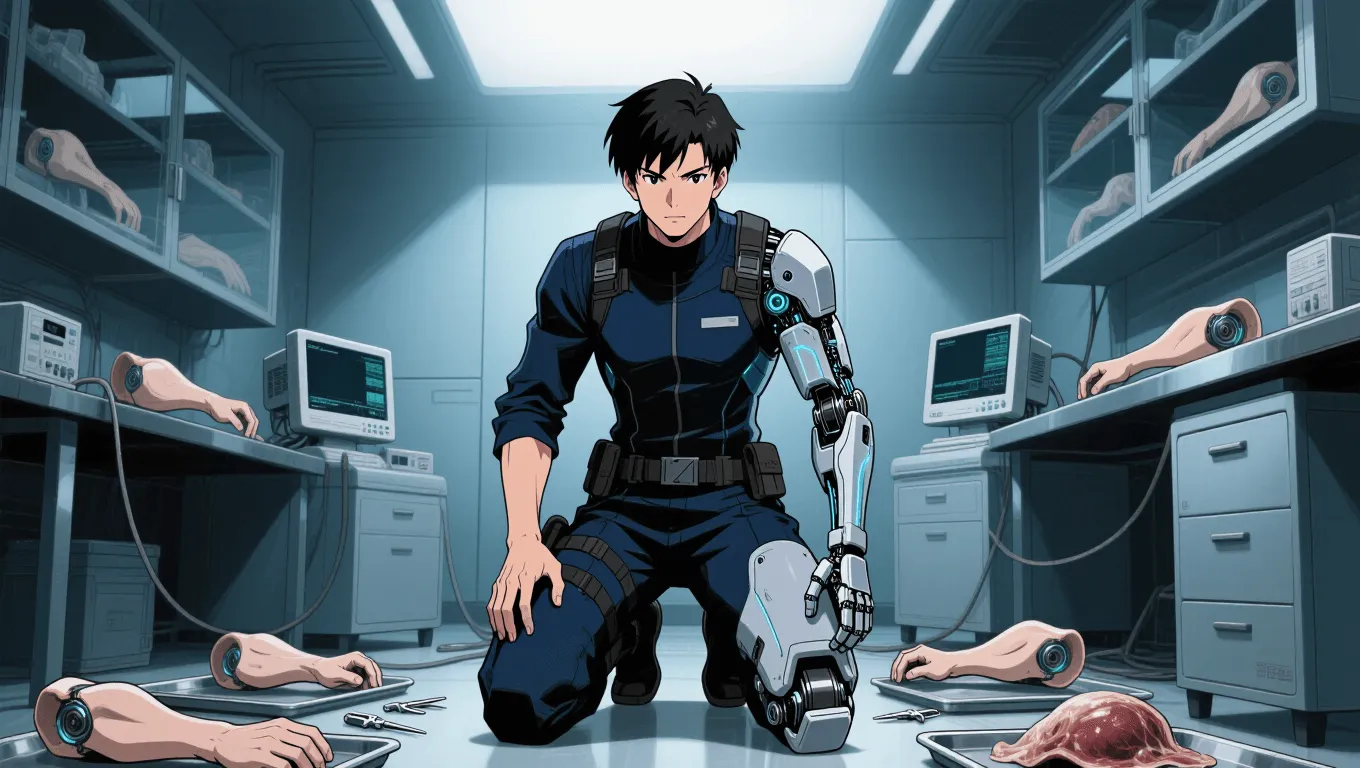
At Level 1, the user can:
-
Replace their own missing or destroyed limbs with compatible donor parts
-
Perform substitutions slowly, often needing minutes of focus or basic tools
-
Integrate parts from humans or closely related species with limited rejection
Abilities gained at this stage are mostly physical—restored functionality and modest boosts in strength or durability. Cross-species grafts are risky, unstable, or short-lived. The user might be limited to one or two substituted parts at a time.
Level 2 🌇 – Hybrid Specialist
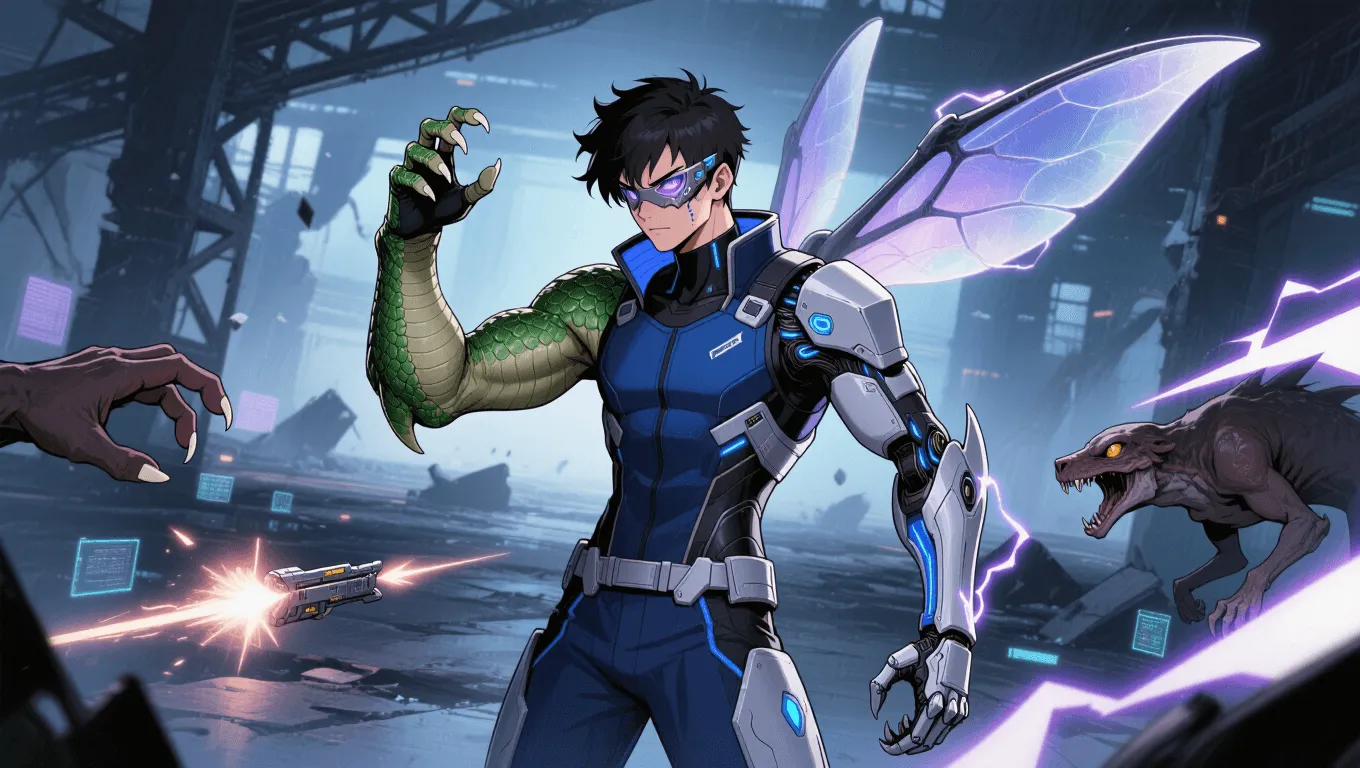
At Level 2, Body Part Substitution becomes more flexible and strategic:
-
Cross-species grafting is now reliable, including alien or monstrous limbs
-
The user can inherit a portion of the donor’s abilities (enhanced senses, minor elemental traits, etc.)
-
Swaps are faster, sometimes completed within seconds in combat
-
Multiple substituted parts can be maintained simultaneously without serious strain
At this level, the user feels increasingly like a “living patchwork,” able to tune their body to the needs of each fight or mission. There may also be early signs of personality or instinct bleed from particularly exotic donors.
Level 3 🌃 – Living Patchwork Master
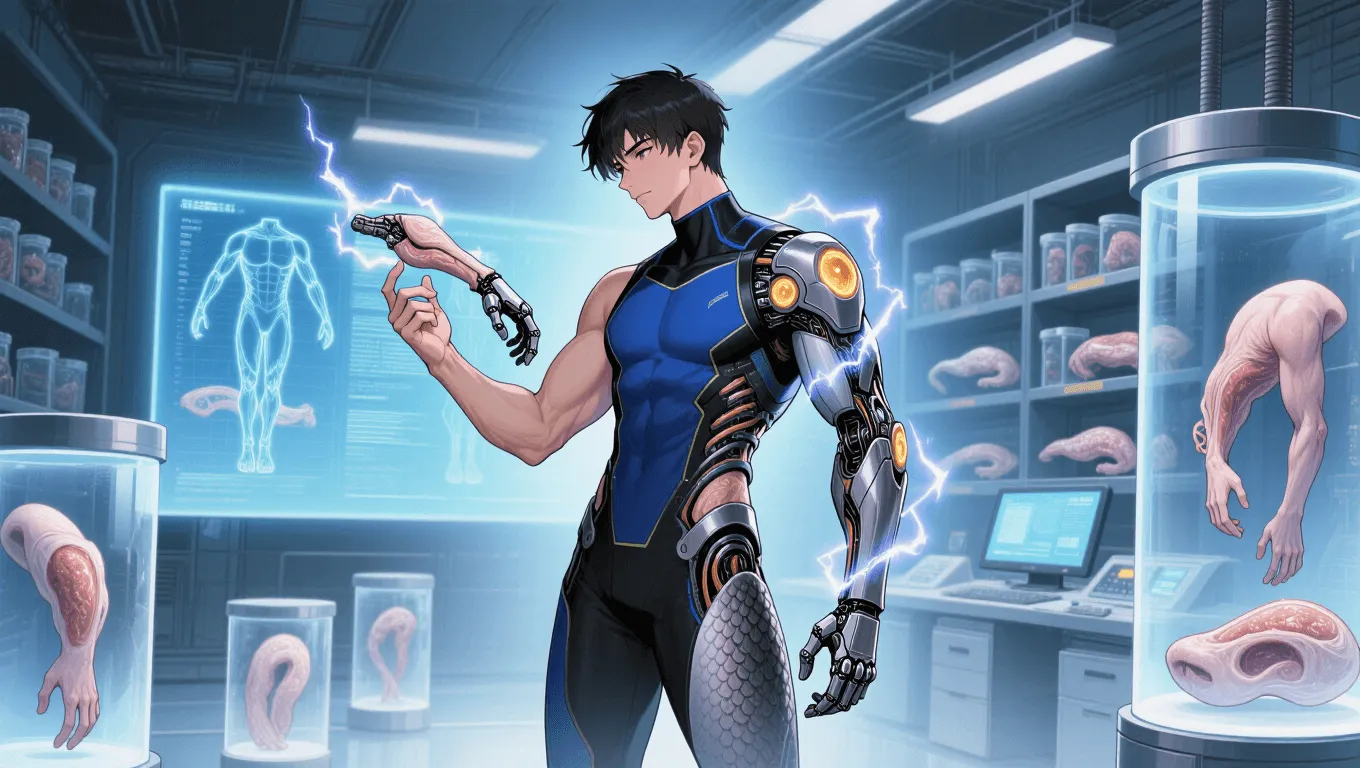
At Level 3, the user is a master of Body Part Substitution:
-
Substitutions can be performed nearly instantly, even mid-motion
-
The user can maintain a complex hybrid body layout with many grafted parts
-
Ability inheritance is strong—donor limbs may function at near-original power
-
Rejection is rare; even wildly incompatible parts can be stabilized through sheer control
High-level users may keep a personal library of stored organs and limbs, switching between them as easily as changing equipment. Some settings might even allow them to “manufacture” custom limbs from multiple sources, creating unique hybrids with tailored abilities.
Limitations of Using Body Part Substitution
Despite its power, Body Part Substitution comes with serious limitations that keep it balanced and narratively interesting.
-
Biological or mystical compatibility: Not all parts can be attached safely. Some donors may be too alien, cursed, or spiritually incompatible, causing violent rejection or corruption.
-
Pain and trauma: Even with supernatural help, repeatedly cutting and grafting limbs is physically and psychologically taxing. Long-term users may develop chronic pain or dissociation from their own body.
-
Resource dependence: The user needs access to viable donor parts. Freshness, preservation, and storage all become logistical issues in-world.
-
Visibility and stigma: Patchwork limbs, mismatched skin, or obviously inhuman features can make blending into normal society difficult. The user may be feared, hunted, or banned by certain groups.
-
Complex control: Managing multiple grafted limbs, each with its own reflexes or instincts, can overload the nervous system. In some settings, the donor’s memories or impulses might bleed into the user’s mind.
-
Legal and ethical consequences: Taking body parts, especially from sentient beings, raises moral questions. Heroes may be restricted to willing donors or artificial parts, while villains may ignore such limits entirely.
These constraints ensure that the power remains as much a story hook as a mechanical advantage.
Weakness Against What Other Superpowers
Certain superpowers and abilities naturally counter or exploit Body Part Substitution.
-
Power negation: Abilities that suppress or cancel superpowers can shut down the graft’s integration, causing substituted limbs to become dead weight or detach.
-
Healing and regeneration: Rapid regenerators are harder to exploit as donors, and healing powers may undo or reject foreign grafts on allies or enemies.
-
Soul or spirit manipulation: Powers that target the soul can cause issues when a limb still carries a fragment of the donor’s essence, destabilizing the graft or turning it against the user.
-
Reality or matter disintegration: Disintegration beams, corrosion powers, and pure energy attacks make limb-based durability irrelevant by simply erasing matter.
-
Technopathy and cyber control: If the user relies on cybernetic or techno-organic limbs, a technopath can hack or shut down their substituted parts.
-
Curse manipulation: Characters who can weaponize curses may implant hexes into donor parts, turning the very act of substitution into a liability.
These weaknesses give opponents meaningful ways to adapt and keep the user from becoming unstoppable.
Synergistic Power Combos
Body Part Substitution shines when combined with other superpowers in a cohesive build.
-
Regeneration: Fast healing allows the user to survive failed grafts, recover from botched operations, and endure frequent self-modification without permanent damage.
-
Shapeshifting: Shapeshift abilities can smooth out mismatched proportions, blend graft lines, and hide monstrous additions under a more human façade.
-
Pain suppression or enhanced willpower: These powers mitigate the mental and physical toll of constant modification, allowing more frequent substitutions.
-
Biokinesis or body manipulation: Fine control over tissue, bone, and blood accelerates graft integration, reduces rejection, and enables custom hybrid limb designs.
-
Pocket dimensions or inventory powers: Handy for storing a catalog of donor parts, keeping them fresh and accessible in the field.
-
Technomancy or cybernetics: Combining living tissue with advanced cybernetics creates powerful techno-organic limbs that benefit from both magic and engineering.
In a game or narrative, these synergies can define a character’s niche as the ultimate adaptive survivor or frightening experimental weapon.
Known Users
Writers and game masters can draw inspiration from existing characters or archetypes when designing a Body Part Substitution user.
-
The Patchwork Saint – A vigilante healer who replaces their own ruined limbs and donates grafted parts to injured civilians, walking the line between holy miracle and horror.
-
Dr. Marrowwright – A rogue surgeon-mage who sees people as raw material, building a constantly evolving body to stay ahead of enemies and age itself.
-
The Chimera Brigadier – A military officer who swaps limbs based on mission profiles: aquatic legs for underwater ops, armored arms for sieges, and sensory implants for recon.
While not a perfect match, some comic book characters brush against the same themes of replacement limbs and hybridization. For example, Curt Connors famously experiments with limb restoration and cross-species genetics, exploring the dangers of altering one’s own body with external traits.
These examples show how Body Part Substitution can be portrayed as tragic, monstrous, or heroic, depending on the character’s choices and the tone of the world around them.