
Bubble Generation

Bubble Generation Video Demo 🎬
Table of Contents
What Is Bubble Generation
Bubble Generation is the ability to produce bubbles, suds, or foam on demand and control how they form, move, and behave. In practice, it can look like harmless soap bubbles drifting through the air, or like dense, expanding foam that spreads across the ground to trap targets. Because bubbles naturally cushion impacts and foam naturally fills space, Bubble Generation sits in a rare sweet spot: it can protect, restrain, and disrupt without relying on brute force.
For readers who enjoy comparing powers across a wider catalog, Bubble Generation fits neatly alongside other creation and manipulation abilities in the Superpower Wiki list. And if exploring new abilities is the goal, the random superpower generator is a quick way to discover a power that pairs (or clashes) with bubble and foam tactics.
At its core, Bubble Generation is about controlling pockets of gas trapped inside a thin film (bubbles) or inside a mass of aerated liquid/solid (foam).
Core abilities of Bubble Generation
Bubble Generation can be portrayed in many “flavors,” but most versions share a set of foundational capabilities:
-
Bubble creation and shaping: Produce bubbles in different sizes, from tiny bead-like “bubble pellets” to room-sized domes. Shape them into spheres, sheets, rings, or layered shells.
-
Foam creation: Generate thick foam or expanding suds that cling to surfaces, fill gaps, and build volume fast (useful for area denial and crowd control).
-
Bubble durability control: Adjust how easily bubbles pop. Softer bubbles are great for cushioning; tougher bubbles act like temporary bubble armor or bubble shields.
-
Adhesion and capture: Make bubbles stick to targets or surfaces. A bubble prison can immobilize a foe, while foam restraints can bind limbs or seal equipment.
-
Buoyancy and lift: Use large bubbles as floating platforms or to lift objects. Even partial lift can reduce an enemy’s traction or disrupt their stance.
-
Mobility tricks: Ride a bubble, “skip” across foam like a slippery runway, or use bubble bursts as short, directional propulsion.
-
Sensory disruption: Fill an area with shimmering bubbles to distort vision, reflect light, or create a confusing, sparkling screen.
Depending on the setting, bubbles may be made from soapy films, magical membranes, bio-foam, hardened energy films, or specialized chemical foams (like fire-suppressing foam). The more control the user has over material properties, the more Bubble Generation shifts from a novelty power into a full-spectrum combat kit.
Application / Tactical Advantages in Combat
Bubble Generation is strongest when used to control space and tempo. Instead of “winning” by hitting harder, it wins by forcing opponents into bad positions, limiting their options, and buying time.
Common combat applications include:
-
Crowd control and containment: Bubble domes and foam floods can split squads, block doorways, and isolate priority targets.
-
Cushioning and damage reduction: Foam walls and bubble shields absorb impacts, reduce falls, and soften blunt-force attacks.
-
Disarms and interrupts: Bubbles around weapons, hands, or faces can break focus, slip grips, or momentarily block breathing and speech (often enough to stop spellcasting or aiming).
-
Area denial: A foam-coated floor becomes a hazard zone—slick, sticky, or simply difficult to cross quickly.
-
Projectile tactics: Dense bubble shots can hit like rubbery slugs; popping bubbles can create distracting bursts, sprays, or pressure snaps (depending on how the power is written).
-
Rescue utility mid-fight: Bubble airbags prevent friendly injuries, while foam plugs can slow flooding, smoke spread, or debris collapse.
Level: Level 1 🏙️
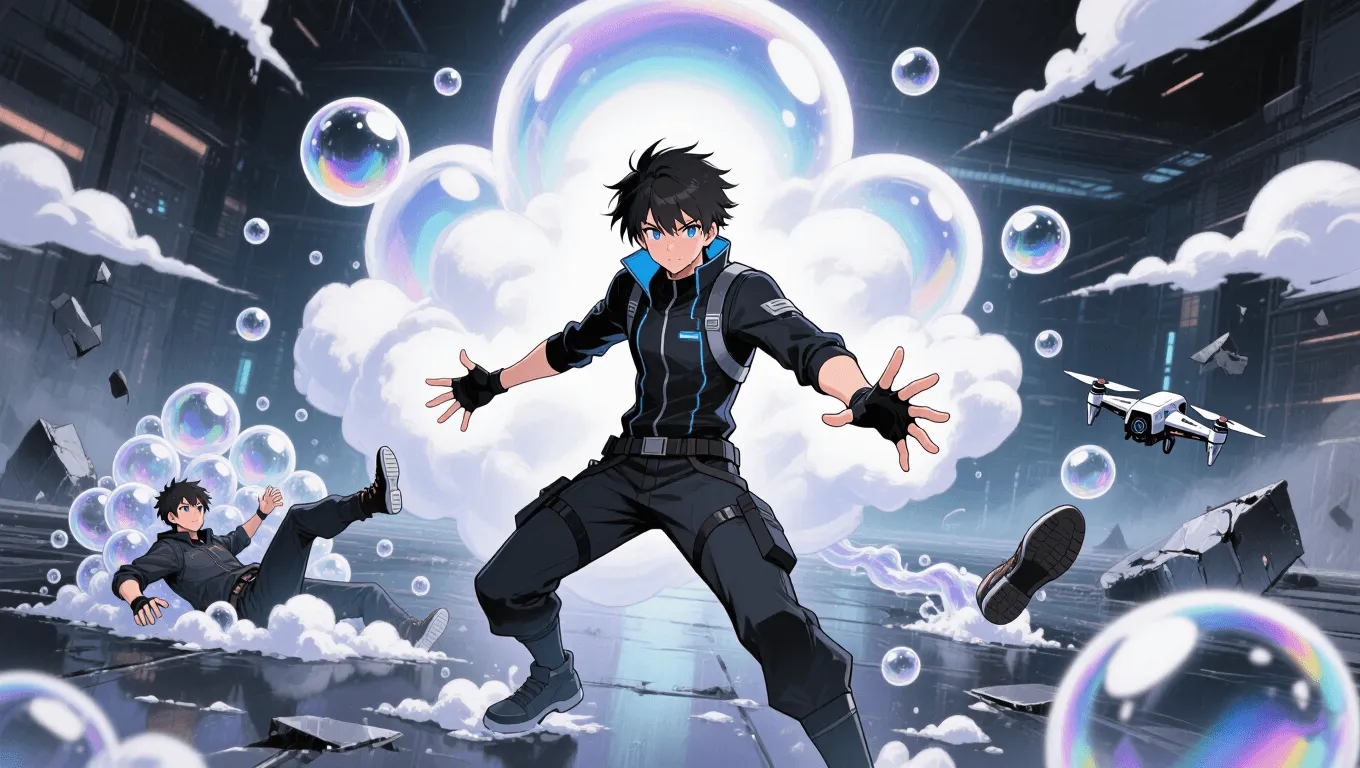
At Level 1, Bubble Generation is mostly straightforward and defensive.
-
Produces basic bubbles and light foam in small quantities.
-
Can cushion falls (bubble “airbag”), soften impacts, and create brief visual distractions.
-
Can trap small objects or slow a single opponent for a moment with a cluster of sticky bubbles.
-
Works best as support: protecting allies, blocking sightlines, and disrupting footing.
Typical tactics: bubble smokescreen, foam-padded cover, slippery bubble trails, and quick bubble grabs to interrupt an attack.
Level: Level 2 🌇
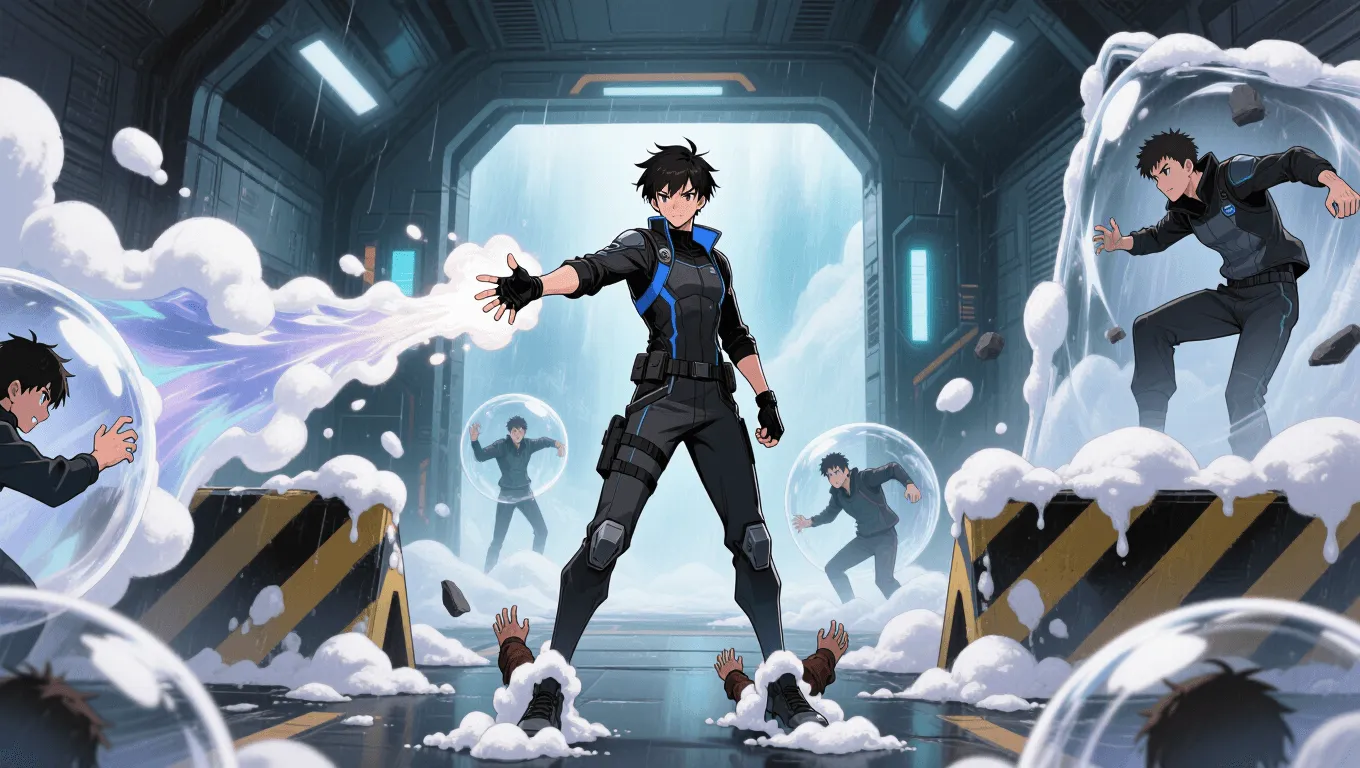
At Level 2, the power becomes a real battlefield tool.
-
Generates larger volumes of foam that expand quickly and fill hallways or rooms.
-
Creates bubble shields and bubble domes that last longer and resist popping from minor hits.
-
Forms bubble prisons around opponents, lifting or pinning them, or sealing them in place.
-
Can sculpt foam into ramps, barricades, or partial cages for rapid fortification.
-
Gains more precise control: targeted bubble shots, bubble nets, and “layered” shielding.
Typical tactics: corridor flooding with foam, isolating a leader inside a dome, trapping feet in hardening suds, and using bubble lift to negate leaps or charges.
Level: Level 3 🌃
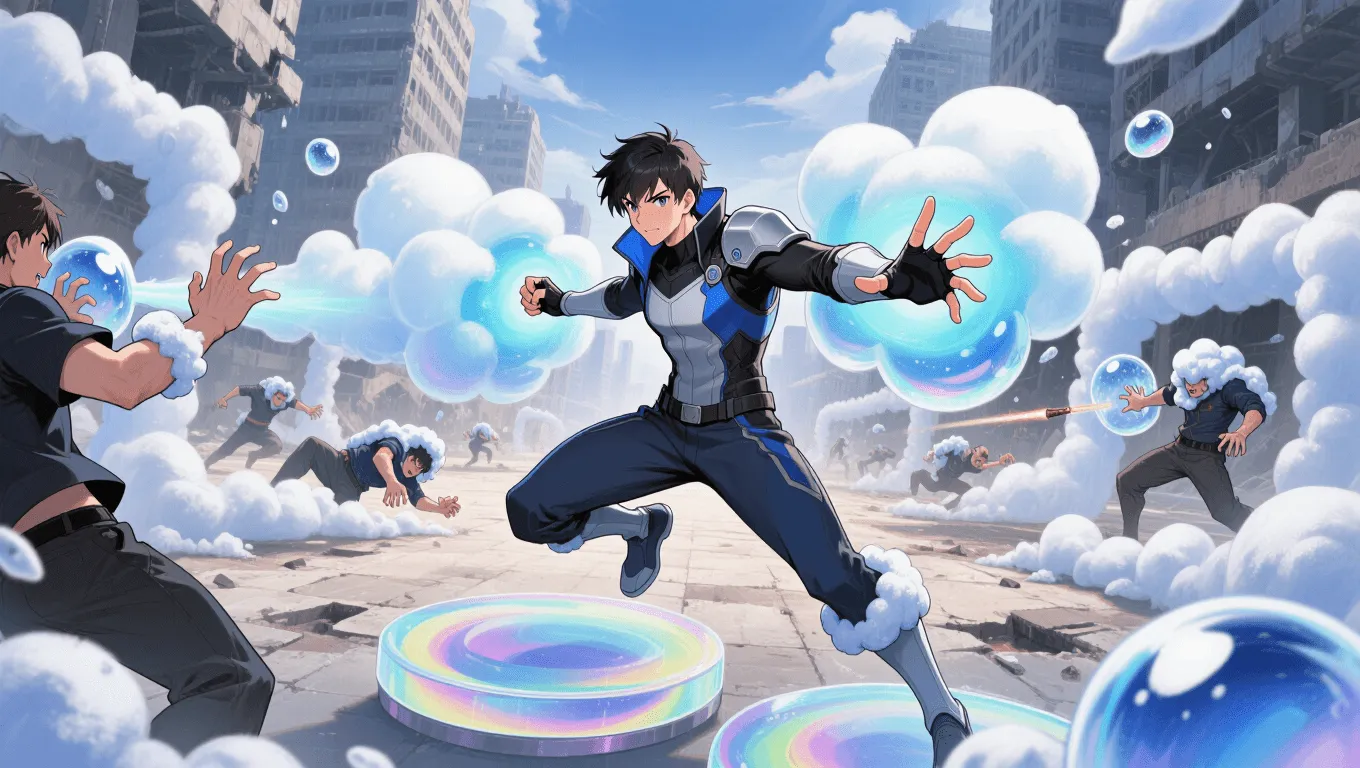
At Level 3, Bubble Generation becomes highly versatile and dangerous.
-
Produces high-density foam with specialized properties: ultra-sticky restraint foam, impact-absorbing gel foam, or rigid “structural foam” that behaves like a temporary wall.
-
Creates multi-layer bubble barriers that can withstand sustained pressure and repeated strikes.
-
Executes precision containment: bubbles formed around specific body parts (hands, eyes, mouth) to neutralize attacks without broad collateral damage.
-
Enables advanced mobility: stable bubble platforms, rapid “bubble hopping,” and controlled lift for allies or objects.
-
Combines offense and defense seamlessly: bubble armor while launching bubble volleys, or foam fortifications while capturing targets.
At this level, the user can control the rhythm of a fight by turning open spaces into foam mazes and turning opponents into stationary problems.
Limitations of using the Bubble Generation
Even a strong Bubble Generation user faces practical constraints:
-
Popping and punctures: Sharp attacks, rough surfaces, and piercing damage can destroy bubbles quickly unless durability is unusually high.
-
Environmental dependence: Wind, heavy rain, dust, and extreme temperatures can weaken standard soap-like bubbles or disperse foam.
-
Line-of-sight and attention: Complex shaping often demands focus. If the user is stunned or distracted, barriers may thin, drift, or collapse.
-
Mobility trade-offs: Flooding an area with foam can also restrict allies if used carelessly. Bubble domes can become accidental cages if positioning is poor.
-
Resource logic (setting-dependent): If the power uses moisture, surfactants, or body energy, large-scale foam output may cause fatigue, dehydration, or cooldown windows.
-
Fire and heat sensitivity: Many bubble and foam constructs are vulnerable to heat that evaporates liquid films or destabilizes aerated structures.
In stories that aim for balance, Bubble Generation is often strongest in controlled spaces (hallways, rooms, tight streets) and less dominant in open, windy environments.
Weakness against what other superpowers
Bubble Generation is powerful, but certain abilities naturally counter it by disrupting thin films, removing oxygen pockets, or overwhelming space control.
-
Fire Manipulation / Heat Generation: Heat can evaporate bubble membranes, collapse foam structure, or ignite certain chemical foams (depending on the world’s rules).
-
Wind Manipulation / Aerokinesis: Strong gusts scatter bubbles, shred fragile films, and push foam away from chokepoints.
-
Vacuum / Air Removal: If bubbles rely on trapped air, vacuum effects can collapse them instantly.
-
Sonic Attacks / Vibration Control: Vibrations can destabilize bubble films and cause chain-popping. A wide sonic burst can clear a bubble screen fast.
-
Sharp Object Projection (spikes, needles, blades): Piercing attacks are efficient at puncturing bubbles and shredding foam barriers.
-
Water Manipulation (situational): Heavy water surges can dilute foam, wash it away, or turn a “trap zone” into an uncontrolled flow that helps enemies reposition.
-
Corrosion / Acid Generation (situational): If the bubbles are chemical or liquid-based, corrosion may break down the membranes—though a clever user might counter by making sacrificial foam layers.
The key pattern is simple: Bubble Generation thrives when it can keep its structures intact long enough to change the fight. Powers that rapidly disrupt structure or environment reduce its advantage.
Synergistic Power Combos
Bubble Generation becomes much stronger when paired with abilities that enhance its structure, spread, or battlefield value:
-
Water Generation + Bubble Generation: More material means more foam volume, stronger bubble screens, and faster containment.
-
Air Manipulation + Bubble Generation: Fine control over airflow helps steer bubbles, stabilize domes, and prevent gust-based counters.
-
Adhesive Secretion + Foam Creation: Sticky foam restraints become harder to escape, turning quick slows into full immobilization.
-
Ice Manipulation: Freezing bubbles or foam can convert soft control into hard containment—ice-coated bubble prisons and frozen foam barricades.
-
Electricity Manipulation (careful use): Electrified foam zones can deter pursuit and punish contact—useful for area denial, though it risks harming allies.
-
Illusion Casting: A bubble-filled battlefield becomes a perfect illusion stage—reflections, distortions, and shimmering movement make misdirection easier.
-
Gravity Manipulation: Even minor gravity shifts paired with bubble lift can pin opponents midair or slam them into foam traps.
-
Smoke, Ash, or Mist Generation: Layering obscurants inside bubbles creates moving blind spots and decoys, forcing enemies to guess wrong paths.
In team fights, Bubble Generation is an excellent “enabler” power: it creates time and structure so damage dealers can land clean hits, or so stealth specialists can reposition safely.
Known Users
Bubble-based powers show up in different forms across fiction—sometimes as literal bubbles and foam, sometimes as “bubble-shaped” force fields that behave similarly in combat.
-
Invisible Woman (Susan Storm Richards) frequently uses protective force fields that can form domes and bubble-like barriers around herself and others, functioning like high-end bubble shields and containment constructs.
-
Speedball (Robert Baldwin, Marvel) is commonly associated with a kinetic energy field that can act like a protective “bubble” and alter how impacts behave, echoing the cushioning and deflection side of Bubble Generation.
-
Josuke Higashikata (JoJo’s Bizarre Adventure Part VIII: JoJolion) is noted for bubble-based attacks via his Stand, showcasing offensive bubble techniques rather than pure defense.
-
Kalifa (One Piece) uses bubble-themed techniques that combine cleansing/weakening effects with trapping utility, highlighting how “soap bubble” powers can blend debuffs with control.