
Candy Manipulation

Candy Manipulation Video Demo 🎬
Table of Contents
What Is Candy Manipulation
Candy Manipulation is the ability to conjure, control, and reshape candy as a functional substance—turning sweets into weapons, traps, shields, tools, or harmless treats. In the first moments of a fight, Candy Manipulation can change the battlefield by flooding lanes with sticky caramel, launching hard-candy projectiles, or building quick candy constructs for cover. It’s a playful-looking power with very real bite: sugar glass can cut, taffy can bind, and gummy barriers can absorb impacts.
For readers who enjoy power breakdowns, it pairs nicely with browsing the broader superpower catalog or rolling something unexpected on the random superpower generator.
Candy Manipulation is often described as a close cousin to confectionery control—overlapping with broader “confection” and “sugar” based abilities in fiction.
Core abilities of Candy Manipulation
At its core, the power treats candy like a programmable material. The user can typically generate sweets from nothing (or from ambient sugars), then alter texture, temperature, density, and shape in real time.
Common core techniques include:
-
Candy conjuration: Producing candies in bulk—hard candy, gummies, licorice, taffy, caramel, chocolate, rock candy, cotton candy, and more.
-
Material tuning: Switching between brittle (sugar glass), elastic (taffy), sticky (caramel), granular (sherbet-like powder), and foamy (marshmallow) states.
-
Candy shaping (constructs): Forming candy weapons (clubs, blades, maces), candy armor, cages, ramps, barricades, and decoys.
-
Adhesive capture: Creating caramel traps, taffy nets, gummy restraints, and syrup slicks to limit movement.
-
Projectile control: Firing hard candy bullets, peppermints like shuriken, jawbreakers like cannonballs, or splintering sugar shards for shrapnel effects.
-
Environmental control: Filling corridors with cotton-candy fog for visibility disruption, laying licorice tripwires, or building candy caltrops that crunch underfoot.
-
Support uses: Emergency calories, morale-boosting treats, sugar-based adhesives, and cushioning foam-like candy for safer landings.
In many settings, the user’s creativity determines lethality. A simple lollipop is harmless—until it becomes a baton, a distraction, or a pressure-triggered candy bomb.
Application / Tactical Advantages in Combat
Candy Manipulation excels in battlefield control: blocking routes, forcing footwork mistakes, and turning open spaces into sticky hazards. It also offers rapid “tool answers” to varied threats—melee pressure, ranged harassment, crowd control, and even rescue operations.
Level: Level 1 🏙️
At Level 1, Candy Manipulation is small-scale and straightforward.

-
Conjure handfuls of candy and shape simple weapons (clubs, spikes) and basic restraints (taffy bindings).
-
Create trip hazards (gum puddles, caramel slicks) and minor cover (low candy walls).
-
Fire short-range projectiles like peppermints or small jawbreakers.
-
Practical edge: quick distractions (bright candy bursts, sudden sweet scent), low-level trapping, and improvised gear.
This tier is strong in close quarters: doorways, alleyways, stairwells, and tight corridors where sticky terrain matters.
Level: Level 2 🌇
At Level 2, the user gains precision, volume, and multi-step tactics.

-
Generate larger constructs: candy barricades, domes, ramps, and segmented shields.
-
Complex traps: layered caramel + brittle shell (slip → stick → shatter), licorice snares that tighten, gummy “bear traps” that clamp.
-
Mid-range barrages: hard-candy volleys, sugar-glass shrapnel, or bouncing jawbreakers that ricochet.
-
Defensive upgrades: candy armor that alternates between shock-absorbing gummy and hardened sugar plating.
-
Utility control: sealing vents, plugging locks, creating stepping stones, or cushioning falls with marshmallow-like foam.
This tier turns Candy Manipulation into a true “controller” kit—less about raw damage, more about deciding where enemies can stand.
Level: Level 3 🌃
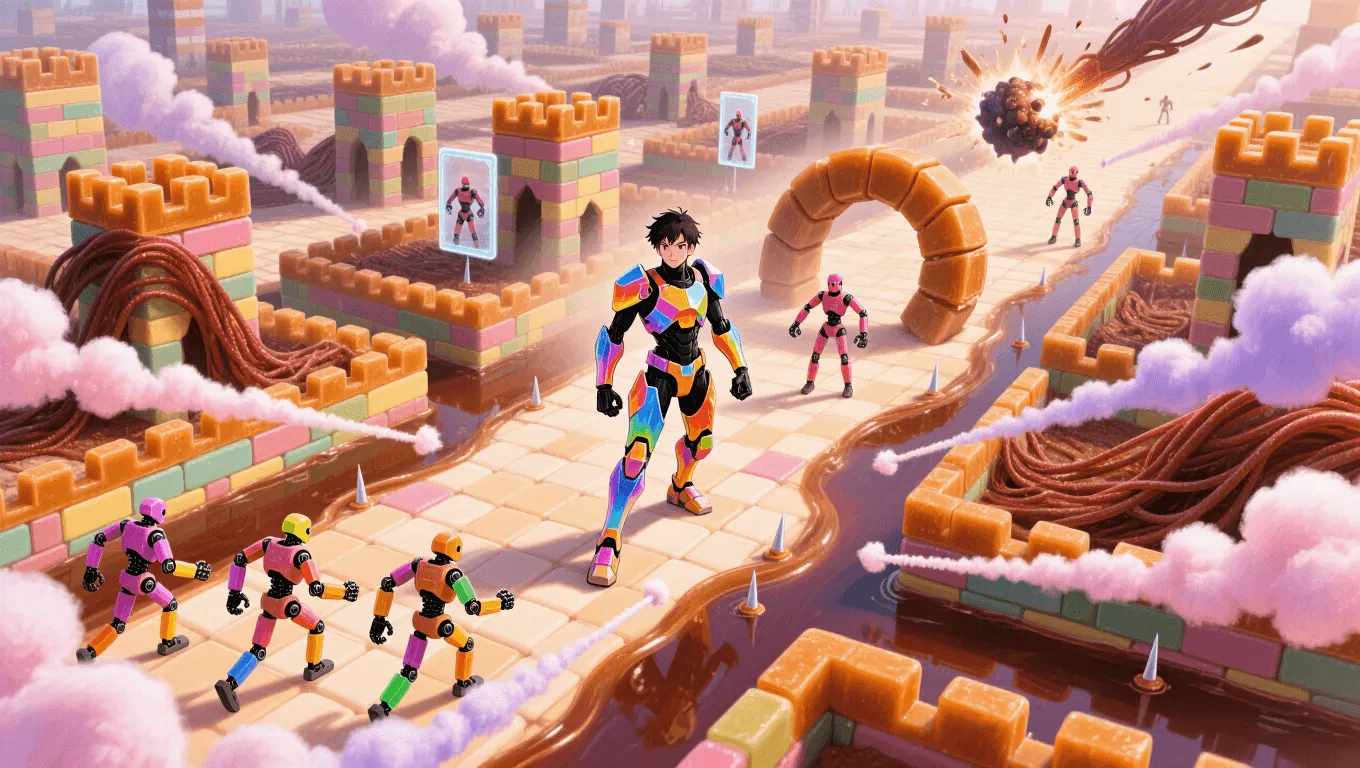
At Level 3, Candy Manipulation becomes battlefield architecture.
-
City-block scale candy terrain: syrup moats, candy wall mazes, multi-layered fortifications.
-
High-fidelity constructs: articulated candy golems, moving shields, rotating barricades, decoy doubles.
-
Advanced material science: temperature-control caramel that hardens instantly, sugar-glass blades with razor edges, ultra-sticky resin candy that resists solvents.
-
Crowd control at scale: cotton-candy obscuration, gummy adhesive waves, mass entanglement fields with licorice filament webs.
-
Precision lethality: needle-thin sugar spikes, shatter-point bombs, and controlled fragmentation to avoid allies.
At this level, the user can dominate space even against faster opponents—because the “floor” itself becomes a weapon.
Limitations of using the Candy Manipulation
Despite its versatility, Candy Manipulation has real constraints that prevent it from being unstoppable:
-
Heat and melting: Fire, high ambient temperatures, and sustained friction can soften constructs, weaken edges, and dissolve trap integrity.
-
Moisture and dissolution: Rain, flooding, and water-based attacks can erode candy structures, reduce stickiness, or wash away granular sugar.
-
Ants-and-animals problem: In some worlds, candy attracts wildlife, pests, or even monsters—creating unintended chaos.
-
Structural brittleness: Sugar glass hits hard but can shatter; gummies absorb impacts but may lack cutting power. The user must pick the right candy “mode.”
-
Resource/energy drain: Large constructs or constant reshaping can exhaust the user quickly, especially at higher levels.
-
Hygiene and contamination: Dirty environments can ruin edible candy and make sticky terrain hazardous for allies too.
-
Control break risk: If the user loses focus, candy traps can become obstacles that block friendly movement or provide enemy cover.
In short: Candy Manipulation rewards planning and punishes sloppy placement.
Weakness against what other superpowers
Candy Manipulation tends to struggle against powers that directly counter its material properties or bypass terrain control:
-
Fire Manipulation / Heat Aura: Melts, caramelizes, or vaporizes candy constructs and ruins adhesive traps.
-
Water Manipulation / Flooding: Dissolves sugar-based structures, reduces traction control, and washes away terrain setups.
-
Acid Generation / Corrosion powers: Break down candy quickly, especially porous gummies and foams.
-
Cold Manipulation (extreme): Can make candy too brittle, causing barriers to fracture under stress (useful to enemies if they control the freezing).
-
Telekinesis / Forcefields: Can shove candy obstacles aside, suspend enemies above sticky terrain, or negate projectile pressure.
-
Phase Intangibility / Teleportation: Ignores traps entirely, making “zone control” less valuable.
-
Wind Manipulation: Can blow away cotton-candy obscuration and scatter powdered sugar tactics.
Against these matchups, the candy user usually needs hybrid tactics—precision strikes, layered materials, and misdirection instead of relying on one big syrup moat.
Synergistic Power Combos
Candy Manipulation becomes terrifying when paired with powers that solve its weaknesses or amplify its best traits:
-
Ice Generation: Flash-freezes candy into durable “sweet steel,” improves structure strength, and makes syrup traps harder to escape.
-
Adhesive Manipulation: Doubles down on immobilization—stacking glue-like effects with caramel for near-total movement denial.
-
Smoke or Fog Generation: Combines with cotton-candy clouds to create layered visibility disruption and panic zones.
-
Metal Manipulation: Adds internal reinforcement—candy exterior for trapping + metal skeleton for strength.
-
Electricity Manipulation: Turns syrup pools into conductive hazards (in settings where sugar liquids can carry current), creating stun zones.
-
Illusion Casting: Makes candy decoys, false floors, and fake exits far more convincing.
-
Regenerative Healing / Support magic: Lets the user fight longer while maintaining large-scale candy terrain.
The best pairings either reinforce candy’s durability (ice, metal) or enhance control and deception (fog, illusions).
Known Users
Because Candy Manipulation is a broad “power concept,” it appears across multiple media as either literal candy control or candy-themed villainy.
-
Charlotte Perospero (One Piece) – Uses a candy-creation and shaping ability to form weapons, bindings, and large constructs.
-
Sweet Tooth (Batman-related media) – A candy-themed villain associated with candy-focused crimes and gimmicks (often cited in Batman fandom references).
In tabletop campaigns and superhero settings, “known users” also frequently include original characters: candy sorcerers, sugar alchemists, confectioner knights, and prankster controllers who weaponize treats with deadly efficiency.