
Clay Mimicry
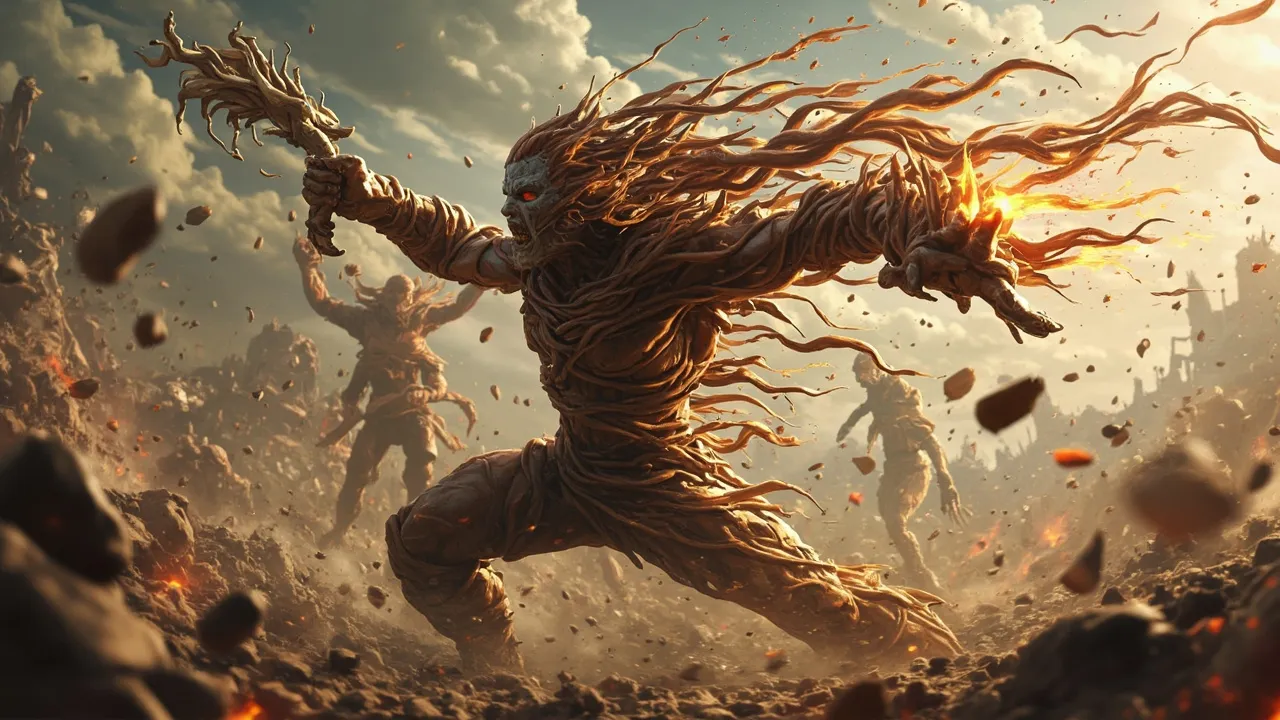
Clay Mimicry Video Demo 🎬
Table of Contents
What Is Clay Mimicry
Clay Mimicry is a transformation-based superpower that lets its user become malleable, living clay. Instead of a fixed human physiology, the body behaves like sculptor’s material: it can be stretched, compressed, reshaped, segmented, or reinforced on command. In practical terms, Clay Mimicry blends shapeshifting with durability control, allowing the user to flow like wet mud one moment and harden like fired ceramic the next.
Because the body is functionally re-sculptable, Clay Mimicry is often described with related keywords such as clay transformation, malleable body, living clay form, earthen shapeshifting, mud body, and ceramic hardening. It also sits close to earth mimicry and morphology powers, but with a distinct focus on pliability, self-sculpting, and rapid reformation rather than broader “control all earth” effects.
For readers exploring different abilities and their variants, the broader catalog on the superpower wiki list provides a helpful map of related powers. If a quick prompt is needed for story ideas or RPG builds, the random superpower generator can spark interesting pairings.
Core abilities of Clay Mimicry
Clay Mimicry typically expresses as a kit of interlocking abilities. Different settings may emphasize some aspects over others, but the “core” usually includes the following.
Clay physiology and malleability
The user’s body becomes a cohesive clay medium. They can soften, liquefy into mud-like consistency, or maintain a workable firmness that holds shape. This enables extreme flexibility, contortion, and deformation without conventional injury.
Self-sculpting shapeshift
Clay Mimicry allows rapid reshaping of facial features, limbs, torso volume, and surface texture. Many users can create functional morphologies such as elongated arms, widened hands, extra grasping tendrils, or a streamlined profile for squeezing through gaps. In more advanced cases, the user can form convincing disguises (clay disguise, mimic appearance), though perfect replication may require additional powers like advanced mimicry or detailed sensory knowledge.
Hardening and ceramic armor
A defining advantage is controlled hardening. By compressing and stabilizing the clay matrix, the user can create armor plating, reinforced “bone-like” supports, or weapon-grade edges. Some interpretations frame the hardest state as ceramic-like—tough but potentially brittle under specific stresses (sharp impacts, vibration, thermal shock).
Regeneration and reconstitution
Clay bodies are often resistant to bleeding, puncture trauma, and blunt damage. Lost mass can be reattached, reabsorbed, or reformed, supporting a regenerative clay factor. If the setting allows external clay absorption, the user may replenish mass by merging with nearby earth, wet clay, or mud.
Weapon and tool formation
Clay Mimicry enables clay weapon creation: clubs, hammers, spikes, shields, restraints, wedges, ladders, anchors, and even lockpicks. This “living equipment” style is especially effective in close quarters.
Density and weight modulation (limited)
Some versions allow the user to compact clay to become heavier and more immovable, or aerate it to become lighter and more buoyant. This is usually modest compared to true density control powers, but it still changes grappling outcomes and impact force.
Application / Tactical Advantages in Combat
Clay Mimicry excels when fights are messy, constrained, or require adaptation. It rewards tactical creativity more than raw damage numbers.
Close-quarters dominance
A clay body can absorb punches, wrap around limbs, and convert contact into control. The user can “flow” into clinches, create instant binds, and force opponents into awkward angles. Forming a braced, hardened shoulder or forearm on impact can turn defense into counter-strikes.
Shapeshift feints and reach manipulation
Changing arm length mid-swing, widening a hand into a paddle, or splitting a forearm into multiple gripping prongs can break an opponent’s timing. Clay Mimicry is excellent at changing the geometry of a fight in real time.
Restraints, containment, and terrain use
Clay walls, ankle snares, adhesive patches, and quick “mud pits” can control space. In team settings, Clay Mimicry can act like a mobile barricade, sealing doorways, forming cover, or creating temporary ramps for allies.
Infiltration and evasion
A softened clay form can slip through vents, drain grates, cracked windows, or narrow pipe routes. The same malleability also enables escape from cuffs and many forms of physical restraint—unless the captor uses specialized containment.
Non-lethal options
Because it naturally supports grappling, binding, and disarming, Clay Mimicry is well-suited for non-lethal takedowns. A user can immobilize targets with clay wraps or blunt them with padded, widened strikes rather than lethal blades.
Environmental resilience
Mud and clay tolerate impacts that would break bones. Even when hardened, the user can redistribute stress by reshaping. This makes them difficult to disable with conventional weapons—though not invulnerable.
Level: Level 1 🏙️, Level 2 🌇, Level 3 🌃
Level 1 🏙️
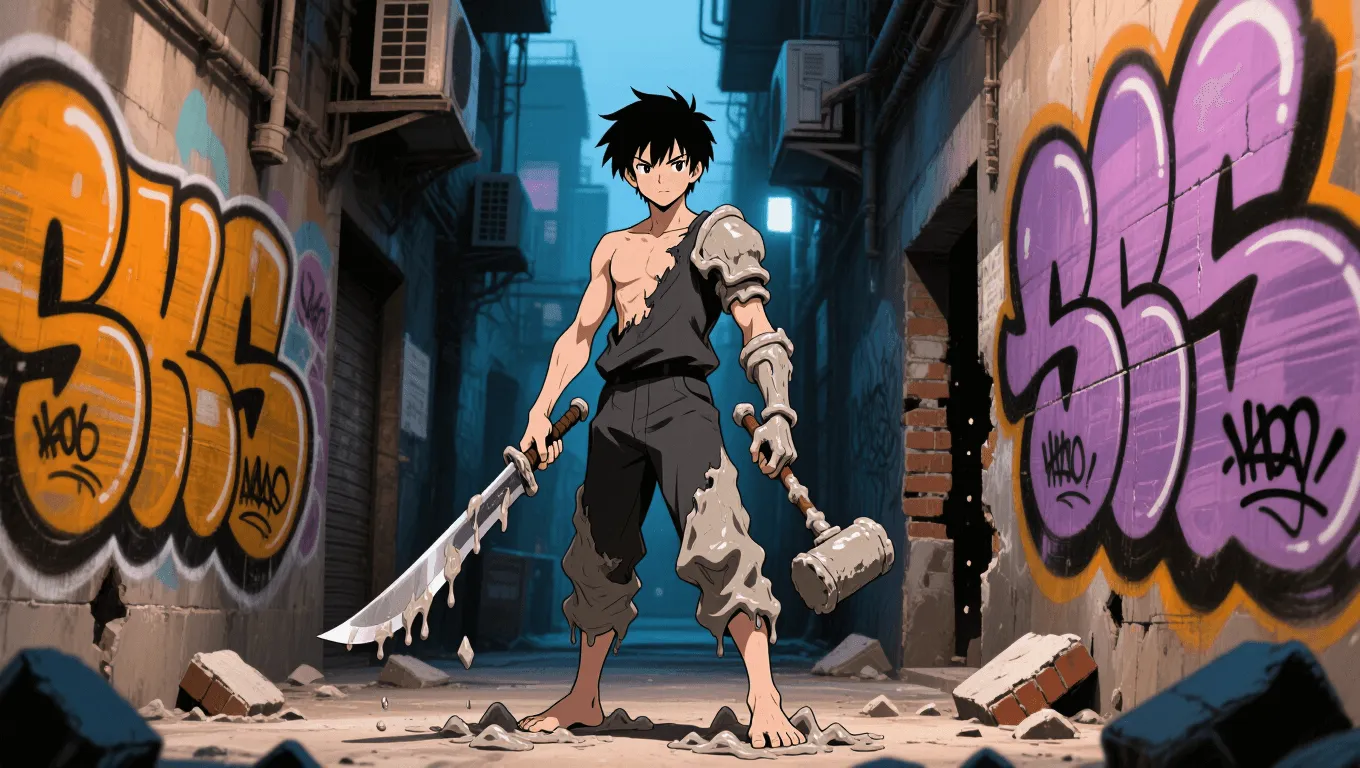
At this stage, Clay Mimicry is mostly personal-scale and reactive.
-
Partial transformation (hands, arms, skin layers) into malleable clay
-
Basic reshaping: stretch, compress, thicken, simple blunt weapon forms
-
Short-duration hardening (temporary armor plates or fists)
-
Limited self-repair: closing holes, reattaching small pieces
-
Weak infiltration: squeezing through small gaps is possible, but slow and tiring
-
Disguises are rough and may fail under close inspection
Level 2 🌇
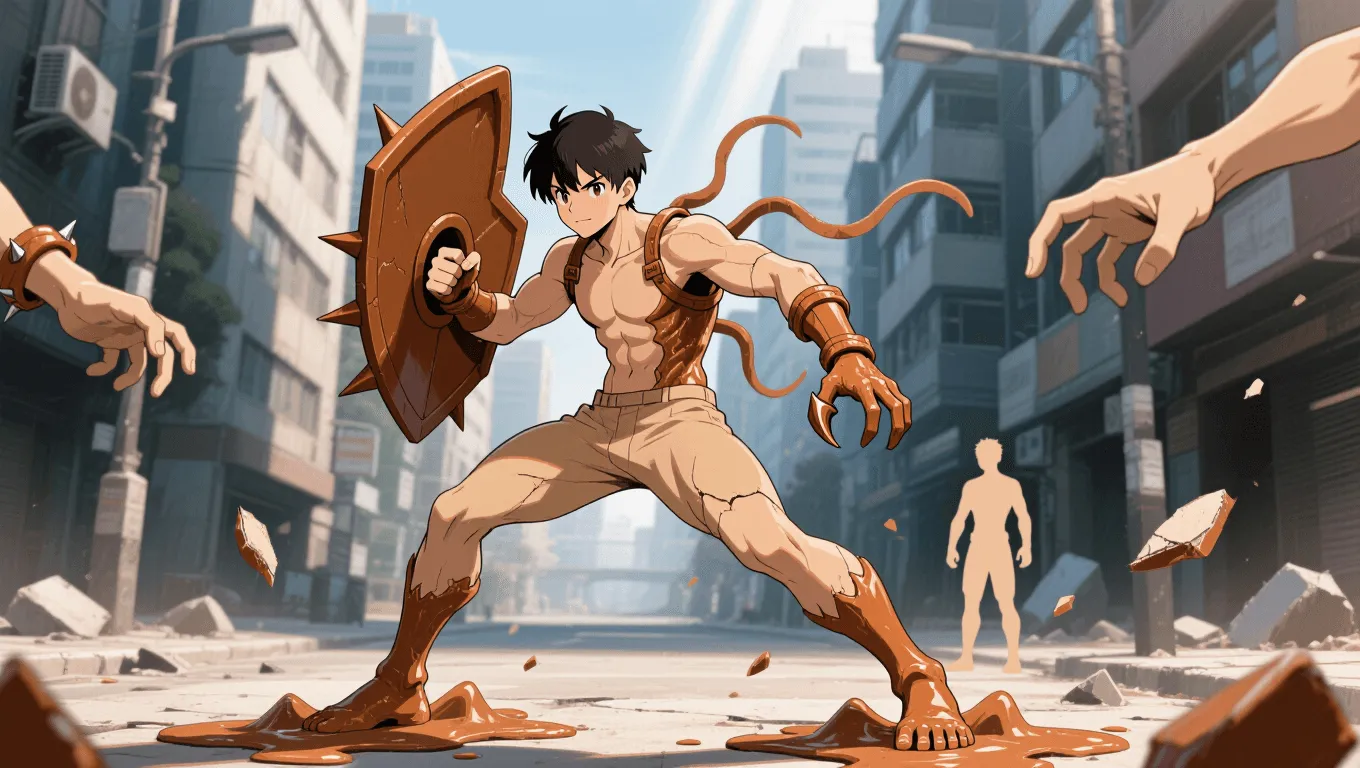
Here, the power becomes a flexible combat toolkit with reliable defense and control.
-
Full-body clay transformation with stable cohesion
-
Fast reshaping into complex tools (shields, hooks, clamps, spikes, restraints)
-
Strong hardening into ceramic-like armor with meaningful bullet/impact resistance (setting-dependent)
-
Improved regeneration: rapid reformation after blunt trauma, reattaching larger segments
-
Better mobility: flowing slides, partial liquefaction for dodges, and quick re-solidification
-
Credible impersonation at a distance: face and body silhouettes can be matched more convincingly
Level 3 🌃
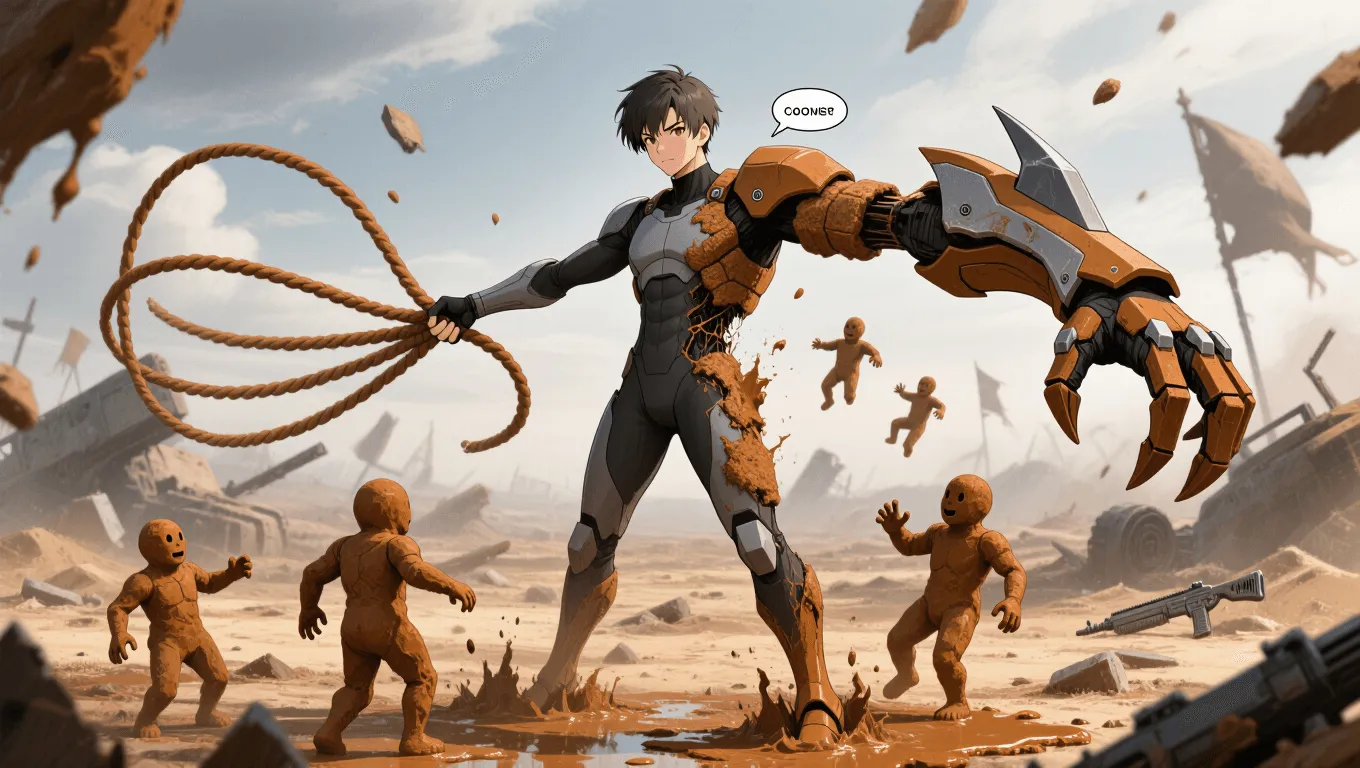
At the highest tier, Clay Mimicry becomes a battlefield-shaping power with advanced survivability.
-
High-speed morphology: near-instant limb redesign, multi-point grappling, adaptive armor geometry
-
Mass manipulation: splitting off blobs as decoys, remote limbs, or adhesive traps (if the setting permits)
-
Advanced hardening: layered armor that alternates soft shock-absorption with hardened strike surfaces
-
Major regeneration: recovery from severe fragmentation if enough mass remains
-
Environmental integration: absorbing nearby clay/mud to rebuild and increase size (where allowed)
-
Expert disguises: texture, fine detail, and voice approximation become possible when paired with sensory skill (or a complementary power)
Limitations of using the Clay Mimicry
Clay Mimicry is strong, but it comes with practical constraints that smart opponents can exploit.
Moisture dependence and consistency management
If the clay becomes too dry, it can crack and lose elasticity. If it becomes too saturated, it may slump, lose structural strength, or become easier to disperse. Skilled users constantly manage “workability,” shifting firmness like a craftsman controlling a mixture.
Mass and volume constraints
Unless the setting explicitly allows absorption of external material, most users cannot create mass from nothing. Stretching thinner increases surface area but reduces durability. Forming giant limbs or a large body often means becoming hollow, porous, or fragile in places.
Heat and thermal shock risk
Hardening into ceramic-like states can introduce brittleness. Sudden temperature changes may cause cracking. Extreme heat can bake sections too rigid, while rapid cooling can stress hardened layers.
Containment vulnerability
Clay Mimicry can escape many restraints, but specialized containment is a problem: airtight chambers, vacuum systems, high-pressure water jets, adhesive foams designed for amorphous entities, or magnetic/telekinetic suspension (depending on the universe’s rules).
Cognition and fine control load
Maintaining a complicated form—especially multiple tools at once—can be mentally demanding. Under stress, users may revert to simpler, safer shapes.
Weakness against what other superpowers
Clay Mimicry’s biggest threats are powers that disrupt cohesion, exploit brittleness, or forcibly move the body’s mass.
Water Manipulation and Pressure Jets
High-volume water can erode, disperse, and wash away clay mass, especially if the user is in a softened state. Pressurized streams can carve channels through hardened sections and separate chunks before they can rejoin.
Fire Manipulation and Extreme Heat
Heat can desiccate clay, bake it into overly rigid ceramic, or create uneven hardening that fractures under impact. Sustained fire can turn flexible defense into brittle armor that shatters.
Ice Manipulation and Cryokinesis
Freezing reduces malleability and can make clay-like material crack when struck. Cold also slows reshaping speed in many interpretations, preventing quick recovery after being fractured.
Vibration, Sonic Attacks, and Resonance Powers
Hardened clay forms can be especially vulnerable to vibration. Resonant frequencies may cause micro-fractures to spread quickly, breaking armor plating or weapon limbs.
Telekinesis and Force-Dispersal Abilities
Powers that can yank, scatter, or suspend pieces of the user’s body can defeat the “reform and regenerate” advantage by preventing reattachment. This is particularly dangerous if the user relies on a single core mass to maintain consciousness.
Acid, Corrosion, and Chemical Breakdown
Some settings treat the clay body as chemically reactive. Corrosive powers may dissolve cohesion or prevent hardening, forcing the user into a weak, slumping state.
Synergistic Power Combos
Clay Mimicry becomes terrifying when paired with powers that solve its main constraints: moisture control, structural reinforcement, sensory detail, or ranged pressure.
Clay Mimicry + Water Manipulation
This combo gives perfect consistency control: the user can keep clay workable, create slick mobility, and resist drying or erosion by actively shaping water flow. It also enables “instant mud” terrain traps.
Clay Mimicry + Earth Manipulation
Earth control provides raw material and battlefield shaping. The user can replenish mass, form ramparts, and draw clay from the ground to rebuild after fragmentation.
Clay Mimicry + Heat Manipulation
Used carefully, controlled heat can “fire” specific sections into durable ceramic armor or sharpened edges while keeping joints soft. Precision matters; uncontrolled heat increases brittleness.
Clay Mimicry + Regeneration or Biomass Conversion
A dedicated healing factor reduces the danger of mass loss. If the setting allows clay-to-flesh conversion or self-sustaining regeneration, the user can fight longer and recover from dispersal tactics.
Clay Mimicry + Enhanced Senses or Eidetic Memory
Impersonation and infiltration improve dramatically when the user can memorize faces, micro-expressions, and body language. Fine sculpting is easier when the user can perceive fine detail.
Clay Mimicry + Psychic Shield
If the setting ties consciousness tightly to a core body mass, mental defense can matter. A psychic shield can prevent telepathic disruption while the user reshapes or splits off decoys.
Known Users
Clay Mimicry is a common archetype in comics and animation—often portrayed as a shapeshifting “living clay” physiology with regeneration and disguise potential. One of the best-known examples is Clayface from DC Comics, a name used by multiple characters who are frequently depicted with clay-like bodies and shapeshifting powers.
- Clayface (DC Comics) – A prominent clay-bodied shapeshifter archetype associated with Batman’s rogues gallery. https://en.wikipedia.org/wiki/Clayface