
Concussion Beams: Kinetic Blast Superpower Guide
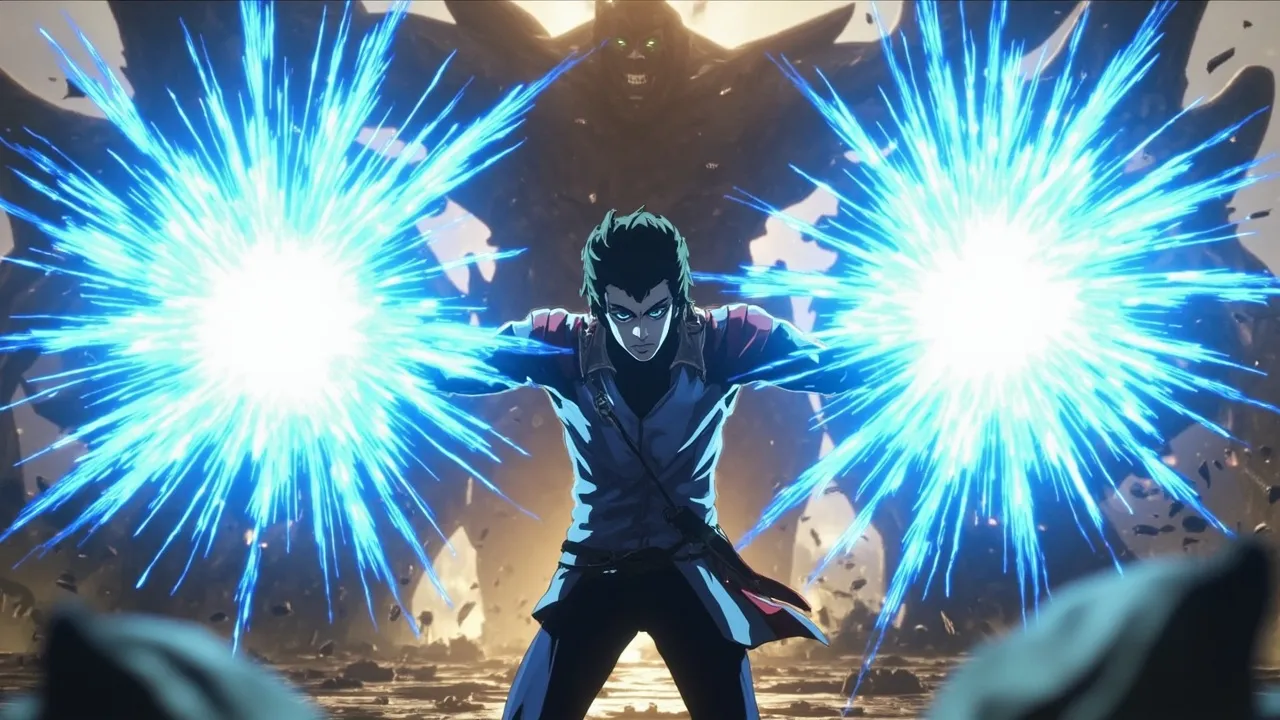
Concussion Beams Video Demo 🎬
Table of Contents
What Is Concussion Beams
Concussion Beams is a superpower that lets a character project focused kinetic force as beams or blasts. Instead of burning like heat vision, the impact behaves like a high-speed battering ram made of energy: it shoves targets backward, cracks armor, rattles organs, and can pulverize brittle materials on contact. In many power lists, this ability is categorized as concussive beam emission or concussive blasts because the defining feature is physical impact and knockback rather than elemental damage.
In roleplay and combat storytelling, Concussion Beams sits in a sweet spot between ranged striking and battlefield control. It can be used as a non-lethal crowd-control tool (launching enemies away) or escalated into a structure-breaking siege option (shattering doors, pillars, and cover).
Readers who want to compare Concussion Beams with similar abilities can explore the broader catalog on the superpower wiki, or roll something unexpected on the random superpower generator.
Core abilities of Concussion Beams
Concussion Beams looks simple—shoot force, make things fly—but it becomes far more versatile as the user gains precision and output control.
Kinetic beam projection
The user emits a concentrated stream or bolt of concussive energy that hits like a heavyweight punch delivered at range. Depending on the setting, the “beam” may be a pressure wave, a gravitic shove, a psionic force line, or a compressed air shock lance—the visuals differ, but the result is consistent: blunt-force trauma and displacement.
Knockback shaping and vector control
A skilled user doesn’t just blast harder—they blast smarter. By adjusting angle, width, and timing, they can:
-
Pop targets upward to break footing
-
Slam enemies sideways into walls
-
Bounce threats away from allies
-
Force a target to cross a trap line or hazard zone
This is one of the biggest SEO-adjacent keywords for the power: knockback control.
Shatter force and breaching
Concussion Beams excels at breaking objects that fail under sudden impact—glass, stone, ceramics, older concrete, bone, and poorly reinforced metal. The beam can spiderweb a surface, then a follow-up shot finishes the job. Many concussive blast descriptions explicitly include shattering and even explosive impacts at higher outputs.
Concussive shockwaves
Instead of a tight beam, the user can “bloom” the force into a short-range cone or ring-like shockwave. This is useful for clearing space, disrupting a rush, or swatting down projectiles that rely on stable flight paths.
Micro-bursts for control, not destruction
Concussion Beams doesn’t have to be a cannon. Light taps can stagger, interrupt spells, spoil aim, or create a split-second opening—especially strong against enemies who need steady focus, balance, or a charging wind-up.
Sustained pressure vs. pulse shots
Some users favor repeated pulses (rapid concussion bolts). Others hold a sustained beam that continually pushes a target back, pinning them against a surface or preventing forward movement. In power taxonomies, concussive effects are often described as scalable from a small push to major damage depending on output.
Application / Tactical Advantages in Combat
Concussion Beams is a tactical workhorse power because it can solve many battlefield problems without demanding a perfect kill-shot.
Crowd control and space-making
A single well-placed kinetic blast can reset a chaotic fight: knock enemies off ledges, break formations, separate bodyguards from a VIP, or simply force a melee swarm to restart their approach. This makes Concussion Beams especially valuable in tight corridors, rooftops, stairwells, and doorways.
Anti-charge and interruption
Charging brutes and berserkers thrive on momentum. Concussion Beams steals that momentum. Even if a target is tough, disrupting their forward motion prevents grapples, tackles, and close-range finishers.
Cover denial and battlefield reshaping
If opponents rely on cover, Concussion Beams can crack it, collapse it, or turn it into shrapnel hazards. Used carefully, it also opens new paths by breaching walls, breaking locks, or tearing down barricades.
Non-lethal takedowns
Because the default effect is impact and displacement, Concussion Beams can be tuned for incapacitation rather than lethal force: knocking targets unconscious, pinning them with pressure, or blasting weapons out of hands. This “stun and shove” profile is a big reason the power shows up frequently in hero fiction.
Long-range control with short windows
Even when the beam is dodgeable, it forces reactions. Opponents must sidestep, brace, or block—each response creates openings for allies. In team fights, Concussion Beams becomes a rhythm tool: blast to force movement, then let teammates punish the reposition.
Level: Level 1 🏙️, Level 2 🌇, Level 3 🌃
Level 1 🏙️
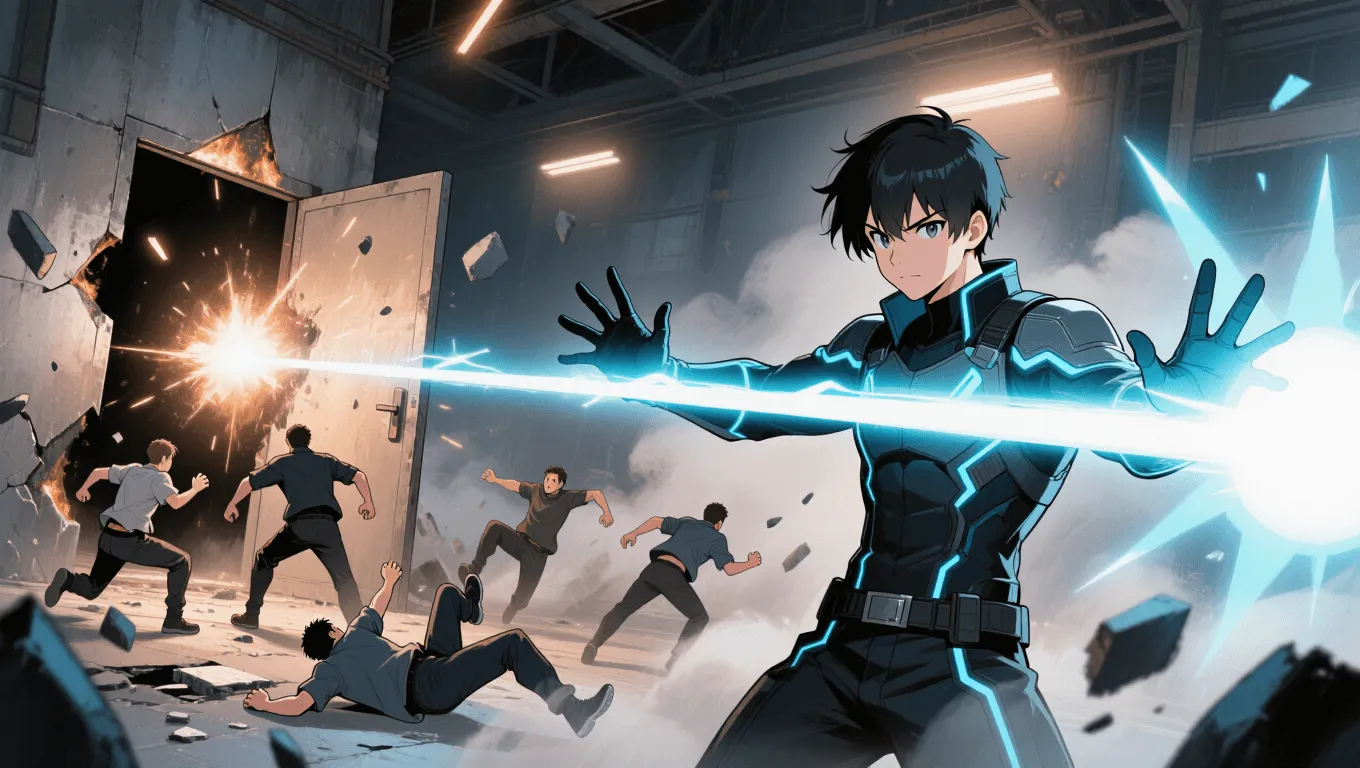
At Level 1, Concussion Beams is straightforward force projection:
-
Short-to-mid range blasts with obvious wind-up
-
Reliable knockback on unarmored targets
-
Minor cracking of weak materials (wood, thin glass, cheap masonry)
-
Limited accuracy under stress, especially against fast movers
Tactically, Level 1 is best used for spacing, interrupting, and basic breaching rather than precision shots.
Level 2 🌇
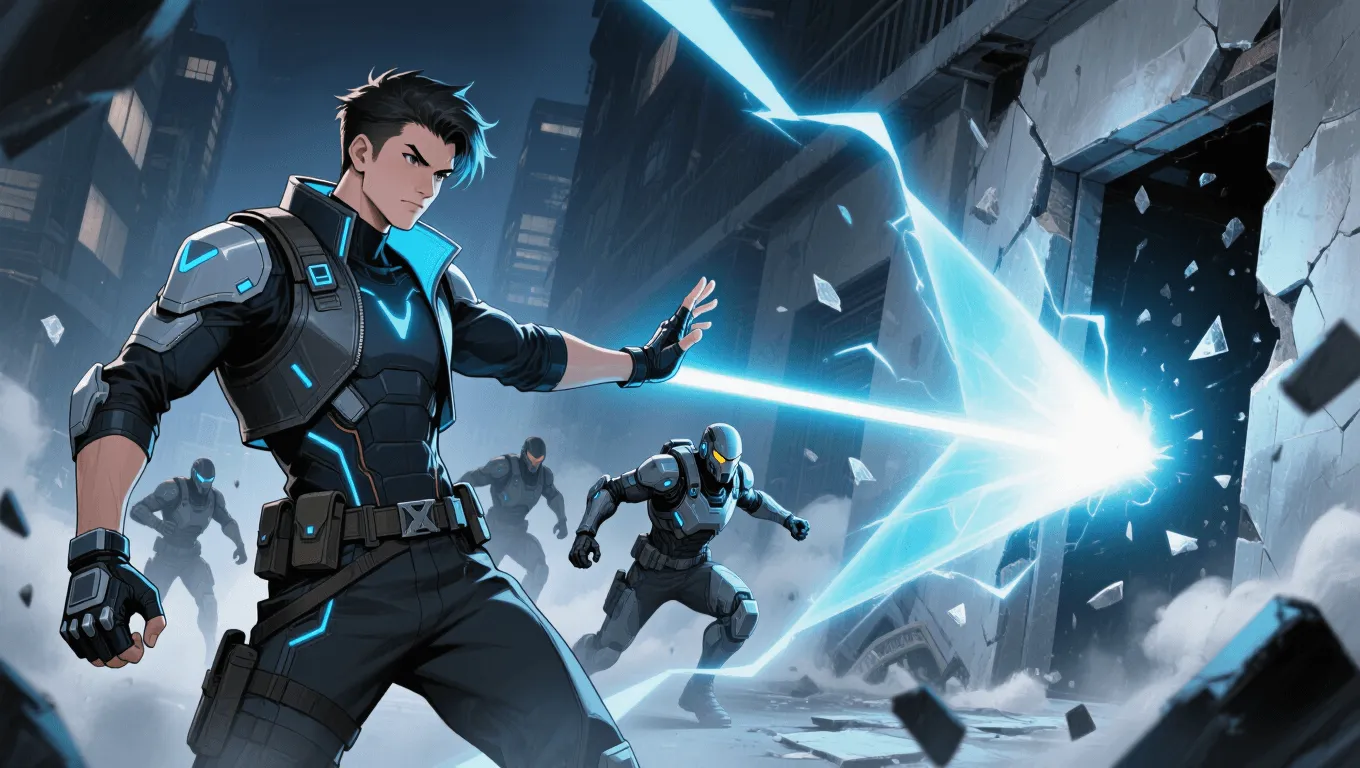
At Level 2, the user gains control and variety:
-
Adjustable beam width (pinpoint shot vs. cone shove)
-
Better recoil management and faster follow-up shots
-
Selective knockback (push without launching, launch without shattering)
-
Consistent breaching of reinforced doors and thicker barriers
This is where Concussion Beams becomes a true combat toolkit—crowd control, anti-charge, and cover denial all become dependable.
Level 3 🌃
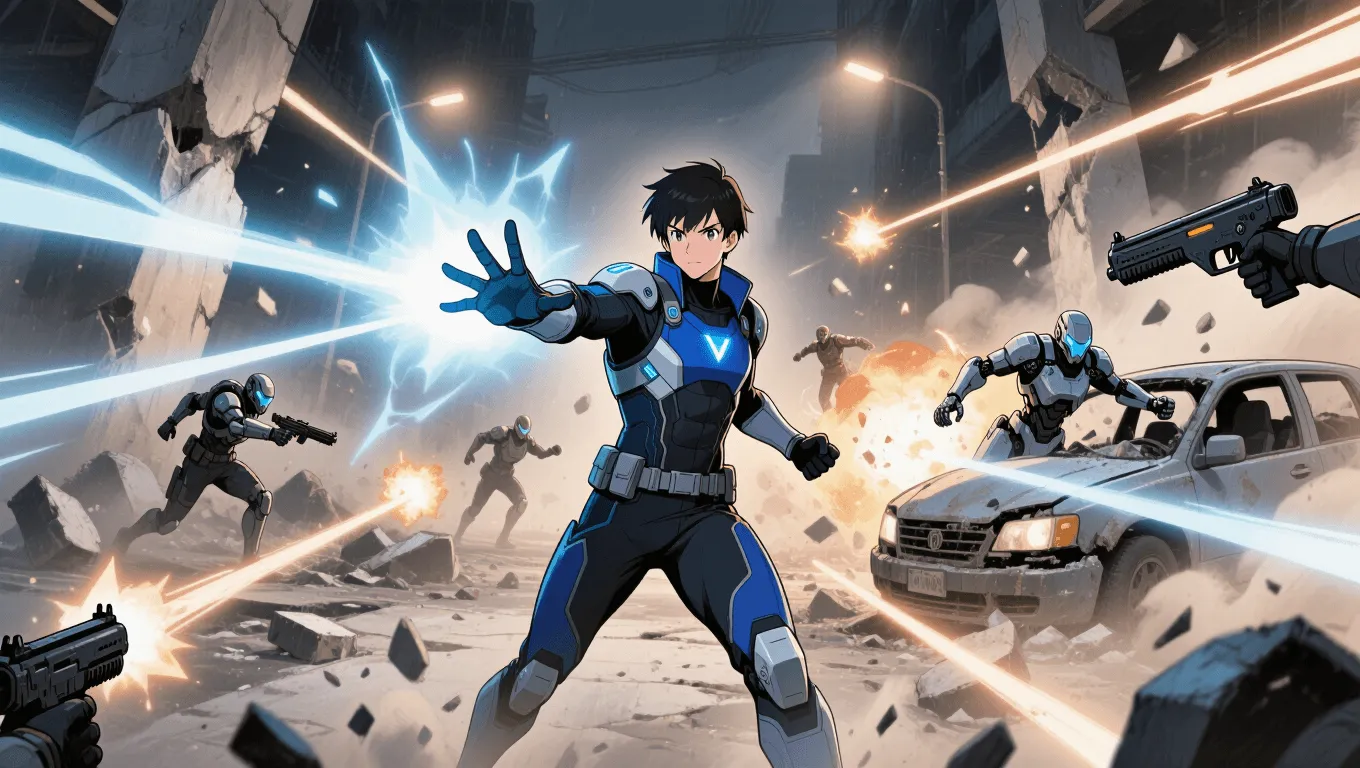
At Level 3, the power reaches battlefield-dominating precision:
-
Near-instant micro-bursts for constant interruption
-
Sustained pressure beams that can pin targets
-
Structural damage capable of collapsing weak supports
-
Fine vector control to “steer” enemies into hazards or away from allies
At this level, the user can fight like a siege engine or like a surgeon, choosing between devastation and restraint moment by moment.
Limitations of using the Concussion Beams
Even a “simple” force beam has real constraints that keep it balanced.
Recoil, bracing, and self-injury
Kinetic force has to come from somewhere. Many versions of the power impose recoil: firing while airborne may spin the user, firing too fast may strain joints, and overcharging can cause muscle tears or bone stress. The stronger the beam, the more the user must brace.
Collateral damage risk
Concussion Beams breaks things by impact—so missed shots can demolish walls, rupture pipes, or collapse floors. In urban settings, it’s easy to cause unintended harm. Many concussive blast write-ups explicitly warn that it can be indiscriminate when used without refinement.
Line-of-sight and telegraphing
If the beam travels in a straight line, it’s subject to dodges, cover, and misdirection. Bright charging effects, stance changes, or audio cues can also give opponents time to move.
Energy drain and cooldown
Repeated high-output shots can exhaust the user quickly. Sustained beams often cost even more, forcing the user to choose between burst damage and long-term control.
Diminishing returns against massive or anchored targets
Knockback is less effective against targets with extreme mass, flight stabilization, magnetic anchoring, or terrain-grip powers. The beam might still hurt, but it won’t easily move them.
Precision requires calm
Threading a beam between allies, hitting a weapon hand, or cracking a support without collapsing a building demands focus. Stress, fear, or sensory overload can make the power dangerous to use in crowded spaces.
Weakness against what other superpowers
Concussion Beams is strong, but it has clear counters—especially from powers that ignore force, redirect it, or punish predictable lines.
Intangibility and phasing
If a target can become intangible, the concussive impact may pass through with reduced effect or none at all. Phasing users can “ghost” through the hit window and punish the shooter during recovery.
Energy absorption and redirection
Characters who absorb energy or convert incoming attacks can turn concussive beams into fuel. Redirectors can bounce the kinetic force back, making careless shots a self-own.
Force fields and barriers
A solid barrier cancels the main advantage of knockback by preventing displacement. Even if the beam cracks the shield, the user may waste stamina grinding through defenses.
Gravity control and anchoring
Gravity manipulation, density anchoring, or terrain-lock abilities reduce knockback dramatically. If the opponent can pin themselves to the ground or increase effective mass, Concussion Beams loses its signature “launch” effect.
Teleportation and speed
Highly mobile targets can dodge line-based shots and punish the user’s aiming rhythm. A teleporter can appear behind the blaster during charge-up; a speedster can close distance before the shooter resets.
Regeneration and pain immunity
Because concussive damage is blunt trauma, regeneration and shock resistance can soften its threat. The user may still control space, but securing a decisive stop becomes harder.
Synergistic Power Combos
Concussion Beams becomes terrifying when paired with powers that enhance accuracy, restrict movement, or amplify impact.
Concussion Beams + Enhanced Accuracy
Precision turns a “shove beam” into a surgical tool: weapon disarms, limb shots, cracking specific weak points in armor, or collapsing only the enemy’s cover. It also reduces collateral damage in crowded scenes.
Concussion Beams + 360-Degree Vision
All-angle awareness prevents flanks and enables instant reaction blasts to threats behind or above. It’s especially strong in close-quarters where attackers try to swarm from multiple angles.
Concussion Beams + Light Manipulation
Light control can blind or mark targets, making it easier to land knockback shots exactly when opponents misstep. It also supports stealthy takedowns: flash to stun, then a low-output blast to drop the target safely.
Concussion Beams + Psychic Navigation
Tracking powers help keep pressure on elusive enemies. If the user knows where the target is moving, they can fire predictive bursts to herd them into dead zones.
Concussion Beams + Density Control
A density controller ally can increase an enemy’s brittleness or reduce their stability, making knockback more decisive. Alternatively, the beam user can be made heavier to manage recoil and fire stronger shots without being thrown backward.
Concussion Beams + Merging Vision
A stealth-oriented teammate can lure targets into chokepoints; then the beam user delivers controlled shockwaves to keep enemies trapped and disoriented.
Known Users
Concussive, kinetic-style beams appear across comics and pop culture, sometimes under different names (optic blasts, force bolts, shock rays). Energy projection categories commonly describe beams as concussive, explosive, or wave-like depending on the character.
-
Cyclops (Marvel Comics): Often described as firing optic blasts that function as a concussion beam, emphasizing impact force over heat.
-
Concussion (Marvel Comics): A character explicitly noted for generating concussive blasts from his hands.
-
Havok (Marvel Comics): Commonly depicted firing ring-shaped energy beams that are frequently discussed as concussive in effect in trope and fan references.