
Deflection Superpower: Redirecting Attacks With Precision

Deflection Video Demo 🎬
Table of Contents
The Deflection superpower allows a character to redirect or bounce back incoming attacks, turning enemy aggression against itself. Rather than simply blocking damage, Deflection bends the path of force, projectiles, energy, or even certain magical effects so they miss, disperse, or slam back into their original source. In many settings, it is treated as a specialized form of attack redirection or damage reflection, ideal for defensive tacticians and counter-strikers.
What Is Deflection?
Deflection is a defensive ability focused on changing the trajectory or ownership of an incoming attack. Instead of absorbing blows with durability or stopping them with a shield, the user manipulates vectors: nudging a punch off course, curving a bullet, bouncing a beam away, or reflected back at the attacker.
Depending on the universe or game system, Deflection might be:
-
A passive field that automatically misguides attacks.
-
A conscious technique that requires timing and precision.
-
A hybrid where minor attacks are deflected automatically, while stronger ones demand focus.
This superpower fits cleanly into any catalog of abilities alongside energy manipulation, force field control, and combat-based reflex powers. In a broader context like a superpower list, Deflection usually sits near skills such as projectile deflection, kinetic redirection, and counterattack-focused abilities.
Core Abilities of Deflection
While each setting can define it differently, most versions of Deflection share a set of core capabilities.
Attack Redirection
At its heart, Deflection is about taking an incoming threat and sending it somewhere else. This might include:
-
Punches and kicks pushed off-line.
-
Bullets and arrows curved into the ground or side walls.
-
Energy beams bent away or reflected at an angle.
-
Thrown weapons or debris turned back toward the thrower.
In many systems, the more precise or powerful the Deflection, the more control the user has over where the attack ends up.
Damage Reflection
Advanced versions of this superpower allow not just harmless redirection but full-on reflection. Instead of merely avoiding harm, the user sends the attack back at its origin with equal or sometimes amplified force. This creates a powerful deterrent: every attack risks hurting the attacker instead.
Damage reflection works especially well with:
-
Energy blasts.
-
Magical bolts.
-
Kinetic projectiles.
-
Shockwaves or force attacks.
Area and Group Deflection
Some interpretations expand Deflection from single-target responses to area-level control. The user can manipulate entire volleys of projectiles or overlapping attacks, pushing them aside like a wave or redirecting them into harmless patterns.
This is often described as:
-
A deflection aura that surrounds the user and nearby allies.
-
A temporary dome of warped trajectories that shields a zone.
-
Controlled currents of force that steer attacks off target.
Energy and Elemental Redirection
In more fantastical settings, Deflection can affect fireballs, lightning bolts, ice shards, or magical constructs. Rather than resisting the element directly, the user manipulates its direction or the pathway it travels along, sending it spinning away or curving around allies.
This extends the power from simple melee parrying into full-spectrum threat management, blending into energy redirection and elemental countering.
Application / Tactical Advantages in Combat
Deflection is one of the most tactically rich defensive powers in combat-focused stories or games.
Turning Defense Into Offense
By reflecting attacks, the user effectively weaponizes enemy firepower. Aggressive opponents become self-defeating, draining their energy or damaging themselves when they overcommit.
This enables strategies such as:
-
Letting a heavy hitter strike first, then reflecting the blow back.
-
Luring ranged attackers into rapid-fire assaults that rebound on them.
-
Forcing enemies to hesitate, giving allies openings.
Protecting Allies
A skilled Deflection user can stand at the front line as a living shield. By curving projectiles and beams away from allies or into harmless directions, they become a tactical anchor for a team.
Typical uses include:
-
Guarding healers or support characters at the back.
-
Creating safe corridors through enemy fire.
-
Covering retreats by bending attacks away from fleeing allies.
Controlling the Battlefield
Because Deflection manipulates trajectories, it can subtly reshape how both sides move and fight. Enemies must adjust their positions, angles, and timing to avoid their own attacks being used against them.
This adds layers of control such as:
-
Forcing snipers and artillery to reposition.
-
Disrupting coordinated barrages.
-
Channeling attacks into traps or already fortified positions.
Psychological Impact
Knowing that every attack might backfire is intimidating. Opponents become cautious, second-guessing their moves. This hesitation can be just as valuable as the raw defensive power, slowing enemy momentum and morale.
Level: Level 1 🏙️, Level 2 🌇, Level 3 🌃
Many systems scale Deflection across power tiers. Below is a common three-stage progression for the Deflection superpower.
Level 1 🏙️: Instinctive Parry
At Level 1, Deflection manifests as enhanced parrying and minor redirection.
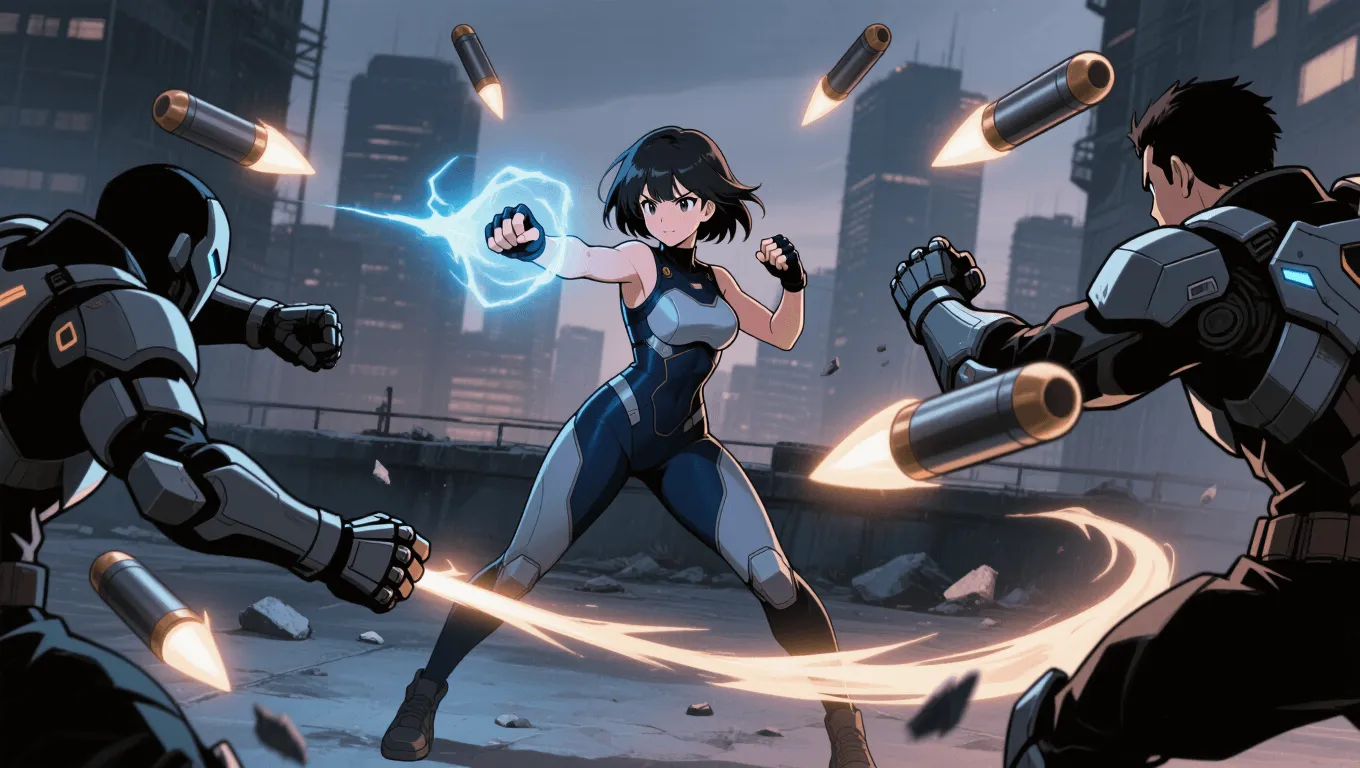
Key traits:
-
Works best on slow or clearly telegraphed attacks.
-
Requires physical motion (raising an arm, moving a weapon, shifting stance).
-
Primarily used to make attacks miss, not to send them back at the attacker.
-
Effective against a single foe or a small number of projectiles.
At this level, Deflection feels like a blend of superhuman reflexes and directional luck. The user is still vulnerable to surprise angles, overwhelming fire, or complex multi-directional assaults.
Level 2 🌇: Controlled Redirection
At Level 2, Deflection becomes more precise, reliable, and versatile.
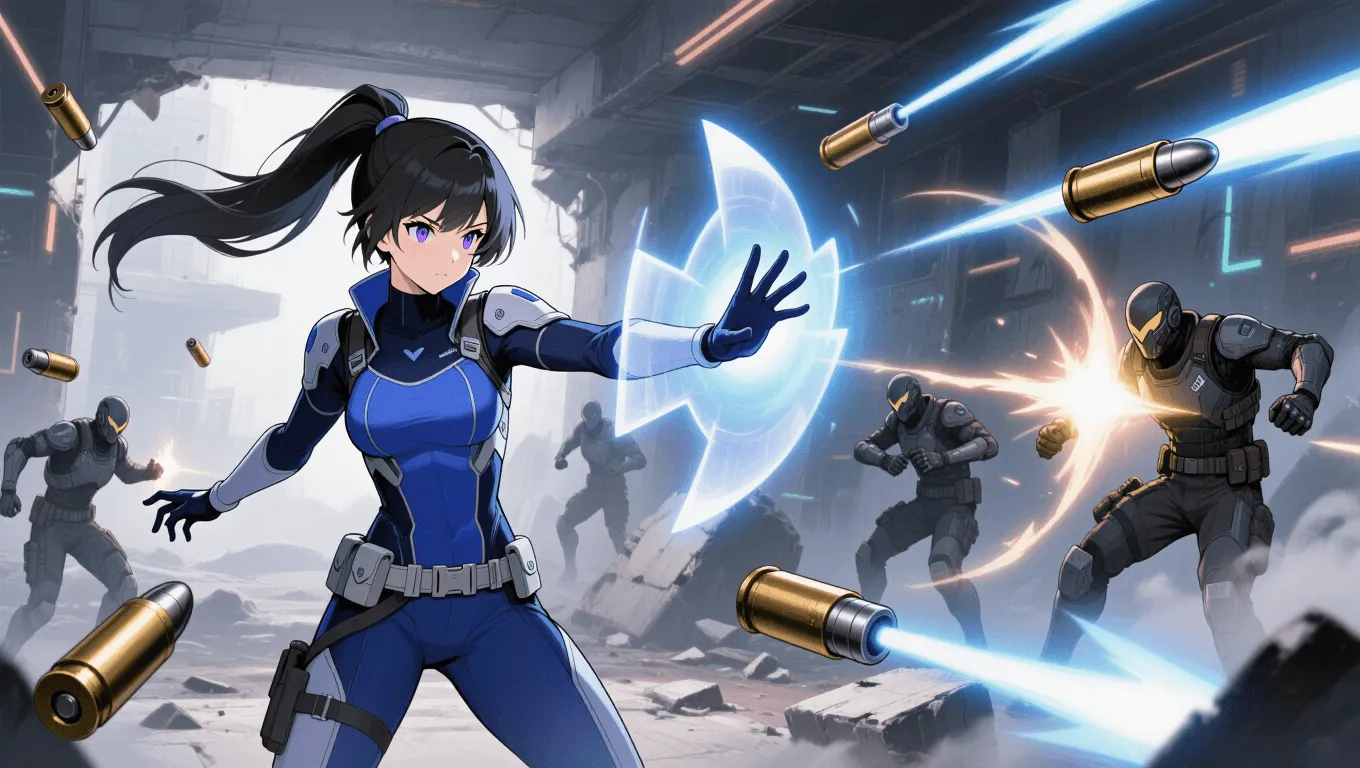
Key traits:
-
The user can consciously choose where to redirect attacks.
-
Can affect faster projectiles, including bullets and energy bolts.
-
Partial damage reflection is possible, especially with focused effort.
-
Works on small groups of attacks (bursts, short volleys, basic spell barrages).
The character at this stage can shape the flow of combat, guiding enemy attacks into cover, into each other, or into pre-planned kill zones. Deflection starts to resemble a mid-tier force manipulation power.
Level 3 🌃: Total Counter-Reflection
At Level 3, Deflection reaches its dramatic apex.
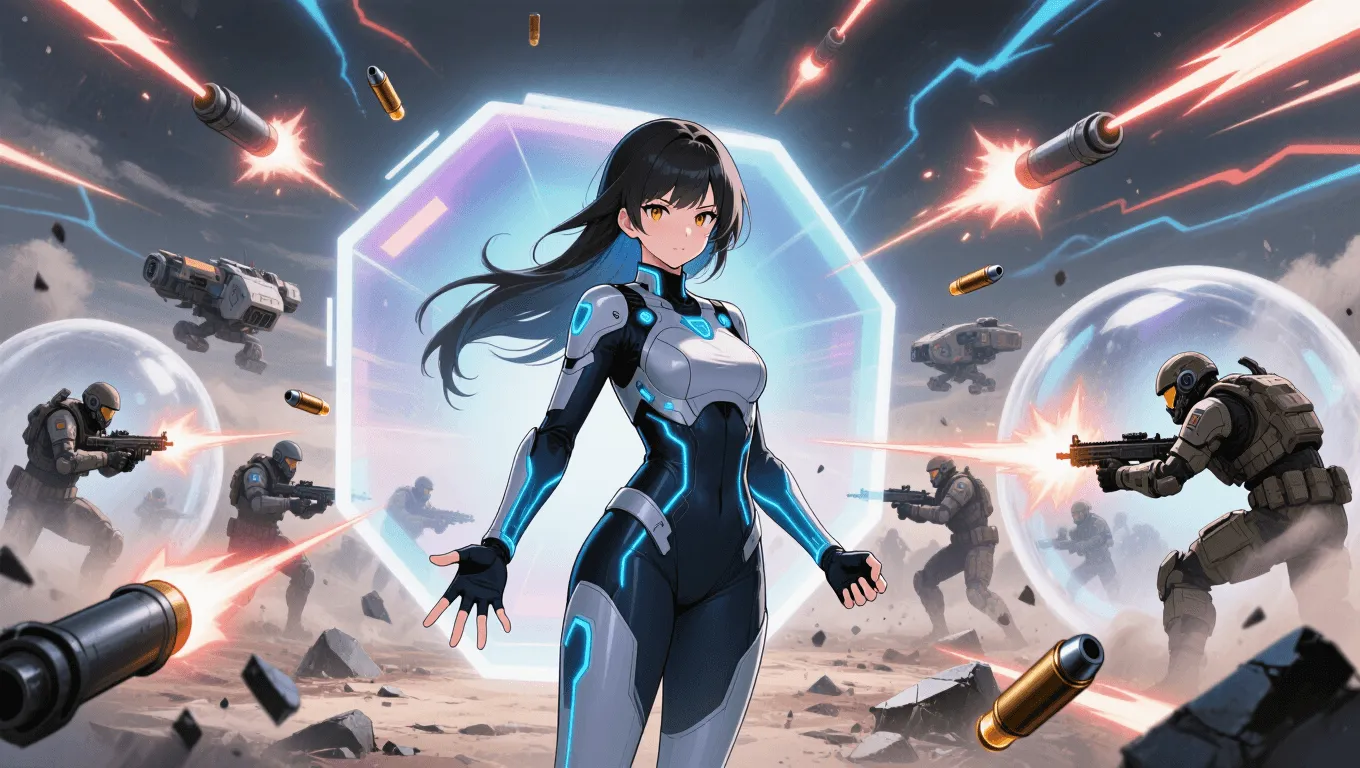
Key traits:
-
Near-instant response to a wide range of physical and energy attacks.
-
High-level damage reflection capable of sending full force back at the origin.
-
Area-level deflection, creating temporary zones where attacks cannot reliably land.
-
Potential to curve or fold attacks into new trajectories, striking multiple targets.
At this level, a Deflection user can stand against armies, artillery, or powerful energy wielders, acting as both a shield and a mirrored weapon. However, even this tier does not make the user invincible, especially against specific counters.
Limitations of Using the Deflection Superpower
Deflection is potent but not all-purpose. Common limitations help keep the power balanced and interesting.
-
Line of sight or awareness: The user usually must sense or see an attack to deflect it. Invisible, surprise, or psionic attacks can slip through.
-
Reaction time: Extremely fast or instantaneous effects may outpace the user’s capacity to respond, especially at lower levels.
-
Energy or stamina cost: Maintaining a deflection aura or reflecting high-powered attacks can be exhausting and may drain physical or mental reserves.
-
Complexity of attacks: Multi-directional barrages, ricochet shots, or cleverly timed combinations can overwhelm the user’s ability to control every trajectory.
-
Non-directional effects: Many variants of Deflection struggle with area-of-effect phenomena like gas clouds, earthquakes, or reality-warping auras that do not rely on a clear “incoming” vector.
These constraints encourage players, writers, and designers to use Deflection as part of a broader toolkit rather than a single solution to every problem.
Weakness Against What Other Superpowers
Some superpowers naturally bypass or counter Deflection. Common examples include:
-
Intangibility and phasing: If an attacker becomes intangible, there may be nothing physical for Deflection to redirect.
-
Telepathy and mind control: Mental assaults often ignore physical paths and go straight to the target’s mind, sidestepping trajectory-based defenses.
-
Time manipulation: Slowing, freezing, or skipping time can negate the user’s ability to react or interfere with when deflection occurs.
-
Probability manipulation: Powers that alter chance may make Deflection misfire, causing redirected attacks to land in unintended places.
-
Environmental and terrain control: Earthquakes, gravity shifts, transmuted ground, and spreading hazards (fire, acid pools, poison fog) do not always present a simple “incoming attack” to bend away.
-
Illusion and misdirection: If the user cannot accurately identify real threats versus false ones, they may waste their deflection on decoys, leaving genuine attacks unopposed.
These matchups help define where Deflection sits among other abilities on a balanced superpower-list-style index, emphasizing its strengths while clarifying its blind spots.
Synergistic Power Combos
Deflection shines brightest when combined with complementary abilities. Some of the most effective synergies include:
Precognition or Enhanced Perception
Seeing attacks before they happen or perceiving them in slow motion dramatically boosts Deflection. The user can plan redirect angles more precisely and handle complex multi-directional assaults.
Super Speed or Enhanced Agility
Speed amplifies the user’s ability to physically reposition and angle attacks. Combined with Deflection, super speed makes the character a living pinball table for enemy fire, sending projectiles and energy shots ricocheting across the battlefield.
Force Fields and Barriers
Deflection paired with force fields allows for layered defense:
-
Barriers absorb or weaken attacks.
-
Deflection shapes the remaining force, sending it aside or back.
This reduces the strain on the user and enables creative battlefield control, like funneling attacks into empty space.
Energy Absorption
A user who can both absorb and deflect energy gains flexible options:
-
Absorb a portion of energy to fuel other powers.
-
Redirect the remainder back at opponents.
-
Choose to harmlessly disperse attacks when reflection would be too dangerous.
Power Amplification or Enhancement
When a power amplifier boosts Deflection, reflected attacks may strike harder than the original blows. This creates a high-risk scenario for enemies who attempt big finishing moves, only to have them turned into self-destructive blasts.
Strategic and Leadership Abilities
Even non-supernatural traits like tactical genius pair well with Deflection. A strategist can plan formations, bait attacks, and use redirection to shape entire battles, turning a defensive specialty into a team-wide advantage.
For players or creators exploring builds through a random superpower generator, landing on Deflection opens a wealth of combo possibilities with perception, speed, force, and energy-based abilities.
Known Users
Deflection-style abilities appear frequently across comics, anime, and games, often as iconic defensive techniques rather than explicitly labeled “Deflection.”
Some well-known examples include:
-
Marvel’s Captain America, who famously deflects bullets, energy blasts, and physical strikes using his shield’s unique properties and his own combat skill.
-
A variety of martial arts-based heroes who use weapon parries, blade redirection, or staff spinning to turn enemy attacks aside and send them back.
-
Energy-manipulating characters who curve beams, lasers, or elemental strikes away from allies to protect a team.
Original characters in tabletop RPGs, webcomics, and video games often adopt a Deflection superpower to embody the “perfect defender” or “mirror counter” archetype—fighters who win not by overwhelming force, but by flawless control over incoming attacks and the flow of battle.