
Diamond Mimicry
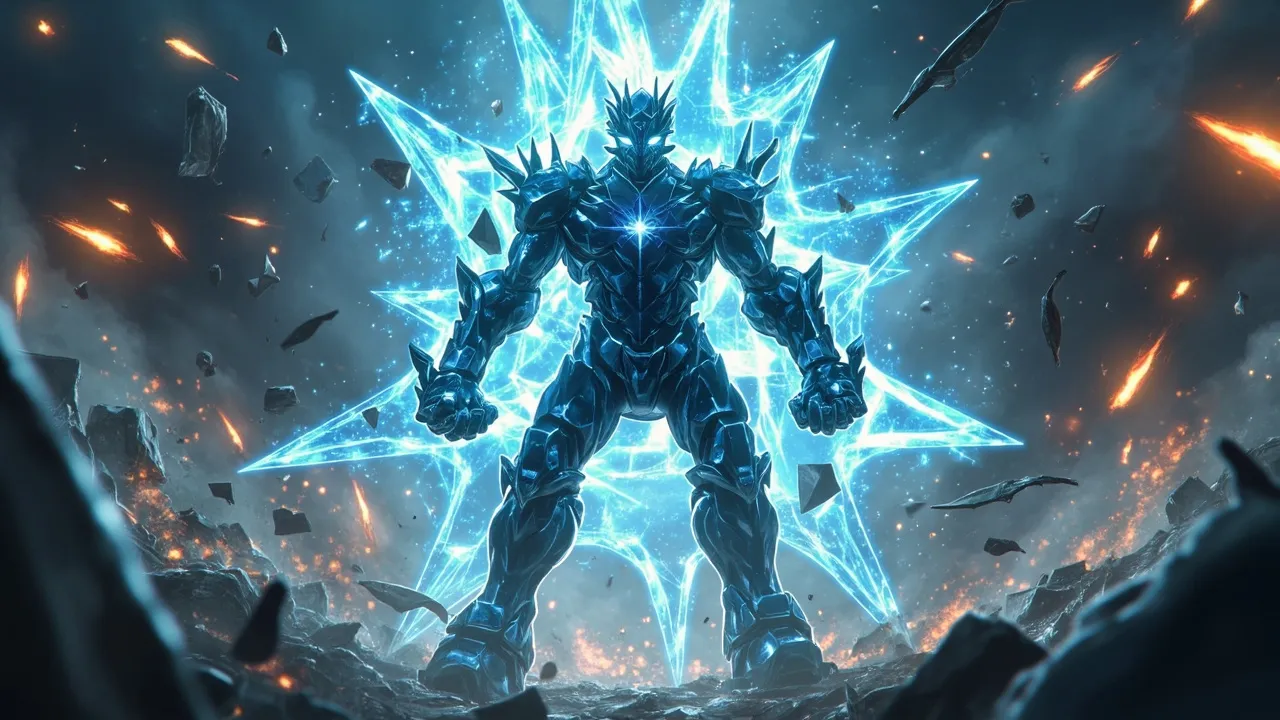
Diamond Mimicry Video Demo 🎬
Table of Contents
Diamond Mimicry is the ability to transform the body into diamond, gaining extreme hardness and turning skin, muscles, and even bones into a gemstone-like shell. In practice, Diamond Mimicry functions like living diamond armor: it shrugs off cuts, resists bullets, and turns the user into a close-quarters wrecking ball who can punch through barriers and hold a frontline almost alone. While the fantasy is “invincible diamond skin,” the reality is more nuanced—diamond is famously hard, but it can still crack along certain stress lines, and the form can introduce new problems like weight, reduced flexibility, and vulnerability to vibration-based damage.
For readers who want to compare Diamond Mimicry with other defensive transformations, it fits neatly alongside crystal body, gemstone transformation, and carbon-based armor concepts. It’s also a great entry in any roster of powers found on the Superpower Wiki, and it pairs well with builds discovered through the random superpower generator.
What Is Diamond Mimicry
At its core, Diamond Mimicry is a full-body (or partial-body) metamorphosis that converts organic tissue into a diamond-like state. The user’s surface becomes faceted and ultra-dense, often taking on a glassy shine or crystalline texture. The defining trait is extreme hardness—diamond is the reference point for 10 on the Mohs hardness scale—meaning many common weapons simply can’t scratch it easily.
In fiction and RPG terms, Diamond Mimicry is usually portrayed as:
-
A defensive stance that boosts durability and damage resistance
-
A melee amplifier that turns punches, elbows, and headbutts into weapon-grade impacts
-
A “stand your ground” power that excels at protecting allies, holding choke points, and surviving ambushes
Core abilities of Diamond Mimicry
Diamond Mimicry tends to express as a package of interlocking benefits. Some settings add extras (like reflective light tricks), but the following are the most common “core kit” features.
Diamond-hard durability
The user’s body becomes exceptionally resistant to abrasion, cutting, and piercing. Blades dull, shrapnel glances off, and rough terrain becomes irrelevant. The user can also “armor lock” vulnerable areas (face, neck, ribs) by thickening the diamond layer.
Impact amplification
Hardness plus mass equals brutal kinetic transfer. A diamond-coated fist doesn’t just hit harder—it wastes less energy deforming on impact. That makes strikes feel like being hit by a polished battering ram. This also improves grappling: diamond forearms and shoulders turn clinches into crushing control.
Structural stability and bracing
The diamond form acts like an internal brace. The user can endure recoil, resist being thrown, and hold a line against charging opponents. This is the tactical reason Diamond Mimicry is so effective in frontline roles.
Environmental resistance (selective)
Many interpretations grant strong resistance to corrosives and wear. However, it’s worth remembering that diamond has specific chemical and thermal behaviors—at sufficiently high heat in air, it can burn. Diamond Mimicry may resist flames for a while, but “fireproof” is not guaranteed unless the setting explicitly says so.
Brittleness risk (the hidden core feature)
Diamond is extremely hard, but hardness is not the same as toughness. Toughness is the ability to absorb energy without cracking. Diamond can cleave along crystal planes, which means certain angles and vibration patterns can be dangerous. A skilled opponent aims for fracture, not scratches.
Application / Tactical Advantages in Combat
Diamond Mimicry rewards proactive, positional fighting. It’s strongest when the user dictates range and tempo.
Frontline tanking and ally protection
A diamond-mimic can body-block corridors, shield teammates, and soak opening volleys. In team fights, the user becomes a mobile bulwark: stepping into lines of fire, drawing aggro, and forcing enemies to reposition.
Breaching and terrain control
Doors, walls, and barricades become optional. Diamond Mimicry excels at breach tactics: shoulder-checking cover, creating entry points, and turning “hard targets” into messy rubble. It’s also ideal for improvised shields—bracing in doorframes or kneeling behind raised diamond forearms.
Grapple dominance and restraint play
When striking is risky (hostages, fragile environments), diamond form shines in grapples. The user can pin limbs, apply crushing joint pressure, and restrain without relying on blades. In many systems, Diamond Mimicry doubles as a capture power because it makes the user hard to dislodge.
Anti-weapon tactics
Even if an enemy weapon can’t pierce the body, it can still be used to control space. The diamond-mimic’s answer is to close distance, jam swings, and punish recoil windows. Against knives and swords, the user can accept “hits” that would cripple others and use that commitment to win the clinch.
Psychological pressure
A gleaming, faceted opponent that ignores damage creates panic. Diamond Mimicry often forces opponents into bad decisions—overcommitting, wasting ammo, or switching to suboptimal tools mid-fight.
Level: Level 1 🏙️, Level 2 🌇, Level 3 🌃
Level 1 🏙️: Surface Diamond Skin
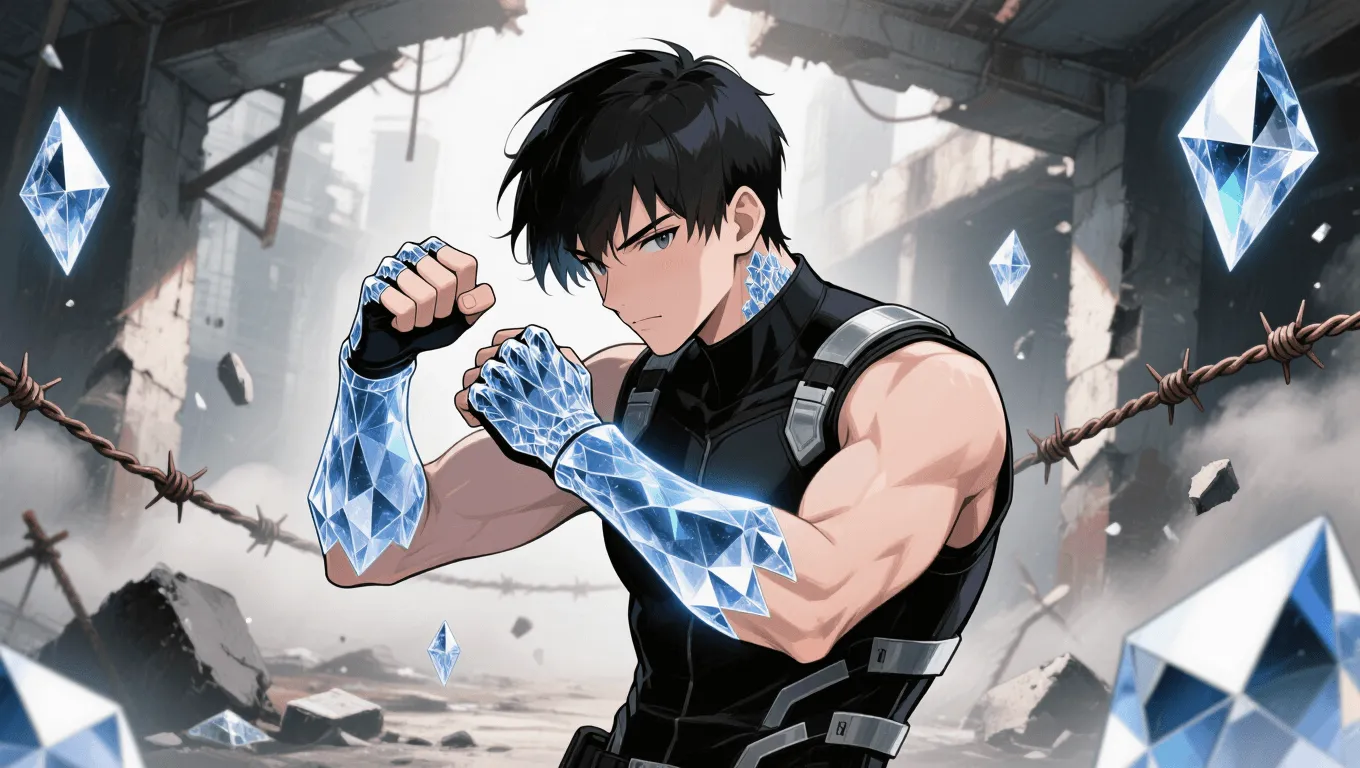
At early mastery, Diamond Mimicry appears as a tough outer layer—diamond skin that resists cuts and reduces blunt damage. The user can:
-
Harden on reflex to block sudden attacks
-
Reinforce hands and forearms for safer striking
-
Withstand environmental hazards like debris, barbed wire, and minor explosions
Trade-off: mobility remains mostly normal, but coverage is inconsistent. The user might still have soft gaps (joints, inner arms, throat) and limited duration.
Level 2 🌇: Full-Body Diamond Form

At mid mastery, the user can convert the entire body into a coherent diamond state and maintain it through prolonged combat. This level typically adds:
-
Major durability jump (bullets and blades become far less threatening)
-
Stronger melee output from increased mass and rigidity
-
Better bracing against knockback, throws, and vehicle impacts
Trade-off: the form may reduce fine dexterity and stealth. The reflective, glassy surface can reveal position, and the added density can make swimming, climbing, or silent movement difficult.
Level 3 🌃: Faceted Combat Architecture
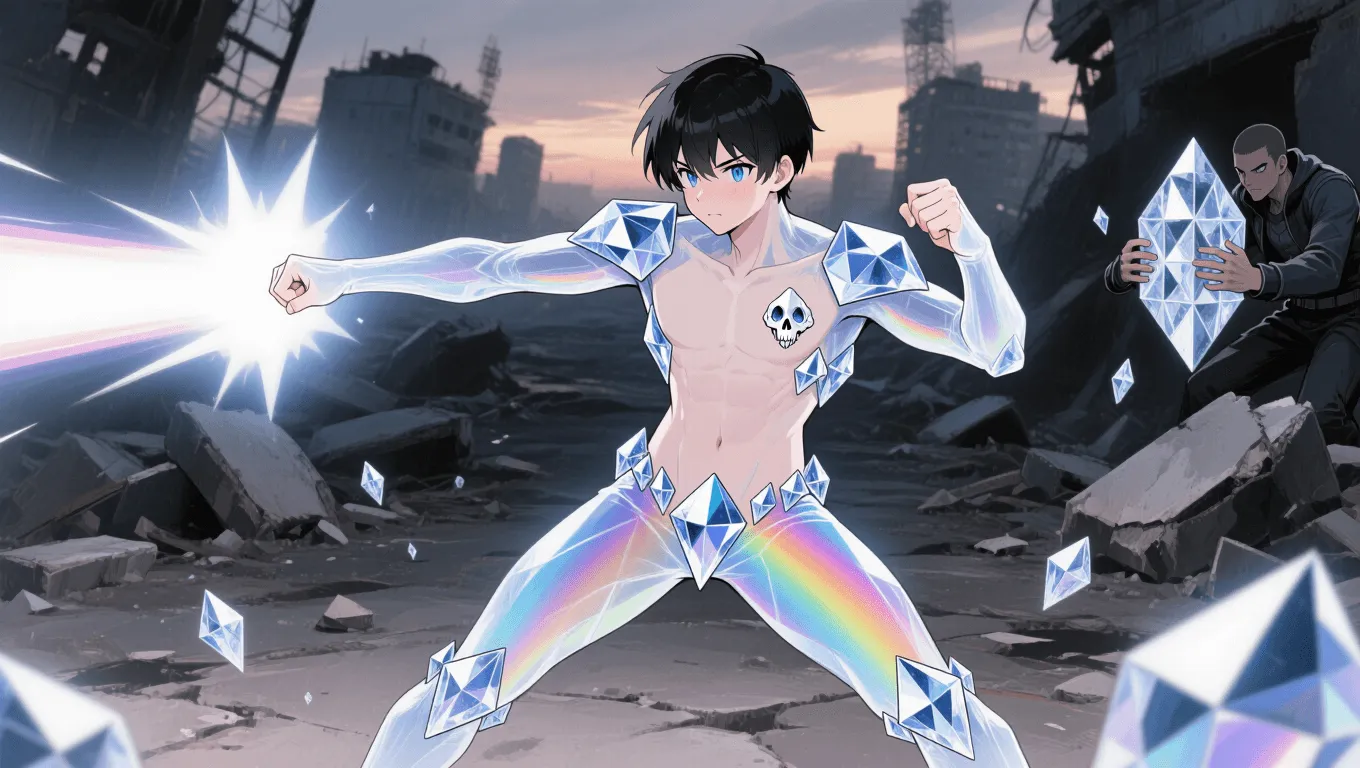
At high mastery, Diamond Mimicry becomes “designed,” not just activated. The user can shape the diamond body to optimize battle performance:
-
Faceting edges along forearms, shoulders, or shins for cutting impacts
-
Selective thickening at critical points (skull, spine, heart, knees)
-
Controlled micro-flex at joints to reduce brittleness and prevent stress fractures
-
Optional prism-like reflection control for countering light-based attacks
Trade-off: higher complexity means higher mental load. Over-shaping can create weak geometry—an enemy may exploit a repeating facet pattern as a fracture map.
Limitations of using the Diamond Mimicry
Diamond Mimicry’s biggest weakness is that it tempts users into thinking “hard equals unstoppable.” Several practical limits keep it balanced.
-
Reduced flexibility and agility: Even with advanced control, a diamond body can be stiffer. Dodging, acrobatics, and delicate movement often suffer.
-
Weight and momentum problems: Added density makes the user hit harder, but also makes them easier to predict and harder to stop once committed.
-
Fracture and cleavage risk: Diamond can split along crystal planes under the wrong kind of stress. Heavy blunt impacts at bad angles—or repeated vibration—can cause cracking rather than denting.
-
Heat and oxidation concerns: Diamond can burn at high temperatures in air. Many settings interpret this as “extreme heat can damage the form,” especially with sustained exposure.
-
Conductive downsides: Depending on the world’s rules, the form may transmit shockwaves efficiently through the body—meaning the user feels less pain but can still be internally disrupted.
-
Social and stealth drawbacks: A sparkling, reflective surface is loud visually. Diamond Mimicry is not subtle unless the user has complementary concealment powers.
Weakness against what other superpowers
Diamond Mimicry is a defensive powerhouse, but some matchups are uniquely bad because they attack the form’s real vulnerabilities instead of trying to scratch it.
-
Sonic Manipulation and vibration attacks: Resonance can propagate cracks, especially if the attacker finds a frequency that stresses the diamond lattice. These powers are less about “breaking hardness” and more about shaking the structure apart.
-
Density Control or Gravity Manipulation: Crushing force and shear can exceed what the diamond form can distribute safely. Extreme gravity fields can also pin the user, neutralizing their biggest advantage: forward pressure.
-
Molecular Manipulation or Disintegration: Powers that bypass physical toughness and rewrite matter can ignore the armor concept entirely.
-
Heat Manipulation and plasma attacks: Sustained extreme heat can threaten the form, especially if the setting treats diamond as vulnerable to oxidation or thermal shock.
-
Psychic attacks and illusions: If Diamond Mimicry is purely physical, it may not protect the mind. Mental control, fear projection, and sensory distortion can turn a tank into a liability.
-
Telekinesis: Direct force application can “throw the tank off the map,” slam them repeatedly, or hold them suspended where mass becomes a disadvantage.
Synergistic Power Combos
Diamond Mimicry becomes terrifying when paired with powers that cover its mobility and fracture weaknesses—or that exploit its strengths in controlled ways.
-
Super Strength: Turns diamond fists into siege weapons. Strength also helps the user move effectively despite added weight and break restraints.
-
Healing Factor: Fixes micro-cracks and stress damage over time, reducing the long-term brittleness problem.
-
Gravity Manipulation or Gravity Negation: Lets the user keep the heavy-hitter benefits without losing mobility. Negation enables “diamond meteor” dives; gravity control enables pin-and-crush grapples.
-
Light Manipulation: Helps manage reflectivity—either by cloaking the shine, bending glare to blind opponents, or using the diamond body as a controlled prism for beam redirection.
-
Enhanced Accuracy: Makes every diamond strike count, especially when targeting weapons, joints, or structural weak points in armor and cover.
-
Psychic Shield: If the diamond form doesn’t protect the mind, a mental barrier completes the tank archetype.
For more pairing ideas, browsing complementary abilities on the Superpower Wiki can help build balanced kits that don’t over-rely on pure durability.
Known Users
Diamond Mimicry shows up across comics and animation as “diamond form,” “organic diamond,” or “crystalline transformation.”
-
Emma Frost (Marvel Comics) can transform her body into an organic diamond form, gaining major durability and physical boosts, with noted constraints in some portrayals.
-
The Stepford Cuckoos (Marvel Comics) have been depicted with a diamond-form capability connected to their shared genetic lineage with Emma Frost.
-
Diamondhead (Ben 10 franchise) is a crystalline alien form known for a diamond-like, highly durable body and crystal-based combat techniques.