
Dust Generation

Dust Generation Video Demo 🎬
Table of Contents
What Is Dust Generation
Dust Generation is the ability to conjure and direct dust clouds that choke the air, irritate lungs, and obscure vision. In practice, it functions like instant battlefield weather: a spreading haze of particulate matter that turns clear sightlines into guesswork and steady breathing into a struggle. While it can look like a simple smokescreen, this power is closer to particulate control, aerosolized debris projection, and environmental denial all rolled into one.
Unlike fog, Dust Generation has a gritty, physical bite. The dust can cling to skin, coat weapons, creep into seams, and hang in the air as a persistent threat. Skilled users shape density and movement to create blinding dust storms, choking curtains, or targeted bursts that force enemies to cough, rub their eyes, and break formation. Readers looking for related abilities and variants can explore the broader catalog on the Superpower Wiki list or roll a surprise ability idea on the random superpower generator.
Core abilities of Dust Generation
Dust Generation tends to show up in several repeatable “core moves,” with plenty of room for creative specialization:
-
Dust cloud conjuring: Produces a cloud of fine particulate matter on demand, ranging from a small puff to a street-filling haze.
-
Vision obscuration: Creates blinding dust that reduces targeting accuracy, interrupts aim, and breaks line-of-sight for ranged attacks.
-
Respiratory assault: Causes coughing, choking, and shortness of breath, especially against unprotected targets, disrupting speech and stamina.
-
Area denial and zoning: Makes specific zones “unsafe” to cross, forcing opponents into predictable routes or cover.
-
Particulate shaping: Forms drifting curtains, rolling waves, spirals, or domes; advanced users can “paint” corridors of clearer air for allies.
-
Adherence and contamination: Dust can cling to surfaces, creating slippery footing, clogging mechanisms, or revealing footprints and motion trails.
-
Sound and presence masking: The chaos of a dust storm can hide movement, soften silhouettes, and make it harder to read body language.
Common secondary keywords and related terms include dust manipulation, particulate emission, blinding haze, choking smog, dust storm creation, and aerosol cloud generation.
Application / Tactical Advantages in Combat
Dust Generation shines when the user treats the environment like a weapon. It rarely wins by raw damage alone; it wins by making the opponent fight blind, tired, and out of position.
-
Opening advantage: A sudden dust burst can interrupt an enemy’s first strike, ruin a spell’s line-of-sight requirement, or spoil a sniper’s aim.
-
Target isolation: A dense cloud splits teams. Allies can’t coordinate if they can’t see each other or breathe comfortably.
-
Counter-pressure: Many fighters rely on rhythm—steady breathing, steady stance, steady focus. Dust breaks rhythm immediately.
-
Escape and reposition: A moving dust curtain is mobile cover, enabling flanks, retreats, or ambushes.
-
Anti-tech nuisance: Dust can clog vents, foul optics, and interfere with mechanical joints, especially if combined with heat, moisture, or static.
Level: Level 1 🏙️
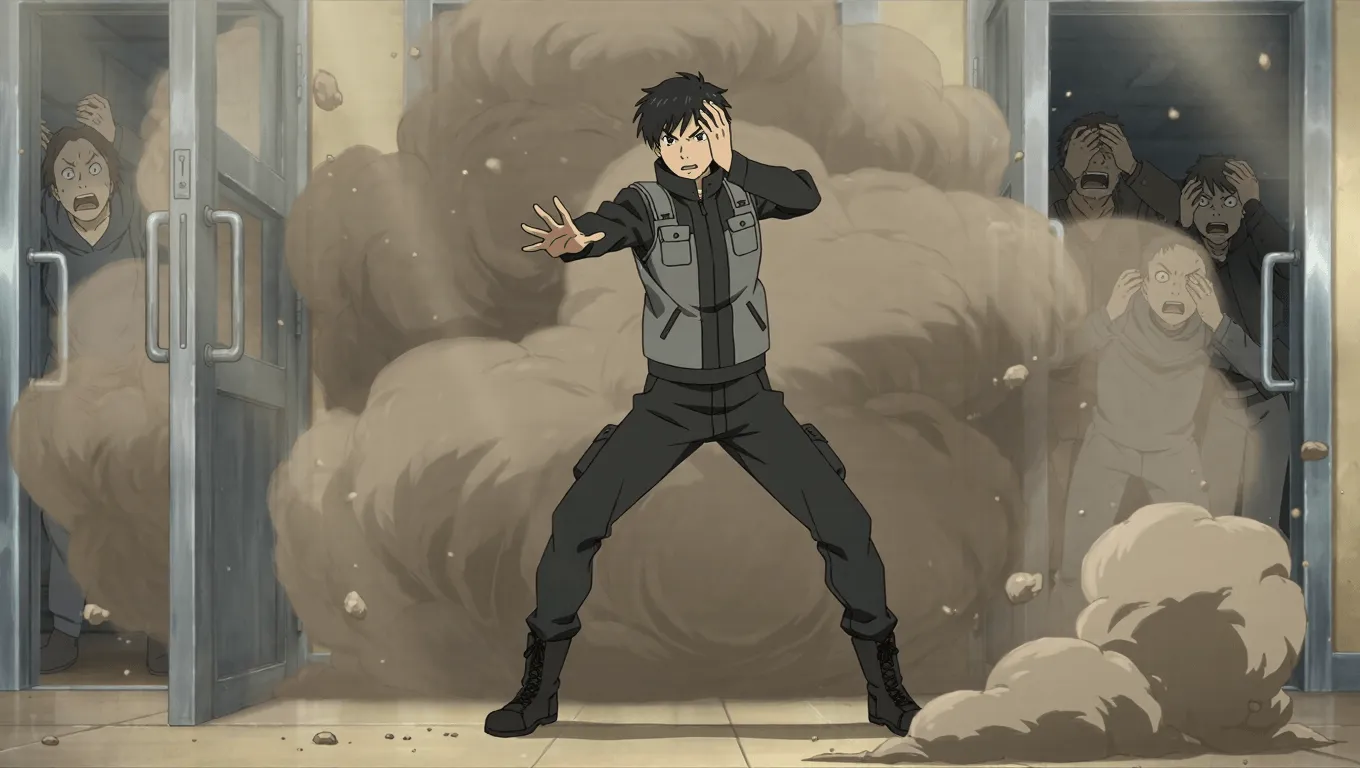
At this stage, Dust Generation is mostly tactical cover and minor disruption.
-
Produces short-lived dust puffs and small clouds (room-sized or smaller).
-
Obscures vision long enough to disengage, swap positions, or force a miss.
-
Causes irritation—watery eyes and coughing—but not prolonged choking unless targets are already vulnerable.
-
Best use: quick blinds, doorway denial, and creating confusion in close quarters.
Level: Level 2 🌇
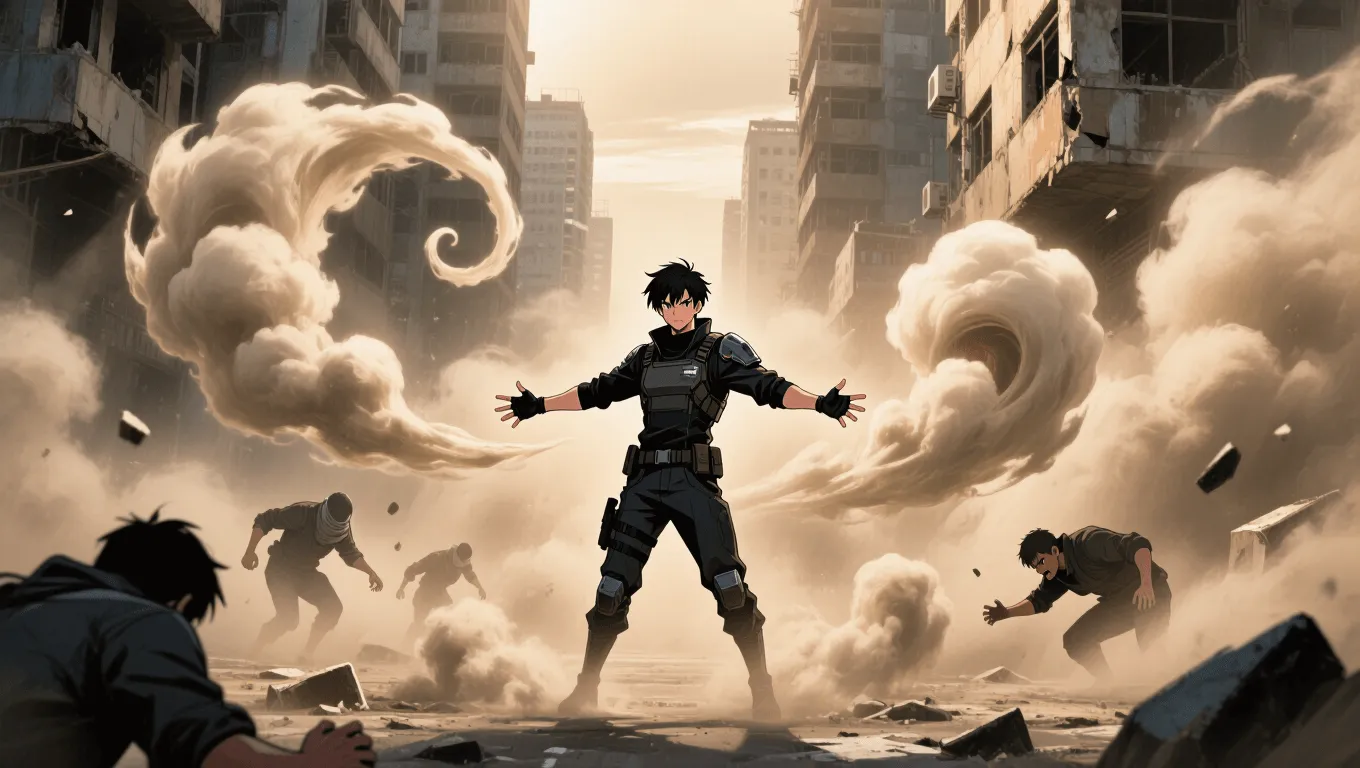
The power becomes a true battlefield controller, capable of shaping engagements.
-
Creates sustained dust clouds that linger, drift, and expand across a block or large interior space.
-
Can adjust density to create “walls” of dust, funnels, or rotating dust devils for mobile cover.
-
Respiratory effects become fight-changing: coughing fits, reduced endurance, and disrupted speech for callouts or incantations.
-
Best use: splitting squads, controlling lanes, and forcing opponents into predictable approaches.
Level: Level 3 🌃
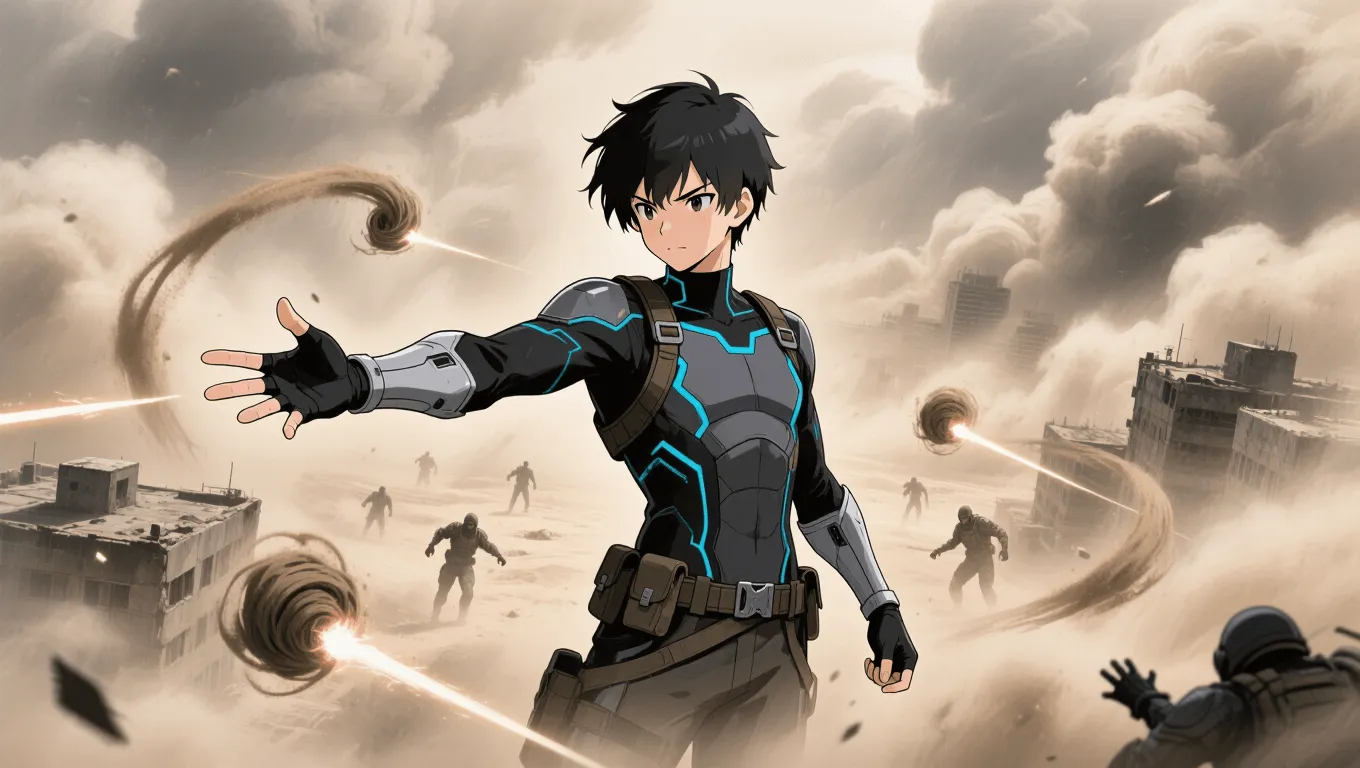
At peak mastery, Dust Generation turns into a precision hazard and a strategic weapon.
-
Generates large-scale dust storms that blanket districts, choke rooftops, and erase long-range sight entirely.
-
Shapes dust with fine control—tight vortices, targeted lung-invasive streams, decoy silhouettes, or layered density traps.
-
Can coordinate team movement by maintaining “safe corridors” while the rest of the area remains a choking haze.
-
Best use: battlefield domination, siege-style suppression, and dismantling superior ranged opponents by removing their key advantage.
Limitations of using the Dust Generation
Even when Dust Generation looks overwhelming, it has meaningful limits that smart opponents exploit.
-
Environmental dependence: Humidity, rain, and heavy mist can weigh dust down, reducing hang-time and spread. Wet surfaces also prevent dust from staying airborne.
-
Self-exposure risk: Without training and protection, the user can cough, suffer eye irritation, or lose track of allies inside their own cloud.
-
Ventilation and airflow: Strong ventilation systems, open terrain with high winds, or engineered air circulation can disperse dust quickly.
-
Reduced precision in chaos: The denser and wider the cloud, the harder it is to track exact positions—Dust Generation can create as much uncertainty for the user as for the enemy.
-
Friendly-fire visibility: Allies may struggle to identify targets, increasing the risk of misfires or friendly collisions unless the user provides guidance or “clear lanes.”
-
Not always lethal: Dust is often a disruption tool rather than a finisher. If the opponent can seal breathing and maintain targeting, the advantage shrinks.
Weakness against what other superpowers
Dust Generation has natural predators—powers that either remove particulates, ignore vision denial, or punish the user for flooding the area.
-
Wind Manipulation and Air Control: Gusts, pressure shifts, and directional airflow can scatter clouds and reopen sightlines.
-
Vacuum Creation: Localized vacuum zones can “drink in” dust, creating clean pockets and disrupting storm structure.
-
Water Manipulation: Rain curtains, water sprays, and mist saturation can force dust to clump and fall out of the air.
-
Air Purification and Atmosphere Filtering: Powers that cleanse air, create breathable bubbles, or neutralize contaminants can blunt choking effects.
-
Fire Generation and Heat Auras: Heat can create turbulence that disperses dust unpredictably, and some dust mixtures can become hazardous if ignited in confined spaces.
-
Enhanced Senses: Thermal vision, radar-like perception, echolocation, or aura detection reduces the value of visual obscuration.
-
Force Fields and Personal Barriers: A tight barrier around the body blocks particulate intrusion and preserves breathing and sight.
Synergistic Power Combos
Dust Generation becomes far nastier when paired with abilities that either keep the dust in place, weaponize it, or let allies operate inside it effortlessly.
-
Wind Manipulation (controlled, not opposing): Instead of dispersing dust, an ally can steer it—turning it into a guided blinding haze that chases targets.
-
Static Electricity or Lightning Control: Electrified particulates can sting, disorient, or create crackling zones that punish movement.
-
Gravity Manipulation: Increased gravity can slam dust down to create sudden “brownout” ground fog; reduced gravity can keep it airborne longer.
-
Light Manipulation: Bending light through dust makes silhouettes misleading, creates false depth, and turns the cloud into a living illusion screen.
-
Sound Dampening: Pairing dust cover with silence creates near-perfect ambush conditions—no sight, no sound, no warning.
-
Invisibility or Stealth Powers: Dust provides the misdirection; stealth provides the decisive strike.
-
Toxic Gas or Spore Generation: Dust acts as a carrier medium, helping other airborne hazards spread and linger (especially if the user can maintain safe corridors for allies).
Known Users
Dust Generation (or close variants like sand-to-dust transformation and living particulate storms) shows up in comics as both a signature power and a tactical tool.
-
Dust (Sooraya Qadir, Marvel Comics): A mutant known for converting her body into a living sandstorm-like cloud and shaping it offensively and defensively. See the character profile here: Dust (Marvel).
-
Dust (Sooraya Qadir, reference overview): Background and capability summaries often describe her as a controlled dust/sand cloud form used for blinding, scouring attacks, and mobility.
For readers building characters inspired by this style of power, browsing adjacent entries on Superpower Wiki can help identify related abilities like smoke generation, ash generation, sand manipulation, air control, and sensory disruption—while the random generator is a fast way to discover unexpected combo ideas.