
Electric Conductivity
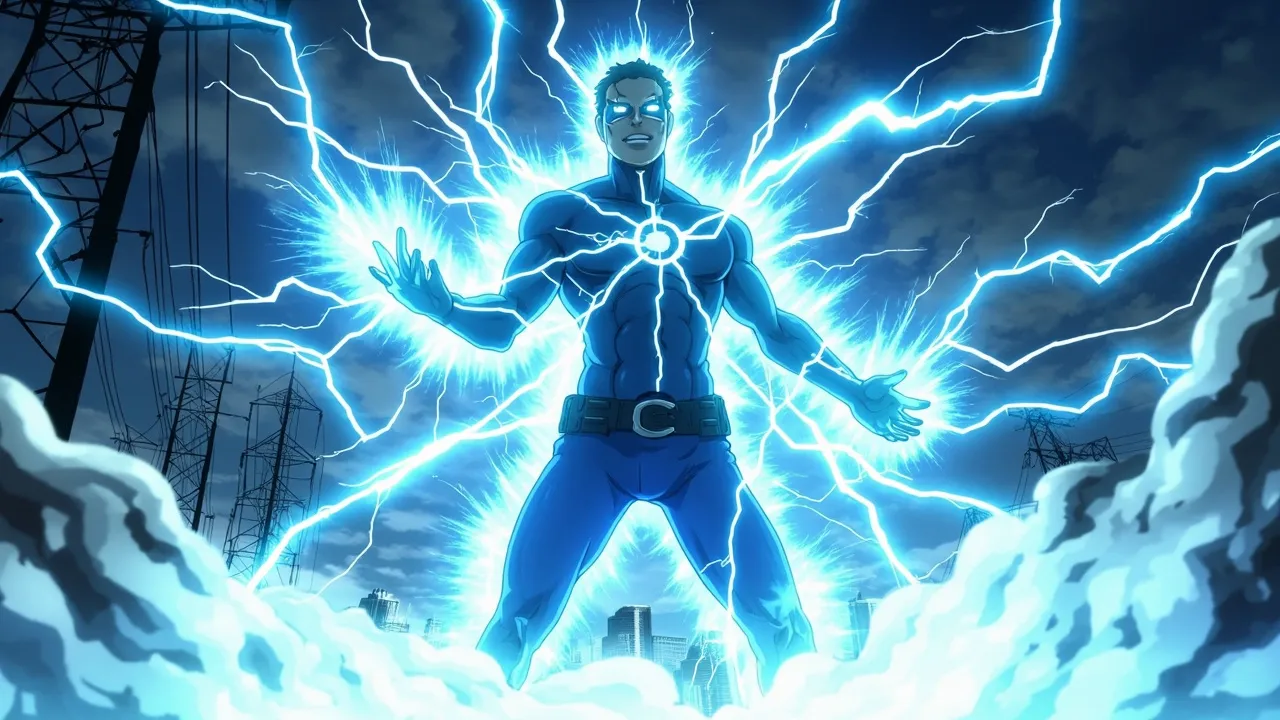
Electric Conductivity Video Demo 🎬
Table of Contents
- Electric Conductivity Video Demo 🎬
- What Is Electric Conductivity
- Core abilities of Electric Conductivity
- Application / Tactical Advantages in Combat
- Level: Level 1 🏙️, Level 2 🌇, Level 3 🌃
- Limitations of using the Electric Conductivity
- Weakness against what other superpowers
- Synergistic Power Combos
- Known Users
What Is Electric Conductivity
Electric Conductivity is a superpower that allows a person to channel electricity safely through their body or through objects they touch, without suffering the burns, nerve damage, or cardiac arrest that would normally follow. Within the first moments of using Electric Conductivity, the user effectively becomes a living electrical conduit—able to guide current along chosen paths, redirect voltage away from vital organs, and “ground” dangerous surges into the environment.
Unlike broader electricity control, this ability focuses on conduction and routing: absorbing, carrying, dispersing, or transferring electrical energy with precision. In stories and RPG settings, Electric Conductivity often overlaps with terms like electric channeling, current redirection, lightning absorption, voltage routing, conductive skin, bioelectric conduit, and circuit interfacing. It can be subtle (safe handling of live wires) or spectacular (walking through lightning storms and turning the strike into a weapon).
For readers exploring powers across different categories, Electric Conductivity fits neatly into energy-adjacent abilities in a broader catalog like the Superpower Wiki, and it pairs especially well with randomized builds from a random superpower generator when building a versatile character kit.
Core abilities of Electric Conductivity
Electric Conductivity can manifest in several “core functions” that define how the user interacts with electricity and conductive materials:
-
Safe electrical channeling (electric immunity to conduction harm): Electricity can pass through the user without frying tissue. This usually includes resistance to heat from current, muscle seizure prevention, and cardiac shielding.
-
Directed current flow: The user can choose where electricity enters and exits—hand to hand, hand to ground, body to weapon, or body to a target via a conductive medium (metal floor, water, cables).
-
Voltage routing and grounding: The user can discharge excess electricity into the earth, a lightning rod, a grounded object, or a sacrificial conductor, preventing overload.
-
Lightning absorption and storage (limited): Some versions allow temporary “holding” of charge like a capacitor. This can power short bursts of movement, strikes, or device reactivation.
-
Conductivity control in objects: By touching an item, the user can make it act like a better conductor (or stabilize its conduction), enabling safer high-voltage delivery through blades, chains, batons, arrows, or improvised metal tools.
-
Circuit interfacing: The user can bridge gaps in circuitry, jump-start engines, restart generators, or overload electronics by delivering current where it shouldn’t go.
-
Electrical sense (optional): Advanced users may detect live wires, energized surfaces, or electromagnetic “hum” in powered systems, helping them navigate dark industrial spaces or locate active security systems.
Crucially, Electric Conductivity does not automatically grant infinite power generation. It is often strongest when electricity is already present (power grids, storms, tech-filled arenas) or when paired with an energy source.
Application / Tactical Advantages in Combat
Electric Conductivity shines in combat because it turns the battlefield itself into a wiring diagram. The user doesn’t just throw electricity—they use positioning, materials, and contact to make electricity behave like a controlled hazard.
-
Contact-based disabling strikes: A conductive punch through armor seams, a palm press against a shield, or a grapple can deliver a stunning current that disrupts muscle control. Even a brief pulse can force a drop, stumble, or blackout depending on intensity and duration.
-
Weaponized conduction: Metal weapons become delivery systems. A staff can act like a lightning rod; a chain can spread current across multiple opponents; a sword can “flash-stun” on impact.
-
Area denial through conductive terrain: If opponents stand in shallow water, on metal grating, or within a wired facility, the user can turn those surfaces into risk zones by routing electricity through them.
-
Countering electric attacks: Against lightning blasts or taser-like powers, Electric Conductivity can redirect incoming current away from organs, dump it into the ground, or even feed it into a tool for a counterattack.
-
Tech disruption: The user can short cameras, lock doors, fry drones, disable powered armor joints, or interrupt comms—sometimes without needing a visible “blast,” just a touch and a reroute.
-
Team utility: Electric Conductivity can stabilize teammates by pulling current out of electrified environments, safely extracting someone from live wires, or powering critical systems during a blackout.
In RPG terms, it functions as both a defensive resistance and a tactical amplifier—especially in modern or sci-fi settings where electricity is everywhere.
Level: Level 1 🏙️, Level 2 🌇, Level 3 🌃
Level 1 🏙️
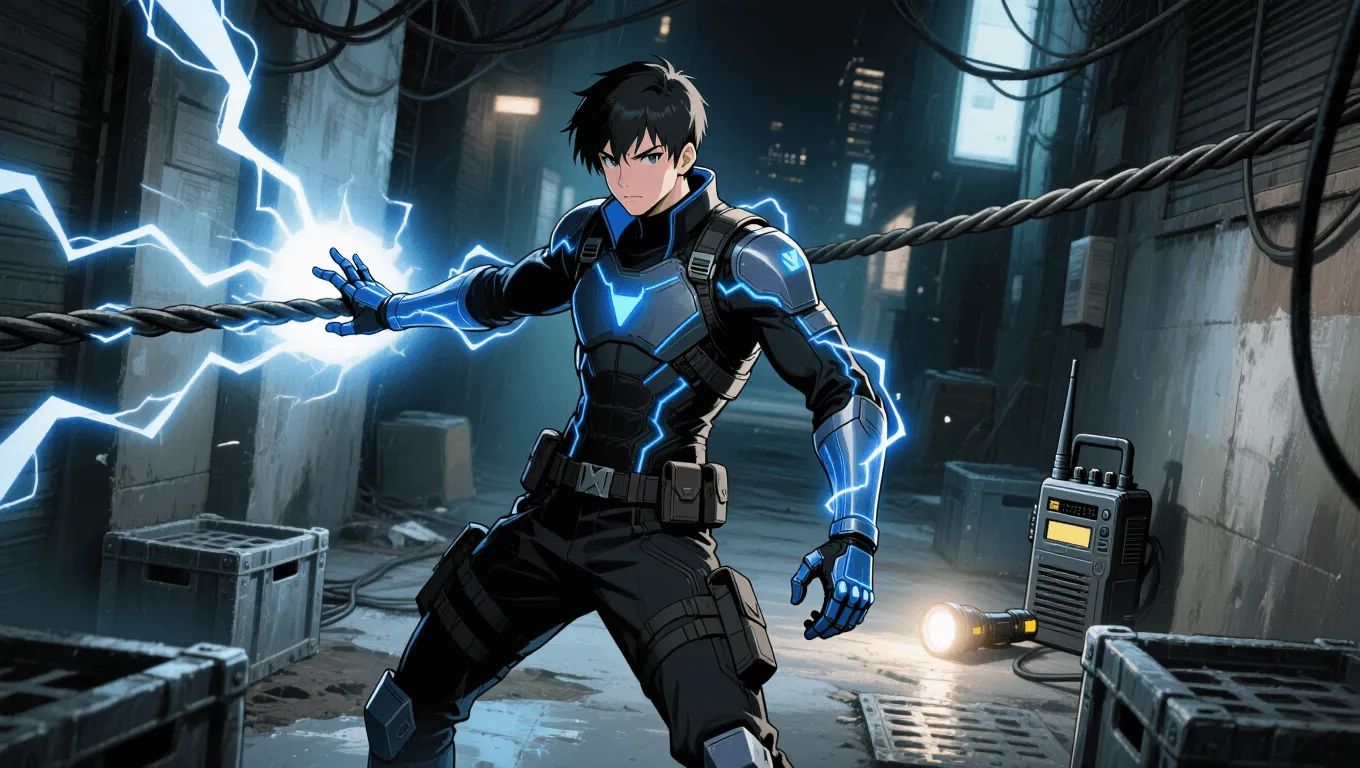
At Level 1, Electric Conductivity is primarily self-protection and basic transfer:
-
Safely touch live wires and electrified surfaces without injury.
-
Discharge mild current through touch (stun-level, brief muscle disruption).
-
Ground small surges into nearby metal or soil.
-
Power simple devices (flashlights, radios) for short periods or jump-start small motors.
Combat vibe: “Shock glove” and hazard immunity. Strong against electrified traps and tasers, decent at grapples.
Level 2 🌇
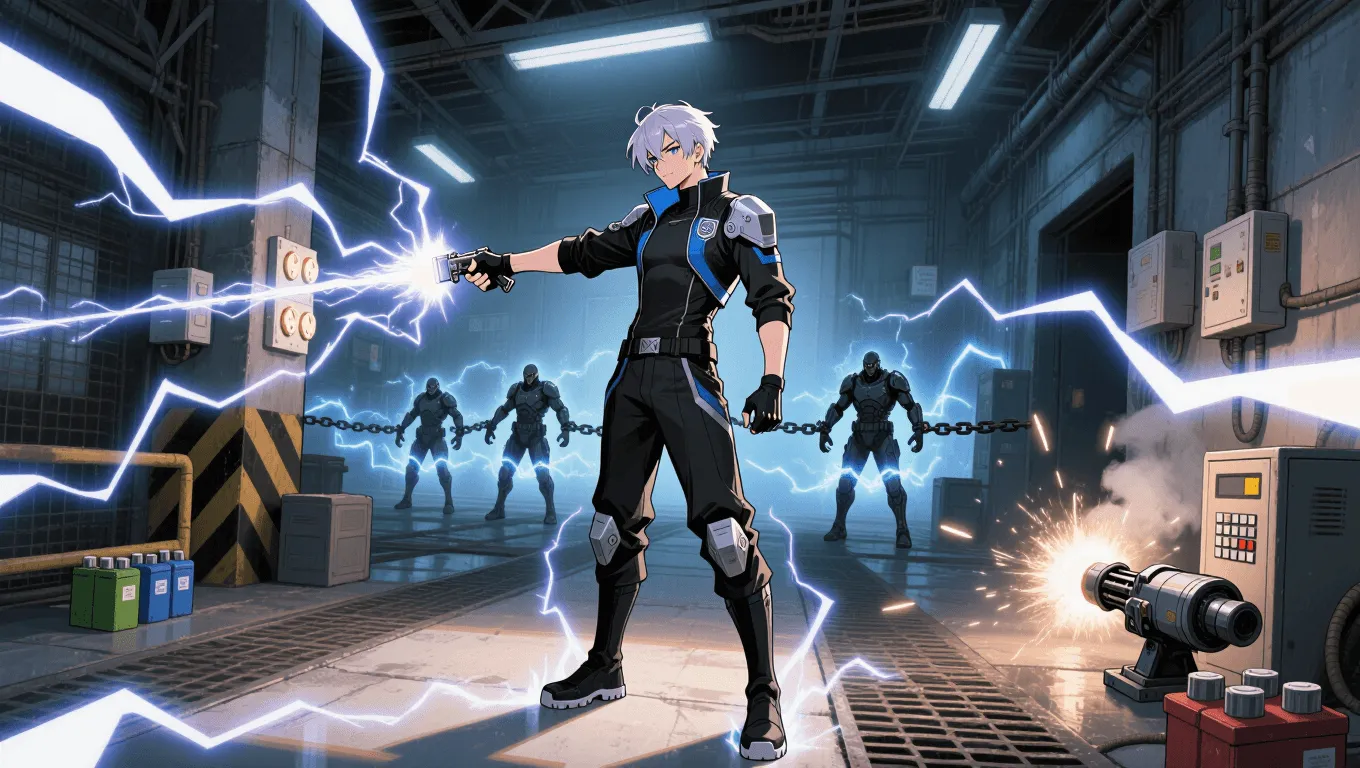
At Level 2, the user gains reliable routing and battlefield control:
-
Choose entry/exit points more precisely (hand → weapon tip, shoulder → grounded boot).
-
Pull electricity from nearby sources (outlets, cables, battery packs) and channel it.
-
Spread current through connected conductors (fence lines, metal flooring, chained enemies).
-
Perform more advanced circuit interfacing (short a keypad, disable a turret, reboot a generator).
Combat vibe: “Living conduit.” The environment becomes a weapon—especially in factories, ships, and city streets.
Level 3 🌃
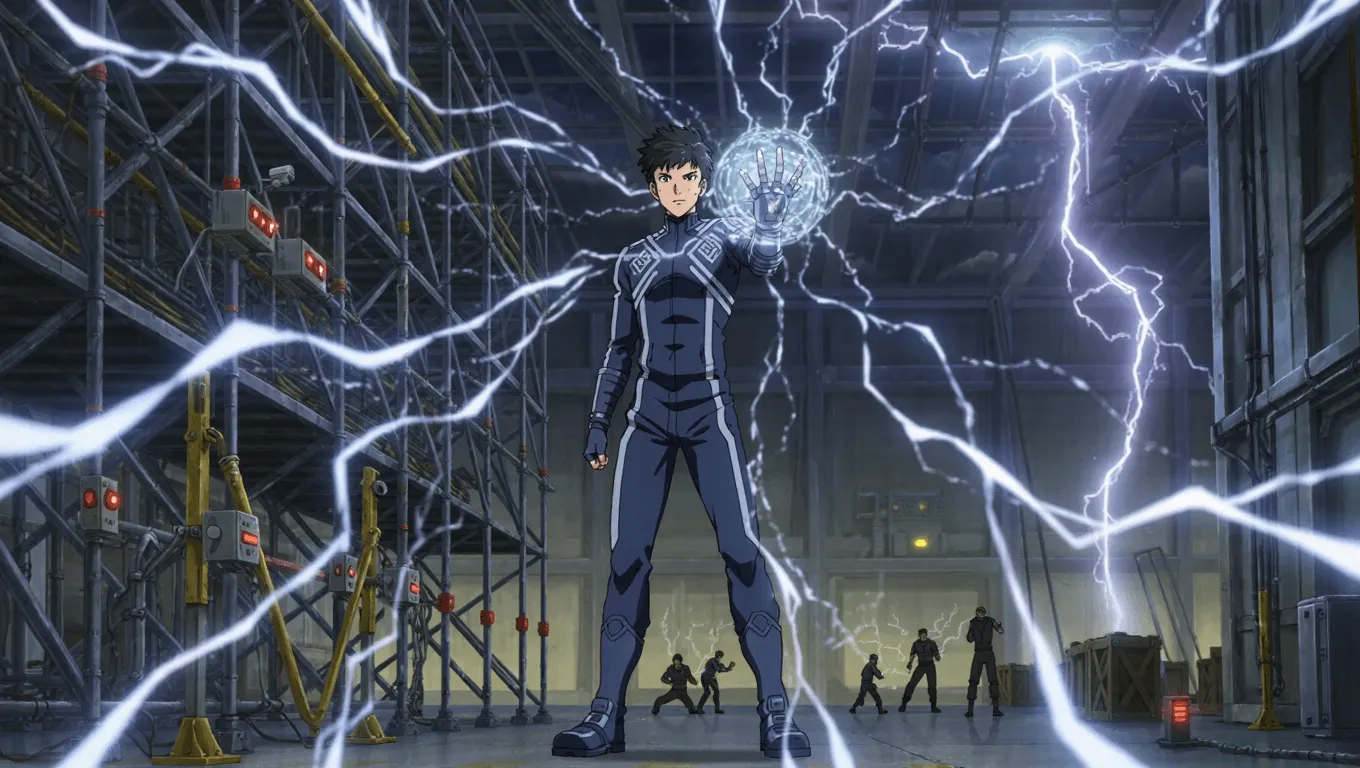
At Level 3, Electric Conductivity becomes high-voltage mastery with fine control:
-
Temporarily store larger charges and release them in controlled bursts.
-
Redirect lightning-scale energy if a path to ground exists (still risky).
-
Shape conduction through complex networks (building wiring, vehicle frames, grid-like scaffolds).
-
Protect allies by acting as a mobile lightning rod and controlled grounding path.
-
Precision disruption: selectively disable components (sensors, actuators) instead of frying everything.
Combat vibe: “Electrical architect.” The user can turn a whole facility into a trap, while staying surprisingly non-lethal if desired—thanks to control over current duration and route.
Limitations of using the Electric Conductivity
Even at high levels, Electric Conductivity has meaningful constraints that keep it interesting and balanced:
-
Needs a source (often): Without nearby electricity, the user may only have what they’ve stored. In low-tech environments, the power becomes more defensive than offensive.
-
Overload risk: If the incoming energy exceeds their routing capacity, the user can suffer internal burns, neurological damage, or “capacitor failure” (uncontrolled discharge).
-
Grounding dependency: Safe redirection often requires a ground path. Floating in the air, standing on perfect insulation, or being isolated from conductive exits makes high-voltage handling far riskier.
-
Conductive medium matters: Rubber, ceramics, dry wood, and certain composites can block routes. Enemies who fight with insulated gear reduce contact-based effectiveness.
-
Precision requires focus: Routing electricity cleanly during chaos can be mentally demanding. Distraction can cause misfires—shorting the wrong device, stunning an ally, or wasting stored charge.
-
Collateral damage: Even controlled conduction can ignite flammables, damage medical implants, erase data, or start electrical fires in cramped spaces.
-
Water is double-edged: Water can expand the user’s reach dramatically, but it also increases unpredictability and endangers allies.
Weakness against what other superpowers
Electric Conductivity has clear counters—especially powers that remove the user’s “path” advantage or exploit their reliance on contact and conductivity.
-
Insulation / Rubberization: Any ability that creates insulating layers (rubber body, ceramic plating, insulation fields) can shut down touch-based delivery and block environmental routing.
-
Ground Nullification / Levitation: Flight, levitation, or anti-gravity can deny grounding and reduce the user’s ability to safely dump charge—making big plays dangerous.
-
Water Manipulation: While water can spread electricity, skilled water control can redirect flow away, isolate targets in non-conductive bubbles, or force the user into “no-safe-exit” situations.
-
EMP Generation: Electromagnetic pulses can disrupt the user’s stored charge control, disable the devices they rely on, or create chaotic surges that are harder to route safely.
-
Magnetism / Metal Manipulation: If an opponent can move the conductors, they can break circuits, pull away grounded exits, or force the current through undesirable paths.
-
Energy Absorption: Powers that absorb electricity outright can starve Electric Conductivity of fuel and punish attempts to “feed” current into the opponent.
-
Intangibility / Phasing: If an enemy can avoid physical contact or pass through conductive terrain without touching it meaningfully, conduction-based tactics lose bite.
-
Extreme Heat/Cold Control: Temperature shifts can change resistance, warp metal conductors, or create hazardous steam and condensation conditions that complicate safe routing.
Synergistic Power Combos
Electric Conductivity becomes terrifyingly versatile when paired with complementary abilities—either to supply electricity, improve delivery, or control the battlefield’s materials.
-
Electricity Generation: The classic combo. Generation supplies the current; Electric Conductivity provides safe handling, routing, and efficiency. Together they enable sustained output without self-harm.
-
Metal Manipulation: Metal weapons, cages, nets, and conductive pathways can be shaped on demand—turning the arena into a circuit trap.
-
Weapon Summoning / Construct Creation: Conjured spears, chains, or batons become dedicated conductors. Constructs can be designed with grounding spikes or insulated grips.
-
Magnetism: Use magnetic control to position conductors, snap cables into place, or create a “rail” for electricity to travel, then route current through it precisely.
-
Water Manipulation (team-based): An ally who can shape water into controlled channels can create safe, directed conductive lines—like temporary “liquid wires.”
-
Speed / Agility Boosts: A fast conduit user can tag multiple targets, plant conductive nodes (coins, nails, wires), and create rapid chain-stun patterns.
-
Techno-Interface / Hacking: Electric Conductivity can provide the physical layer—bridging circuits, injecting signals, powering ports—while hacking handles the logic layer for silent takedowns.
-
Barrier Fields: A teammate with barriers can isolate allies from conduction splash while the conduit user floods an enemy zone with current.
If a character build needs inspiration, combining Electric Conductivity with a random roll from the random superpower generator can produce surprisingly coherent archetypes—like “storm-rescue specialist,” “anti-drone infiltrator,” or “arena trap engineer.”
Known Users
Electric Conductivity appears across comics, animation, games, and superhero fiction—sometimes explicitly, sometimes as an implied part of surviving and routing electricity.
-
Static (Virgil Hawkins): Frequently portrayed channeling and safely handling electricity as part of his electromagnetic toolkit. More on the character here: Virgil Hawkins (Static).
-
Electro (Marvel): Often depicted as living electricity, with conduction through surfaces and objects as a core combat mechanic.
-
Black Lightning (DC): Commonly shown directing electrical energy and resisting its effects, implying strong conductive control.
-
Killua Zoldyck (Hunter x Hunter): Uses electricity-enhanced movement and resistance that aligns with safe channeling concepts.
-
Pikachu (Pokémon, in a broad fictional sense): A pop-culture example of a being that can generate and handle electricity without self-harm, implying internal conduction safeguards.
For more abilities that pair well (or clash hard) with Electric Conductivity, browsing a larger catalog like the Superpower Wiki helps place it among energy, defense, and utility powers.