
Energy Conversion
Energy Conversion Video Demo 🎬
Table of Contents
What Is Energy Conversion
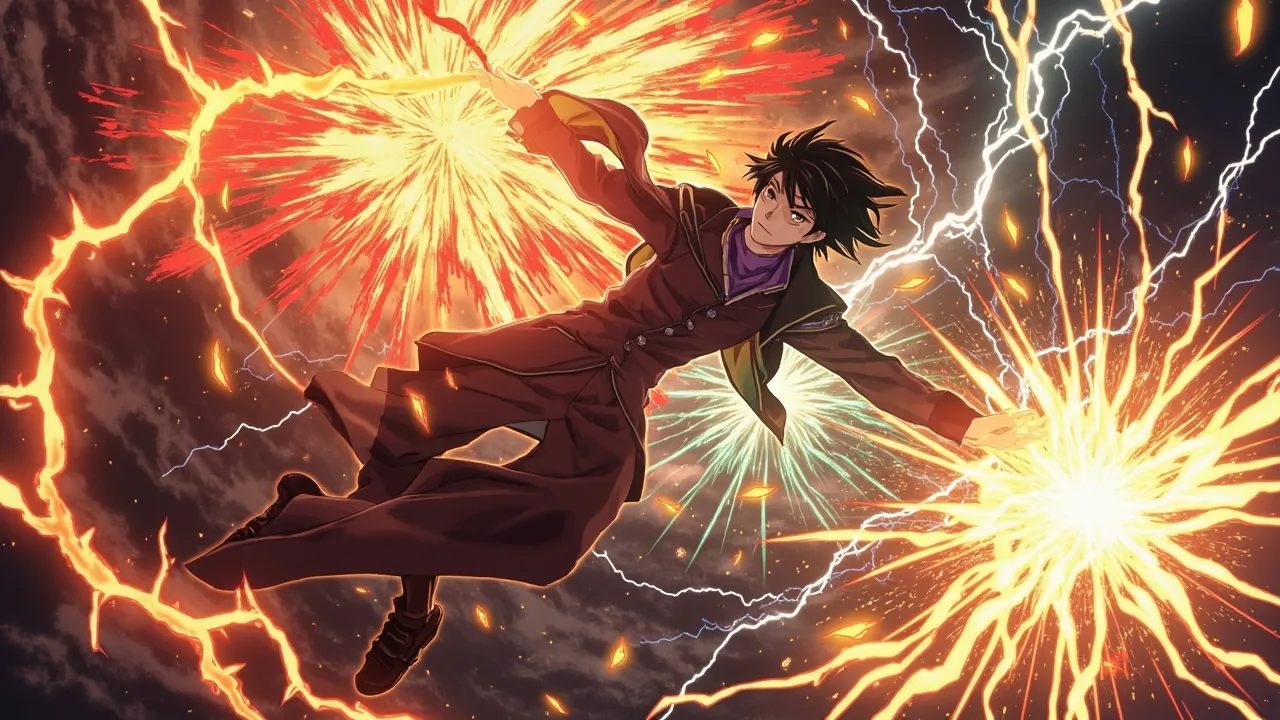
Energy Conversion is the ability to transform one type of energy into another at will. In practice, that means a user can take incoming heat and turn it into motion, convert sound into light, or redirect electricity into concussive force—depending on their skill and the “conversion pathways” their power supports. Unlike simple energy projection (which focuses on emitting a single energy form), Energy Conversion is about energy transduction: reshaping what already exists into the most useful output for the moment.
Because it can turn an enemy’s advantages into fuel, Energy Conversion is often described as a battlefield equalizer. It rewards planning and fast thinking, especially when the environment is packed with usable energy sources—fire, sunlight, vibration, electrical grids, moving vehicles, or even repeated impacts.
Readers exploring related abilities can browse the broader catalog on the Superpower Wiki, or roll for a brand-new ability idea on the random superpower generator.
Core abilities of Energy Conversion
Energy Conversion can look wildly different from one user to another, but most versions share a few core pillars.
-
Energy intake and sensing
To convert energy, the wielder generally needs to detect it. Many users develop an “energy sense” that helps them notice heat gradients, electromagnetic activity, vibrations, kinetic momentum, or ambient radiation. This doesn’t have to be literal sight; it can feel like pressure changes, ringing, tingling, or an intuitive map of what’s available. -
Conversion pathways (the personal “conversion chart”)
Some users can convert nearly anything into anything. Others have narrower rules, such as:
-
kinetic-to-thermal conversion (turning impacts into heat)
-
thermal-to-kinetic conversion (turning heat into motion or shockwaves)
-
sonic-to-light conversion (turning vibration into illumination or laser-like beams)
-
electrical-to-plasma conversion (turning current into scorching ionized blasts)
-
light-to-electric conversion (photovoltaic-style power harvesting)
The more pathways available, the more versatile the power becomes—but also the harder it is to control without mistakes.
-
Energy storage (buffering)
Many Energy Conversion users can temporarily store energy in an internal “reservoir,” like a living capacitor or battery. Storage enables delayed use—absorbing a strike now, releasing a burst later—and helps smooth out conversions that would otherwise be too sudden. -
Output shaping and channeling
Conversion is only half the battle; the other half is aiming and shaping the output. Skilled users can:
-
emit beams, pulses, waves, or fields
-
coat weapons in converted energy
-
create bursts for movement (dash-jets, air pops, braking fields)
-
spread energy across surfaces (area denial)
-
focus energy into tight points (armor piercing)
- Efficiency control (loss management)
Realistic or grounded versions of Energy Conversion include “conversion loss” (waste heat, light scatter, recoil, noise). High-level users minimize loss, while novices accidentally vent energy into the environment—sometimes explosively.
Application / Tactical Advantages in Combat
Energy Conversion is a tactical powerhouse because it can adapt to almost any fight. Its biggest advantage is turning the opponent’s pressure into the user’s options.
Turning defense into offense
A common combat loop is absorb → convert → counterstrike. For example, a user hit by a concussive blast might convert the impact energy into a blinding flash or a kinetic shockwave that knocks the attacker off balance. This can discourage repeated attacks, forcing enemies to switch strategies.
Environmental weaponization
Modern environments are full of energy:
-
Electricity: streetlights, transformers, battery packs, vehicle systems
-
Heat: fires, engines, industrial vents, sun-baked pavement
-
Sound: crowd noise, machinery, alarms, gunfire
-
Motion: traffic, elevators, falling debris, spinning fans
-
Light: sunlight, spotlights, neon signage, laser sensors
Energy Conversion users thrive in cities because they can “live off the grid” and improvise weapons from what’s nearby.
Mobility and positioning tricks
Converted energy can be used to move, not just attack. Examples include:
-
converting heat to thrust for a short hover
-
converting kinetic energy to a braking field to land safely
-
converting electricity into magnetic impulses to push off metal structures
-
converting sound to directional force to create mid-air course corrections
These tricks make the user harder to pin down and excellent at hit-and-run tactics.
Countering specialized energy attackers
Against flamethrowers, lightning users, sonic screamers, or laser snipers, Energy Conversion can function as a hard counter—if the user’s pathways match the incoming energy. A specialist who can convert heat into kinetic bursts can “drink” fire and answer with shockwaves.
Non-lethal control options
Not every fight needs destruction. With fine output control, the power can:
-
convert energy into dazzling light to disorient
-
convert heat into gentle force to push crowds back safely
-
convert electricity into localized EM interference to disable weapons
-
convert vibration into “dead zones” that dampen movement
Level: Level 1 🏙️, Level 2 🌇, Level 3 🌃
Level 1 🏙️: Reactive converter

At this stage, the user can perform one or two reliable conversions under stress—often “incoming energy → one signature output.” They usually need a clear source (being hit, standing near a generator, touching a hot surface). Output tends to be bursty and inefficient, with visible venting (steam, sparks, glare). Tactical use is mostly defensive: survive attacks by redirecting them.
Typical feats:
-
turn a punch’s impact into a small shove wave
-
convert nearby electricity into a short-range stun pulse
-
convert loud sound into a flare to break line of sight
Level 2 🌇: Adaptive converter

The user gains broader pathways and better shaping. They can store energy briefly, chain conversions, and choose outputs based on the situation (flash, beam, shield, dash). They start controlling conversion loss, reducing collateral damage.
Typical feats:
-
absorb repeated impacts and release a focused concussive blast
-
convert engine heat into sprint bursts without burning themselves
-
convert ambient noise into sustained light constructs (barriers, platforms)
Level 3 🌃: Strategic transducer

At the highest tier, Energy Conversion becomes an art. The user can convert complex mixtures (heat + kinetic + EM) and maintain multiple outputs simultaneously. Storage is deep, efficiency is high, and shaping becomes precise enough for surgical disarms or wide-area suppression.
Typical feats:
-
create layered defenses that convert incoming energy into harmless forms (heat into light haze, kinetic into gentle wind)
-
“starve” an enemy’s attack by converting it mid-flight
-
run high-powered conversions continuously without overheating or destabilizing the area
Limitations of using the Energy Conversion
Even an extremely flexible converter has constraints. These limitations keep the power from becoming an instant win button.
Energy cannot be made from nothing
Most versions obey a conservation rule: the user needs an input source. If the battlefield is quiet, cold, and electrically dead, conversion options shrink. Users who rely on absorbing attacks may struggle against opponents who refuse to feed them energy.
Conversion bandwidth and overload
There is often a maximum rate at which energy can be processed. Too much, too fast can cause:
-
painful feedback (nerve burn, migraines, muscle spasms)
-
uncontrolled venting (explosive heat release, blinding flashes)
-
forced shutdown (the body “trips a breaker” to avoid damage)
Heat is the most common waste product
Even if the user converts energy cleanly, some loss usually becomes heat. Long fights risk overheating, dehydration, and thermal damage—especially if the user is converting high-energy attacks repeatedly.
Precision demands focus
Complex conversions require concentration. Distractions, surprise attacks, or mental interference can cause misfires—like accidentally converting stored energy into an uncontrolled burst.
Pathway restrictions
Not all users can do all conversions. A sonic-to-light specialist may be nearly helpless against silent attackers in an insulated room. A kinetic-to-thermal converter might struggle in a ranged firefight unless they can also store and project energy.
Weakness against what other superpowers
Energy Conversion is strong, but it has clear counters—especially from abilities that deny inputs, disrupt control, or punish storage.
Energy Nullification and Power Dampening
If a foe can cancel superhuman outputs or suppress the conversion process, the user may be forced back into normal human limits. Even partial dampening can reduce efficiency enough to make conversions unsafe.
Energy Absorption and Energy Drain
A dedicated absorber can “steal the fuel” after conversion or siphon stored reserves directly. This creates a dangerous tug-of-war where the converter becomes an energy bank for the enemy.
Reality Warping and Probability Manipulation
Powers that rewrite rules can bypass conversion logic: turning blasts into harmless bubbles, making the converter’s output misfire, or forcing “conversion loss” to spike unpredictably. (In settings where such abilities exist, they are often universal threats.)
Telepathy and Mental Disruption
Because high-level conversions rely on focus and control, psychic interference can cause catastrophic mistakes—especially if the user is holding a large reserve.
Vacuum, Silence, and Environmental Denial
Opponents who remove energy sources can starve the converter:
-
vacuum fields can reduce available sound and heat transfer
-
sound suppression can shut down sonic-based inputs
-
cryokinesis can drain ambient thermal energy
-
darkness powers may reduce usable light (depending on how the setting treats “darkness”)
Synergistic Power Combos
Energy Conversion becomes even scarier when paired with complementary abilities. These combos are popular in team tactics and “build” crafting.
Energy Absorption + Energy Conversion
Absorption provides consistent fuel; conversion provides versatile output. Together they form a closed loop: take anything, turn it into the perfect answer.
Electromagnetic Manipulation + Energy Conversion
EM control can gather electricity, radio waves, and light-spectrum energy while conversion reshapes it into plasma bursts, kinetic shields, or disabling pulses. In tech-heavy areas, this combo turns the battlefield into a power plant.
Sonic Manipulation + Energy Conversion
A sonic user can flood an area with vibration; the converter can transduce it into blinding light, hard-hitting force, or sustained constructs. This is an excellent crowd-control pairing.
Technopathy + Energy Conversion
Technopathy finds and taps power sources (batteries, grids, drones). Conversion turns that harvested electricity into combat outputs or protective fields. It also enables clever non-combat solutions: powering life support, rebooting systems, or restoring disabled devices.
Gravity Manipulation + Energy Conversion
Gravity can generate kinetic inputs (falls, compressions, accelerations), which the converter reshapes into heat, light, or shockwaves. This duo is devastating for area denial and movement control.
For more pairing ideas across the wider roster, browsing the Superpower Wiki can help connect Energy Conversion with neighboring concepts like Energy Absorption, Electromagnetic Manipulation, and Sonic Manipulation.
Known Users
While “Energy Conversion” appears in many universes under different labels (energy transduction, power conversion, energy metabolization), several well-known comic characters showcase close variants:
-
Bishop (Marvel Comics) – A mutant known for absorbing energy and releasing it as different outputs, commonly concussive blasts, while also using stored energy to boost durability and strength.
-
Dazzler (Marvel Comics) – Converts sound vibrations into light, ranging from dazzling flashes to directed energy beams, making her a classic example of sonic-to-light energy conversion.
-
Sebastian Shaw (Marvel Comics) – Absorbs kinetic and thermal energy and converts it into enhanced physical strength, speed, and stamina, effectively turning attacks into power-ups.