
Enhanced Visibility

Enhanced Visibility Video Demo 🎬
Table of Contents
- Enhanced Visibility Video Demo 🎬
- What Is Enhanced Visibility
- Core abilities of Enhanced Visibility
- Application / Tactical Advantages in Combat
- Level: Level 1 🏙️, Level 2 🌇, Level 3 🌃
- Limitations of using the Enhanced Visibility
- Weakness against what other superpowers
- Synergistic Power Combos
- Known Users
Enhanced Visibility is the superpower that lets a character notice minute details and distant objects with startling clarity. Where normal sight blurs into guesswork at long range or loses precision in busy scenes, Enhanced Visibility turns vision into a dependable instrument: sharp focus, fast recognition, and reliable detail detection. In practice, it functions like an ever-ready blend of eagle eye perception and perception enhancement, allowing a user to read the battlefield, identify threats early, and capitalize on tiny openings others never even see.
What Is Enhanced Visibility
Enhanced Visibility is heightened visual acuity taken beyond normal biological limits. A user’s eyes (or visual processing system) can resolve finer textures, smaller movements, and longer distances without relying on external tools like binoculars. This often overlaps with related “enhanced vision” branches such as long-range sight (telescopic vision), microscopic sight, superior contrast recognition, and rapid refocusing.
Importantly, Enhanced Visibility is not automatically an offensive eye-beam power. It is a perception-based advantage: the user sees more, sooner, and more accurately. In stories and gameplay, it shines as a recon and precision power that upgrades decision-making, aiming, tracking, and situational control.
Core abilities of Enhanced Visibility
Enhanced Visibility can be expressed in several “modules,” depending on how the setting defines biology, magic, tech, or mutation.
-
Long-range sight (telescopic-style focus): The user can visually zoom and maintain clarity at distances where faces, hands, or small objects would normally be indistinguishable. This supports scouting, sniping support, and early-warning threat detection.
-
Detail detection at close range: Minute clues pop out—hairline fractures, faint fingerprints, micro-expressions, tiny mechanisms, or nearly invisible seams on disguised gear.
-
Motion discrimination: The user spots subtle movement in crowds or foliage, tracks quick feints, and notices timing shifts (like a trigger finger tightening or a shoulder dipping before a strike).
-
Rapid refocusing: Switching from near to far (or far to near) is nearly instant, reducing the “focus lag” that can cost a fight.
-
Superior pattern recognition: Enhanced Visibility often pairs with better visual processing, letting the user pick out patterns in maps, terrain, camouflage, or enemy formations.
-
Environmental reading: Dust trails, heat haze, reflected glints, and faint ripples on water become actionable signals instead of background noise.
Depending on power level, additional features can appear as extensions: low-light clarity, glare compensation, polarization-like filtering, or the ability to read lips at distance.
Application / Tactical Advantages in Combat
Enhanced Visibility is a force multiplier because combat is information. The earlier a user understands what is happening, the easier it becomes to choose the right response.
-
Pre-engagement dominance: The user can identify hostile intent (weapon grip changes, concealed gear outlines, squad spacing) before a fight starts, enabling ambush avoidance or decisive first strikes.
-
Target prioritization: In chaotic battles, Enhanced Visibility helps separate decoys from real threats by noticing small inconsistencies—incorrect breathing rhythm, mirrored footsteps, or a hidden communicator.
-
Weak-point exploitation: The user can aim for gaps in armor, damaged joints, exposed wiring, or stress points. Even without super strength, “hit the right place” can outperform “hit harder.”
-
Counter-stealth and anti-ambush: Distant silhouettes, imperfect camouflage edges, and abnormal shadows become visible cues. This doesn’t automatically beat true invisibility, but it punishes ordinary concealment.
-
Projectile and melee support: Archers, gunslingers, spear users, and knife throwers benefit immediately. Enhanced Visibility also boosts close combat by reading micro-tells and spacing.
-
Team utility: Calling out flanks, spotting snipers, tracking fleeing targets, and identifying traps turns the user into a battlefield coordinator.
In tactical storytelling, Enhanced Visibility often fills the “scout,” “spotter,” “tracker,” or “analyst” role—someone who makes everyone else more effective.
Level: Level 1 🏙️, Level 2 🌇, Level 3 🌃
Level 1 🏙️
At this level, Enhanced Visibility resembles peak-human eyesight pushed to an exceptional extreme.

-
Clearer distance vision than normal; faces and gestures remain readable farther away.
-
Better detail detection up close: small flaws, tiny switches, faint markings.
-
Improved tracking of fast motion and feints, but still limited by distractions and line-of-sight.
-
Strong synergy with training: a skilled fighter becomes reliably consistent rather than “sometimes lucky.”
Level 2 🌇
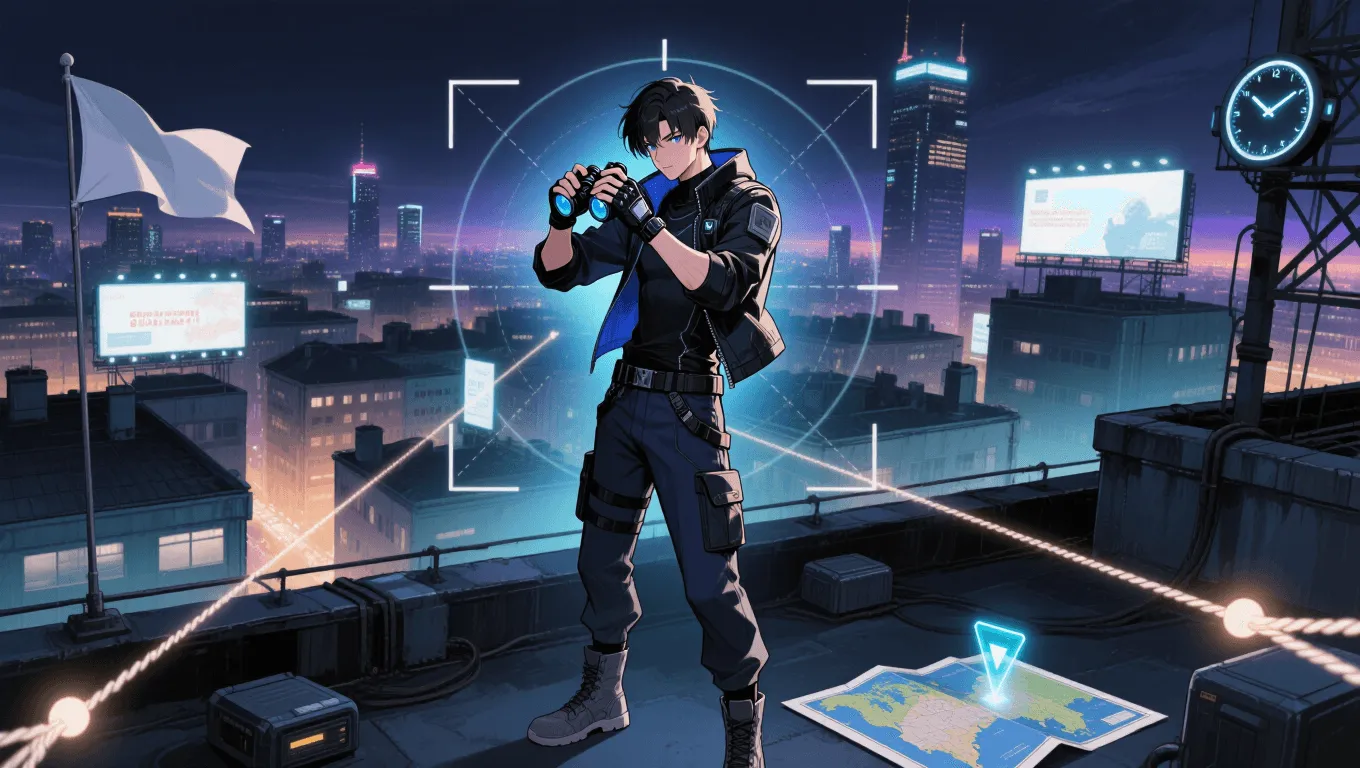
Here, the power begins to feel unmistakably superhuman.
-
Telescopic-like focus becomes reliable: reading text at distance, identifying specific equipment, or spotting tripwires becomes plausible.
-
Rapid refocus reduces vulnerability when switching targets.
-
Visual processing improves: the user can scan a scene quickly without missing key details.
-
Combat edge grows: identifying the moment before a trigger pull or the start of a spell gesture becomes easier.
Level 3 🌃
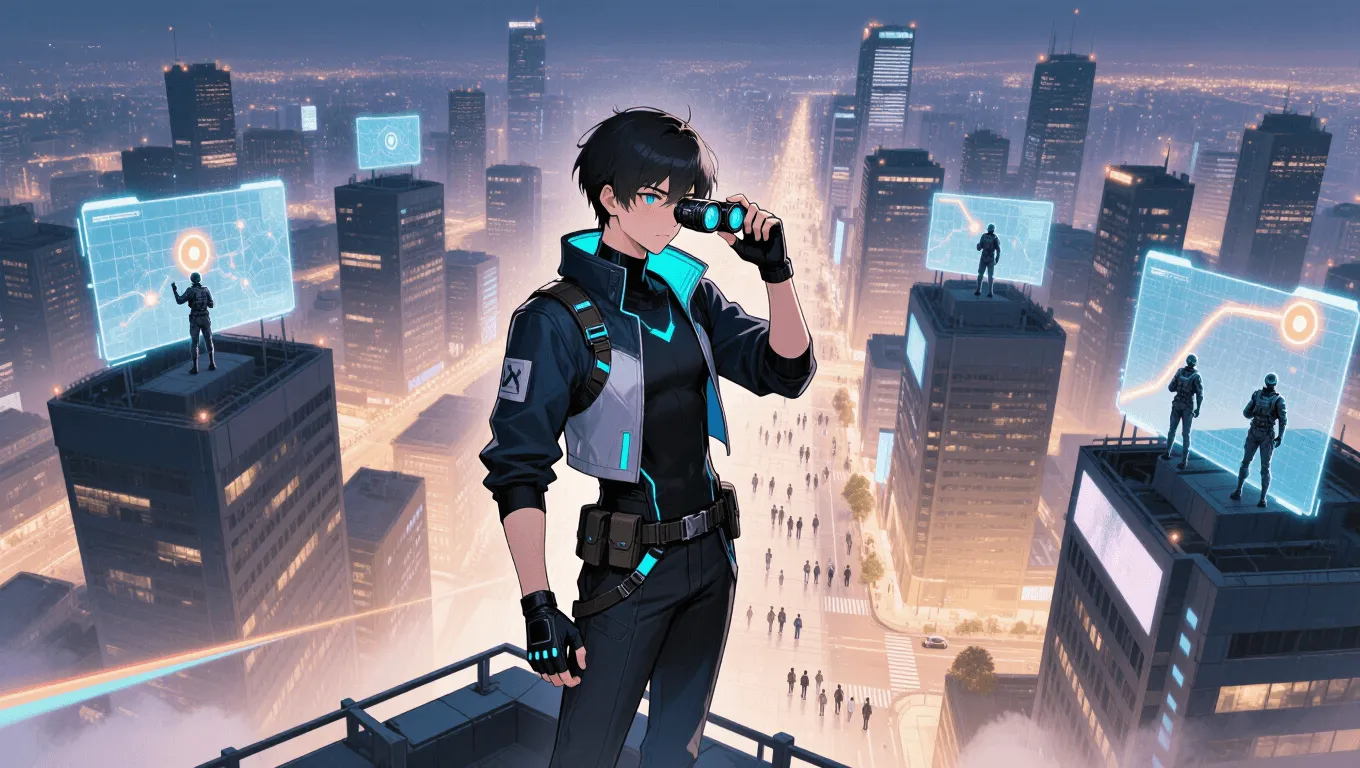
At this level, Enhanced Visibility becomes a strategic advantage that can shape entire encounters.
-
Extremely long-range sight and consistent micro-detail resolution across complex environments.
-
Near-instant recognition of threats through crowds, foggy stress, or chaotic motion (though not through solid barriers).
-
Precision spotting enables high-level teamwork: the user can act as a living surveillance platform.
-
In some settings, advanced filtering appears (glare reduction, enhanced contrast, low-light clarity), making typical countermeasures less effective.
Limitations of using the Enhanced Visibility
Even a powerful perception ability has constraints. Good stories (and balanced gameplay) make Enhanced Visibility strong but not absolute.
-
Line-of-sight is king: Walls, terrain, and solid barriers still block what the user can see unless another power changes that.
-
Obscurants still matter: Smoke, dense fog, sandstorms, ink clouds, and blinding debris reduce visibility. Enhanced Visibility may push through mild obstruction, but heavy concealment is still heavy concealment.
-
Sensory overload: Seeing too much can be a weakness. Crowded environments, flashing lights, reflective surfaces, or rapid scene changes can overwhelm attention.
-
Eye strain and fatigue: Maintaining extreme focus for long periods can cause headaches, dry eyes, or processing burnout, especially if the user is constantly scanning.
-
Tunnel vision risk: Telescopic-style focus can narrow awareness. A user who “zooms in” may miss what’s happening at the edges unless trained to alternate scanning modes.
-
Deception still works: Illusions, holograms, shapeshifting, and expertly planted false clues can trick even perfect eyesight if they target interpretation rather than clarity.
Weakness against what other superpowers
Enhanced Visibility excels at gathering real information, but it can be undermined by powers that deny information, distort perception, or weaponize sensory input.
-
Darkness Manipulation: If there is no usable light (or light is actively suppressed), the user’s advantage collapses unless they also have night vision or alternate senses.
-
Invisibility: True invisibility can remove the target from visual detection entirely, forcing the user to rely on secondary clues (sound, footprints, displaced air).
-
Illusion Casting: If the mind is fed false images, clarity becomes irrelevant. The user may see the illusion perfectly—and still be wrong.
-
Light Manipulation: Sudden flares, glare, or strobing effects can blind or disorient, turning superior sight into a liability.
-
Smoke/Cloud Generation: Battlefield obscurants are a classic counter, especially when layered with movement powers.
-
Mind Control or Emotion Manipulation: If the user’s attention and priorities are forcibly redirected, the best eyesight in the world won’t help.
Synergistic Power Combos
Enhanced Visibility becomes terrifying when paired with abilities that convert information into action. If a character is exploring builds, they can browse more options in the Superpower Wiki list or jump to the random superpower generator for inspiration.
-
Enhanced Accuracy: A natural pairing—Enhanced Visibility finds the opening, Enhanced Accuracy guarantees the hit.
-
360-Degree Vision: Removes blind spots so the user can zoom without losing awareness.
-
Technopathy or Digital Vision: Turns the user into a living recon suite—spot the device, read the screen glow, interpret signals, then hack or navigate.
-
Light Manipulation: Control lighting conditions to prevent glare and deny enemies cover while keeping the user’s sight optimal.
-
Psychic Navigation: Use Enhanced Visibility to confirm targets and routes, while extrasensory tracking handles line-of-sight breaks.
-
Electromagnetic Manipulation: Disable optics, cameras, drones, and targeting systems while the user retains superior organic (or internal) vision.
-
Phasing or Stealth powers: Enhanced Visibility supports infiltration by spotting cameras, lasers, pressure plates, and patrol timing at a glance.
Known Users
Enhanced Visibility (or closely related “extraordinary eyesight” abilities) appears across comics and comic-adjacent franchises, often under labels like telescopic vision, microscopic vision, or peak human sight.
-
Superman: Frequently depicted with advanced sensory capabilities and iconic vision-based powers; many interpretations include telescopic and microscopic sight as part of his enhanced perception suite.
-
Hawkeye (Clint Barton): Often characterized as having extremely keen eyesight supporting his elite marksmanship, fitting a grounded version of Enhanced Visibility focused on precision and target reading.
-
Eagle Eye (Transformers): A character noted for exceptional long-range focus, embodying a tech-forward version of enhanced visual acuity used for target lock and aerial combat precision.