
Environmental Adaptation
Environmental Adaptation Video Demo 🎬
Table of Contents
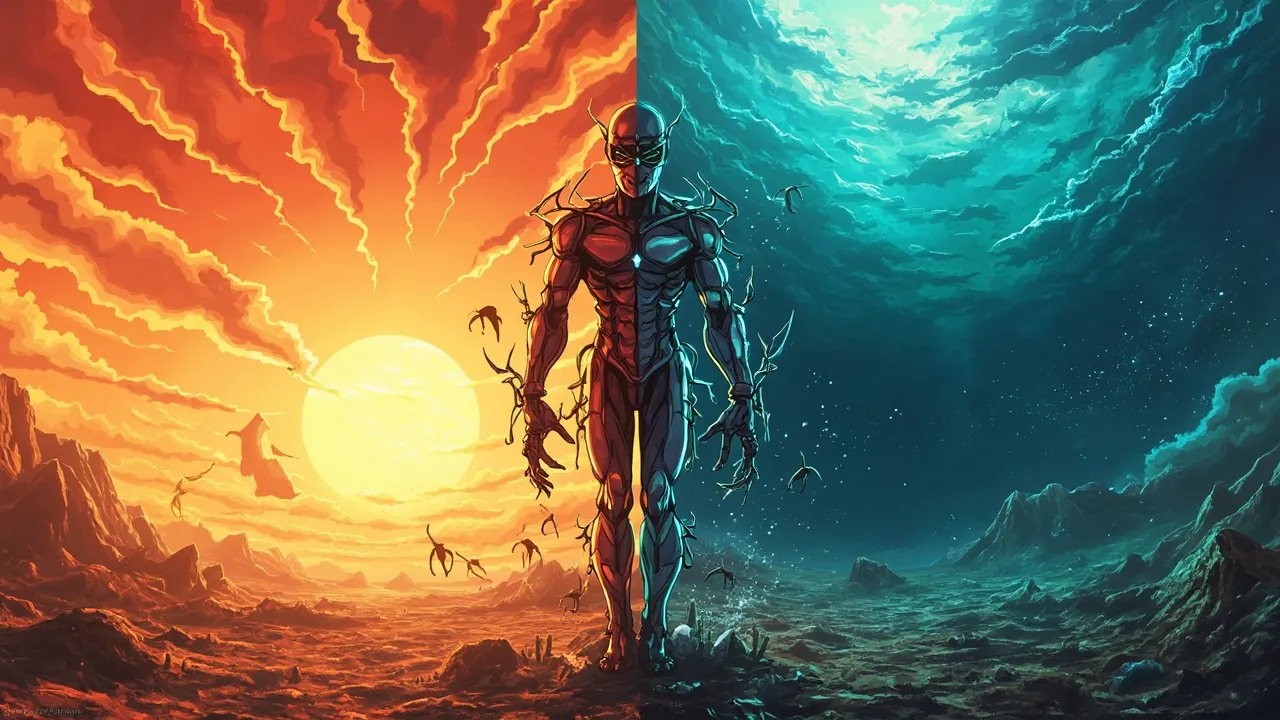
Environmental Adaptation is a survival-focused superpower that lets a user adjust their physiology to thrive in virtually any environment. Instead of relying on gear, the body itself changes to handle extreme heat or cold, toxic air, crushing pressure, radiation, low oxygen, underwater conditions, and other hazards. In many settings, Environmental Adaptation is described as an automatic, self-preserving response: when conditions become hostile, the user’s biology recalibrates until the surroundings are no longer lethal.
For readers exploring more abilities like this, the broader catalog on the superpower wiki page is a helpful reference point, and the random superpower generator can spark ideas for matchups and builds.
What Is Environmental Adaptation
At its core, Environmental Adaptation is the power to survive and function comfortably across conditions that would normally kill or incapacitate a human. The adaptation can be gradual (acclimation over minutes or hours) or instantaneous (reactive evolution), depending on the setting and the user. In the strongest interpretations, the user can tolerate dramatic changes in temperature, moisture, pressure, breathable medium, and available sustenance with little to no discomfort.
Unlike simple resistance (such as “immune to cold”), Environmental Adaptation is dynamic. The body doesn’t just tank damage—it changes what it is: lungs may switch to filtering poison, skin may thicken against radiation, blood chemistry may alter to conserve oxygen, or cells may shift to metabolize unfamiliar nutrients. The result is a power that excels at endurance, infiltration, and long-term operations in hostile zones.
Core abilities of Environmental Adaptation
Environmental Adaptation can manifest in many “modules” of adaptive physiology. Common core abilities include:
-
Atmospheric adaptation: breathing underwater, in smoke-filled rooms, or in thin air by altering lungs, gills, blood oxygen affinity, or internal filtration.
-
Temperature tolerance: rapid thermoregulation, antifreeze-like blood chemistry, heat-dissipating skin, or hibernation states for deep cold.
-
Pressure and gravity tolerance: reinforced tissue structure, shock-absorbing joints, denser bone matrices, or internal counterpressure to prevent crushing.
-
Toxic and pathogen resistance: accelerated detox pathways, adaptive antibodies, altered liver/kidney function, or symbiotic microbiomes that neutralize poisons.
-
Radiation and energy resistance: cellular repair loops, melanin-like shielding, or energy-diffusing tissues.
-
Sustenance flexibility: ability to endure starvation, drink poor-quality water, metabolize alternative nutrients, or enter low-power states.
In many fictional write-ups, Environmental Adaptation overlaps with “life support” traits—automatic survival changes that keep the user alive in hostile terrain.
Application / Tactical Advantages in Combat
Environmental Adaptation isn’t always flashy, but it can be brutally effective in real fights—especially when the battlefield itself is weaponized.
-
Fighting in “unfair” terrain: The user can choose battlegrounds opponents can’t handle—burning buildings, arctic storms, vacuum exposure, poison fog, deep underwater tunnels, or radiation zones.
-
Denial and attrition: Opponents may tire, suffocate, freeze, or overheat while the user stays steady. This makes Environmental Adaptation excellent for prolonged engagements.
-
Immunity to common control tactics: Many crowd-control tools—tear gas, smoke, irritants, temperature shock, pressure changes—lose value against an adaptive body.
-
Stealth and pursuit advantages: Surviving in vents, sewers, underwater routes, or contaminated industrial areas opens angles for flanking and escape.
-
Rapid recovery from environmental damage: Even when struck by elemental attacks, the user may “learn” the condition and become progressively harder to disable (depending on the power’s rules).
Level: Level 1 🏙️
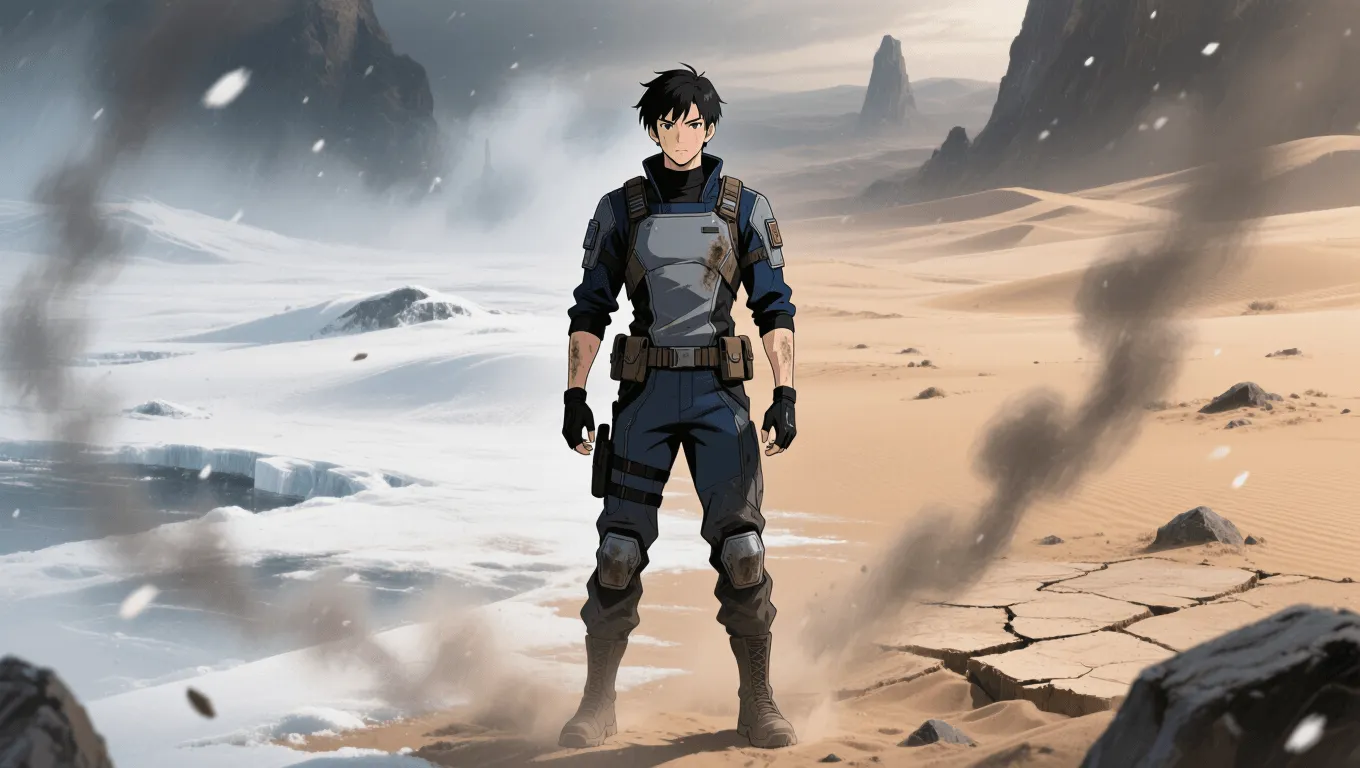
At Level 1, Environmental Adaptation functions like advanced acclimation:
-
The user tolerates harsh weather, mild toxins, smoke, and poor air quality.
-
They can operate longer without water/food, resist hypothermia/heatstroke, and reduce fatigue in unpleasant conditions.
-
Adaptations are limited and may require time, concentration, or repeated exposure (for example, needing minutes to adjust to thin air).
Combat impact: Level 1 users gain consistency and stamina—hard to gas out, hard to chase off with environmental tricks, and difficult to corner using terrain hazards.
Level: Level 2 🌇
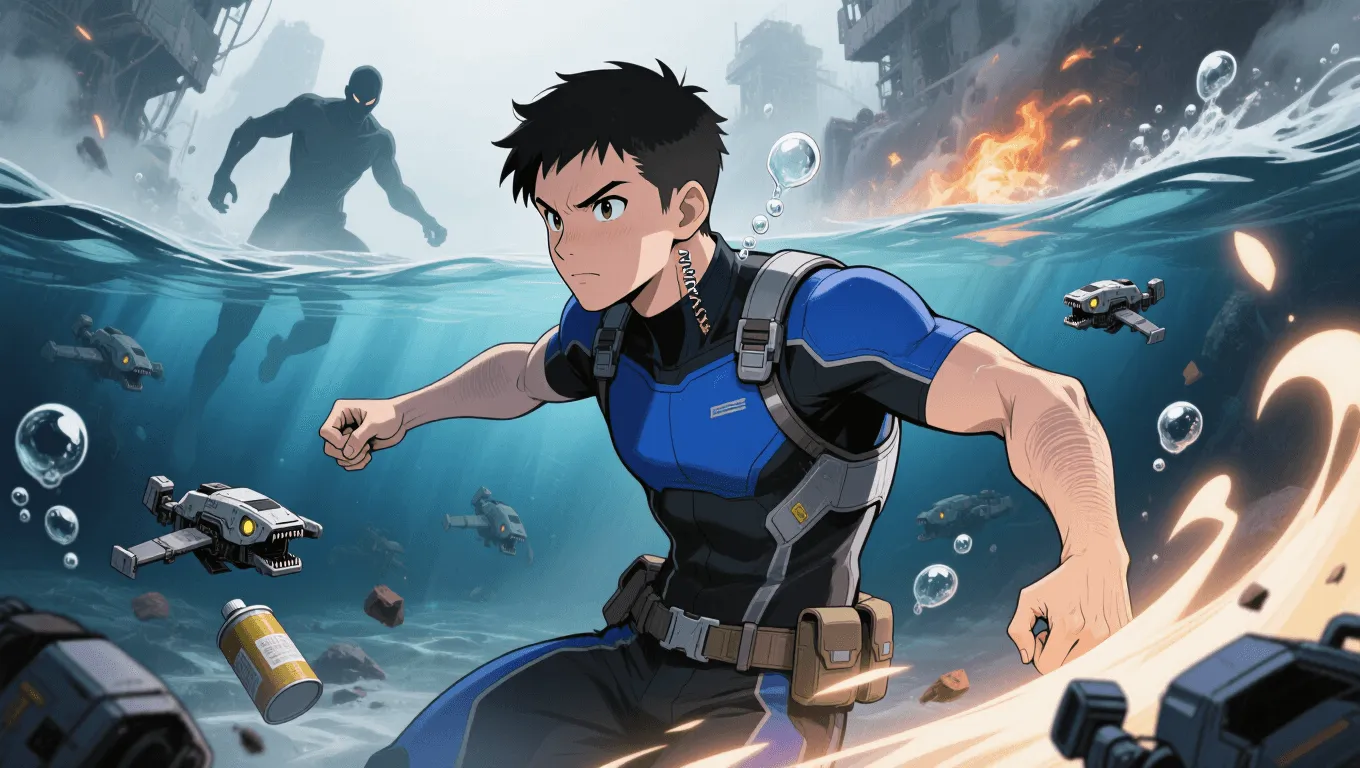
At Level 2, adaptation becomes faster and broader:
-
The user can breathe in multiple mediums (underwater or in contaminated air), resist stronger poisons, and handle severe heat/cold swings.
-
Pressure tolerance improves, allowing deep dives or high-altitude operations without decompression issues.
-
The body may develop situational traits—temporary gills, thicker skin, altered vision in darkness/fog, or improved filtration.
Combat impact: Level 2 users can intentionally drag fights into hostile zones, shrug off chemical warfare, and remain effective across changing environments.
Level: Level 3 🌃

At Level 3, Environmental Adaptation approaches “anywhere survival”:
-
Near-instant physiological redesign to counter extreme conditions (vacuum, radiation bursts, supertoxic atmospheres, crushing depths).
-
Enhanced extremophile physiology: cells behave like organisms built for the most hostile niches, with repair and shielding baked in.
-
The user can maintain performance while adapting, rather than having to “pause” and endure a painful transition.
Combat impact: Level 3 users become terrain-proof. The environment stops being a limitation and becomes a tool—one they can weaponize against opponents who still need air, warmth, and stable biology.
Limitations of using the Environmental Adaptation
Environmental Adaptation can feel unstoppable unless a world’s rules keep it honest. Common limitations include:
-
Reactive, not predictive: Many versions adapt only after exposure. A sudden one-shot hazard (instant incineration, total disintegration, or immediate vacuum without any buffer) may land before the body can respond.
-
Energy and resource cost: Rapid adaptation can burn calories, dehydrate the user, or cause exhaustion afterward. Surviving “anything” might still mean the user must rest, eat, or recover.
-
Trade-offs during transformation: A body optimized for deep water might sacrifice speed on land, dexterity, or fine motor control. Some adaptations are protective but bulky.
-
Adaptation lock-in: The body may overcommit to one survival mode. If the environment changes rapidly again, the user may lag behind or suffer “adaptation whiplash.”
-
Not a cure-all against non-environmental threats: Mind control, illusions, soul attacks, or pure reality manipulation may bypass physiology entirely.
-
Biological ceiling: If the power is grounded in biology, it may struggle against conditions that require impossible chemistry (for example, surviving in a dimension with no meaningful physical laws).
In short, Environmental Adaptation keeps the user alive—but it doesn’t automatically make them the strongest hitter in the room.
Weakness against what other superpowers
Environmental Adaptation is strongest against terrain and elemental pressure. It tends to be weakest against powers that ignore terrain and biology.
-
Power Nullification / Dampening: If abilities can be shut off, an adaptive user can be forced back into baseline human limits mid-hazard.
-
Reality Warping: Changing the rules of physics or causality can override any “natural” physiological fix.
-
Time Manipulation: Stopping time or rewinding damage can bypass the advantage of endurance and incremental adaptation.
-
Molecular Disintegration / Matter Erasure: Attacks that remove matter faster than the body can respond can outpace adaptation.
-
Psychic Assault and Emotion Manipulation: Mental control can force bad decisions or shut down the will to fight—areas Environmental Adaptation does not directly cover.
-
Curse-based or occult effects: If the setting treats curses as metaphysical rather than biochemical, adaptive physiology may not provide meaningful defense.
-
Battlefield sealing (Creation, Force Constructs): Trapping the user in a perfectly sealed, inescapable space can limit the tactical value of terrain-proofing—especially if oxygen and resources are removed faster than the user can compensate.
A good counter theme is “bypass the body” or “end it instantly.” Environmental Adaptation excels at surviving; it struggles when survival is not the axis of the fight.
Synergistic Power Combos
Environmental Adaptation becomes far more dangerous when paired with powers that cover its gaps or exploit its endurance.
-
Healing Factor: Adaptation reduces incoming harm; regeneration repairs what slips through. Together, they create relentless survivability and reduce the energy “tax” of constant adaptation.
-
Energy Absorption: If the environment is hostile because of energy (heat, radiation, electricity), absorbing that energy turns danger into fuel.
-
Density Control: Adapting internally while changing body density helps manage pressure, blunt force, and impacts—useful for deep-sea combat or meteor-like strikes.
-
Phasing: When adaptation is too slow for an instant hazard, intangibility provides the emergency button. Phase first, adapt second.
-
Technopathy: Adaptive operators paired with controlled gear can push into any zone, then hack defenses and infrastructure from inside.
-
Electromagnetic Manipulation: Controls many “environmental” variables—ionized air, radiation bands, electrical storms—so the adaptive user can shape the arena while remaining immune to its backlash.
-
Psychic Shield: A classic complement that protects the mind while the body handles the physical extremes.
For power-build inspiration, browsing the full list on superpower wiki or rolling random superpower generator can help identify pairings that create distinct combat roles (scout, saboteur, tank, or deep-environment specialist).
Known Users
Fiction often depicts Environmental Adaptation either as broad “anywhere survival” or as reactive evolution—automatic transformation in response to danger.
-
Darwin (Armando Muñoz, Marvel Comics): Darwin is widely described as having reactive evolution—his body continuously transforms to adapt to threats and survive danger.
-
Doomsday (DC Comics): Doomsday is frequently characterized by the ability to develop resistances and evolve in response to injuries or methods used against him, making repeated tactics less effective over time.
-
Hulk (Marvel Comics, situational examples): Some references categorize Hulk as capable of adapting to survive extreme environments under certain conditions or story interpretations (often framed as a reactive survival trait rather than a precise, controlled ability).