
Gravity Manipulation
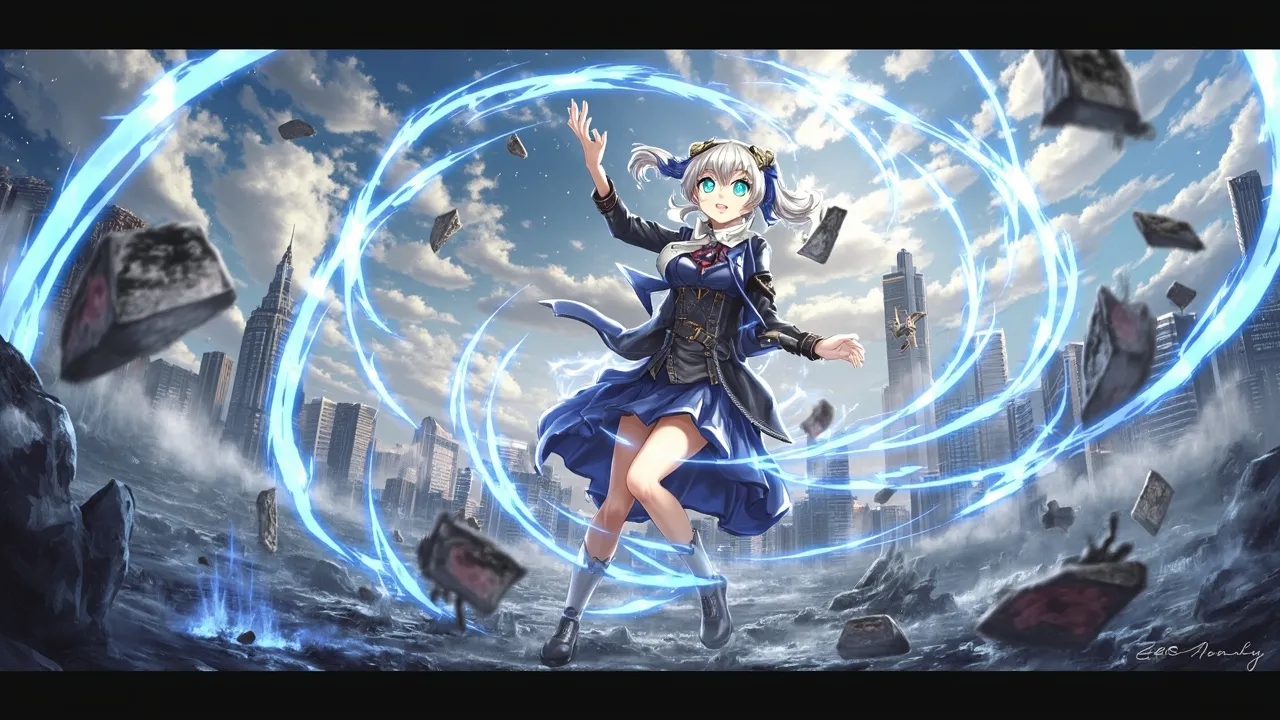
Gravity Manipulation Video Demo 🎬
Table of Contents
What Is Gravity Manipulation
Gravity Manipulation is the power to control gravity itself—raising, lowering, or redirecting gravitational pull to make things float, slam down, or get flung across a battlefield. In simple terms, it lets a user change how heavy something feels and which “direction” down points in a chosen area. This ability is sometimes called gravity control or gravikinesis, and it can be used on the user’s own body, individual targets, or an entire zone depending on skill and range.
Because gravity affects everything with mass, Gravity Manipulation has a reputation as a high-impact superpower. Even small tweaks—like making an opponent’s boots feel twice as heavy—can ruin balance, slow movement, and break timing. At higher mastery, it becomes a full-spectrum tool: mobility, crowd control, defense, and devastating finishing moves.
For more powers like this, readers can explore our list of abilities on the Superpower List, or jump to the random superpower generator homepage to discover something unexpected.
Core abilities of Gravity Manipulation
Gravity Manipulation tends to show up as a “toolbox” power. Different users may specialize in one approach, but the classic core abilities include:
-
Personal gravity shifting: Adjusting one’s own gravitational field to become lighter (for leaps, hovering, flight-like movement) or heavier (for stability, anchoring, harder hits, resisting knockback).
-
Weight manipulation on targets: Making objects or opponents feel heavier or lighter without changing their size. This can immobilize, exhaust, or launch targets.
-
Gravity direction control: Turning “down” sideways or upward within a selected zone, forcing enemies to fall into walls, ceilings, or into prepared hazards.
-
Gravity wells: Creating a pull point that drags debris, projectiles, or enemies inward—useful for grouping targets or disarming ranged attackers.
-
Repulsion and push fields: Reversing the pull to shove enemies away, deflect incoming objects, or create breathing room.
-
Crush pressure: Intensifying gravity around a target to pin them, compress armor, or buckle structures.
-
Precision levitation: Floating objects and moving them by changing local gravity vectors rather than “grabbing” them like telekinesis.
-
Orbital control: Keeping debris circling the user as a rotating shield or ammunition reserve.
-
Area denial: Making an entire patch of ground “too heavy to cross” or “too slippery to stand on” by altering gravity and traction indirectly.
-
Micro-control tricks: Stabilizing one’s aim, canceling recoil, keeping footing on unstable surfaces, or preventing falls by briefly reducing gravity.
Many fictional portrayals describe this as graviton control—manipulating the “carriers” of gravitational interaction—though stories often treat it as a direct mental or energy-driven command of gravity.
Application / Tactical Advantages in Combat
Used creatively, Gravity Manipulation can dominate fights without relying on raw strength. It rewards positioning, timing, and environmental awareness.
-
Instant crowd control: Increasing gravity in a radius can drop multiple enemies to their knees, disrupt charges, and end aerial mobility. Even durable opponents struggle if they can’t move or breathe properly under crushing force.
-
Clean disarms and weapon denial: A quick gravity shift can yank guns, blades, or shields out of hands, or slam them into the ground. Alternatively, lowering gravity can make thrown weapons drift harmlessly off-course.
-
Mobility that ignores terrain: Reducing personal gravity enables long jumps, rooftop traversal, and controlled descent. Changing direction can turn walls into “floors,” letting the user attack from angles that defenders aren’t watching.
-
Projectile control without “catching”: A gravity well can bend arrows, bullets (in fiction), or chunks of rubble toward a trap zone. Conversely, a repulsion burst can turn a hail of debris into a protective outward blast.
-
Environment weaponization: Everything nearby becomes potential ammunition—stones, metal beams, vehicles, even dust clouds can be pulled, lifted, and launched by redirecting gravity instead of muscling objects around.
-
Anti-brute solution: Against super strength, increasing gravity steals mobility and stamina. A powerhouse who can lift a car still struggles when their own body suddenly “weighs” several times more.
-
Finisher setups: Classic finishing sequences include pin-and-crush, gravity inversion slam, or a high-altitude drop created by levitating a target and then restoring normal gravity at the worst moment.
-
Defensive anchoring: By increasing personal gravity, the user can resist knockback, explosions, or wind-based powers, staying planted while others get thrown around.
Skilled users often fight like tacticians rather than brawlers: they shape the battlefield, force mistakes, then end the encounter with a decisive gravity spike.
Level: Level 1 🏙️
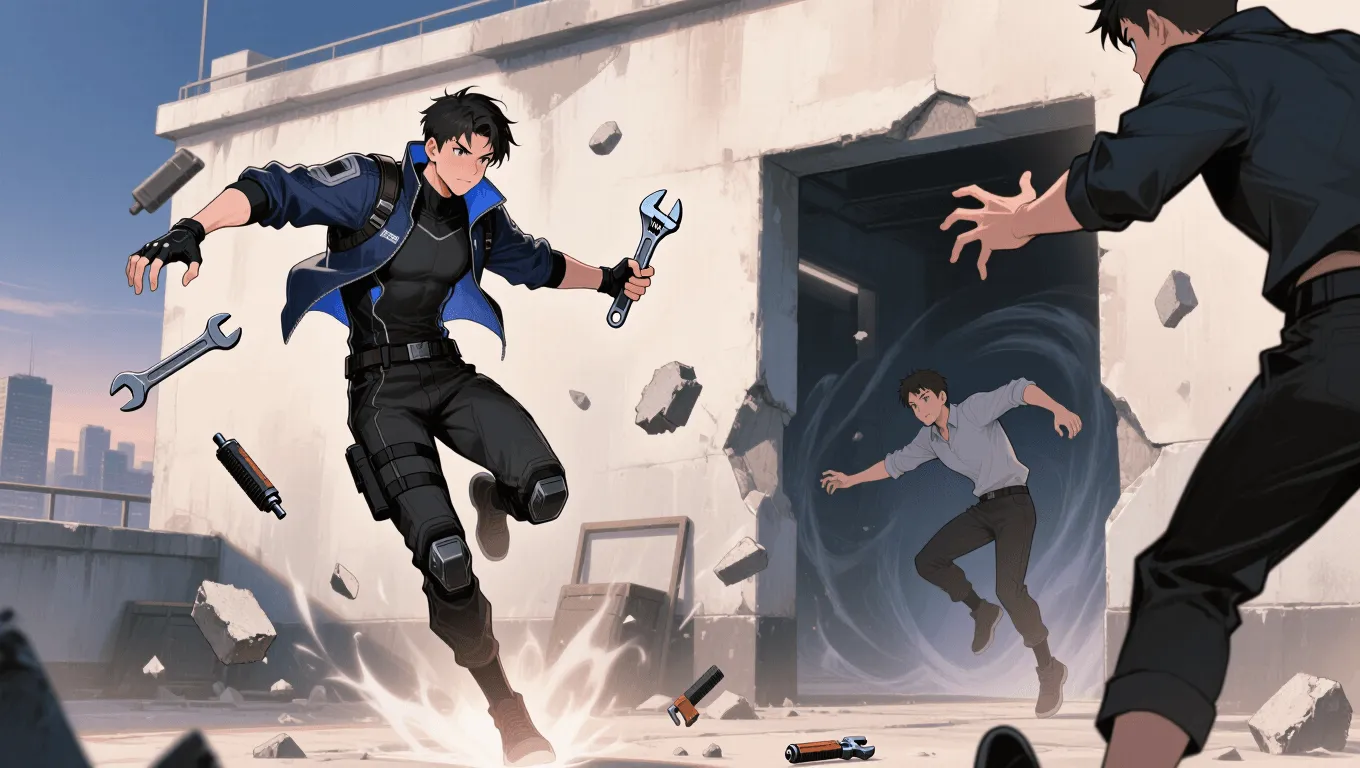
At Level 1, Gravity Manipulation is mostly personal and close-range.
-
Lighten the body for boosted jumps, short hovering, safer landings, and quick direction changes.
-
Increase gravity on a single target briefly to stumble them, interrupt attacks, or pin a limb.
-
Make small objects float or drop on command (tools, debris, loose weapons).
-
Create momentary “heavy zones” the size of a doorway to slow pursuers.
At this level, the power is strong but not unstoppable. It typically requires concentration, line-of-sight, or short distance to be reliable.
Level: Level 2 🌇
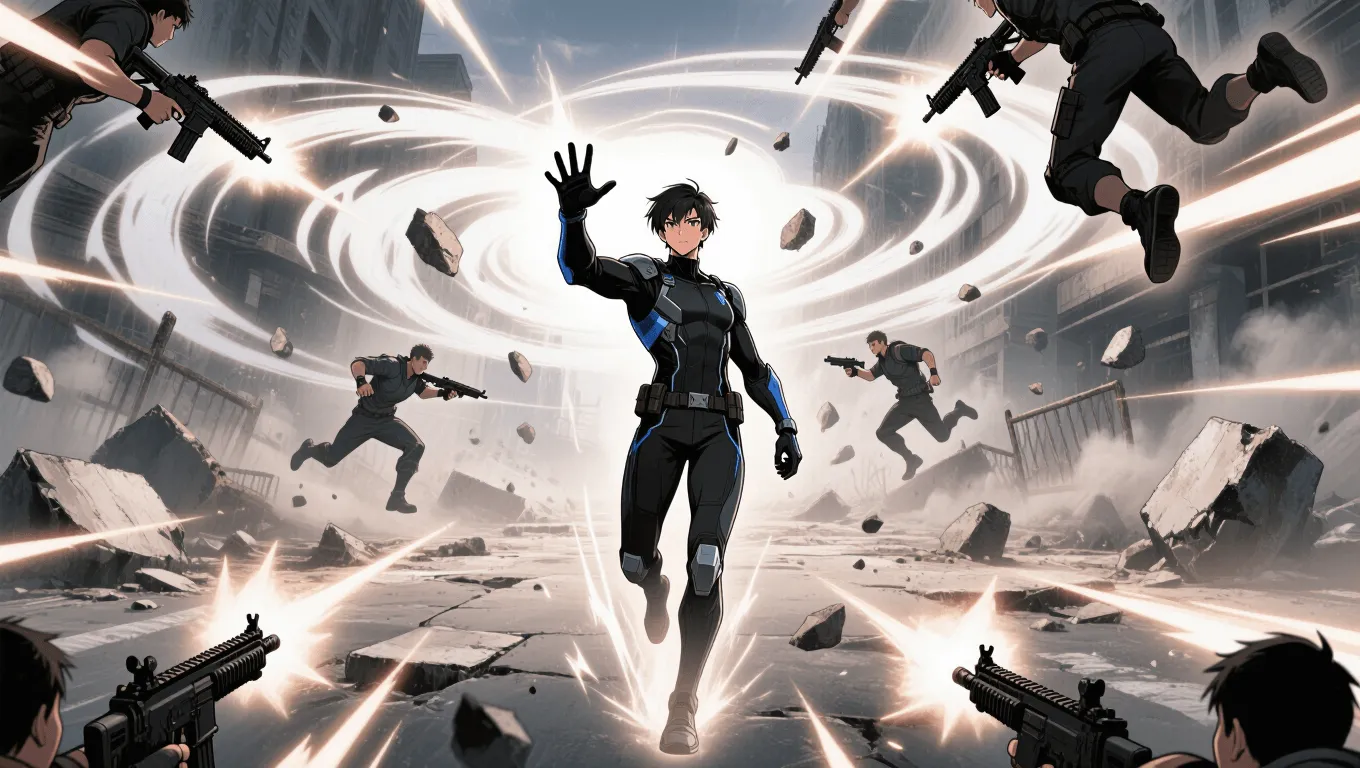
At Level 2, the user gains consistent area control and real combat dominance.
-
Create sustained gravity wells that pull groups together or strip ranged weapons out of hands.
-
Redirect gravity direction in a defined zone to slam enemies sideways into cover, walls, or hazards.
-
Maintain controlled flight-like movement by continuously lowering personal gravity while steering vectors.
-
Apply crushing pressure that can dent armor, crack concrete, and immobilize multiple foes.
-
Use orbiting debris as a rotating shield and a rapid-fire projectile source.
This is also where “soft control” becomes lethal: the user doesn’t need to crush someone directly if they can make them fall, collide, or get trapped.
Level: Level 3 🌃
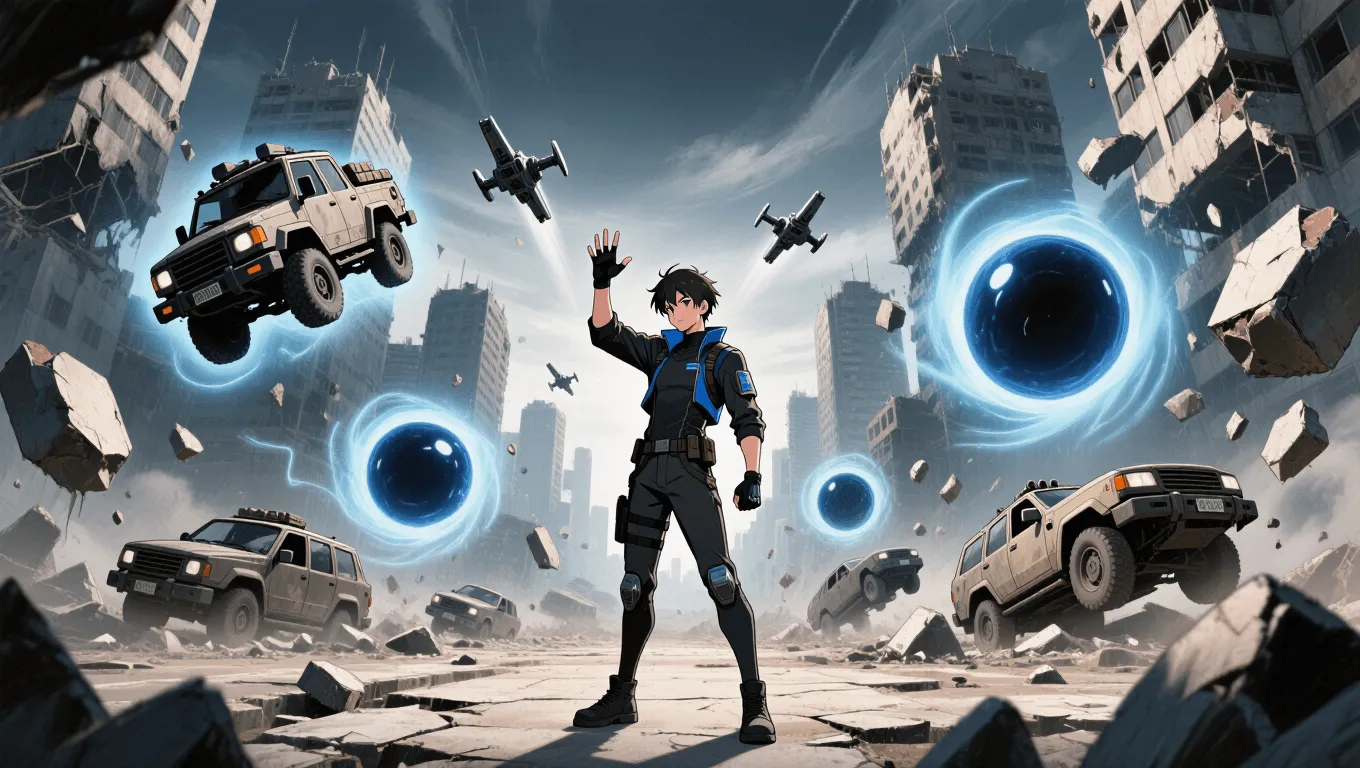
At Level 3, Gravity Manipulation becomes a large-scale, high-precision force that can reshape entire encounters.
-
Manipulate gravity across wide zones (streets, multiple buildings, battlefield sectors).
-
Pin heavy vehicles, pull airborne threats out of the sky, or keep massive debris suspended as a threat.
-
Produce extreme tidal-like forces (in fiction) that tear formations apart by pulling different parts in different directions.
-
Generate ultra-dense gravity wells that act like localized singularity-style traps in storytelling terms (often used sparingly due to risk).
-
Control multiple targets at once with independent vectors—lifting one, slamming another, shielding with orbiting debris simultaneously.
Fiction often portrays top-tier gravity users as capable of moving enormous masses and reshaping terrain, with some characters described as able to perform feats on the scale of islands or mountains. Limitations of using the Gravity Manipulation
Despite its versatility, Gravity Manipulation is rarely “free.”
-
Focus and mental load: Holding several gravity effects at once can overwhelm attention. Losing focus at the wrong moment can drop allies, release restrained enemies, or collapse a defensive field.
-
Area collateral risk: Gravity doesn’t discriminate. Increasing gravity in a zone can injure civilians, damage structures, and turn loose objects into dangerous falling hazards.
-
Mass and range constraints: Many users have a practical limit on how heavy a target they can affect, how far they can project a field, or how long they can sustain it.
-
Precision difficulties: Fine control—like lifting a person without breaking ribs or crushing organs—requires practice. “Crush pressure” is especially risky if the user can’t regulate force.
-
Counter-mobility issues: Enemies who can teleport, phase, or rapidly reposition can escape gravity zones before they fully take hold.
-
Environmental drawbacks: In cramped spaces, violent gravity shifts can cause building collapse, limiting the user’s ability to go all-out without self-endangerment.
-
Reaction time: Gravity effects may have a slight ramp-up in some settings; fast attackers can exploit the gap between intent and effect.
-
Narrative “physics rules”: Many worlds impose limits like line-of-sight, touch-based activation, or immunity from certain materials or force fields.
In short, Gravity Manipulation is strongest when the user can control the pace of the fight. When forced into chaos, the power becomes harder to aim safely.
Weakness against what other superpowers
Gravity Manipulation has natural counters—powers that ignore weight, evade zones, or negate fundamental forces.
-
Teleportation: Instant relocation bypasses gravity wells and heavy zones.
-
Intangibility / phasing: If the target can’t be “held” by normal interaction, pinning becomes unreliable.
-
Space-warping / portals: Manipulating distance and direction can disrupt the geometry a gravity user relies on.
-
Gravity immunity / anti-gravity: Some characters or tech are simply unaffected by changes in gravity.
-
Power nullification: Turning off abilities removes the gravity user’s main advantage.
-
Immutability or absolute anchoring: If a target cannot be moved or altered by external forces, gravity shifts may not displace them.
-
Strong force fields: Barriers can block debris, reduce environmental weaponization, and buy time to escape.
-
Extreme durability + ranged pressure: A foe who can tank crush force and attack from far away can force the gravity user into defensive overuse.
Notably, Gravity Manipulation is often mistaken for telekinesis, but it behaves differently: it changes how things fall and press rather than “grabbing” objects with a mental hand. That distinction matters because telekinetic shields or inertia-based movement tricks may counter gravity changes in ways pure strength cannot.
Synergistic Power Combos
Gravity Manipulation becomes even scarier when paired with powers that amplify control, damage, or battlefield shaping.
-
Telekinesis: Telekinesis provides precise “hands,” while gravity provides area control. Together, they enable brutal combos: gravity pin plus telekinetic disarm, or telekinetic aim plus gravity-accelerated projectiles.
-
Flight or jet propulsion: Independent movement lets the user reposition while maintaining gravity fields, avoiding the “stationary controller” weakness.
-
Force fields: A barrier prevents collateral debris from harming allies while the gravity user changes the battlefield.
-
Magnetism: Magnetism collects metal; gravity accelerates it. The combo creates high-speed shrapnel storms, rotating shields, or focused impact strikes.
-
Earth manipulation: Earth powers provide endless ammunition and terrain shaping; gravity powers launch, compact, or suspend that terrain for traps and walls.
-
Time manipulation: Slowing time makes gravity vectors feel instantaneous and unavoidable, while the gravity user sets perfect slams and pins.
-
Darkness or smoke generation: Obscuring vision plus gravity traps is devastating—enemies stumble into heavy zones before they understand what changed.
-
Super strength: Strength handles close-range finishes; gravity handles setup, immobilization, and bringing enemies into grappling distance.
The most effective pairings share a theme: gravity controls motion, and the partner power decides what happens once targets can’t move normally.
Known Users
Gravity Manipulation appears across comics, anime, and games, often assigned to characters who feel “inevitable” in combat.
-
Graviton (Marvel Comics): Franklin Hall is a classic gravity-based supervillain, frequently depicted using gravity manipulation to immobilize enemies, levitate, and unleash overwhelming force.
-
Gravity (Marvel Comics): Gregory “Greg” Willis is a superhero whose listed abilities include gravity manipulation, often used for flight-like movement, forceful pulls, and protective control around himself and nearby objects.
-
Admiral Fujitora (One Piece): The Zushi Zushi no Mi grants its user the power to generate potent gravitational forces, including pulling massive objects and dragging meteors down in the series’ depiction.
Readers looking to compare Gravity Manipulation with related abilities—like force control, anti-gravity, or fundamental force powers—can browse our full catalog on the Superpower List or roll something new on the random superpower generator homepage.