
Immobility Superpower Guide

Immobility Video Demo 🎬
Table of Contents
Immobility is the superpower that allows a character to remain completely unmoved by any external physical force. Whether it is a punch, an explosion, a charging monster, or a collapsing building, a user of Immobility can stand their ground with an unshakable stance. While other heroes rely on speed or agility, this power turns staying still into an indestructible shield and a powerful tactical tool.
What Is Immobility
Immobility is the ability to resist all external attempts to move the body. The user can choose to “lock in” their position so that no push, pull, knockback, or environmental force can dislodge them. Unlike paralysis, Immobility does not mean the user is helpless; they can still breathe, speak, use other powers, and often move their limbs. What becomes fixed is their position in space.
In many interpretations, this is similar to the classic “immovable object” concept. Once the user decides to become unmovable, they effectively anchor themselves to their current spot. This can be achieved through superhuman stability, density manipulation, gravity locking, or subtle reality-bending, depending on the setting.
On a larger scale, Immobility can also extend to objects the user is in contact with, such as a shield, a weapon, or even a vehicle or building they choose to anchor. This turns them into a defensive pivot on the battlefield.
If someone wants to explore how Immobility compares to other defensive abilities, it fits neatly among durability, force fields, and resistance-type powers in any list of superpowers.
Core abilities of Immobility
Absolute resistance to physical force
The core ability of Immobility is motion resistance. Once activated, external forces—such as punches, kicks, tackles, shockwaves, or even speeding cars—cannot move the user from their chosen spot. The force may still cause damage if it bypasses durability, but it cannot create knockback or displacement.
In many versions of the power:
-
The user is immune to shove and push effects.
-
They cannot be thrown, tackled away, or sent flying.
-
They negate knockback from explosions, recoil, or heavy impacts.
This makes them extremely valuable as a frontline tank or guardian.
Impact absorption and damage reduction
Some versions of Immobility come with impact mitigation. Because the user does not move, the force of an attack is dispersed into the ground, into their power, or into a protective field around their body. This can create:
-
Reduced blunt-force trauma from punches and collisions
-
Partial or full resistance to being crushed or trampled
-
A “wall effect,” where attackers suffer recoil instead
In more advanced interpretations, Immobility may border on invulnerability against physical blows, turning the user into a living shield.
Anchoring other objects
A powerful extension of Immobility is anchor projection. The user can touch an object and make it share their unmovable state. This could apply to:
-
A shield that cannot be knocked away
-
A door that cannot be forced open
-
A vehicle that cannot be pushed off a ledge
-
A bridge or structure temporarily stabilized during an earthquake
This allows the character to protect allies, fortify defensive positions, and control the battlefield by choosing what stays in place.
Territory control and chokepoints
Because an immovable character cannot be displaced, they excel at controlling chokepoints like doorways, tunnels, hallways, and narrow bridges. Their body becomes a living barrier. Enemies must either go around, attack from range, or find creative counters.
Paired with high durability or armor, one Immobility user can hold back entire squads, monsters, or even vehicles simply by standing in the right place.
Psychological intimidation
Immobility is also a psychological weapon. A foe who charges at full speed, only to bounce off a perfectly still opponent, quickly realizes brute force will not work. This can:
-
Demoralize aggressive enemies
-
Force villains to change tactics
-
Make the user appear unstoppable and fearless
That unshaken posture is often iconic for characters with this power.
Application / Tactical Advantages in Combat
In combat, Immobility is a defensive and positional powerhouse.
-
Frontline tank: The user can stand at the front of the team and soak up incoming rush attacks, denying enemies direct access to weaker allies.
-
Shield for allies: By planting themselves between civilians or teammates and danger, they serve as an unbreakable barrier against charging foes or rampaging beasts.
-
Counter to knockback-heavy foes: Enemies who rely on knockback, charge attacks, or crowd-control shoves quickly lose their edge. The immovable hero simply does not budge.
-
Environmental defense: The user can hold a collapsing door, brace against stampeding crowds, or block a falling object, preventing catastrophic chain reactions.
-
Control of narrow spaces: By positioning at stairs, gates, or corridors, they can choke entire armies, forcing them to fight in small numbers.
In more creative tactics, Immobility can also turn offense:
-
Enemies who crash into the user can injure themselves.
-
A charging opponent might be knocked out by their own momentum.
-
Vehicles can crumple against the user, while they remain unharmed and unmoved.
When combined with other powers from a random superpower generator, Immobility easily becomes the backbone of defensive and crowd-control strategies.
Level: Level 1 🏙️, Level 2 🌇, Level 3 🌃
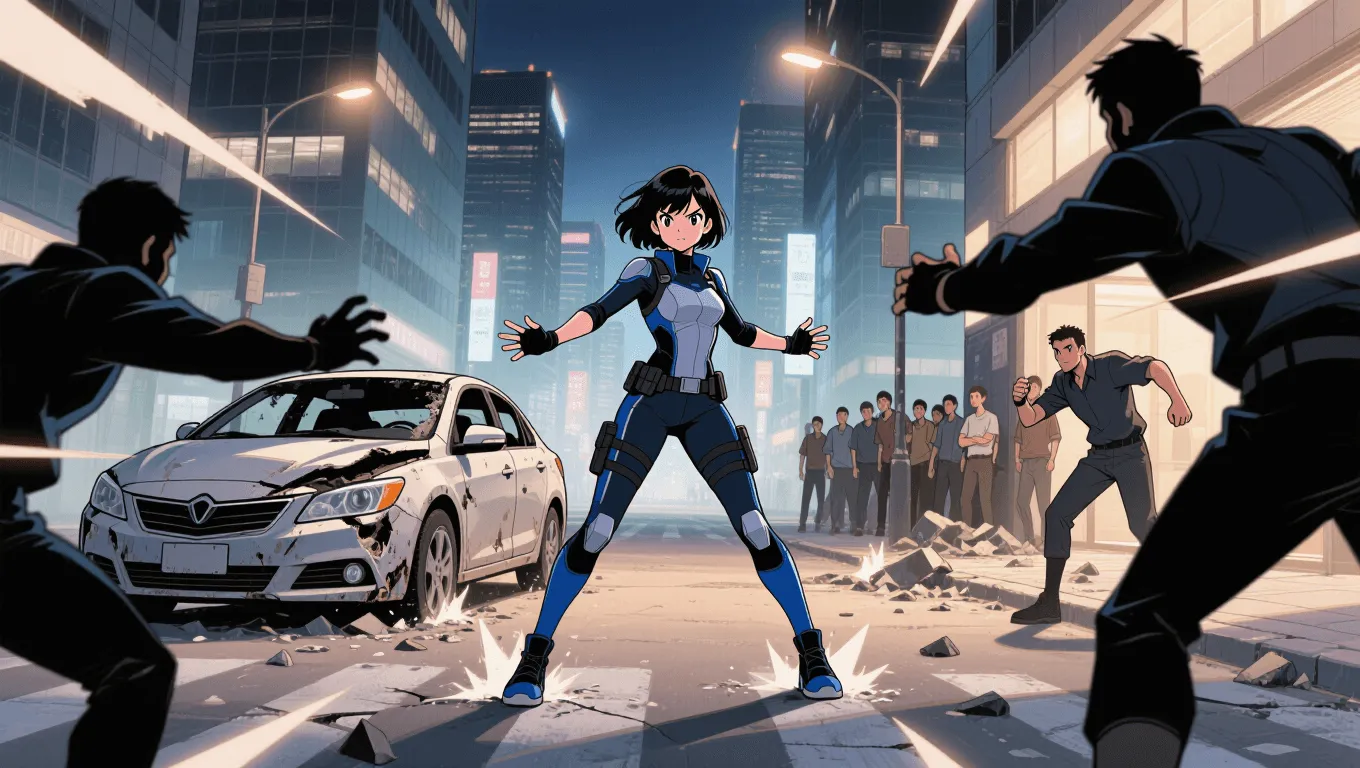
Level 1 🏙️ – Street-level stability
At Level 1, Immobility is strong but not absolute.
-
The user can resist basic shoves, tackles, and most human-level impacts.
-
Small explosions or car bumps may move them slightly, but not throw them far.
-
They can hold a doorway against a few attackers or brace against a light vehicle.
Here, the power works best in street-level heroics: stopping fleeing criminals, blocking doors, and protecting civilians from debris.
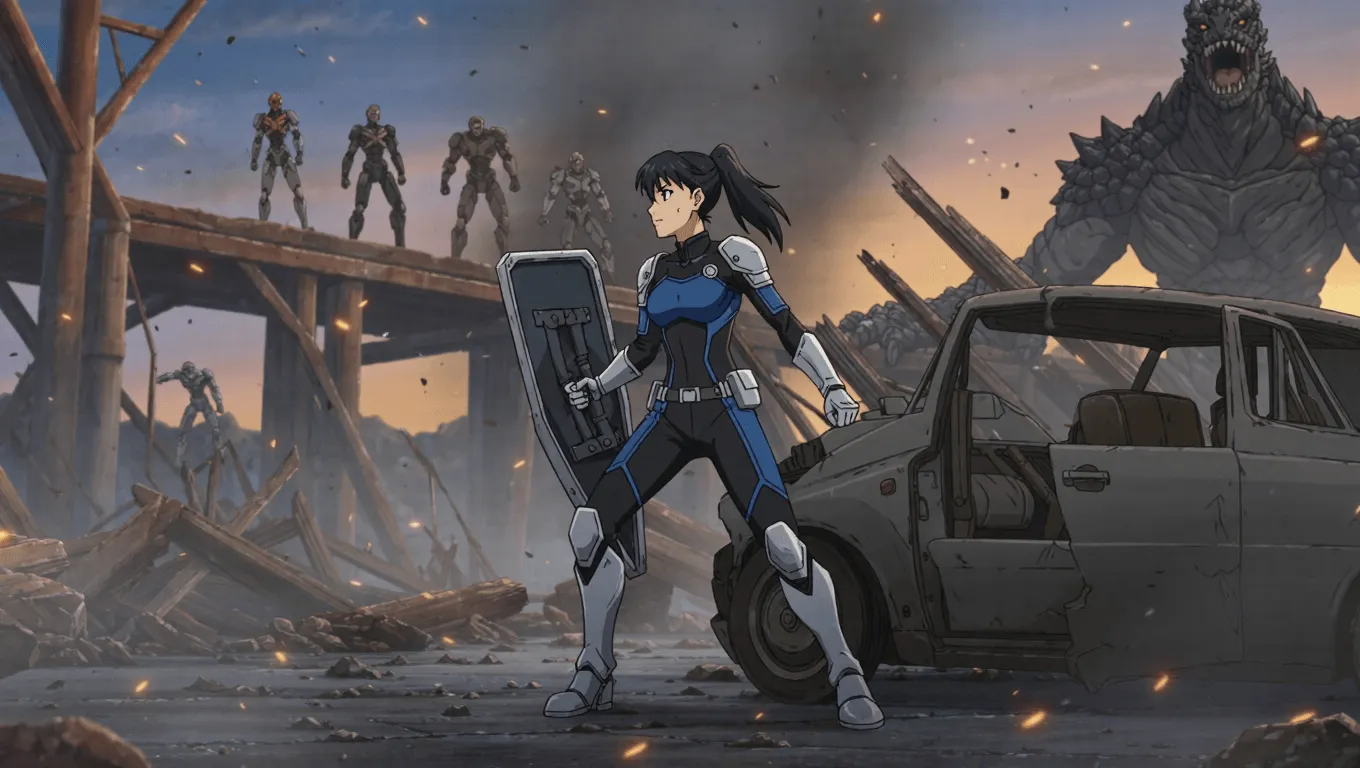
Level 2 🌇 – Superhuman anchor
At Level 2, Immobility becomes superhuman.
-
The user can stand firm against speeding cars, powerful monsters, and many superhumans.
-
Knockback from mid-sized explosions, shockwaves, or heavy projectiles is negated.
-
They can anchor objects they are touching—like a shield or a door—so those objects cannot be forced aside easily.
At this stage, they can hold bridges, brace collapsing structures, and stand as a near-absolute wall on the battlefield.
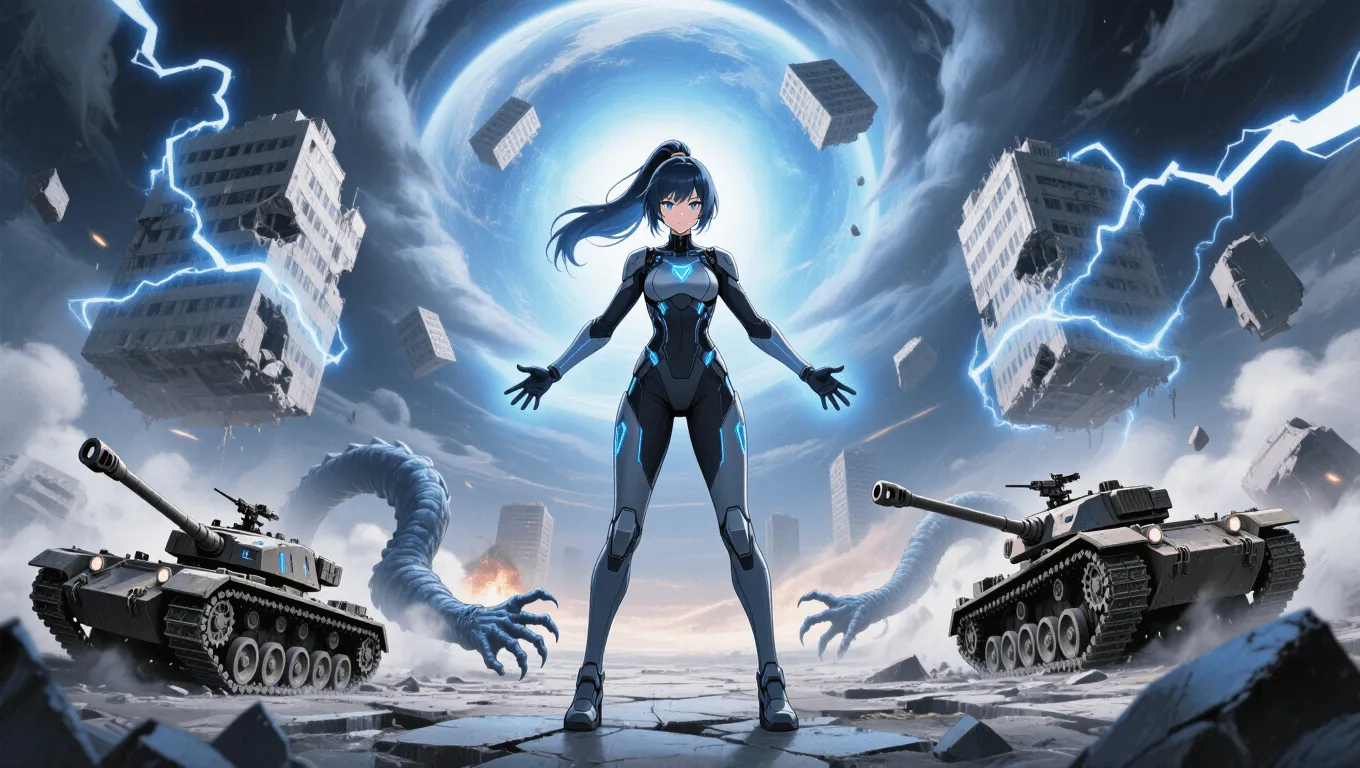
Level 3 🌃 – Cosmic immovable object
At Level 3, Immobility reaches legendary or cosmic levels.
-
The user cannot be moved by almost any physical force, including tanks, giant monsters, or enormous shockwaves.
-
They may withstand building-level or even city-level impacts without budging.
-
Their anchoring can extend to large areas or multiple objects at once, stabilizing entire structures or vehicles.
-
In extreme cases, they might ignore planetary-level forces such as hurricane winds or earthquake tremors.
At this level, Immobility starts to bend physics, turning the user into a true “immovable object” that even reality struggles to displace.
Limitations of using the Immobility
Even an unmovable hero has limits:
-
Voluntary stillness requirement: The user usually must choose when to become immovable. If caught off guard, they might be displaced before activating the power.
-
Limited mobility while active: Depending on the interpretation, they may not be able to walk or dodge while the power is fully engaged. They must deactivate Immobility to reposition, which can create openings.
-
Line-of-attack dependence: If the enemy does not need to move them—such as using ranged attacks or targeting allies—Immobility provides no direct protection.
-
Durability is separate: Being unmovable does not always mean being indestructible. High kinetic energy can still cause internal damage unless they also have superhuman durability or impact absorption.
-
Environmental vulnerability: The user cannot be pushed, but they can still be buried, surrounded, frozen, or sealed away if opponents manipulate the environment.
-
Energy and stamina cost: Some versions of the power require intense focus or drain the user’s energy if maintained for long periods.
Because of these limitations, a wise Immobility user must choose when and where to plant themselves and coordinate with allies for cover and support.
Weakness against what other superpowers
Immobility is not unbeatable. Certain superpowers naturally counter or bypass it:
-
Teleportation: An enemy who can teleport themselves or the user can reposition them without “pushing.” The user may be unmovable at one location, but can be relocated instantaneously.
-
Phasing / intangibility: A foe who can pass through solid matter simply walks around or through the immovable barrier.
-
Ranged energy attacks: Beams, fire, lightning, and other elemental or energy powers can hit the user or their allies from a distance, without needing to move them.
-
Gravity manipulation: Changing gravity’s direction or intensity can circumvent normal “force” interactions, potentially pinning the user or causing them harm while they remain in place.
-
Telepathy and mind control: If the user is mentally dominated, they may willingly deactivate Immobility or move themselves, undoing their main advantage.
-
Molecular or reality manipulation: Powers that reshape matter, space, or reality can remove the ground beneath them, erase the user, or alter the rules that make them unmovable.
-
Size manipulation: A foe who can grow colossal or shrink might find angles and methods to circumvent the narrow area the user is blocking.
These counters keep Immobility balanced in a superpowered setting, ensuring that strategy and teamwork remain essential.
Synergistic Power Combos
Immobility shines when combined with other abilities. Some strong power combos include:
-
Immobility + Super strength: The user cannot be moved, but they can still strike. This creates devastating counterattacks, as enemies who rush them can be met with perfectly stable, high-impact blows.
-
Immobility + Durability or invulnerability: This turns the user into an almost perfect wall—high defense plus zero knockback. Ideal for guarding objectives, leaders, or civilians.
-
Immobility + Force fields or barriers: They can project a shield and then anchor themselves, preventing any attempt to shove the protective field aside. This is effective for team-wide protection.
-
Immobility + Earth or metal manipulation: The user can merge with or anchor themselves into the terrain, forming fortified strongpoints, barricades, and barricaded chokepoints.
-
Immobility + Energy redirection / reflection: If they can reflect attacks, enemies effectively damage themselves and their allies when they attempt to break through.
-
Immobility + Telekinesis: While the user cannot be moved, they can use telekinesis to move enemies and objects around them, effectively controlling the battlefield from a fixed point.
These combinations transform Immobility from a purely defensive stance into a versatile and strategic cornerstone of many team compositions.
Known Users
Several fictional characters across comics, anime, and games demonstrate Immobility-like abilities, even if they are not always labeled with that exact superpower name.
-
A classic example is Blob (Fred Dukes), a mutant whose body becomes effectively immovable once he plants himself. He resists being pushed, thrown, or displaced, and uses his mass as a living wall.
-
Characters with unstoppable or unshakable stances in martial arts series often display partial Immobility, standing firm against stronger opponents by redirecting or grounding force.
-
Some earth or stone-based heroes and villains can root themselves into the ground, making themselves an unmovable bulwark during sieges or large-scale battles.
-
Certain tank-style characters in games are designed around anti-knockback and anchor mechanics, letting them hold objectives or narrow lanes against overwhelming odds.
These examples show how Immobility fits naturally into many genres as the ultimate stand-your-ground power—simple in concept, but incredibly deep in tactical use.