
Ink Manipulation (Melanokinesis)
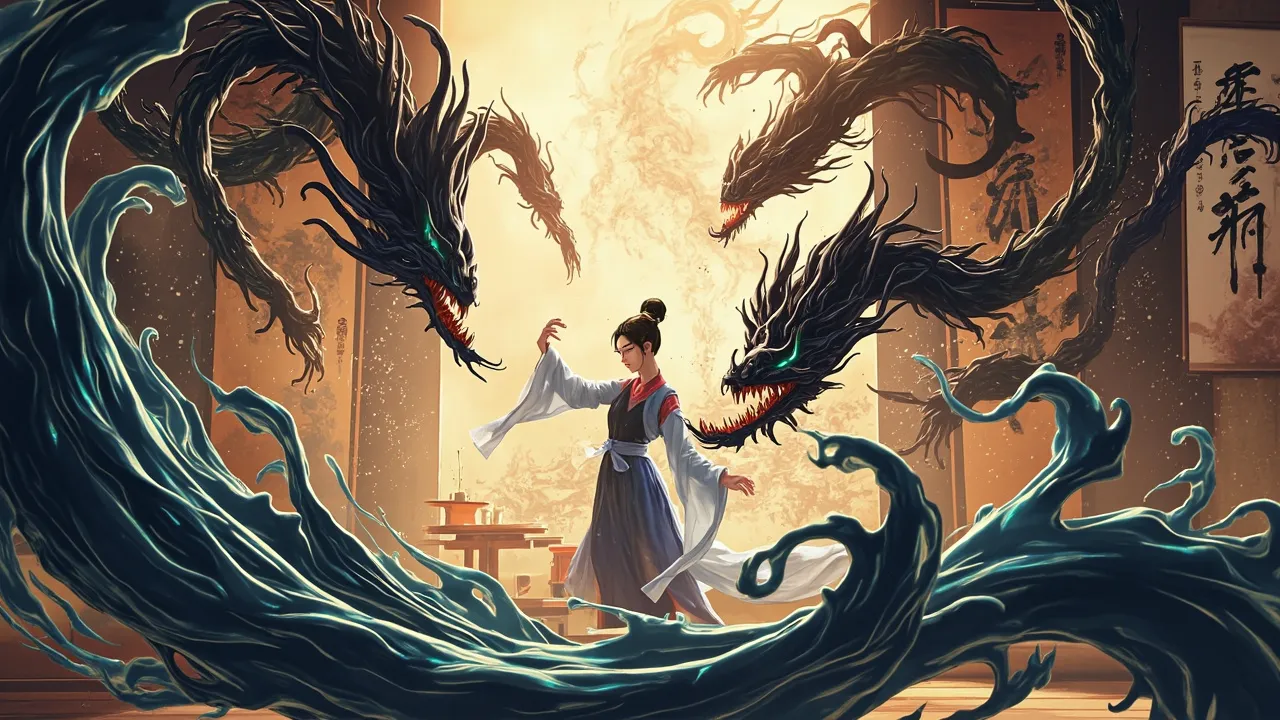
Ink Manipulation (Melanokinesis) Video Demo 🎬
Table of Contents
- Ink Manipulation (Melanokinesis) Video Demo 🎬
- What Is Ink Manipulation
- Core abilities of Ink Manipulation
- Application / Tactical Advantages in Combat
- Level: Level 1 🏙️, Level 2 🌇, Level 3 🌃
- Limitations of using the Ink Manipulation
- Weakness against what other superpowers
- Synergistic Power Combos
- Known Users
What Is Ink Manipulation
Ink Manipulation, also called Melanokinesis, is the superpower to create, control, and animate ink for attacks or artistry. Within the first moments of witnessing Ink Manipulation, observers typically notice two defining traits: ink can behave like a living fluid, and it can be shaped with deliberate intent into symbols, tools, or threats. In practical terms, the user can generate ink, move it through the air or across surfaces, and reshape it into anything from simple strokes to complex animated forms.
In stories and RPG-style worlds, Ink Manipulation sits at a fun crossroads between “elemental control” and “creative magic.” It can look like spellcasting through calligraphy, like living graffiti crawling over walls, or like weaponized streams of black fluid that bind and strike. Readers who want to compare it with related powers can browse a wider catalog on the superpowers list page, or roll a fresh concept through the random superpower generator.
Core abilities of Ink Manipulation
Ink Manipulation (Melanokinesis) is versatile because ink is both a material and a medium. Depending on the user’s skill, the power commonly branches into several core ability groups:
Ink generation and replenishment
The user can produce ink from their body, from the air, or from a personal “reserve.” This supports sustained combat and continuous artistry without needing physical supplies.
Ink control and movement
Ink can be directed like telekinesis, flowing as streams, tendrils, droplets, sheets, or swirling clouds. Fine control allows precise line work; brute control allows waves and impacts.
Ink shaping and solidification
A hallmark of the power is forming ink into ink constructs: blades, shields, chains, cages, stepping platforms, or animated creatures. Some users can harden ink into semi-solid or fully solid forms (like “ink armor”), then relax it back into liquid when needed.
Ink animation and “living ink” effects
Instead of being a passive substance, ink can become a moving servant—slithering, grappling, forming hands, or acting as a scout. “Living ink” is often portrayed as responsive to thought and capable of independent motion within set instructions.
Pigment and color control
Although ink is often shown as black, advanced users may alter pigments, opacity, or saturation—creating colored ink, invisible ink, reflective ink, or high-contrast ink designed to blind and distract.
Ink interaction with existing writing and images
Because ink is tied to language and symbols, many settings allow ink control over printed pages, tattoos, posters, signage, or sketches—pulling ink off paper, rearranging it, or animating drawn figures.
Application / Tactical Advantages in Combat
Ink Manipulation is dangerous in combat because it pressures opponents on multiple fronts at once: visibility, mobility, breathing space, and mental focus.
Battlefield control and capture
Ink is excellent for binding. Tendrils can wrap ankles, glue weapons in place, or pin limbs. Spreading slick ink across the ground can force slips, delayed reactions, and broken formations.
Obscuring and misdirection
Ink clouds and ink smoke-like sprays can reduce visibility, create silhouette confusion, and break targeting for ranged attackers. Even a brief blackout gives the user time to reposition.
Construct-based offense and defense
Ink constructs can become spears, hammers, nets, and shields. Unlike metal weapons, ink constructs can be reshaped mid-swing, making blocks and counters unpredictable. Some users create layered shields: a hard outer plate with a liquid inner layer that absorbs impact.
Precision strikes and “calligraphy combat”
At higher finesse, the user can fight like an artist—creating thin ink whips, needle-like darts, or razor-edged ink blades. This style rewards creativity and control over raw strength.
Psychological advantage
Ink is unsettling when it moves like it’s alive. A foe who hesitates—just once—can be captured. The power also lends itself to intimidation: living graffiti, faces forming in puddles, or words appearing midair.
Level: Level 1 🏙️, Level 2 🌇, Level 3 🌃
Level 1 🏙️: Street-Scale Ink Control
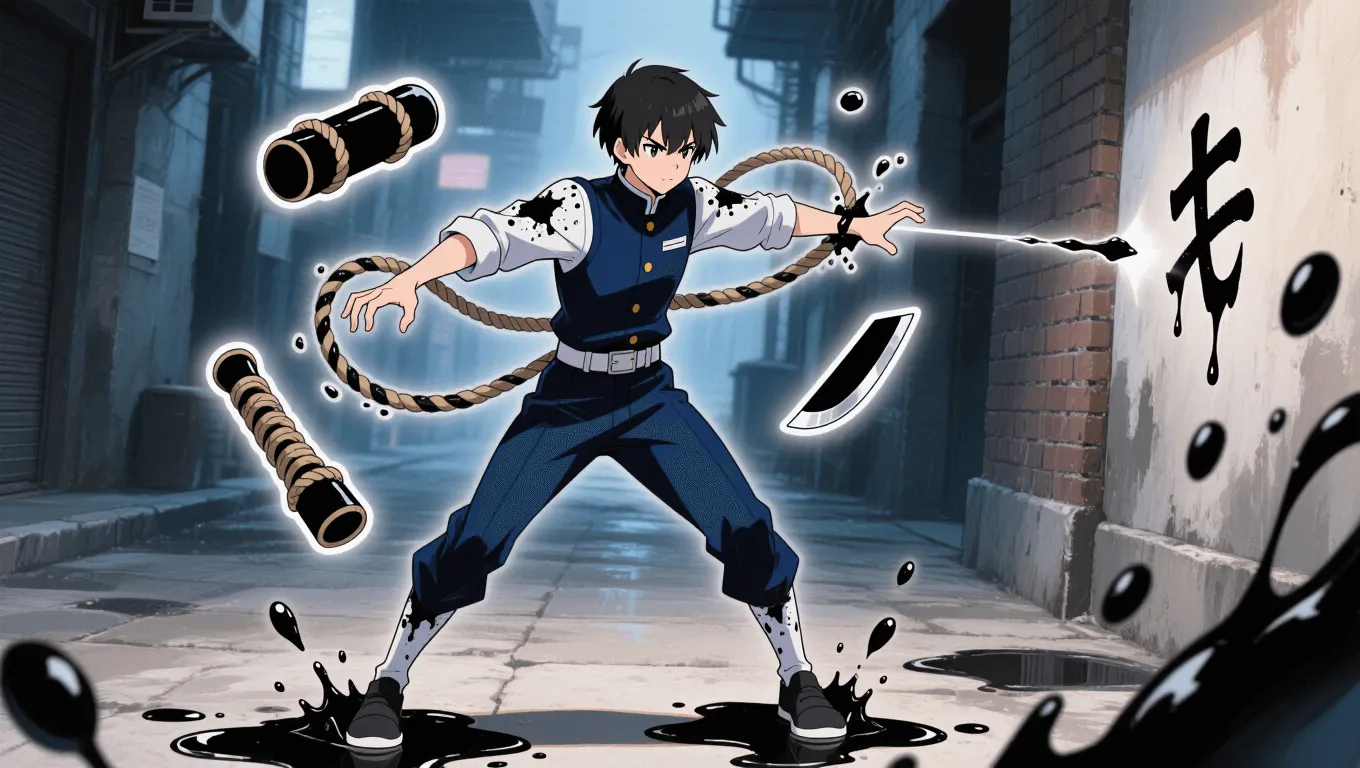
At Level 1, Ink Manipulation focuses on reliable basics:
-
Generate small quantities of ink (splashes, streams, simple puddles).
-
Shape simple constructs (clubs, short blades, rope-like tendrils).
-
Blind or distract with quick ink sprays.
-
Create fast drawings or symbols for minor effects (marking targets, tagging surfaces).
This tier is strong in close quarters and ambush scenarios but struggles with large crowds, heavy weather, or prolonged battles.
Level 2 🌇: Block-Scale Ink Craft and Animation
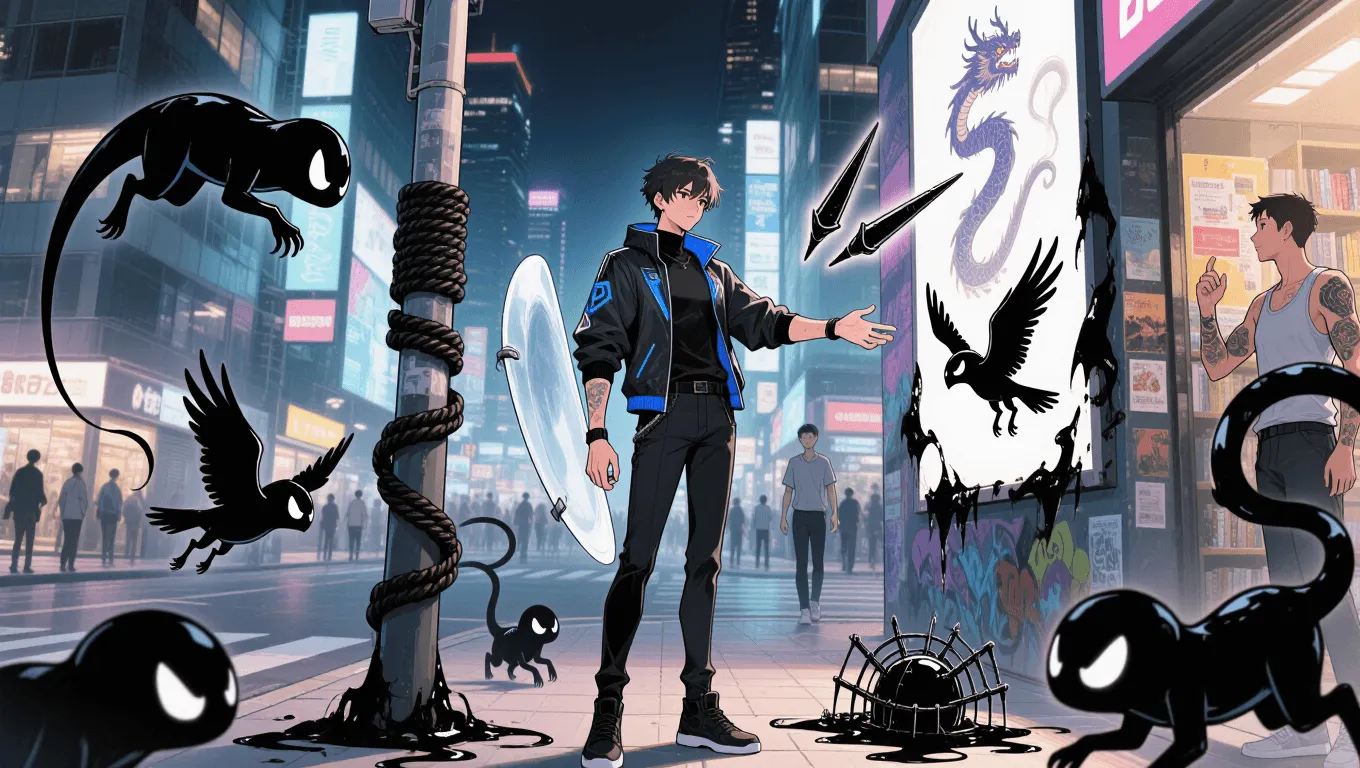
At Level 2, the power becomes a toolkit:
-
Maintain multiple ink constructs at once (shield plus restraints plus projectiles).
-
Animate drawings into semi-independent “ink minions” or scouting shapes.
-
Manipulate existing ink on posters, books, murals, or tattoos for surprise tactics.
-
Alter viscosity and drying speed for traps (sticky ink, fast-hardening ink, slick ink).
This tier shines in urban environments where surfaces and signage provide endless ink-themed opportunities.
Level 3 🌃: City-Scale Melanokinesis Mastery
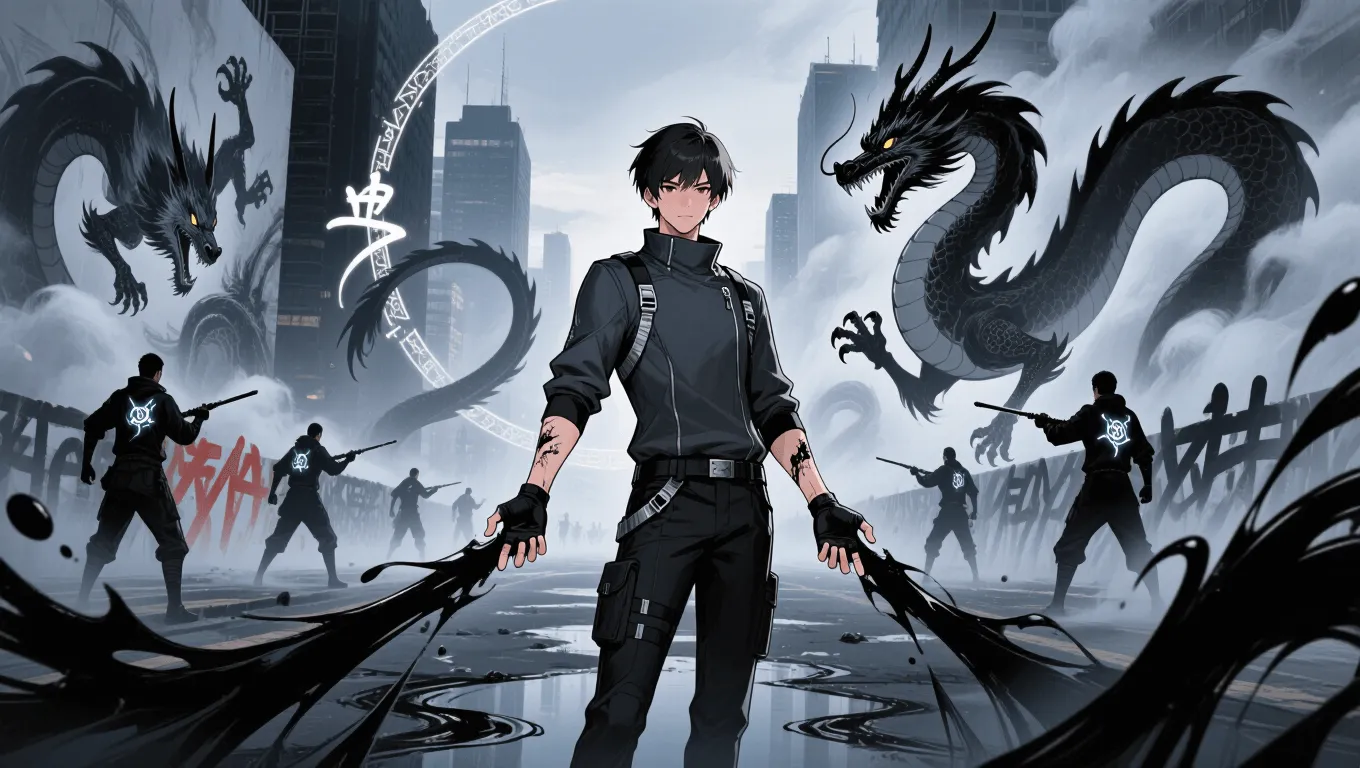
At Level 3, Ink Manipulation becomes an environment-defining force:
-
Flood streets or interiors with controlled ink currents without losing precision.
-
Create massive animated murals, towering ink beasts, or multi-layered barricades.
-
Deploy widespread obscuring effects (ink fog over a district) while coordinating allies within it.
-
Execute advanced “symbol logic,” such as complex sigils, moving typography, or layered calligraphy constructs that act like programmable tools.
At this level, the user is less like a fighter and more like a walking disaster-zone of living ink artistry—beautiful, terrifying, and hard to counter without specialized powers.
Limitations of using the Ink Manipulation
Ink Manipulation has real drawbacks that keep it balanced and interesting:
Supply and stamina demands
Even if the user can generate ink, moving large volumes or sustaining multiple constructs can drain focus and energy. Long fights may force the user into simpler shapes.
Environmental interference
Water can dilute ink, wash it away, and reduce structure. Heavy rain, sprinklers, flooding, or water-based attacks can severely limit control. Many portrayals also treat freezing temperatures as a way to disrupt fluid-based forms.
Drying, absorption, and surface issues
Ink behaves differently depending on the surface. Porous materials (paper, cloth, unfinished wood) absorb ink, making retrieval harder. Slick materials (glass, polished metal) may cause ink to slide uncontrollably unless the user is skilled.
Solvents and chemical counters
Alcohols, detergents, and cleaning agents can break cohesion. In a modern setting, a prepared opponent might carry anti-ink sprays or foam.
Line-of-sight and complexity limits
Some users need to see what they are shaping, especially for fine constructs. Extremely complex creations may be fragile or slow to form under pressure.
Weakness against what other superpowers
Ink Manipulation can be countered by powers that disperse, cleanse, or expose it:
Hydrokinesis and Water Manipulation
Water is the classic counter: it dilutes ink clouds, washes away traps, and breaks sticky cohesion. In many depictions of ink-like bodies, immersion disperses the substance and makes re-forming difficult.
Cryokinesis and Ice Manipulation
Freezing can lock fluid ink in place, preventing reshaping and making constructs brittle. It can also immobilize “living ink” swarms long enough for capture or shattering.
Fire Manipulation and Heat Projection
Heat can bake ink onto surfaces (making it harder to move) or burn away ink-based constructs if they rely on organic binders or paper mediums. It also counters darkness-based concealment by forcing constant repositioning.
Wind Manipulation and Air Pressure Control
Strong winds can scatter airborne ink mist, ruin precision, and push ink clouds back onto the user’s team.
Light Manipulation and Enhanced Visibility
If Ink Manipulation relies heavily on concealment, bright illumination, hard-light outlines, or enhanced perception powers can reduce the value of ink smoke screens and stealth drawings.
Purification, Cleansing, and Reality-Order powers
Abilities that “cleanse” substances, neutralize magical constructs, or impose strict physical laws can erase animated ink or prevent ink from acting “alive,” turning it back into inert pigment.
Synergistic Power Combos
Ink Manipulation becomes wildly stronger when paired with complementary abilities. A few standout combinations:
Ink Manipulation + Light Manipulation
Ink provides shadow and shape; light provides highlights and misdirection. Together they can produce convincing illusions, decoy silhouettes, and blinding contrast attacks.
Ink Manipulation + Water Manipulation (ally, not enemy)
While water is a weakness when hostile, an allied water user can spread controlled ink farther, create ink currents, or deliver ink into hard-to-reach areas (vents, gutters, piping) with precision.
Ink Manipulation + Creation
Creation powers can generate specialty inks: metallic ink for tougher constructs, conductive ink for tech disruption, or adhesive ink for capture. Ink then shapes and animates what Creation supplies.
Ink Manipulation + Emotion Manipulation
Ink-based fear tactics become more effective when paired with emotional influence. A creeping living ink mural is scary; a creeping mural that also amplifies panic can break a squad instantly.
Ink Manipulation + Phasing or Mobility powers
A fast or intangible ally can herd opponents into ink traps, or the ink user can lay “ink rails” and platforms for rapid movement across rooftops.
Ink Manipulation + Digital Vision
In modern settings, controlling ink is not just about paper—printed codes, labels, and signage matter. Digital Vision helps identify targets, routes, and vulnerabilities, while ink reshapes the battlefield to match.
For more pairing ideas, the superpowers list is a useful cross-reference, and the random superpower generator can spark unexpected combo builds.
Known Users
Inque (Batman Beyond)
A notable ink-like character is Inque, a shapeshifting criminal whose body becomes a black, ink-like liquid and who is portrayed as vulnerable to water immersion and freezing conditions.
Sai (Naruto)
Sai’s ink-based techniques often resemble animated ink drawings and ink constructs, turning brushwork into tangible tools and creatures.
Kurozumi Kanjuro (One Piece)
Kanjuro is known for bringing drawings to life, a close cousin to melanokinetic constructs where artwork becomes an active extension of the user.
Ink-themed comic and tattoo mystics
Across various comic universes, tattoo-based characters and living-ink entities appear as variations of Melanokinesis, where ink is stored on skin and unleashed as controlled pigment effects.