
Jet Propulsion Superpower Guide
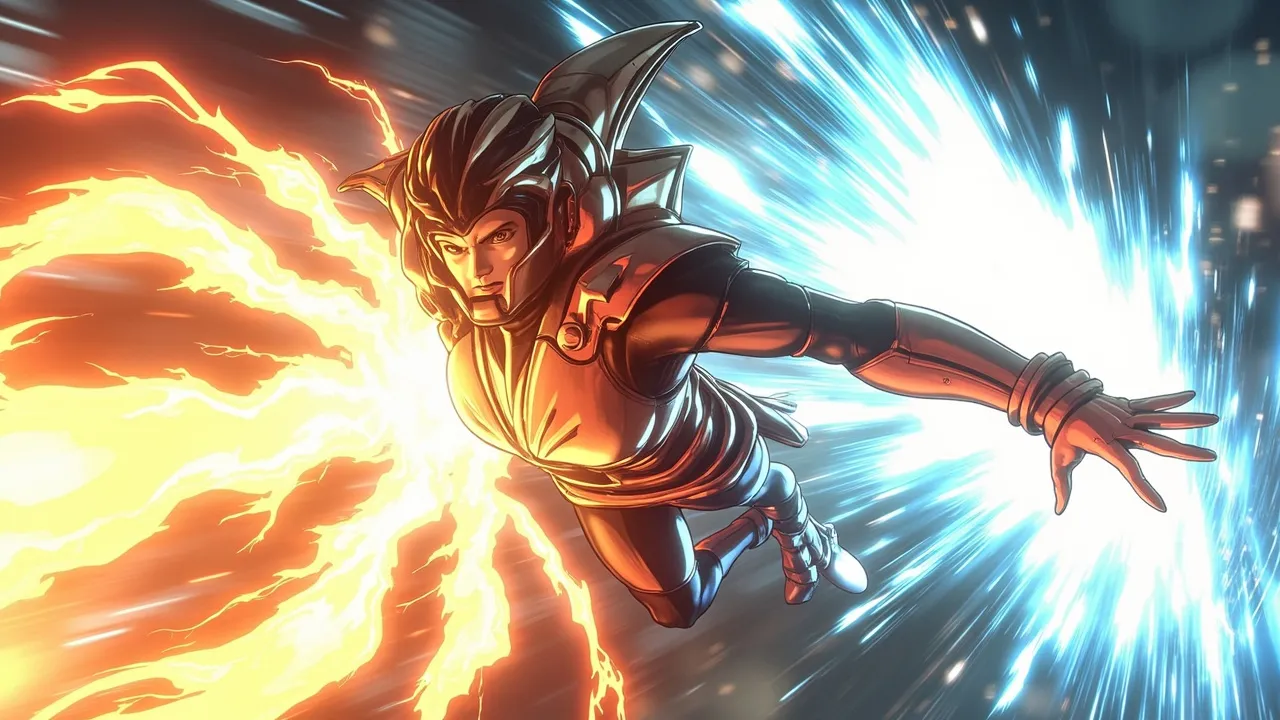
Jet Propulsion Video Demo 🎬
Table of Contents
Jet Propulsion is a movement-based superpower that allows a character to travel at high speed by expelling concentrated energy jets from their body. Whether those jets resemble rocket flames, compressed air, plasma bursts, or pure force, this power turns mobility itself into a weapon. In stories, Jet Propulsion often defines agile heroes and villains who dominate the battlefield through speed, positioning, and dynamic aerial maneuvers.
For creators planning new characters, it pairs well with many other abilities found in the wider superpower wiki, and is a natural fit for anyone using a random superpower generator to build fast-paced, action-heavy concepts.
What Is Jet Propulsion?
Jet Propulsion is the ability to move by producing powerful thrust from specific points on the body, usually the feet, hands, back, or a specialized energy “exhaust.” Instead of relying on muscle power, vehicles, or external tools, the user generates their own jet stream and “rides” that force through the air or across the ground.
In practice, this superpower can function like:
-
Rocket-style flight, with intense forward thrust and controlled steering
-
High-speed dashes close to the ground for quick repositioning
-
Short explosive bursts that act as jumps, boosts, or dodges
Unlike simple flight, Jet Propulsion is inherently directional and momentum-based. The user must constantly manage thrust, angle, and speed, making it feel more like piloting a jet than floating magically. This gives scenes involving the power a very kinetic, high-adrenaline tone.
Core Abilities of Jet Propulsion
While the exact flavor of the energy jets can vary (fire, plasma, air pressure, magic force, etc.), the core abilities of Jet Propulsion tend to share common traits.
High-Speed Movement
The primary benefit is raw speed. A user can:
-
Accelerate far faster than any normal runner
-
Maintain high velocities over open terrain or in the sky
-
Rapidly disengage from danger or chase fleeing enemies
Depending on the setting, advanced users may reach supersonic travel, generating sonic booms and shockwaves as they move.
Aerial Mobility and Flight
Most interpretations of Jet Propulsion include some form of flight:
-
Hovering using balanced jets
-
Banking, rolling, and diving like a fighter jet
-
Dodging attacks in three dimensions rather than just side-to-side
This makes the power ideal for aerial combat, reconnaissance, and hit-and-run tactics.
Burst Acceleration and Evasive Maneuvers
The user can fire short, explosive bursts of thrust to:
-
Sidestep or vault away from incoming attacks
-
Perform last-second dodges or air dashes
-
Reverse direction mid-air to confuse opponents
These bursts make Jet Propulsion a classic “hard to hit” superpower, especially at higher skill levels.
Impact and Striking Power
By combining thrust with physical strikes, the user can deliver devastating impacts:
-
Jet-assisted punches and kicks
-
High-velocity tackles from the air
-
Dive-bomb attacks where speed amplifies force on impact
Even without enhanced strength, momentum from Jet Propulsion can make a normal blow incredibly dangerous.
Versatile Terrain Navigation
This power is not limited to open skies. With control and finesse, the user can:
-
Skim over water using forward thrust
-
Bounce off walls and structures in tight environments
-
Escape pits, traps, or collapsing buildings by blasting upward
In many roleplaying systems and games, this translates to superior mobility over almost any terrain type.
Application / Tactical Advantages in Combat
In combat scenarios, Jet Propulsion is as much about positioning as speed.
-
Hit-and-run tactics: The user can strike, retreat, and reposition before the opponent reacts.
-
Zoning and spacing control: They can choose when and where to engage, staying at optimal range.
-
Flanking and vertical attacks: Approaching from above or from blind angles makes defense difficult.
-
Rapid reinforcement: The character can cross a battlefield quickly to aid allies or intercept threats.
Jet Propulsion also pairs well with ranged attacks. A user can continue to move unpredictably while firing projectiles, beams, or thrown weapons, making them extremely hard to target.
In team scenarios, they might:
-
Draw enemy fire away from less mobile allies
-
Chase down retreating foes
-
Scout ahead and return with intel in moments
All of this makes Jet Propulsion a tactical powerhouse in any encounter where movement and positioning matter.
Level: Level 1 🏙️, Level 2 🌇, Level 3 🌃
Level 1 🏙️ – Street-Level Boosters
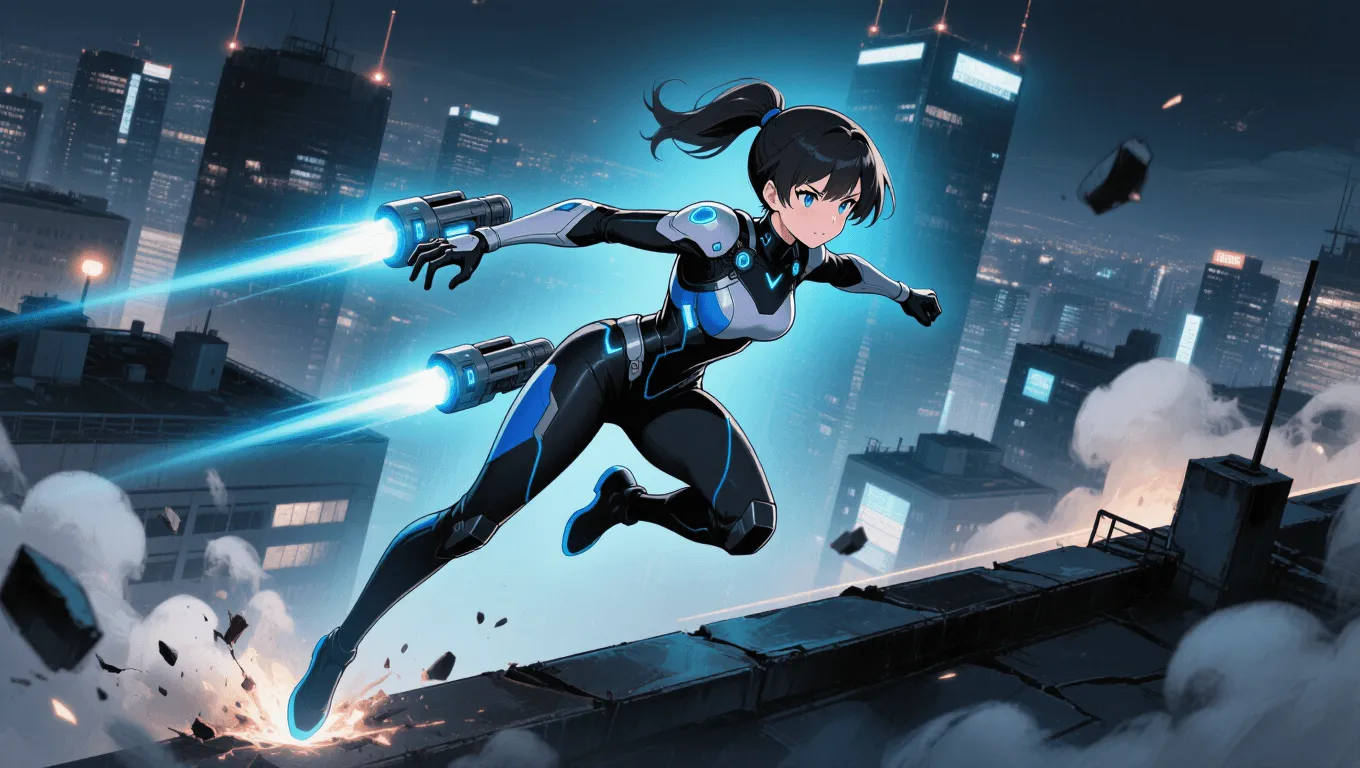
At Level 1, Jet Propulsion is limited but still impressive on an urban scale:
-
Short bursts of thrust enable boosted jumps and quick dashes
-
Limited hover time; staying airborne for long is difficult
-
Speed is high but not yet supersonic; more like a high-end sports vehicle
Characters at this stage may use the power to parkour across rooftops, escape tight situations, and perform quick lunges in combat. Control is still developing, and misfires or rough landings are common.
Level 2 🌇 – City-Spanning Speedsters
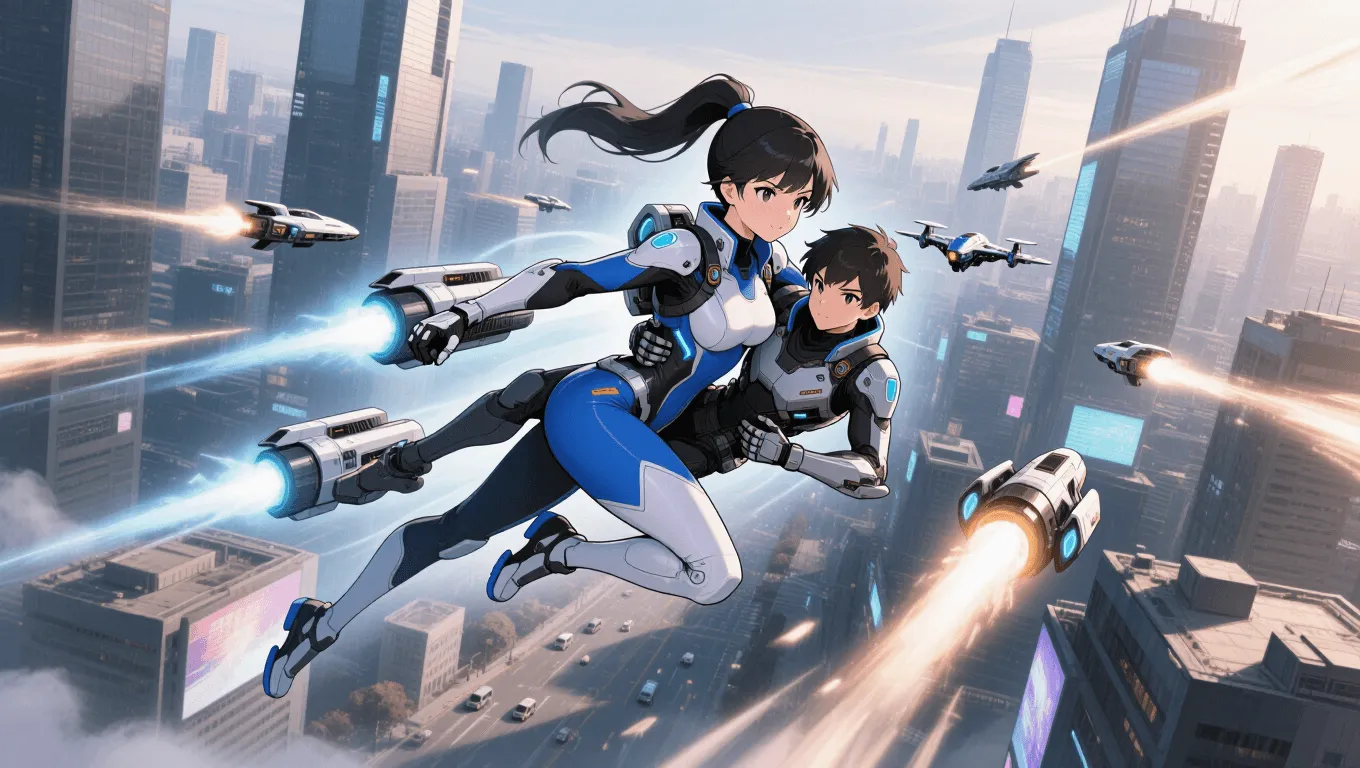
At Level 2, control and power both increase significantly:
-
Sustained flight over long distances
-
Precise maneuvering around skyscrapers, vehicles, and obstacles
-
Ability to carry another person or moderate load while using jets
Here, Jet Propulsion becomes a true travel and combat asset. The user can patrol entire districts, intercept threats across the city, and perform complex aerial maneuvers. In battle, mid-air dogfights and multi-angle attacks become possible.
Level 3 🌃 – Global Jet Aces
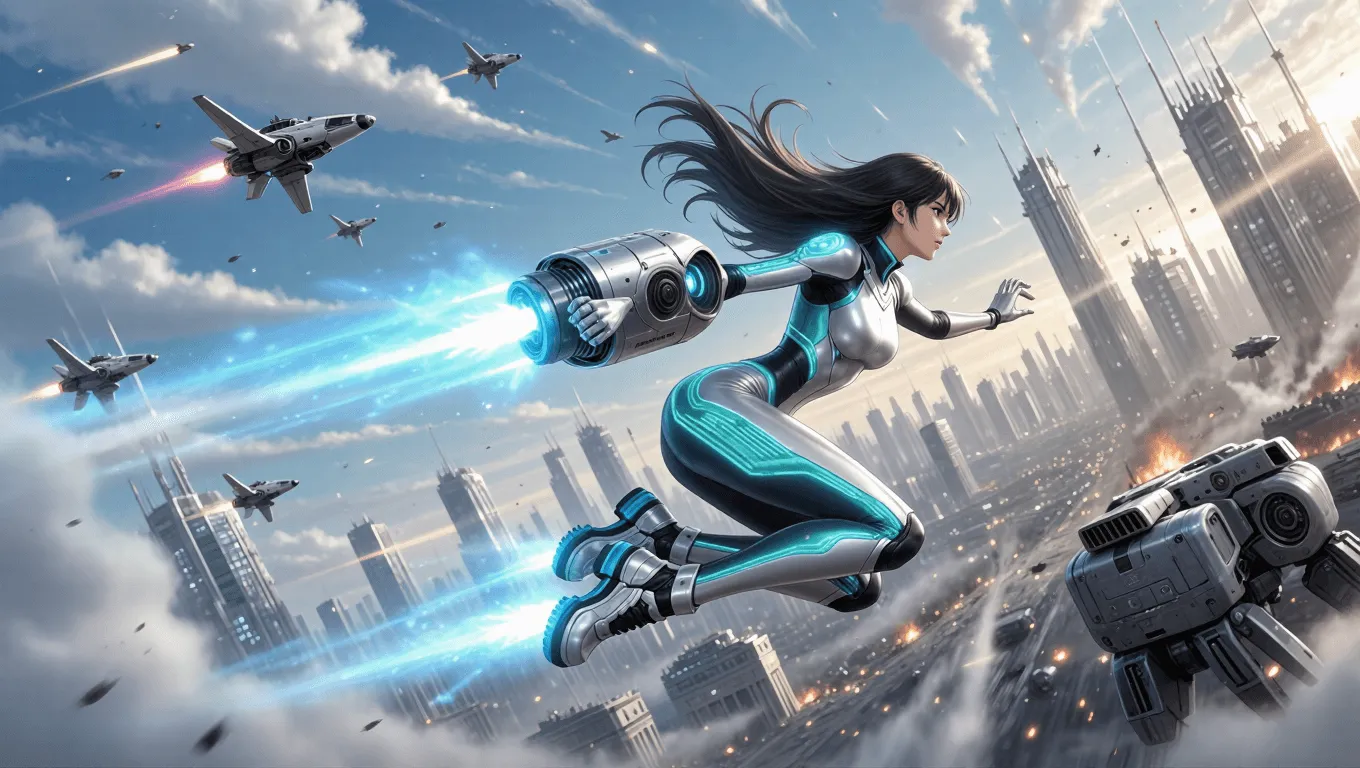
At Level 3, Jet Propulsion reaches its apex:
-
Extremely high velocities, potentially approaching or exceeding supersonic speeds
-
Fine-tuned maneuverability, even at extreme speeds
-
Operation in thin atmospheres or hazardous environments, depending on the energy source
At this level, the user may cross continents quickly, execute complex aerial patterns while engaging multiple targets, and generate shockwaves or environmental effects merely by flying past. They are a dominant presence in any large-scale conflict.
Limitations of Using the Jet Propulsion
Despite its power, Jet Propulsion comes with important limitations that keep it balanced in stories and games.
-
Energy consumption: Sustained thrust burns a lot of energy, stamina, or fuel. Overuse can exhaust the user.
-
Heat and strain: If the jets produce heat or force, they can overheat gear, burn surroundings, or place strain on the user’s body.
-
Noise and visibility: Jet streams are often loud and bright, making stealth very difficult. A user is easy to track by sound, light, or exhaust trail.
-
Turning radius and inertia: High-speed flight makes tight turns risky. Collisions at speed can be dangerous even for a durable character.
-
Confined spaces: Indoors or in narrow corridors, the jets may be hazardous or hard to control, limiting the power’s full potential.
Game masters and writers often use these limitations to create tension and prevent the power from solving every problem outright. Using Jet Propulsion recklessly can lead to collateral damage or self-inflicted harm.
Weakness Against What Other Superpowers
Jet Propulsion can be countered or hindered by several other superpowers:
-
Gravity manipulation: Altered gravity can disrupt trajectory, slow the user, or pin them to the ground.
-
Aerokinesis / wind control: Strong winds or localized air currents can throw a jet-powered character off course.
-
Force fields and barriers: Invisible walls and shields can abruptly halt high-speed charges, causing painful impacts.
-
Time manipulation / slow fields: Slowing time or movement negates the primary advantage of speed.
-
Power negation: If the energy jets are shut down, the user loses both mobility and speed instantly.
-
Magnetism or telekinesis (if tech-based): If the propulsion is technological (jet boots, powered armor), telekinetic or magnetic control can disable, redirect, or hijack the gear.
These weaknesses create natural counters in a superpowered setting, encouraging diverse builds and strategic play.
Synergistic Power Combos
Jet Propulsion becomes even more formidable when combined with complementary abilities.
-
Durability or invulnerability: High-speed collisions and rapid turns become far safer, letting the user fight more aggressively.
-
Energy shields: Jet-powered ramming attacks are less risky when the user is protected by a barrier that absorbs impact.
-
Enhanced reflexes or precognition: At extreme speeds, the brain must keep up. Powers that improve reaction time make aerial combat far more effective.
-
Ranged energy attacks: Combining Jet Propulsion with energy blasts or projectile powers creates deadly, mobile artillery.
-
Weapon-based powers: Jet-assisted sword strikes, lances, or heavy melee weapons can punch through even tough defenses.
-
Steering or vector control abilities: Fine control over force vectors or momentum can refine Jet Propulsion into precise, graceful movement rather than raw thrust.
In a roleplaying context, players can use the superpower wiki to find ideal pairings, or rely on the random superpower generator to stumble into unexpected but fun combinations.
Known Users
Many fictional characters use variations of Jet Propulsion, whether through innate energy control, technological devices, or magical constructs. A few examples and archetypes include:
-
Armored heroes who use boot jets and hand thrusters to fly, fight, and stabilize heavy weapons, similar to Iron Man in mainstream comics.
-
Fire or plasma manipulators who shoot flames from their limbs to push themselves through the air like a living rocket.
-
Cyborgs or androids equipped with built-in thrusters for rapid response and aerial combat missions.
-
Tech-based vigilantes with experimental jet packs, winged rigs, or propulsion harnesses designed for urban patrol and rooftop chases.
-
Spacefaring adventurers who rely on micro-thrusters in their suits to maneuver in zero-gravity environments, docking with ships or dodging debris.
In original settings, Jet Propulsion users often become scouts, skirmishers, or aerial champions who define the tempo of engagements. Their role in a team is usually to move first, strike fast, and shape the battlefield before slower allies arrive.