
Luminous Waltz: Starlit Constellation Combat
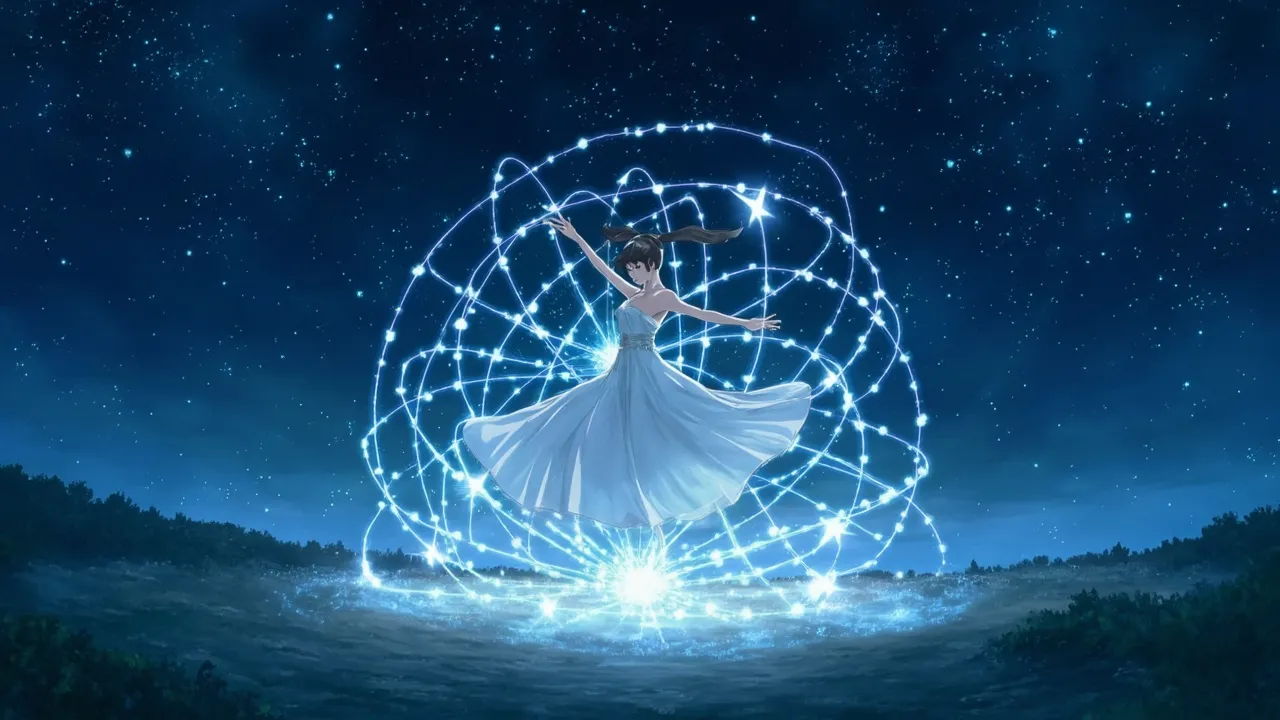
Luminous Waltz Video Demo 🎬
Table of Contents
Luminous Waltz is a performance-based superpower that turns dance into a deadly cosmic weapon. By moving in rhythmic patterns under starlight, the user shapes glowing constellations into blades, barriers, and orbiting sigils that can slice, shield, or control the battlefield. Blending celestial choreography with hard-hitting combat utility, Luminous Waltz sits comfortably among more exotic abilities in any list of superpowers or try with random superpower generator.
What Is Luminous Waltz?
Luminous Waltz is the ability to dance in starlight and weave that light into lethal constellations. Each step, turn, and gesture traces a luminous line across the air, and those lines connect into star-like nodes. When the pattern completes, it becomes a constellation construct: a floating, glowing formation that can cut, bind, or protect.
Unlike simple light manipulation, this power is fundamentally tied to movement and rhythm. The user cannot simply “think” a constellation into existence; they must dance it. Every choreography sequence corresponds to a specific stellar pattern and effect:
-
A swift spin might call down a spiral of star blades.
-
A sweeping waltz step could raise a protective arc of starlight.
-
A sharp, punctuated pose might detonate a constellation into scattered shrapnel.
Because the power is driven by performance, it rewards practice, memory, and physical conditioning as much as raw energy. Over time, experienced users memorize dozens of combat-ready “star choreographies,” turning the battlefield into a luminous stage.
Core Abilities of Luminous Waltz
At its heart, Luminous Waltz is a hybrid of starlight manipulation, spatial control, and pattern-based weapon creation. While individual users may develop their own signature style, the following core abilities are common.
Constellation Blades
By tracing tight, precise steps, the user creates thin ribbons of starlight that harden into constellation blades. These can appear as:
-
Orbiting swords that circle the user at varying radii
-
Long, spear-like beams that can be launched in straight lines
-
Fragmented star shards that scatter like a celestial shotgun
The blades can cut physical and certain energy-based targets, making them versatile against both armored foes and those with basic energy defenses.
Stellar Sigils and Glyphs
Longer, more elaborate sequences of movement inscribe stellar sigils in the air. These patterns function as:
-
Traps that activate when an enemy steps into their radius
-
Buff zones that amplify the user’s speed or reaction time
-
Debuff fields that slow or destabilize opponents caught within
Because sigils are static once formed, they are excellent tools for area denial and battlefield shaping.
Orbital Constellation Shields
By performing a flowing, circular waltz pattern, the dancer can build halo-like constellations around themselves or allies. These shield-constellations:
-
Deflect or disperse projectile attacks
-
Soften impacts from melee blows
-
Absorb a portion of incoming energy attacks and re-emit it as harmless light
The effectiveness of these shields depends on the precision of the choreography and the density of starlight available.
Celestial Threads and Tethers
Fine movements of the hands and feet can generate luminous threads that connect different constellation nodes. These threads can:
-
Pull enemies off balance by yanking on an attached star node
-
Bind multiple targets together in a web of starlight
-
Redirect projectiles or energies that intersect the threads
This gives Luminous Waltz a strong utility and control aspect, not just raw damage.
Application / Tactical Advantages in Combat
Luminous Waltz is more than visual flair; it is a highly tactical superpower when used correctly.
Spatial Control and Zoning
Constellation sigils and tether webs allow the user to divide the battlefield into safe and unsafe zones. Opponents who charge recklessly risk:
-
Triggering delayed star detonations
-
Being ensnared in binding constellations
-
Having their movement channels cut off by luminous fences
This power works extremely well in urban or indoor environments, where choke points and corridors can be “written” with starlight traps.
Dynamic Offense Through Movement
Because offense requires dance, the user is constantly in motion. This has several advantages:
-
Continuous movement makes the user a hard target to hit.
-
Offensive patterns can seamlessly transition into defensive ones.
-
The user can attack while repositioning rather than standing still to cast.
The result is a combat style that feels like a fluid, never-ending performance—graceful yet lethal.
Reactive Defense
Orbital shields and emergency constellation blades can be generated with shorter, clipped motions if the user has pre-memorized “panic sequences.” These rapid patterns let them:
-
Intercept surprise attacks
-
Guard allies by waltzing through their position and leaving shields behind
-
Deflect incoming fire while retreating or repositioning
With enough training, an experienced dancer can overlay multiple defensive sequences within a single continuous routine.
Psychological Impact
The sight of someone dancing amid starlit constructs, blades spinning and sigils burning in the air, can be deeply unsettling. This can:
-
Intimidate less disciplined foes
-
Distract enemies who fixate on the light show
-
Conceal the exact origin of attacks amid swirling patterns
The artistry of Luminous Waltz is itself a weapon, blending performance with psychological warfare.
Level: Level 1 🏙️, Level 2 🌇, Level 3 🌃
As with many powers cataloged in the random superpower generator, Luminous Waltz can manifest at different strength tiers. Below is a simple three-level structure for campaigns and settings.
Level 1 🏙️ Street Performer of Starlight
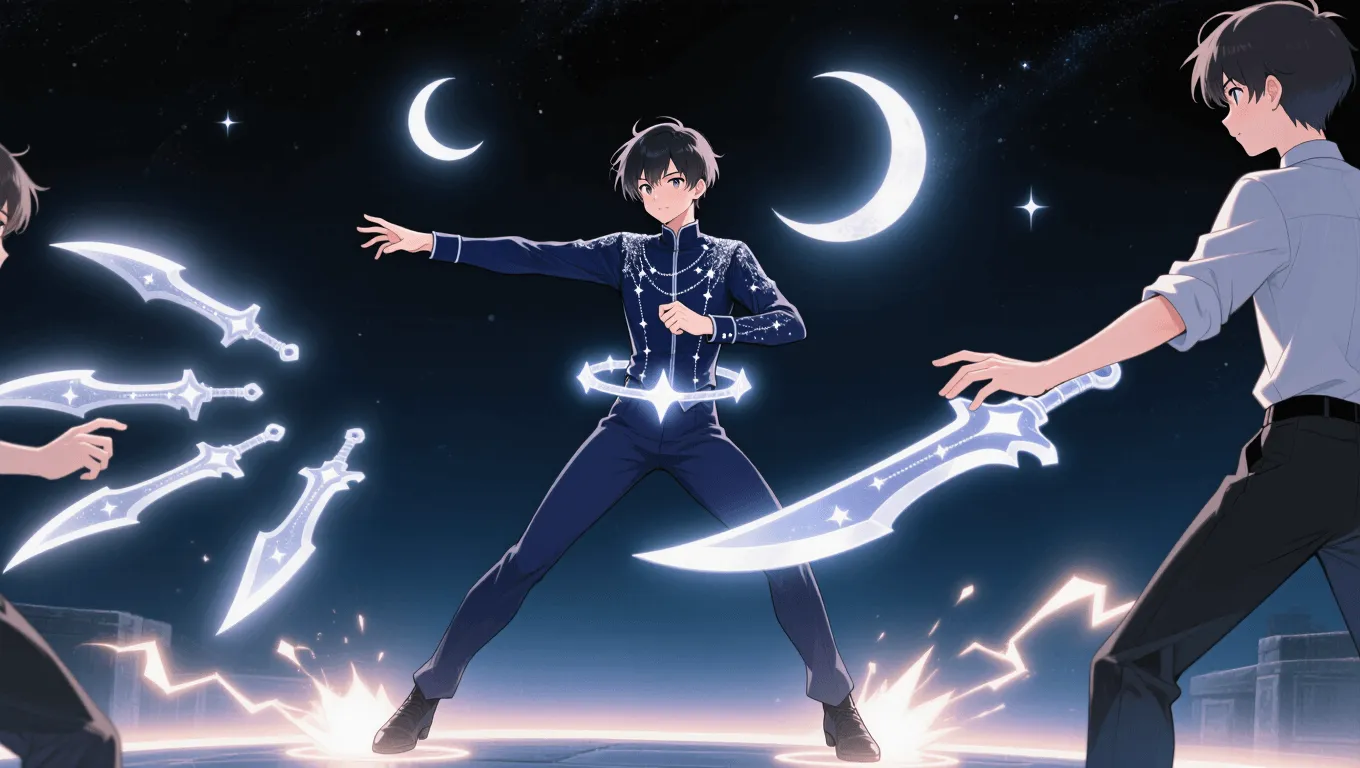
At Level 1, the user is just beginning to understand the relationship between dance and starlight.
-
Can form basic constellation blades within a short radius.
-
Shields are small, usually covering only the user’s body or a single ally.
-
Sigils are simple: minor slowing fields, small stun traps, or weak light bursts.
-
Requires clear access to direct or indirect starlight (night sky, moonlight, reflected starlight).
At this level, Luminous Waltz is dangerous in close quarters but struggles in large-scale engagements.
Level 2 🌇 Twilight Maestro

At Level 2, the user becomes a serious threat across a wider area.
-
Can maintain multiple constellation blades orbiting at different distances.
-
Shields can be extended to a small team, creating mobile glowing formations.
-
Sigils can be layered, stacking effects like slow, disorientation, and minor energy drain.
-
Limited self-generated “stored starlight” allows brief use even in dimly lit interiors.
On this tier, Luminous Waltz evolves from a personal combat style into a battlefield-shaping technique, especially effective in coordinated teams.
Level 3 🌃 Cosmic Choreographer
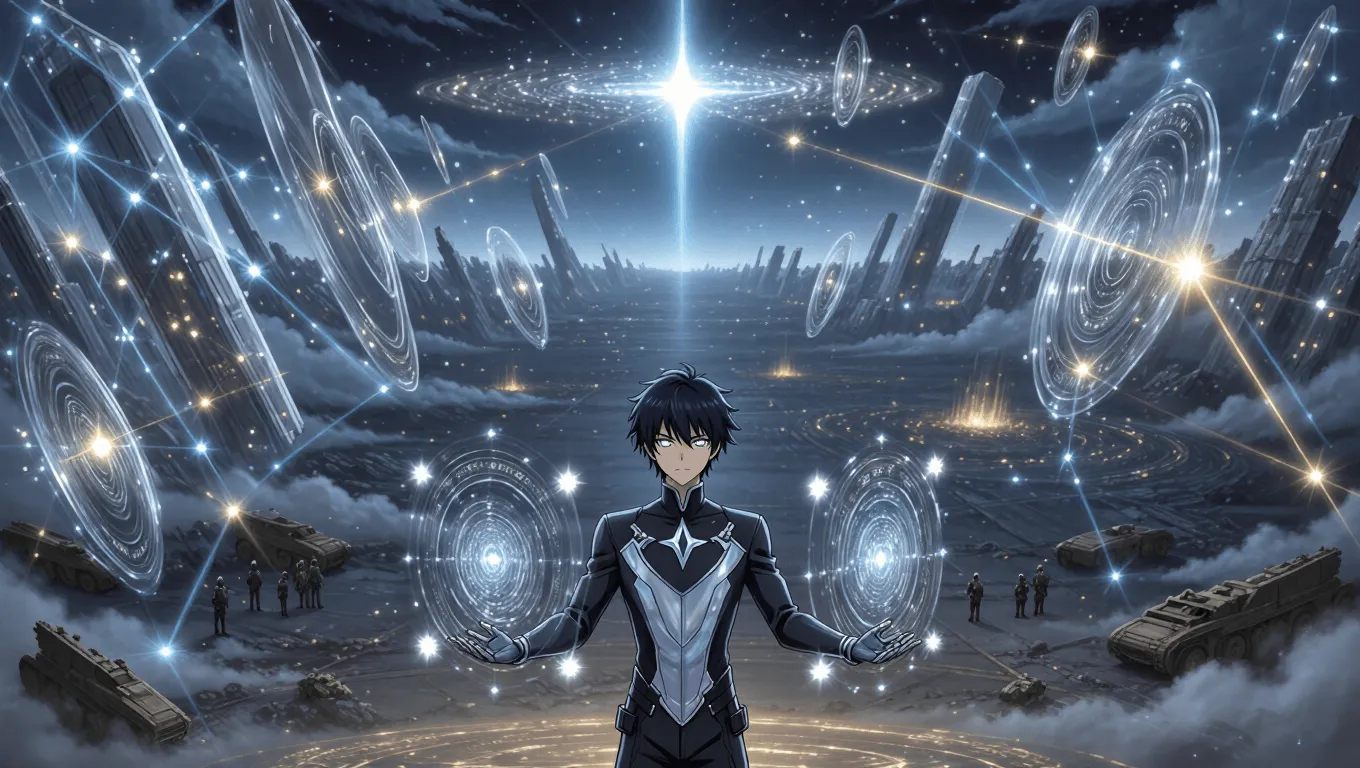
At Level 3, the power approaches its legendary potential.
-
Constellation constructs can span entire city blocks or large open battlefields.
-
The user can simulate new constellations, not just mimic existing ones in the night sky.
-
Shields can envelop structures, vehicles, or large squads.
-
Sigils can reach strategic scale, such as locking down entire zones or creating rotating starstorms that patrol set paths.
-
The user can draw from distant stellar sources, even when the night sky is obscured, though this is taxing.
This level makes the wielder a strategic asset, capable of reshaping the flow of large conflicts with cosmic choreography.
Limitations of Using Luminous Waltz
Despite its versatility, Luminous Waltz comes with clear constraints.
-
Dependence on Starlight
The power’s base fuel is starlight. While higher levels can store or call distant stellar energy, beginners need at least partial access to the night sky or reflected starlight. Heavy cloud cover, underground locations, or specialized light-dampening fields can weaken or entirely suppress the power. -
Physical and Mental Stamina
The user must keep dancing. Extended battles can lead to exhaustion, muscle fatigue, and loss of precision. Since the constructs depend on perfect patterns, a tired dancer risks:-
Miscasting sigils
-
Dropping shields prematurely
-
Losing control over orbiting blades
-
-
Complexity of Choreography
Advanced constellations require intricate, memorized routines. A distraction mid-sequence can break the pattern, resulting in:
-
Failed constructs that simply dissolve
-
Unstable constellations with reduced power
-
In rare cases, backlash where the pattern detonates too close to the user
-
-
Predictable Patterns
Regular opponents who survive multiple encounters can start to recognize specific steps and predict the resulting effect. Without creative variation, the user becomes readable, and enemies can pre-empt or counter known sequences.
-
Limited Instant Casting
While short defensive patterns exist, truly powerful constructs still demand time to complete. Against ultra-fast foes or instant-cast powers, Luminous Waltz may be too slow if preparation is lacking.
Weakness Against What Other Superpowers
Certain categories of superpowers naturally counter Luminous Waltz:
-
Darkness or Shadow Manipulation
Powers that generate absolute darkness, nullify light, or cloak entire areas can cut off the starlight source or smother constellation constructs. -
Energy Draining or Light Absorption
Abilities that absorb or convert light energy can feed on the constellations, turning the user’s own creations into power for the opponent. -
Gravity and Space Distortion
Since constellations rely on precise spatial arrangements, gravity warping, localized black holes, or spatial folding can twist or break their patterns, rendering them ineffective. -
Time Manipulation
Time-slowing or freezing powers can interrupt the choreography mid-step. If the dancer is stopped, the constellation remains unfinished and powerless. -
Mobility Disruption
Immobilizing fields, paralysis, or heavy restraints directly target the power’s requirement: movement. If the user cannot dance, Luminous Waltz cannot function.
These weaknesses give storytellers and game designers clear ways to balance the power within larger systems of abilities.
Synergistic Power Combos
Luminous Waltz shines brightest when combined with compatible superpowers.
-
Time Dilation or Precognition
Mild time dilation around the user allows them to perform more steps in less perceived time, accelerating complex constellations. Precognition lets the dancer “see” incoming attacks and weave counter-choreography in advance. -
Illusion or Mirage Powers
Illusion-based abilities can cloak real constellation patterns amidst false ones, making it impossible for enemies to tell which sigils are genuine threats. This also enhances the psychological warfare aspect. -
Defensive Barriers and Force Fields
Teaming with a defensive specialist lets the dancer rehearse longer, riskier formations behind a sturdy shield. Once the constellation is ready, the barrier can drop for a coordinated strike. -
Sound and Rhythm Manipulation
Rhythm-based powers can stabilize the user’s movements, amplify focus, or disrupt enemy timing. Shared beats between abilities help synchronize multi-hero combination attacks. -
Teleportation or Short-Range Warping
A quick displacement at the end of a dance sequence can reposition the user while their constellations remain anchored, creating surprise angles of attack.
Combining Luminous Waltz with complementary abilities can turn a single performer into the centerpiece of a coordinated, multi-layered strategy.
Known Users
In many settings, Luminous Waltz is rare, often reserved for characters with a strong link to the stars or to performance arts.
-
Celestine Aria – A legendary cosmic dancer who learned her steps from visions of distant galaxies, turning every battlefield into a luminous stage.
-
The Nightstage Troupe – A secretive group of operatives who mix espionage and performance, using synchronized waltzes to create overlapping constellations.
-
Aurora Vail – A star-born guardian who defends city skylines by choreographing protective constellations above urban centers.
For a comparable example from mainstream comics of someone who weaponizes light and performance, consider Dazzler. Although her power set differs, her fusion of stage presence and light-based attacks echoes the thematic idea of turning art and spectacle into a formidable weapon.