
Microwave Vision

Microwave Vision Video Demo 🎬
Table of Contents
What Is Microwave Vision
Microwave Vision is a superpower that lets a user project or detect microwave radiation using their eyes. Instead of relying only on visible light, the user can “see” with radiofrequency energy, turning their gaze into a radar-like sensor or a directed-energy beam. In practical terms, Microwave Vision can help track targets through smoke, map spaces in darkness, interfere with electronics, and apply focused heating effects at a distance.
As with many abilities on the electromagnetic spectrum, Microwave Vision sits in a fascinating middle ground: microwaves are generally non-ionizing (they don’t work like X-rays), but they can still transfer energy efficiently into materials—especially water-rich targets—causing heating, discomfort, and equipment failure when pushed to combat-level intensity.
To explore how Microwave Vision compares with other abilities and where it fits among related powers, readers can browse the wider catalog on the Superpower Wiki or roll something unexpected on the random superpower generator.
Core abilities of Microwave Vision
Microwave Vision typically expresses in two complementary modes: detection and projection. Strong users can do both simultaneously, switching between “scan” and “burn” the way others switch between looking and aiming.
Microwave sensing and radar-like perception
A Microwave Vision user can detect microwave emissions and reflections to build a usable picture of the environment. Depending on finesse, this can include:
-
Radar vision mapping: reading reflected microwaves to outline walls, moving bodies, and objects even when visibility is poor.
-
Motion discrimination: noticing subtle movement via changing reflections, useful against stealth and camouflage.
-
Signal awareness: sensing active microwave sources such as radar devices, wireless transmitters, or microwave-based security systems.
-
Material contrast: recognizing that metal surfaces reflect strongly while many non-metal materials partially transmit or scatter microwaves.
Directed microwave projection
In projection mode, the user emits controlled microwave radiation through their eyes. Common expressions include:
-
Focused microwave beam: a narrow “line-of-sight” emission for precise targeting.
-
Wide-area microwave cone: a spread pattern for crowd control or area denial.
-
Pulsed microwave burst: short, high-intensity spikes that can stun, startle, or overwhelm sensors and electronics.
-
Dielectric heating effect: energy transfer that rapidly warms targeted material (especially water-bearing tissues, fabrics, and certain plastics).
Modulation and “tuning”
Advanced Microwave Vision isn’t just “more power.” It’s smarter power.
-
Frequency tuning: shifting along microwave or millimeter-wave bands for better penetration, sharper imaging, or stronger heating.
-
Power shaping: controlling intensity to avoid collateral damage or to apply a non-lethal deterrent.
-
Beam steering with eye movement: painting a target, sweeping a hallway, or tracing a perimeter quickly.
-
Noise injection and jamming: overwhelming nearby sensors that depend on clean microwave signals.
Application / Tactical Advantages in Combat
Microwave Vision shines when fights are messy: smoke, darkness, dust, fog, and electronic countermeasures. It can turn the user into a walking recon drone and a precision crowd-control weapon at the same time.
Recon, tracking, and anti-stealth
-
Seeing through concealment: smoke grenades and blackout tactics are less effective when the user can scan with microwaves.
-
Corner-checking and room reads: quick sweeps can identify movement patterns and approximate positioning.
-
Detecting hidden gear: some concealed items and weapon shapes can stand out in microwave imaging, especially at higher skill levels.
-
Pursuit advantage: if a target is moving, the changing reflections can act like a breadcrumb trail.
Equipment disruption and battlefield control
-
Electronics interference: concentrated or pulsed output can destabilize sensors, cameras, and certain control circuits.
-
Communication pressure: jamming-like effects can force enemies onto lower-tech coordination.
-
Area denial: a sweeping cone can make a corridor unbearable to cross without shielding.
Precision heating and non-lethal pressure
Microwave Vision can be written as lethal, but it doesn’t have to be. Many users prefer it as a compliance tool:
-
Non-lethal pain compliance: brief bursts that cause intense surface heating sensations can break focus and force retreat.
-
Disabling gear: overheating metal components, softening plastics, or frying delicate electronics can neutralize threats without harming people.
-
Environmental manipulation: selectively warming surfaces can create distractions, force enemies out of cover, or weaken barriers over time.
Level: Level 1 🏙️, Level 2 🌇, Level 3 🌃
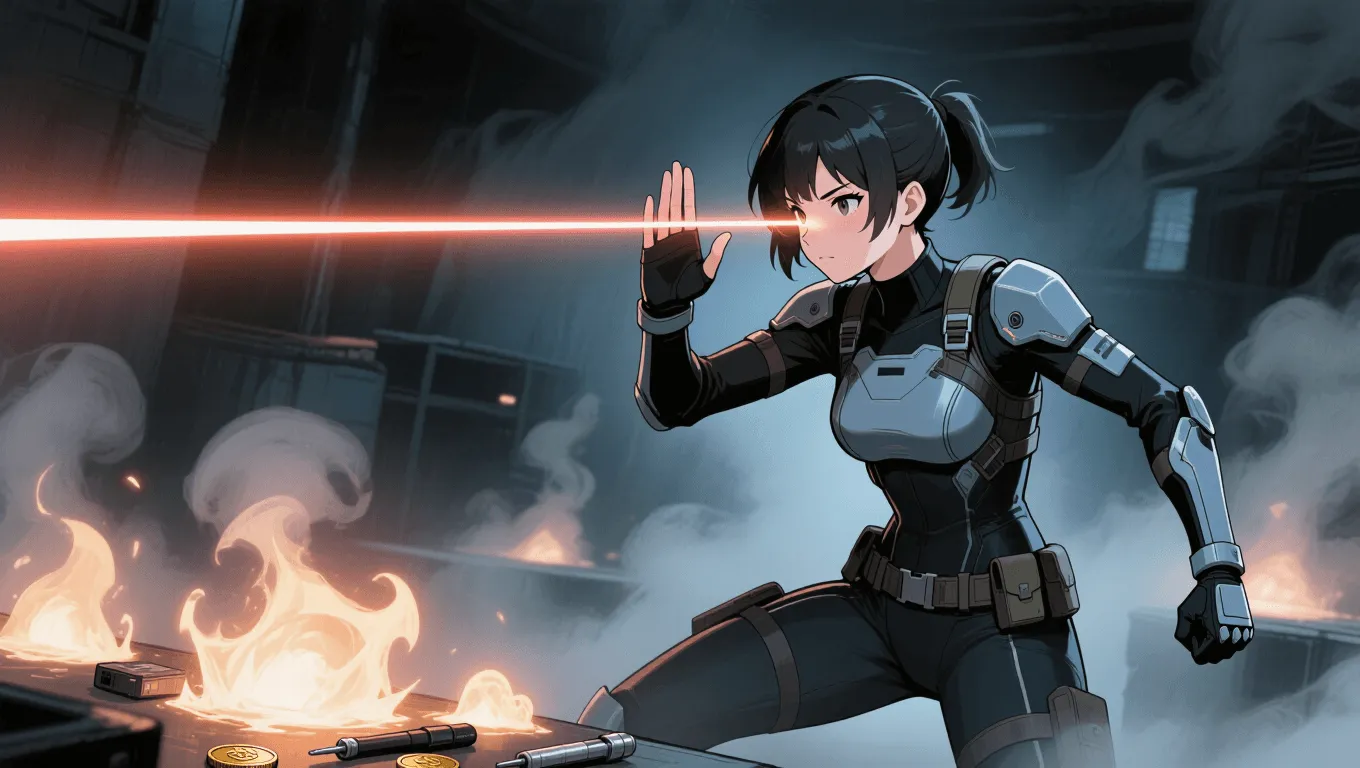
Level 1 🏙️: Street-Sweeper Sight
At this level, Microwave Vision is useful but constrained.
-
Detection: basic radar-like outlines at close range (room-scale), good for darkness and smoke.
-
Projection: short bursts that heat small objects, disrupt simple electronics, or force an opponent to flinch.
-
Control: limited tuning; the user relies on line-of-sight and simple “on/off” intensity.
Typical combat role: close-quarters scout with a disabling glare.
Level 2 🌇: Tactical Scanner
At level 2, the power becomes a true combat tool.

-
Detection: clearer shapes, faster refresh, and better motion tracking across multiple rooms or down long corridors.
-
Projection: sustained beams that can overheat gear quickly, cripple drones/cameras, and pressure armored enemies through weak points.
-
Control: frequency shifts for sharper imaging versus stronger heating; pulsed bursts become a learned technique.
Typical combat role: battlefield controller who denies cover, reveals stealth, and breaks tech-dependent squads.
Level 3 🌃: Directed-Energy Dominance
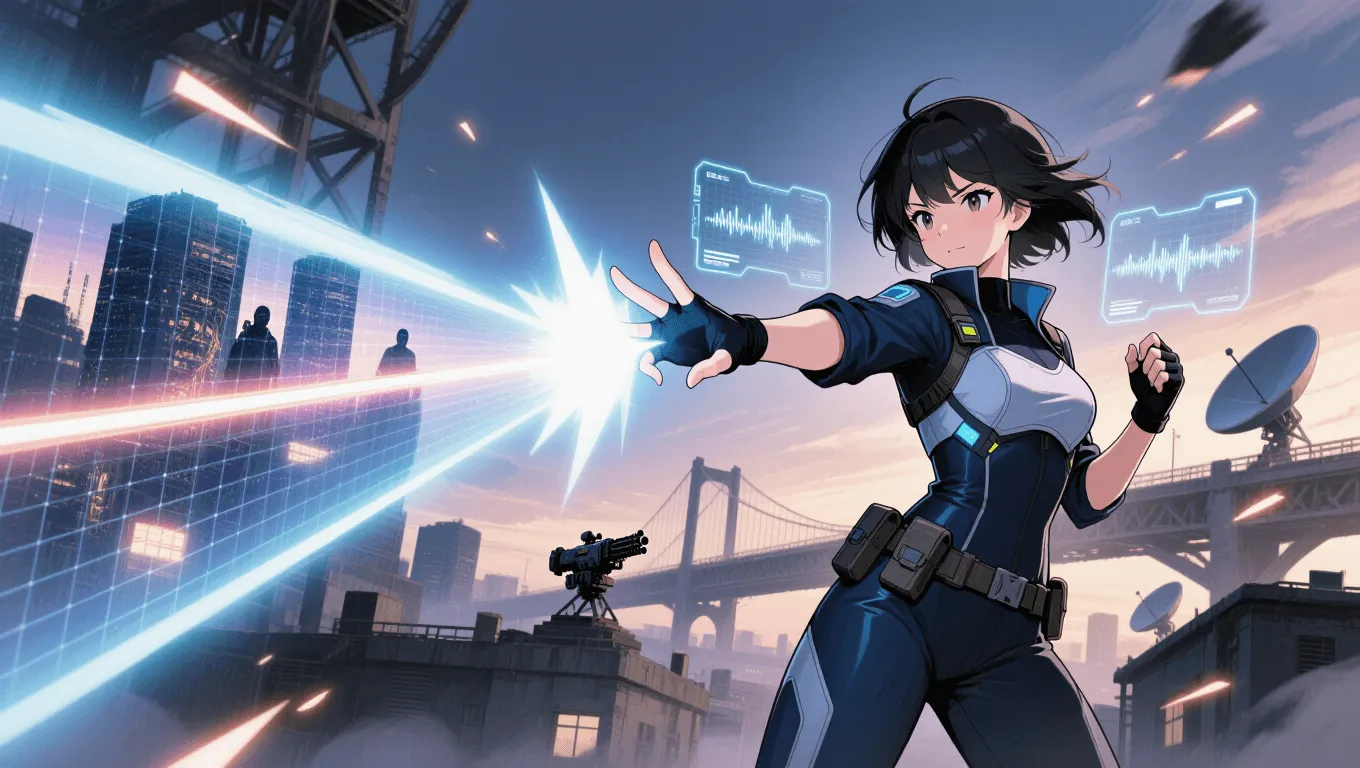
At level 3, Microwave Vision becomes a strategic asset.
-
Detection: high-resolution microwave imaging at long range, potentially reading complex environments or tracking targets across a wide area.
-
Projection: highly focused, high-output beams capable of precision disabling at extreme distance, or wide cones for large-scale denial.
-
Control: advanced modulation—fine control over pulse timing, bandwidth, and intensity to slip past defenses or avoid collateral damage.
Typical combat role: elite hunter-controller who dominates reconnaissance, disables infrastructure, and dictates enemy movement.
Limitations of using the Microwave Vision
Microwave Vision is powerful, but it comes with real constraints that keep it from being an automatic win button.
-
Line-of-sight still matters: even if sensing can “see” around some concealment, projection generally follows gaze direction and can be blocked by dense or reflective barriers.
-
Metal shielding is a hard counter: conductive materials reflect and block microwaves effectively, turning many covers into safe zones.
-
Environmental attenuation: heavy rain, high humidity, or certain particulate clouds can scatter or weaken signals depending on tuning.
-
Heat management and fatigue: projection can drain the user quickly; eyes may ache, tear up, or suffer strain from repeated high-output use.
-
Collateral risk: overheating the wrong object can start fires, damage critical equipment, or injure bystanders—especially in enclosed spaces.
-
Feedback noise: strong reflections in tight metal-heavy environments can distort “microwave sight,” producing confusing ghosts or hotspots.
-
Biological ethics: using microwave heating on living targets raises serious moral and legal issues, since damage can be internal and hard to diagnose.
Weakness against what other superpowers
Microwave Vision tends to struggle against powers that block, redirect, or absorb energy—or that remove the need to be seen and targeted.
-
Electromagnetic Manipulation: users who control EM fields can bend, dampen, or reflect microwave output and jam scanning.
-
Energy Absorption: abilities that drink in radiation can neutralize both detection and projection, potentially powering the opponent.
-
Force Fields and Reflective Barriers: sturdy shielding (especially conductive or mirror-like energy constructs) can bounce the beam or create safe corridors.
-
Phasing: intangible targets reduce the value of heating attacks and can bypass line-of-sight pressure entirely.
-
Teleportation and high-speed movement: rapid relocation can outpace scan refresh and break targeting.
-
Water/Weather Control: heavy rainfall, mist walls, or dense humidity can degrade microwave imaging and bleed off energy effectiveness.
-
Stealth that isn’t optical: if an enemy’s concealment is based on dimensional tricks, time displacement, or psychic masking rather than visibility, Microwave Vision may not help.
Synergistic Power Combos
Microwave Vision becomes especially scary when paired with powers that fix its blind spots or amplify its best traits.
-
Enhanced Accuracy: turns a focused microwave beam into a surgical tool for disabling weapons, drones, or specific armor joints.
-
Technopathy or Digital Vision: scan electronics with microwaves, then hack or rewrite what’s detected; the combo is perfect for counter-surveillance.
-
Electromagnetic Manipulation: one power shapes the battlefield EM conditions while Microwave Vision provides precision projection and sensor feedback.
-
Density Control: increase density to resist recoil, heat blowback, or concussive side effects while maintaining a steady, controlled beam.
-
Psychic Navigation: use extrasensory location to know where targets are, then confirm and pressure them through microwave scanning.
-
Light Manipulation: create blinding flashes for everyone else while Microwave Vision maintains clear “radar sight,” giving a one-sided advantage.
-
Energy Conversion: convert ambient sources into tuned microwave output for longer uptime and less fatigue.
Known Users
Because Microwave Vision is a very specific expression (eyes as microwave projectors and sensors), it appears less often by that exact name. However, several comic characters have closely related microwave-based abilities that match the same core concept of generating, detecting, or manipulating microwave radiation.
-
Firestar (Angelica Jones) has established microwave energy generation and manipulation, including sensing electromagnetic signatures and using microwaves offensively.
-
Monica Rambeau can transform into and control many forms of electromagnetic energy, including microwaves, making her a strong reference point for spectrum-based microwave feats.
-
Microwave Man (Lewis Pagett) is a Superman foe associated with microwave-derived powers, offering a villain template for microwave-themed energy projection and tactics.