
Muscle Manipulation

Muscle Manipulation Video Demo 🎬
Table of Contents
- Muscle Manipulation Video Demo 🎬
- What Is Muscle Manipulation?
- Core Abilities of Muscle Manipulation
- Application / Tactical Advantages in Combat
- Level: Level 1 🏙️, Level 2 🌇, Level 3 🌃
- Limitations of using the Muscle Manipulation
- Weakness against what other superpowers
- Synergistic Power Combos
- Known Users
Muscle Manipulation is a superpower that allows a character to alter and control muscle tissue in their own body or in others. With this ability, a user can enhance strength, reshape their physique, repair damage, or even immobilize enemies by seizing control of their muscles. In many superhero settings, Muscle Manipulation sits at the crossroads of biological manipulation, body control, and combat enhancement, making it a versatile and often frightening power when fully developed.
As with many abilities in a rich superpowered setting, Muscle Manipulation fits neatly into a wider catalog of powers often found in a superpower wiki or random superpower generator. Worlds filled with superhuman strength, regeneration, and flesh-shaping abilities frequently feature some version of this muscle control power.
What Is Muscle Manipulation?
Muscle Manipulation is the ability to directly influence muscle fibers and muscle tissue. This can apply to:
-
The user’s own muscles (self-enhancement and self-modification)
-
The muscles of other living beings (offensive or supportive use)
Unlike simple super strength, which usually just multiplies physical power, Muscle Manipulation gives fine-tuned control over how muscles contract, relax, grow, shrink, or change structure. It can extend to skeletal muscles used for movement, smooth muscles in organs and blood vessels, and sometimes even cardiac muscle in the heart, depending on the power level.
In story terms, a character with this power can:
-
Tighten muscles to become super-strong or highly resistant to impact
-
Loosen muscles to slip through tight spaces or become extremely flexible
-
Reshape muscle tissue to change their build or appearance
-
Influence another person’s movement, either helping or hindering them
Because it touches the core of how bodies work, this power can be both incredibly useful and morally complex.
For more unusual and imaginative abilities like this one, many creators reference a larger superpower list in a wiki when building their worlds, or use a random superpower generator to spark ideas.
Core Abilities of Muscle Manipulation
At its core, Muscle Manipulation offers both precision and power. Common manifestations of this superpower include:
Self-enhanced strength and speed
By tightening muscle fibers, increasing muscle density, and optimizing how muscle groups work together, the user can gain superhuman strength and speed. Movements become more efficient and explosive, giving them powerful punches, high jumps, and rapid acceleration.
Instant muscle relaxation and flexibility
The user can fully relax muscles on demand, removing stiffness and tension. This allows:
-
Extreme flexibility and contortion
-
Reduced risk of muscle strain
-
The ability to shrug off holds or joint locks by “turning off” resistance
This kind of muscle control pairs well with martial arts or acrobatic fighting styles.
Muscle growth and reshaping
By controlling how muscle cells grow and rearrange, the user can:
-
Increase or decrease muscle mass in specific areas
-
Change body proportions (broader shoulders, thicker arms, leaner legs)
-
Sculpt their build for intimidation, stealth, or specialized combat roles
In some versions, the character can create corded, layered muscle armor under the skin for extra protection.
Healing and recovery
Muscle Manipulation often includes a limited healing factor focused on muscle tissue. The user can:
-
Knit torn muscle fibers back together
-
Flush out lactic acid to recover from fatigue quickly
-
Correct minor scar tissue or imbalances
While not full regeneration, it can make the user incredibly durable over long battles.
External muscle control
More advanced users can reach beyond their own body and manipulate the muscles of others, usually by touch or close range. This can allow:
-
Forcing limbs to move or lock
-
Temporarily paralyzing an opponent by seizing their muscles
-
Relaxing and soothing strained muscles in allies
This side of the power blurs into biological or flesh manipulation and can be both heroic (healing and support) or terrifying (body puppetry).
Muscle-based sensory feedback
A subtle application is reading muscle tension in others. Fine perception of micro-movements and twitches can:
-
Anticipate attacks by reading pre-movement muscle shifts
-
Detect stress, fear, or lies through involuntary muscle responses
-
Help in precise medical or therapeutic applications
This turns the user’s understanding of musculature into a form of “body language radar.”
Application / Tactical Advantages in Combat
In combat, Muscle Manipulation is a tactical powerhouse because it affects almost every aspect of physical performance.
Offensive advantages
-
Strikes enhanced by dense, perfectly coordinated muscles hit much harder than normal.
-
The user can channel force efficiently, reducing wasted motion and making every blow count.
-
By targeting an enemy’s muscles, they can cause temporary weakness, cramps, or immobilization without lasting damage, ideal for non-lethal takedowns.
Defensive and durability benefits
-
The user can tense muscles in critical areas to absorb impact like padding or armor.
-
They can reduce the chance of dislocation or fracture by stabilizing joints through precise muscle control.
-
Controlled relaxation at the moment of impact can let the body roll with a blow, minimizing trauma.
Mobility and stamina
-
Fine-tuned muscle coordination boosts agility, balance, and acrobatic ability.
-
Efficient movement reduces energy waste, dramatically extending stamina.
-
The user can shift muscles to favor explosive bursts of speed or long-distance endurance as needed.
Support and team roles
-
The user can act as a combat medic for muscle-related injuries, resetting cramps, strains, or tears.
-
They can enhance teammates by stimulating their muscles for temporary speed or strength boosts, if their power extends to others.
-
Muscle Manipulation also synergizes with tactical grappling, as the user can predict and counter throws or holds by reading and responding to the opponent’s muscle engagement.
Overall, this superpower turns the human body into a customizable battlefield tool, letting a character adapt to many situations without needing extra weapons.
Level: Level 1 🏙️, Level 2 🌇, Level 3 🌃
Level 1 🏙️ – Basic Muscle Control
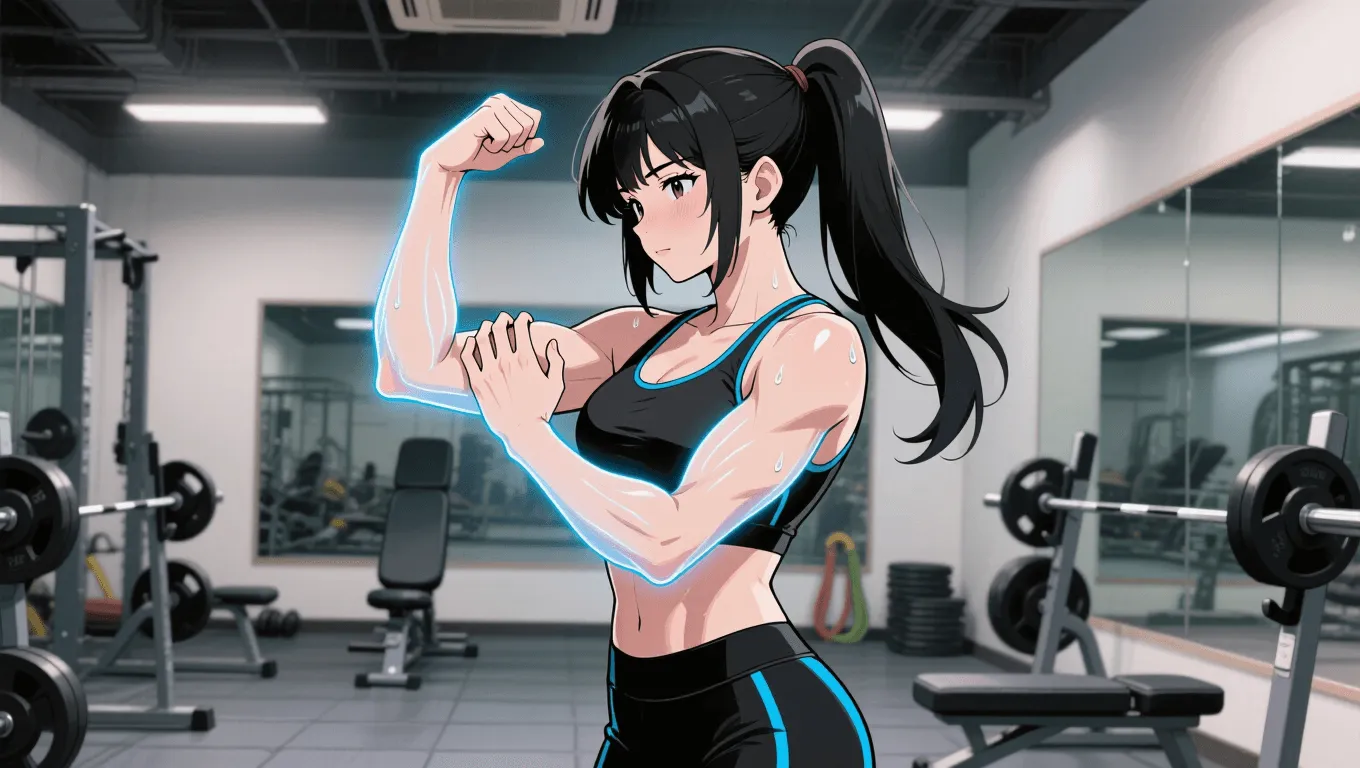
At Level 1, Muscle Manipulation is mostly internal and subtle.
-
The user can consciously flex, relax, and isolate muscles that most people cannot control.
-
They gain noticeable but not overwhelming boosts to strength, flexibility, and endurance.
-
Recovery from muscle fatigue is faster than normal, and minor strains heal quickly.
-
External manipulation of others, if present at all, is limited to gentle relaxation or slight muscle stimulation through direct contact.
Characters at this level feel “peak human plus,” still operating within realistic human limits but pushing them consistently.
Level 2 🌇 – Advanced Muscle Adaptation
At Level 2, the power becomes clearly superhuman and more versatile.

-
The user can rapidly grow or shrink muscle mass in specific areas, changing their build mid-battle.
-
Strength and speed reach low to mid superhuman levels, allowing feats like bending metal bars or leaping several stories.
-
They can create muscle “armor” around vital spots, thickening tissue to blunt weapons and impacts.
-
External control extends to forcibly locking joints, triggering short-term paralysis, or helping allies by accelerating muscle repair after injury.
At this stage, the character becomes a major threat in close combat, mixing brute force with tactical precision.
Level 3 🌃 – Master of Flesh and Movement
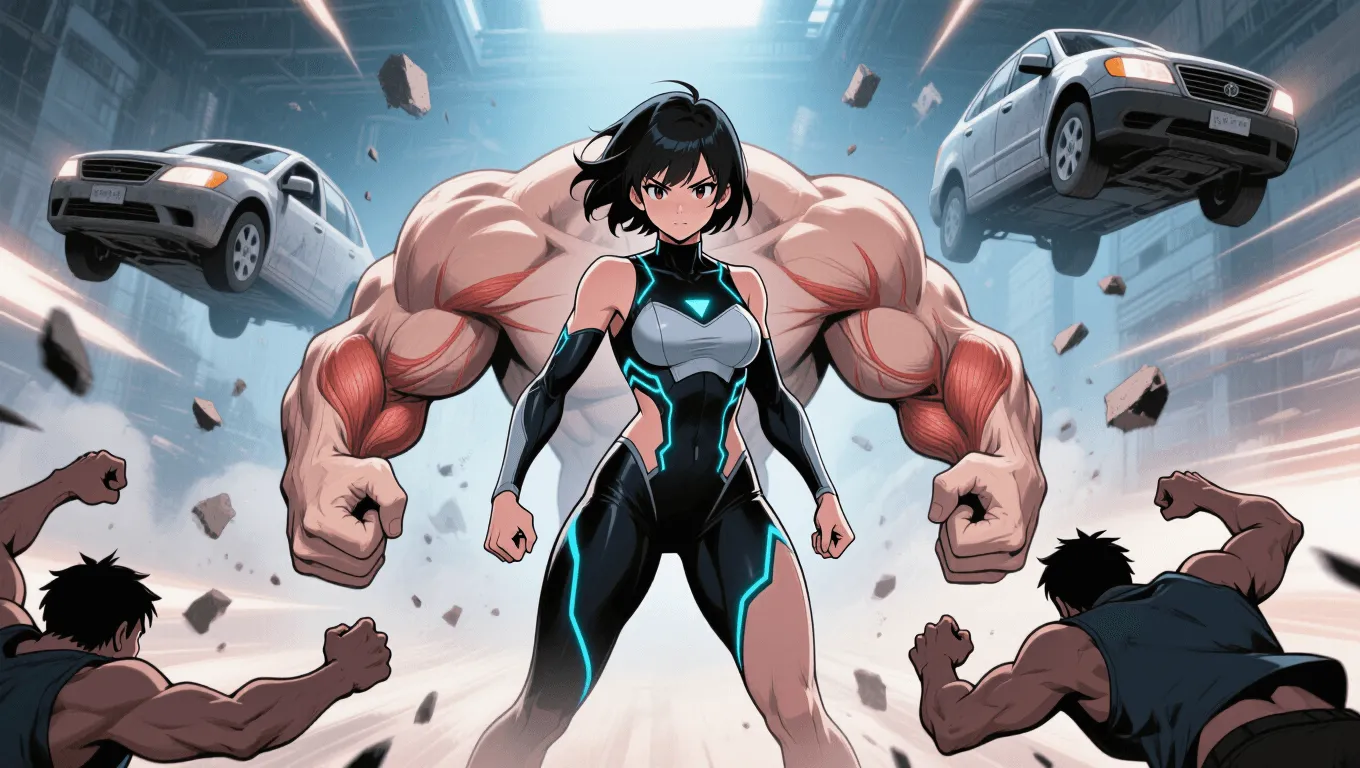
At Level 3, Muscle Manipulation is refined into a near-complete command over muscle tissue.
-
The user can reshape their entire musculature in seconds, shifting from slim and agile to massive and tank-like.
-
Superhuman strength, speed, and endurance reach extreme levels; they may lift vehicles, move faster than the eye can track, or fight for hours with minimal fatigue.
-
External control can affect multiple targets at once, sometimes even at a distance, depending on the story’s rules.
-
They may influence smooth and cardiac muscle as well, allowing precise control over circulation, breathing patterns, and heart rate—usually portrayed with careful moral and narrative limits.
At this level, the character’s relationship to physical bodies is almost sculptural, making them one of the most dangerous close-range specialists in any setting.
Limitations of using the Muscle Manipulation
Despite its power, Muscle Manipulation has important checks and balances that keep it from being unstoppable.
-
Anatomy knowledge: Effective use on others often requires detailed understanding of how muscles attach and move. Mistakes can cause unintended injury or reduced effectiveness.
-
Energy cost: Constantly reshaping or powering muscles burns enormous energy. Users may need increased food intake or rest, and overuse can lead to collapse.
-
Range and contact: Many versions require touch or close proximity to affect others. Long-range control is rare and usually reserved for high-level users.
-
Complexity of organs: Manipulating smooth or cardiac muscle safely is difficult. Most responsible characters avoid deeply altering internal organs, or they risk serious harm.
-
Mental strain: Tracking multiple muscle groups, especially in several people at once, can overload concentration and cause headaches, dizziness, or loss of control.
-
Dependence on living tissue: The power is often useless against robots, energy beings, or constructs with no muscles to control.
These limitations help balance the ability in game systems and stories, and they can also create interesting weaknesses for plot and character development.
Weakness against what other superpowers
Muscle Manipulation is strong, but certain other superpowers naturally counter or bypass it.
-
Nerve or mind control powers: If someone can control nerves, thoughts, or motor signals directly, they may override or disrupt muscle-based commands.
-
Intangibility and phasing: Characters who become intangible or transform into energy, gas, or other non-muscular forms cannot easily be affected.
-
Elemental or hard-body transformations: Stone skin, metal forms, or full-body energy auras reduce or cancel the impact of muscle attacks. There is little muscle tissue to influence.
-
Regeneration and biological resistance: Rapid healers can undo damage or forced changes quickly, and some may naturally resist external biological manipulation.
-
Time and speed manipulation: Time stops, slow fields, or extreme superspeed let opponents move outside the user’s reaction window, making it hard to target their muscles in time.
-
Bone or exoskeleton control: Powers that reinforce or reshape the skeleton can counter attempts to manipulate movement purely through muscles, especially if they lock joints from the inside.
These weaknesses give Muscle Manipulation clear counters and encourage varied team compositions and strategies.
Synergistic Power Combos
Muscle Manipulation becomes even more impressive when combined with compatible abilities. Some powerful combos include:
-
Bone Manipulation: Together, control over muscles and bones allows full-body restructuring, living armor, or terrifying combat morphs.
-
Fat Manipulation: Balancing muscle density with fat distribution can create the perfect mix of shock absorption, durability, and power output.
-
Adoptive Muscle Memory: If a character can copy any movement they see, then fine-tune the muscles behind that movement, they become a martial arts and acrobatics prodigy.
-
Regeneration or healing factors: Rapid tissue repair removes many risks of overexertion and allows more aggressive remodeling.
-
Additional Limbs: Extra arms or appendages combined with precise muscle control make for overwhelming grappling, multi-weapon fighting, or spider-like climbing.
-
Enhanced senses or x-ray-style perception: Seeing or sensing muscle structures in detail makes external manipulation more accurate and safe, both in combat and medical use.
-
Kinetic absorption or deflection: Muscles can be arranged to channel force into abilities that store or redirect impacts, turning the user into a living shock absorber and counter-striker.
In RPGs or comics, these synergies help define unique builds and visually striking character designs.
Known Users
While “Muscle Manipulation” may not always be named directly in fiction, many characters display similar body and flesh-controlling powers.
-
Masque (Marvel Comics): A member of the Morlocks, Masque can reshape flesh, including muscles, with a touch, often in disturbing ways. Their ability is a dark and uncontrolled form of tissue manipulation. Masque – Marvel Database
-
Muscular (My Hero Academia): This villain can massively expand and harden his own muscles, boosting strength and durability to monstrous levels, a clear example of extreme self-focused muscle control.
-
Various shapeshifters and bio-manipulators: Characters who can reshape their bodies without turning into fluid or energy—such as some comic shapeshifters and anime warriors—often implicitly manipulate muscles to change build, size, and toughness.
In a custom RPG setting, Muscle Manipulation might belong to elite soldiers engineered for perfect combat efficiency, healers who can rebuild damaged limbs, or villains who treat the human body as raw material. Paired with other abilities from a broader superpower wiki or discovered through a random superpower generator, it offers a flexible, grounded, and thematically rich power for storytellers and game designers alike.