
Photography Vision

Photography Vision Video Demo 🎬
Table of Contents
Photography Vision is a visual-based superpower that lets a person capture photographs directly from their eyes and project those images on demand. Instead of relying on a physical camera, the wielder’s gaze functions like a living lens—recording crisp snapshots, storing them internally, and displaying them as projected images when needed. In practice, Photography Vision sits at the crossroads of camera eyes, optic projection, and visual recording, making it equally valuable for reconnaissance, evidence-gathering, misdirection, and precision combat support.
What Is Photography Vision
Photography Vision (also commonly described as camera eyes or photographic eyes) is the ability to take “still shots” through sight alone and reproduce those shots as visible projections. A user can glance at a scene, capture it like an instant photo, and later display the captured image—on a wall, in midair as a light projection, or even as a focused “slide” only allies can see, depending on the setting.
Unlike simple enhanced eyesight, this power includes two distinct functions:
-
Capture: turning visual input into a stored, stable image (a snapshot).
-
Projection: converting that stored snapshot back into a viewable photograph.
On a worldbuilding level, Photography Vision can be biological (retina acting as an organic sensor), mystical (the eyes “steal” an image from reality), or techno-organic (living optics with an internal image buffer). In a larger setting like a Superpower Wiki, it’s often categorized under sensory powers with a creation/projection sub-type because it produces usable visual outputs rather than only improving perception.
Core abilities of Photography Vision
Photography Vision tends to develop into a toolkit of camera-like controls. The more skilled the user becomes, the more their eyes behave like a full professional rig.
-
Instant snapshot capture: A deliberate blink, stare, or focus-lock “click” captures a still image.
-
Internal image storage: Photos are stored in a mental gallery, visual archive, or “retinal roll.”
-
Image projection: Stored photos can be projected onto surfaces, screens, smoke, fog, or open air as luminous stills.
-
Zoom and focus control: Optical zoom, focus pull, and depth-of-field simulation can isolate details like a telephoto lens.
-
Low-light enhancement (advanced): Some users can “expose” longer to capture usable images in dim environments.
-
Freeze-frame clarity: The power can reduce motion blur during capture, preserving sharp detail in fast action.
-
Timestamping and tagging: Images may include contextual metadata (time, angle, emotional “signature,” or location sense).
-
Sequential burst shots: Rapid-fire captures create a flipbook-like series for analysis and replay.
-
Photographic overlay: A projected image can be layered over reality to compare changes, track targets, or mark routes.
-
Selective projection: The user may choose who can see projections (public broadcast vs. ally-only display).
Many versions also include “image imprinting,” where the user can burn a photo-like still onto a surface by maintaining a projection long enough—useful for leaving messages, warnings, or evidence.
For readers exploring powers across the site, Photography Vision pairs naturally with other sensory and emission abilities listed in the Superpower Wiki, and it’s a fun wildcard to discover via the random superpower generator.
Application / Tactical Advantages in Combat
Photography Vision looks non-lethal at first glance, but its combat value comes from information dominance and visual control. In fights where timing and awareness decide outcomes, a power that records, replays, and broadcasts the battlefield can quietly become oppressive.
-
Combat reconnaissance: The user can capture enemy stances, weapon positions, and environmental hazards for later review.
-
Weak-point mapping: Freeze-frame shots reveal patterns—favoring one leg, a tell before a strike, or a defensive gap.
-
Ally coordination: Projected stills can brief teammates instantly: enemy count, positions, escape routes, hostages, traps.
-
Evidence and deterrence: Capturing proof of wrongdoing can force retreats, expose disguises, and discourage escalation.
-
Misdirection with still projections: A projected image of a doorway, a hallway, or a “standing figure” can bait attacks.
-
Threat identification: Burst shots help identify who fired first, who moved, and what changed in a single second.
-
Psychological pressure: Being “documented” mid-crime can rattle opponents and disrupt composure.
-
Target tracking: Overlay projections can mark last-known positions and guide pursuit through cluttered environments.
The power becomes especially tactical in urban combat, where reflective surfaces, signage, glass, and tight corridors provide easy projection canvases.
Level: Level 1 🏙️
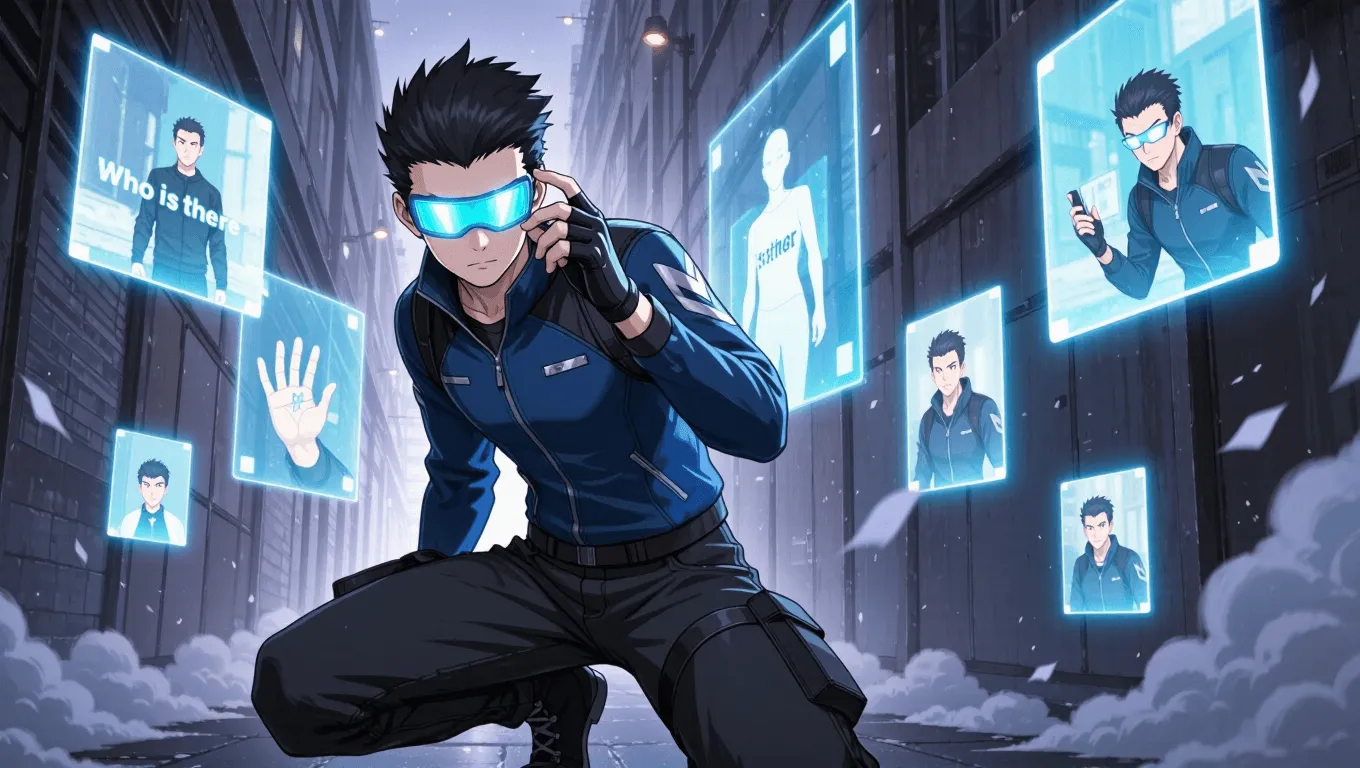
At Level 1, Photography Vision is reliable but straightforward: capture and project basic photos.
-
Captures clear still images with a short focus time.
-
Projects photos onto nearby surfaces like walls, floors, or fog.
-
Useful for quick intel: “who is there,” “what is in their hand,” “what changed.”
-
Can support escape tactics by projecting a fake hallway corner or a misleading doorway outline.
-
Weakness: limited storage, weak brightness, and reduced clarity in motion-heavy scenes.
A Level 1 user often plays like a scout or support fighter—hard to pin down, constantly feeding information.
Level: Level 2 🌇
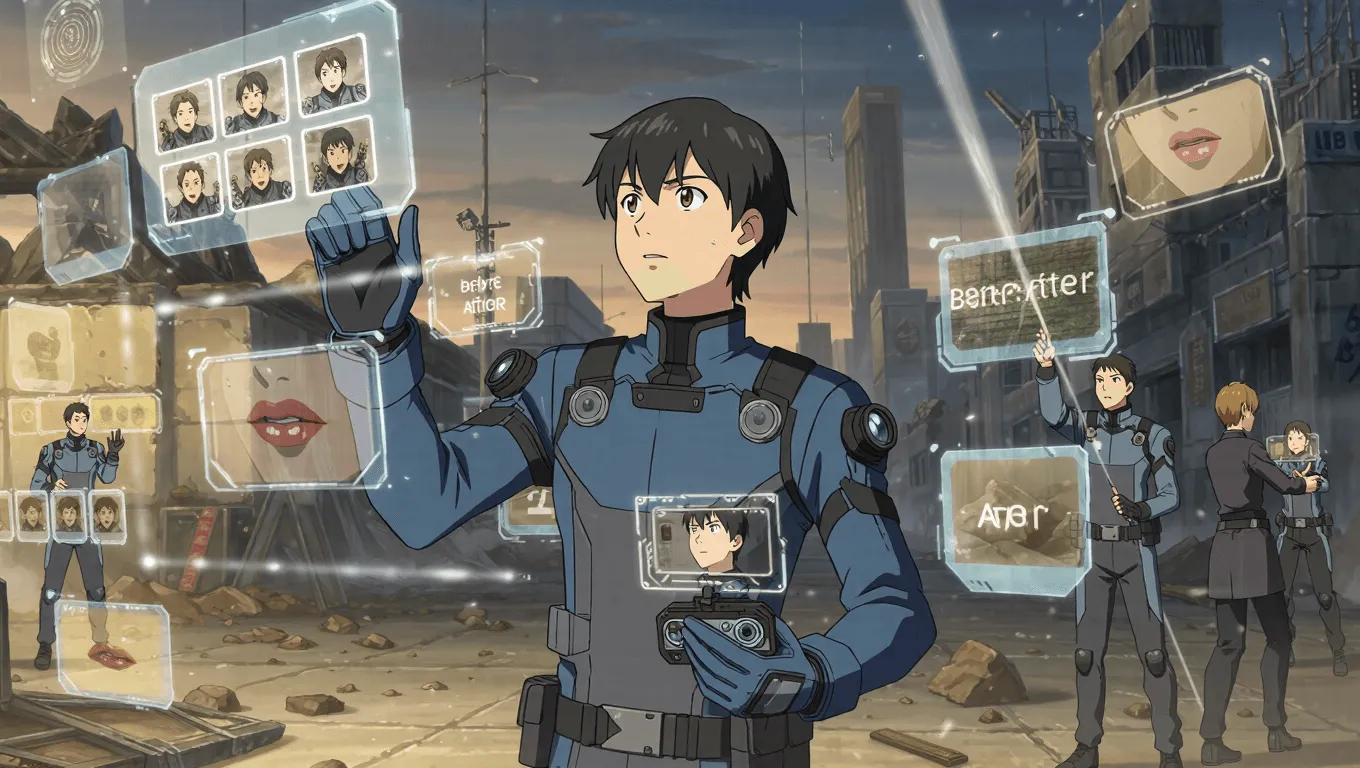
At Level 2, Photography Vision gains camera-grade control and faster throughput.
-
Burst capture and rapid indexing (quickly flipping through multiple images).
-
Zoom/focus control strong enough to read lips or identify small objects at distance.
-
Brighter, more stable projections that can be thrown farther and held longer.
-
Photo overlays for comparison: projecting “before” over “after” to reveal hidden movement or tampering.
-
Tactical advantage: setting up ambush prevention by constantly documenting choke points and projecting the last known “clean” frame for teammates.
At this tier, the power becomes a battlefield command utility—turning chaos into documented, shareable clarity.
Level: Level 3 🌃
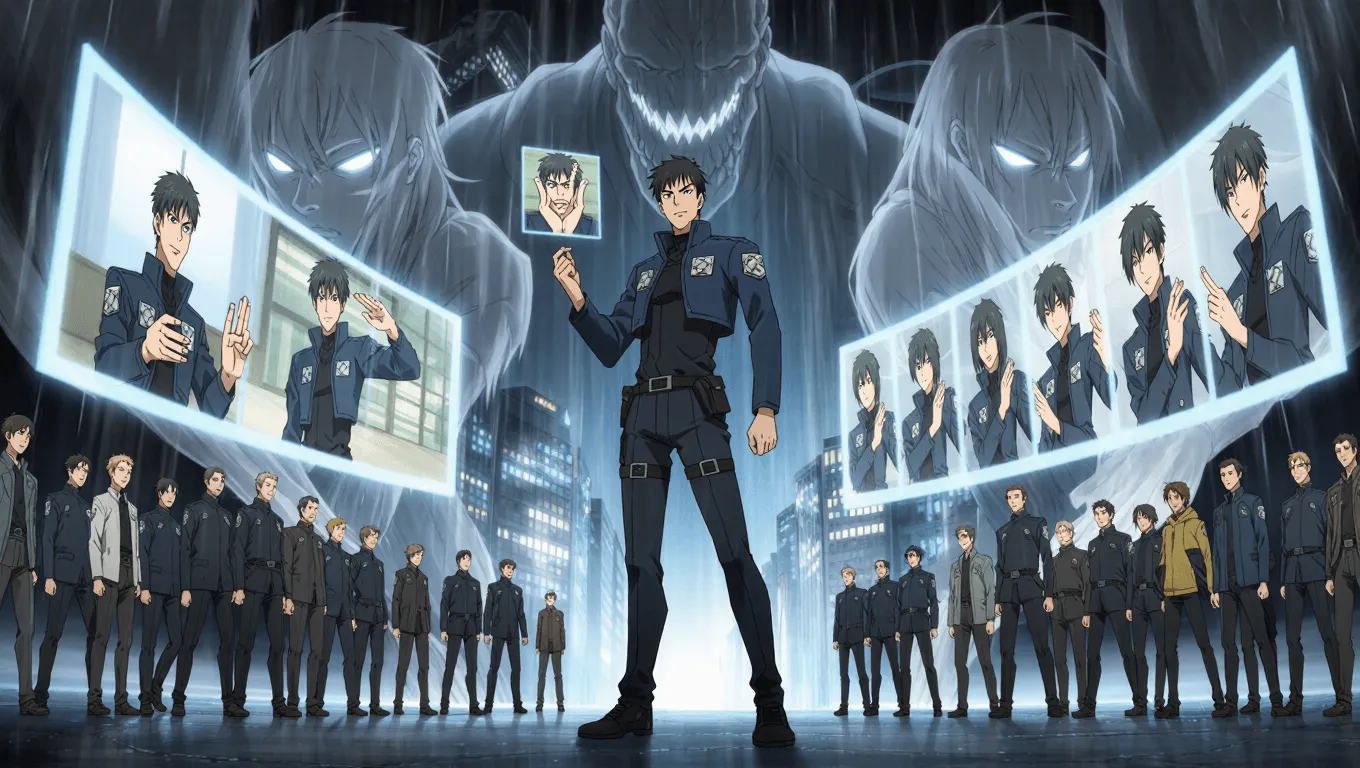
At Level 3, Photography Vision can reshape encounters through advanced projection logic and near-instant capture.
-
Near-zero shutter delay: the user can “snap” decisive micro-moments (hand twitch, trigger squeeze, blink tells).
-
High-fidelity projections with controllable scale (from palm-sized photos to building-wide displays).
-
Selective visibility (in some interpretations): allies can see the projection while enemies see only darkness or glare.
-
Projection chaining: multiple photos displayed in sequence to guide allies step-by-step through an evolving fight.
-
Counter-illusion utility: “reality receipts” help expose shape-shifters and fake environments by comparing frames.
At the highest tier, Photography Vision doesn’t win by brute force—it wins by making deception, surprise, and coordination failures almost impossible.
Limitations of using the Photography Vision
Photography Vision remains bounded by the rules of light, attention, and cognition. Even if the power is supernatural, it still tends to mirror the constraints of photography.
-
Light dependency: Extreme darkness, overexposure, or strobing conditions can ruin captures.
-
Line of sight requirement: The user must see the target; walls, smoke, and solid cover block clean shots.
-
Attention cost: Capturing at the wrong moment can pull focus away from defense.
-
Storage overload: A limited “gallery” can fill up, forcing deletion, compression, or imperfect recall.
-
Motion constraints: Fast-moving targets may require longer focus or burst capture to avoid blur.
-
Projection tells: Bright projections can reveal the user’s position if used carelessly.
-
Emotional contamination (some settings): Stress or fear may distort captures, creating flawed “evidence.”
-
Anti-sensory counterplay: Flashbangs, glare, darkness fields, and visual noise disrupt both capture and projection.
-
Privacy and ethics complications: In-story consequences can follow users who record everything.
In many narratives, the biggest limitation is not technical—it’s the user’s ability to decide what to record and when, without freezing up under pressure.
Weakness against what other superpowers
Photography Vision is strongest when the environment behaves predictably. It struggles against powers that either deny clear visuals or punish attention.
-
Darkness Manipulation and Shadow Control: Reduces capture clarity and can erase projected images by swallowing light.
-
Light Manipulation: Can overexpose scenes, bleach details, or create glare that makes photos unusable.
-
Invisibility: Prevents capturing a clean subject (though the user may still record footprints, disturbances, or reflections).
-
Illusion Casting: Can poison the “truth value” of captured images by feeding false visuals into the snapshot.
-
Smoke, Mist, and Particle Control: Obscures line of sight and creates projection interference.
-
Reality Warping: Makes “evidence” unreliable because the world itself can be rewritten after the photo is taken.
-
EMP or Tech Disruption (setting-dependent): If the ability is techno-organic, interference may corrupt storage or projection.
-
Mind Control and Memory Manipulation: Can force the user to capture the wrong things—or forget the right ones.
A strong counter theme emerges: anything that breaks visual fidelity, awareness, or trust undermines the power’s core value.
Synergistic Power Combos
Photography Vision becomes far more dangerous when paired with powers that exploit information, positioning, or light.
-
Stealth or Invisibility (ally): The photographer becomes a mobile surveillance unit, documenting targets without being targeted.
-
Teleportation: Snap a location, then project the photo for teammates as a navigation cue before a coordinated jump.
-
Hard Light Constructs: Convert projected photos into solid decoys, cover shapes, or “still-image shields.”
-
Time Slow or Reflex Enhancement: Creates perfect capture windows—no blur, no missed micro-movements.
-
Sound Manipulation: Project a photo while sound lures enemies toward the wrong hallway or door.
-
Mind Reading (limited): Confirms whether captured images match reality, defeating illusion-based misinformation.
-
Electromagnetic Vision or Energy Vision: Combine “what happened” (photo) with “what’s powering it” (energy readout) for elite threat analysis.
-
Ink, Paint, or Graffiti Manipulation: Turn projections into permanent markings—maps, warnings, wanted posters, battlefield signage.
In team scenarios, Photography Vision often functions like a tactical HUD for the whole squad—especially when projection can be thrown onto walls, smoke screens, or the ground as directional arrows.
Known Users
Because Photography Vision overlaps with “camera eyes” and “photographic vision” concepts across fiction, it often appears as cybernetic eyes, magical ocular recording, or a temporary modification.
-
Psylocke (Betsy Braddock): In Marvel lore, Mojo gives her camera eyes to spy on the X-Men during a storyline that involves captivity and manipulation.
-
Superman: Some encyclopedic descriptions of Superman’s many vision abilities have referred to photographic vision as a memorization-at-a-glance type of optic feat (a close cousin conceptually, though not always portrayed as literal photo projection).
-
The Man With the Camera Eyes: A Golden Age Batman-era villain concept appears under this name in reference listings for classic stories, reflecting how long the “camera eyes” idea has been part of comic storytelling.
-
Glass-Eye Freddie (Marvel): A cyborgized character whose artificial camera eyes are explicitly described as camera replacements, fitting the “camera eyes” branch of the power family.
In superpower terms, these examples show how the same core idea—eyes that record and reproduce images—can be expressed as surveillance hardware, alien physiology, or pure superhuman optics, depending on the universe.