
Plant Mimicry: Turning Into Living Plant Matter
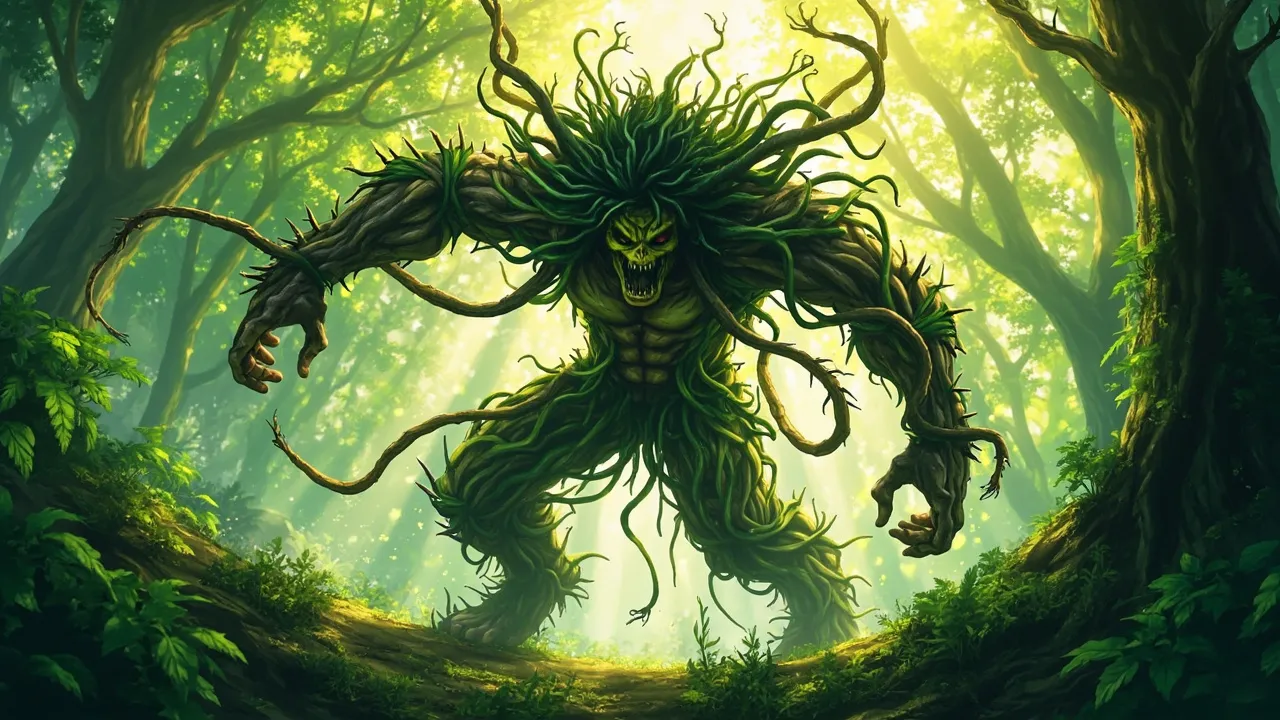
Plant Mimicry Video Demo 🎬
Table of Contents
Plant Mimicry is a transformation-based superpower that lets a person turn their body into living plant matter and use plant traits as if they were natural limbs, skin, and organs. Instead of simply controlling plants from the outside, the user becomes the plant—shaping bark-like armor, growing vines and thorns, and even using photosynthesis-style energy gain in the right conditions. Because Plant Mimicry blends shapeshifting with botanical biology, it can feel equal parts durable, adaptable, and unsettling, especially when the user’s silhouette shifts from human to something rooted, leafy, and alive.
What Is Plant Mimicry
Plant Mimicry allows the user to convert all or part of their body into plant tissue while staying conscious and mobile. In practice, it’s a form of botanical shapeshifting: muscles can become bundles of fibrous roots, skin can become layered bark, hair can turn into leaves or moss, and hands can split into tendrils.
This power isn’t limited to “tree mode.” Depending on the user’s skill and imagination, plant matter can imitate different plant structures—soft vines for grappling, tough wood for defense, thorny growths for close combat, or broad leaves for gliding and camouflage. Many versions of Plant Mimicry also include accelerated healing by regrowing tissue like a plant regrows branches, and limited “nutrient management” where sunlight, water, and minerals influence stamina.
Core abilities of Plant Mimicry
Plant Mimicry has a wide toolkit. The most effective users treat plant traits like a menu and swap features depending on the situation.
Plant-body transformation and partial morphing
A user can shift their whole body into plant matter or transform only specific parts. Partial morphing is often the most practical:
-
Arms become vine whips, root coils, or wooden clubs.
-
Skin turns into bark plates or dense, cork-like padding.
-
Fingers split into tendrils for finer grip or lockpicking-like precision.
-
Hair becomes leafy camouflage that breaks up the head and shoulders outline.
Bark armor and wood-like durability
Plant structures can be surprisingly tough. Dense wood and layered bark act like natural armor:
-
Bark plating can reduce blunt impact and shallow cuts.
-
Hardwood limbs can hit like batons without injuring the user’s “bones,” because the structure is a single continuous plant form.
-
Cork-like layers can add shock absorption, helping with falls or concussive blasts.
Vines, tendrils, and grappling control
Vines and tendrils provide reach and restraint:
-
Extendable limbs can grab ledges, swing across gaps, or pull opponents off balance.
-
Multiple tendrils can restrain more than one target at once.
-
Wrapping techniques can disarm weapons or pin arms and legs without needing a clean “hold” like a human grip.
Thorns, needles, and natural weapons
Plant Mimicry can create built-in offense:
-
Thorns can sprout from forearms or shoulders to punish grapples.
-
Needle-like spines can be launched as short-range bursts (in some versions) or used as a raking surface in melee.
-
Saw-tooth leaf edges or splintered wood spikes can form cutting or stabbing tools when shaped carefully.
Regrowth and plant-style regeneration
Instead of healing like flesh, the user can regrow:
-
Replacing lost mass by “sprouting” new tissue.
-
Sealing wounds by forming resin-like sap or toughening a bark layer over damage.
-
Rebuilding limbs over time if enough energy and raw material are available.
Regrowth is powerful, but it often depends on resources (water, minerals, sunlight, or stored energy), making it strong in nature-rich environments and weaker in sterile or hostile ones.
Photosynthesis-like energy gain and nutrient storage
Many Plant Mimicry users can supplement endurance by absorbing sunlight through chlorophyll-like tissues. It rarely replaces food entirely, but it can:
-
Reduce fatigue during daytime battles.
-
Improve recovery after damage.
-
Provide a slow “trickle” of energy for maintaining forms like armor plating or extra limbs.
Camouflage and environmental blending
Leaves, moss, lichen textures, and bark patterns make stealth easier:
-
The user can match colors and textures to trees, hedges, or overgrown walls.
-
Stillness becomes a stealth advantage—remaining motionless can make the user nearly indistinguishable in vegetation.
Application / Tactical Advantages in Combat
Plant Mimicry shines in fights where adaptability matters more than raw speed. It rewards planning, terrain awareness, and clever form choices.
Battlefield control and space denial
Vines can control the “lanes” of a fight:
-
Create trip hazards by laying root-like cords low to the ground.
-
Block doorways with thick growths that act like living barricades.
-
Force opponents to cut their way through, buying time to reposition.
Defensive tanking with flexible armor
Bark plating can be grown where hits are expected:
-
Thicken forearms as shields.
-
Harden the torso before a collision.
-
Create layered “knot” structures around vital zones for extra protection.
Unlike rigid armor, plant armor can be reshaped mid-fight—thick on the front when advancing, then redistributed to the back while retreating.
Grappling, disarming, and nonlethal takedowns
Plant Mimicry is excellent for capture tactics:
-
Tendrils bind wrists and ankles quickly.
-
Vines can yank weapons away or jam triggers and mechanisms.
-
A user can immobilize without lethal force, making it useful for hero-style combat or stealth missions.
Sustained endurance and attrition wins
If the fight drags on, a skilled user can outlast opponents:
-
Regrowth reduces the long-term cost of taking hits.
-
Energy supplementation (sunlight) helps maintain forms longer.
-
Natural “shock absorption” reduces cumulative damage from repeated impacts.
Level: Level 1 🏙️, Level 2 🌇, Level 3 🌃
Level 1 🏙️: Basic plant traits
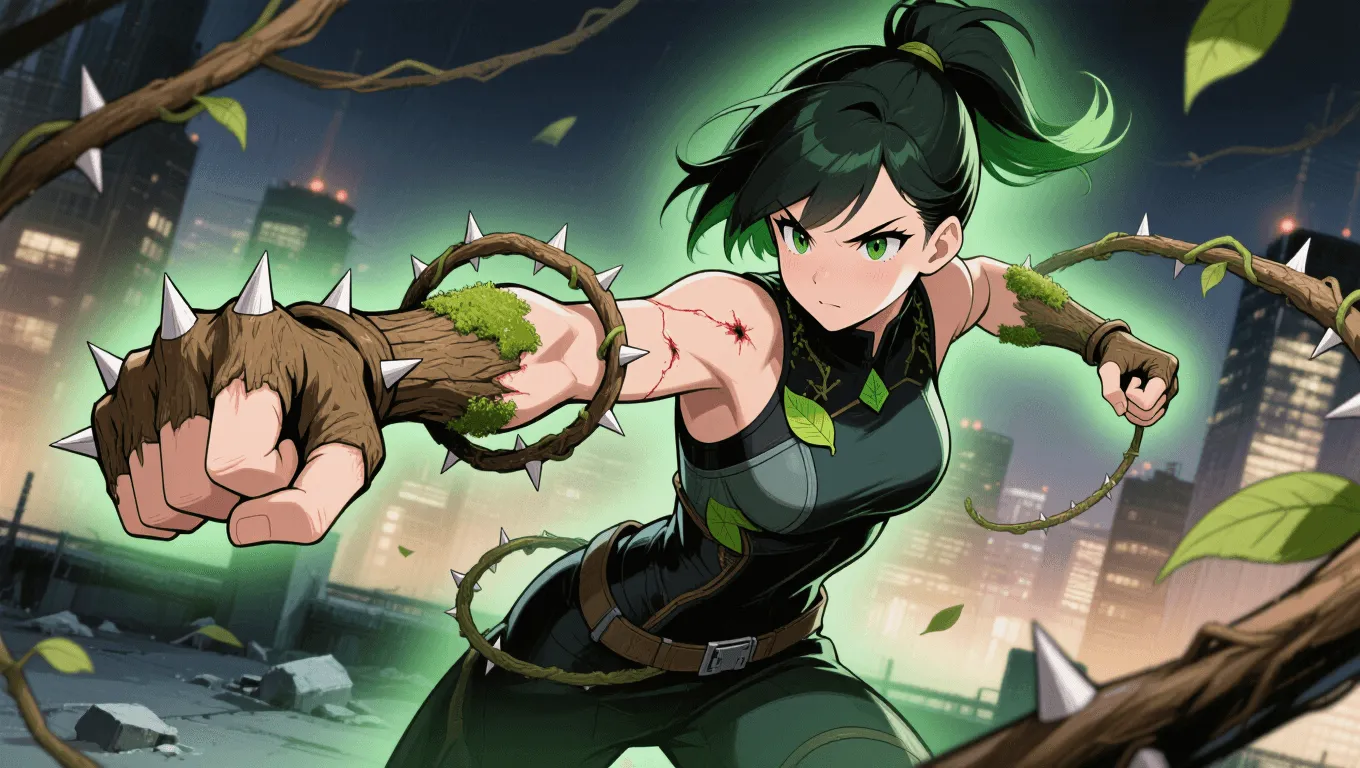
At this level, Plant Mimicry is straightforward and physical:
-
Partial transformations like bark skin, thorny knuckles, or vine forearms.
-
Small boosts to durability and grip.
-
Minor regrowth that closes cuts or repairs cracks in “wood” slowly.
Combat style is mostly brawler-plus: tougher defense, stronger hits, and simple vine grapples.
Level 2 🌇: Advanced shaping and functional forms
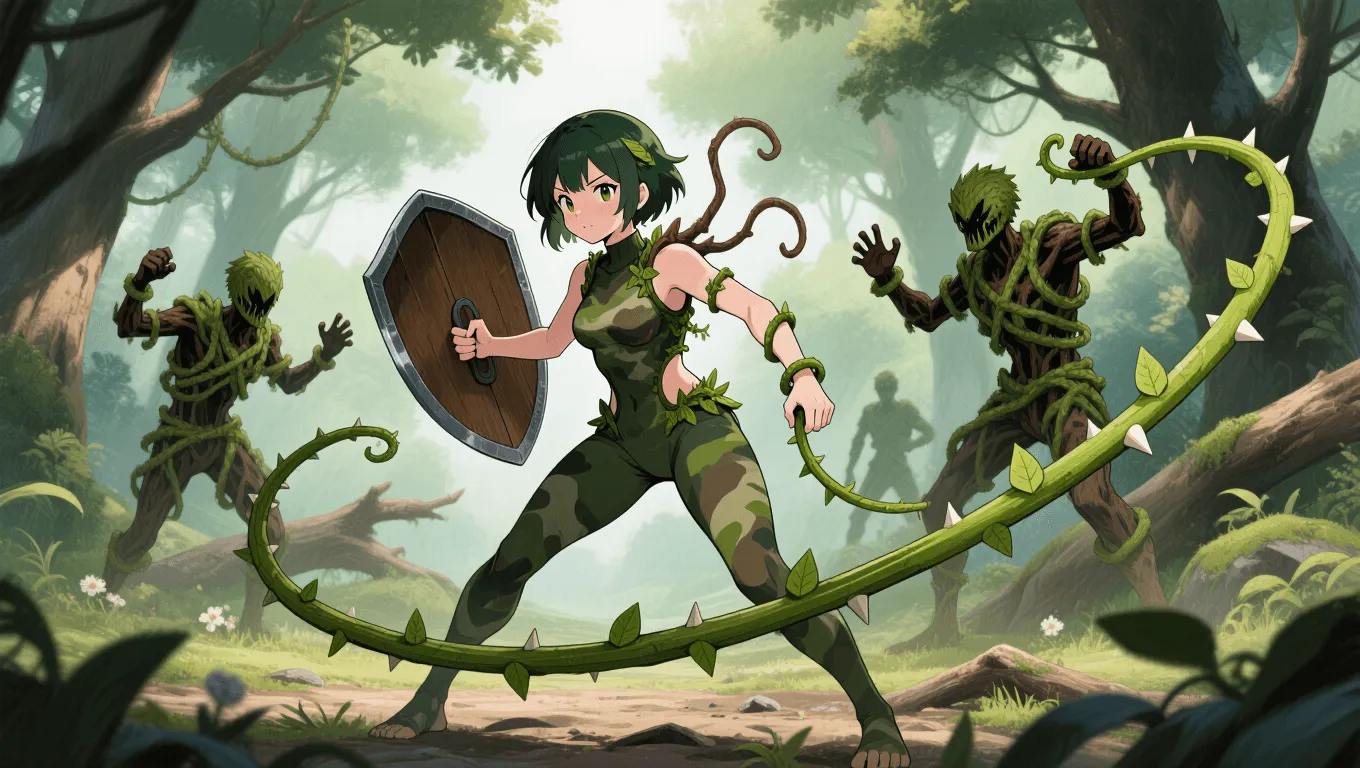
Here the user gains control and versatility:
-
Rapid reshaping of limbs into multiple tools (shield, whip, spike, hook).
-
Strong vine control for mid-range grabs and throws.
-
Better camouflage with texture/color blending.
-
Faster regrowth with fewer resources.
This level unlocks real tactics: capture, crowd control, and fighting in uneven terrain with superior mobility.
Level 3 🌃: Mastery of living plant biology
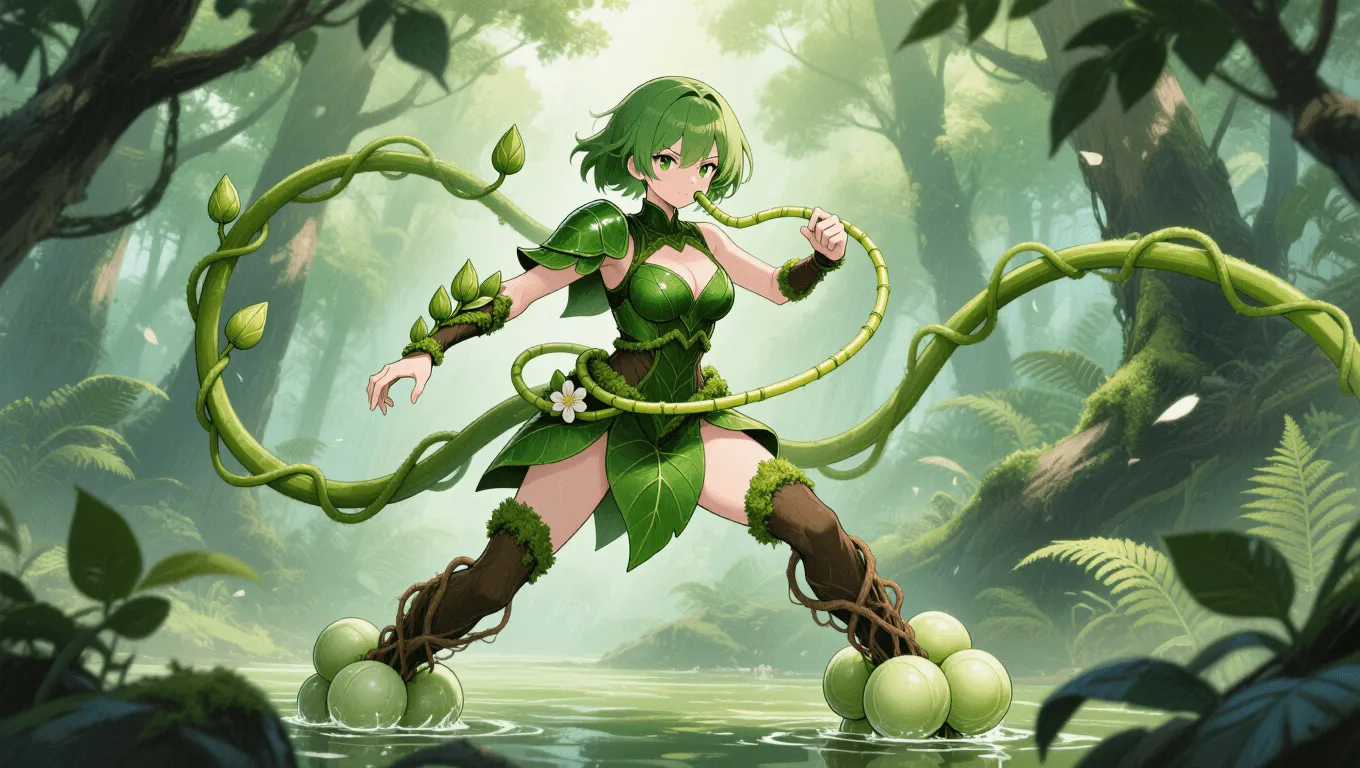
At mastery, Plant Mimicry becomes a full combat ecosystem:
-
Multi-limb growth (extra tendrils, rooting anchors, layered armor zones).
-
High-speed regrowth with stored nutrients and efficient sunlight use.
-
Specialized tissues (resin sealing, hollow reeds for breathing, buoyant structures for water survival).
-
Complex form switching without losing balance or coordination.
At this tier, the user can fight like a moving thicket—hard to strike cleanly, hard to restrain, and constantly re-forming to counter whatever is happening.
Limitations of using the Plant Mimicry
Plant Mimicry is strong, but it is not free.
Resource dependency
Plant matter needs resources:
-
Water loss can cause brittleness, cracking, and slower regrowth.
-
Lack of minerals or nutrients can reduce how much mass the user can safely create.
-
In darkness or indoor environments, photosynthesis benefits drop sharply.
Mobility trade-offs
Some forms are bulky or slow:
-
Heavy bark armor can reduce speed and agility.
-
Rooting for stability can limit quick repositioning.
-
Large vine growth can snag on obstacles, especially in tight corridors.
Temperature and climate vulnerability
Plant tissue reacts to the environment:
-
Extreme cold can stiffen and make limbs easier to shatter.
-
Extreme heat can dry, scorch, or weaken structural integrity.
-
Salt exposure (coastal spray, salt weapons) can stress plant tissue and worsen dehydration.
Pain and sensory drawbacks
Depending on the setting, plant tissue may:
-
Be more sensitive to cutting (splintering can hurt like tearing muscle).
-
Have reduced fine touch in bark-heavy forms.
-
Be vulnerable to irritants like smoke, ash, or chemical sprays.
Weakness against what other superpowers
Plant Mimicry has some natural counters—powers that exploit dryness, burning, or chemical stress.
-
Fire Manipulation and Heat Vision: burning and dehydration can rapidly dismantle plant tissue, forcing constant regrowth and draining resources.
-
Acid Manipulation and Corrosive Attacks: many plant structures break down under corrosives; sap sealing may not keep up.
-
Ice Manipulation and Cryokinesis: freezing can make plant limbs brittle and prone to snapping.
-
Poison/Toxin Generation: herbicide-like toxins or tailored biochem attacks can interrupt growth and regeneration.
-
Wind Manipulation: strong winds can rip away leaf-based forms and reduce stealth, especially if the user relies on broad foliage or light structures.
Plant Mimicry can still fight these opponents, but it must shift strategy—favoring compact hardwood forms, minimizing exposed foliage, and prioritizing cover and resource access.
Synergistic Power Combos
Plant Mimicry pairs best with powers that solve its biggest problems: water, sunlight, mobility, and protection from fire.
-
Water Manipulation: prevents dehydration, boosts regrowth, and keeps plant tissue flexible.
-
Earth Manipulation: provides minerals and anchoring terrain, and supports fast “sprouting” by feeding the plant body from the ground.
-
Light Manipulation: creates controlled light sources to fuel photosynthesis in dark areas and strengthen recovery.
-
Regeneration: stacks with plant regrowth for faster recovery and less resource strain.
-
Toxic Secretion or Venom: turns thorns and sap into a delivery system for paralyzing or sleep-inducing effects.
-
Camouflage or Invisibility: makes the “living hedge” approach terrifying—hidden vines can restrain before a fight even starts.
Readers building a full character kit can explore more abilities and matchups in the site’s Superpower Wiki, or roll a fresh idea through the random superpower generator to find unexpected combos that complement plant-based transformation.
Known Users
Plant Mimicry shows up in fiction as characters whose bodies become plant matter or operate as living vegetation rather than ordinary flesh.
-
Swamp Thing (DC Comics): Often portrayed as a plant elemental with a body made of vegetation and a deep connection to plant life.
-
Floronic Man (DC Comics): A botanist who transforms into a plant/human hybrid, gaining plant-like traits and powers.
-
Man-Thing (Marvel Comics): A plant-based being whose body is composed of swamp vegetation such as algae, moss, and other plant matter. (Outbound character link: Man-Thing.)
-
Groot (Marvel Comics): A sentient tree-like alien whose physiology is inherently plant-based, often depicted with regrowth and resilience.