
Powder Generation
Powder Generation Video Demo 🎬
Table of Contents
What Is Powder Generation
Powder Generation is the ability to create fine powders on demand and disperse them with precise control. These powders can be engineered for different effects, such as blinding flashes, choking irritation, slick terrain, or even explosive dust reactions. In superhero terms, it sits at the crossroads of particle manipulation and battlefield control: the user doesn’t just “make powder,” they shape how it behaves—how quickly it spreads, how dense it becomes, and when it triggers its effect.
Unlike simple smoke screens, Powder Generation is versatile because powders can be reactive (combustible), passive (obscuring), or chemical (stinging eyes and lungs). It can function as a non-lethal takedown tool, a disruption power for crowd control, or a high-risk demolition option when the user creates combustible dust in the right concentration.
For readers exploring related abilities and variants, it helps to compare Powder Generation with other particle-based powers in a broader catalog like the full list of abilities on the Superpower Wiki, or to discover adjacent powers through the random superpower generator.
Core abilities of Powder Generation
Powder Generation usually breaks into a few core skill sets, each of which can scale dramatically with training:
-
Powder creation and composition control
The user produces powder from nothing (or converts surrounding matter into powder, depending on the setting). Advanced users can vary grain size from grit-like to near-talc fineness and choose compositions: inert mineral dust, metallic powder, irritant powder, pigment powder, or combustible particulate. -
Dispersion and shaping
Powder can be released as puffs, continuous streams, drifting clouds, or focused cones. Skilled users can form curtains, domes, “powder walls,” or low-lying carpets that spread across floors. -
Triggered effects
Some powders are designed to ignite, detonate, flash, or react when exposed to friction, heat, oxygen concentration, or a spark. Others are engineered for blinding (flash powder), adhesion, or sensory disruption. -
Visibility and sensory denial
Fine particles scatter light and cling to surfaces. Powder clouds can break line of sight, interfere with cameras, and create false silhouettes, especially if mixed with colored pigments. -
Area denial and movement control
Powders can make terrain slippery, gritty (painful to run on), or hazardous to inhale. Even non-toxic powders can force opponents to cover their faces and slow down.
Application / Tactical Advantages in Combat
Powder Generation is a tactician’s power. It rewards positioning, timing, and knowledge of airflow and ignition risk.
-
Instant blinding pressure
A short-range burst of flash powder can overload vision for a critical second, creating openings for disarms, escapes, or precision strikes. Even without a bright flash, simple eye-level powder throws can cause tearing, coughing, and reflexive flinching. -
Soft control with hard consequences
The user can choose non-lethal compliance (irritant cloud, obscuring fog) or escalate to destructive outcomes (combustible dust detonation). That flexibility makes opponents hesitate: they never know whether the next cloud is “just” a screen or a bomb. -
Anti-technology disruption
Powder clogs vents, coats lenses, infiltrates gears, and can short or foul delicate equipment. A fine powder cloud can also reveal laser tripwires or invisible fields by making them visible through particle scatter. -
Terrain editing
A carpet of powder can turn a hallway into a slip zone, a staircase into a choke point, or a rooftop into a visibility trap—especially if the user can re-suspend settled powder with a secondary burst. -
Psychological dominance
Combatants fear what they can’t see. A thick powder curtain forces slower movement, tighter formations, or panicked firing, all of which can be exploited.
Level: Level 1 🏙️
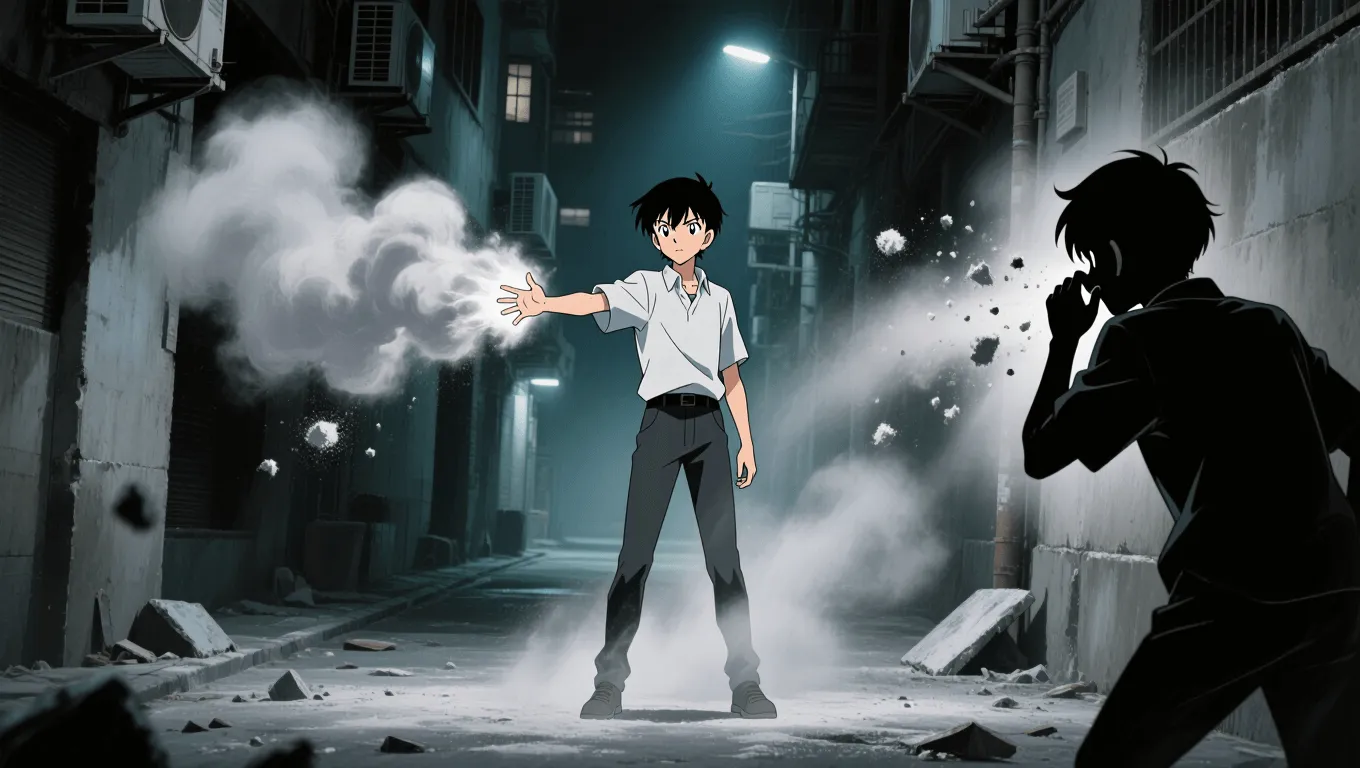
At Level 1, Powder Generation is straightforward and close-range.
-
Produces small amounts of inert powder (handfuls to brief clouds).
-
Basic line-of-sight blocking in tight spaces (rooms, alleys).
-
Simple blinding tosses: grit to the eyes, mild irritation, coughing.
-
Limited composition variety and poor shaping; powder drifts unpredictably.
-
Best use: quick escapes, disrupting a single opponent, or creating cover.
Level: Level 2 🌇
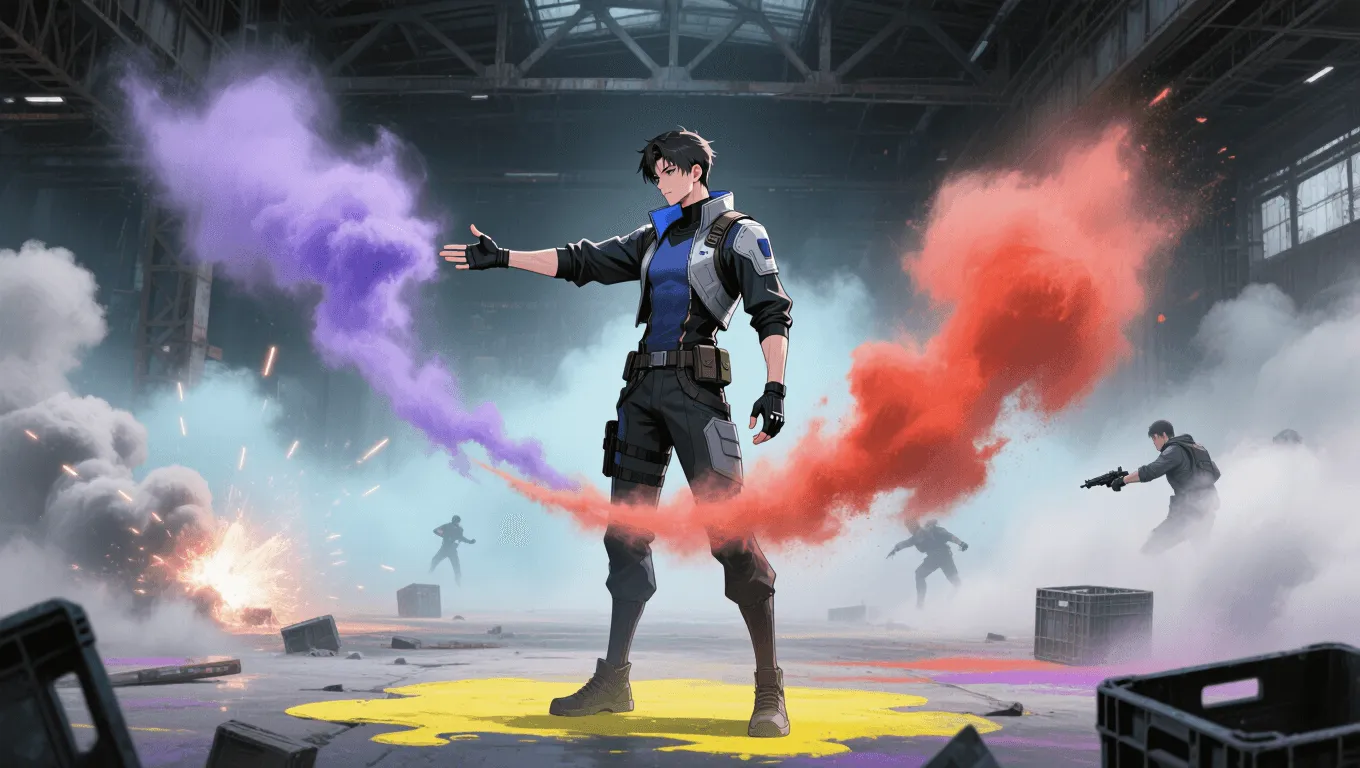
At Level 2, the user gains reliability, volume, and tactical shaping.
-
Sustained powder streams and wider-area clouds.
-
Better grain-size control for lingering haze vs. fast-falling grit.
-
Purpose-built powders: pigment clouds, adhesive powder, stronger irritants.
-
Can “layer” clouds (one for cover, another for sting, another for slip).
-
Can seed an area with combustible dust for controlled, smaller blasts—still risky.
-
Best use: crowd control, room-clearing, setting traps, and splitting teams.
Level: Level 3 🌃
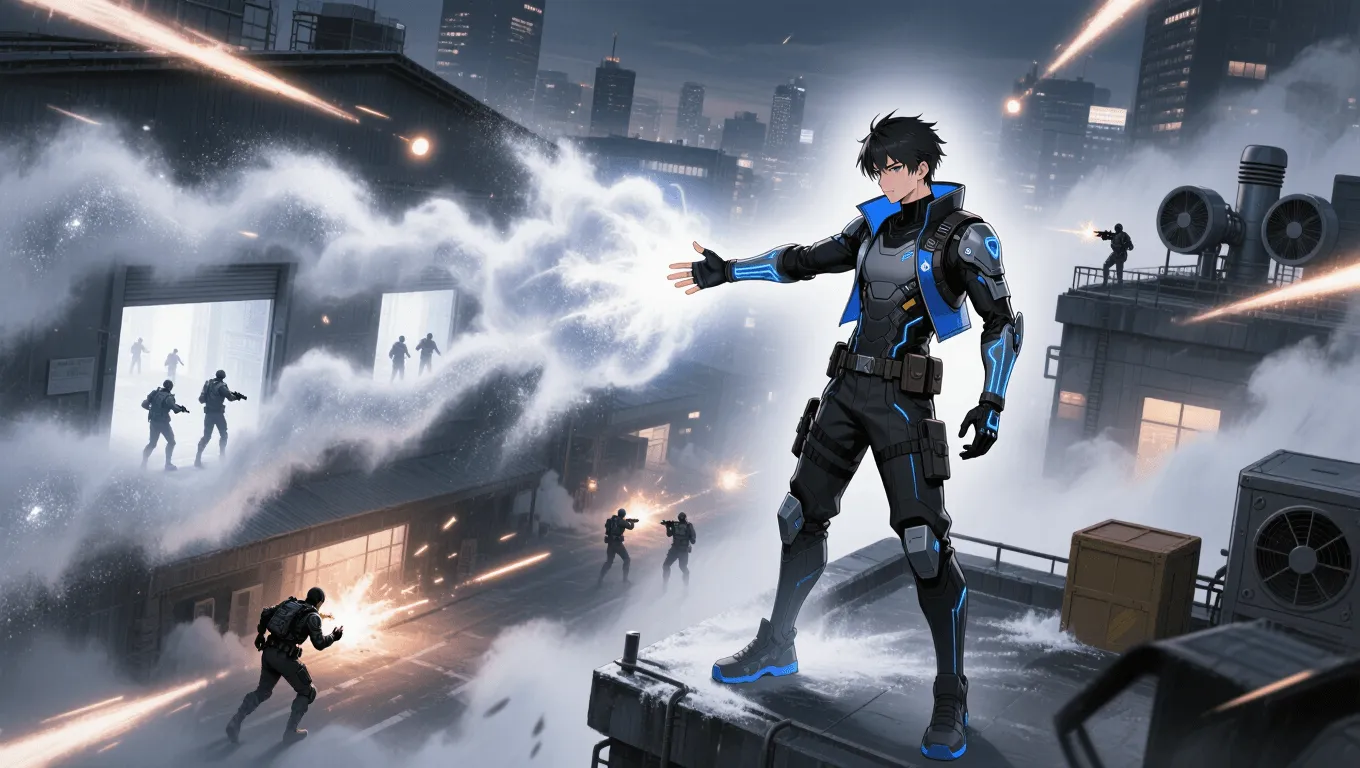
At Level 3, Powder Generation becomes a true battlefield power.
-
High-volume output that can blanket streets, warehouses, or rooftops.
-
Precision shaping: corridors of visibility, moving screens, swirling “powder storms.”
-
Advanced reactive powders: delayed ignition, directional flash bursts, staged detonations.
-
Counter-scouting mastery: powder reveals footprints, airflow, and hidden movement.
-
Environmental reading: using powder drift to infer vents, fans, and enemy positions.
-
Best use: large-scale denial, coordinated team tactics, and engineered “safe zones” amid chaos.
Limitations of using the Powder Generation
Powder Generation can be incredibly strong, but it comes with practical constraints that good opponents (and careful writers) can exploit.
-
Friendly-fire risk
Powder doesn’t care who breathes it in. Without filters, masks, or immunity, allies can be blinded or choked just as easily as enemies. -
Wind and ventilation unpredictability
Even skilled users fight airflow. Fans, open windows, HVAC systems, or outdoor gusts can dilute the cloud, blow it back, or reveal the user’s position. -
Detonation volatility
Combustible dust explosions are notoriously sensitive to concentration, oxygen availability, and ignition source. If the user misjudges density, the result is either a harmless flare or a devastating blast that can injure the user too. -
Resource and stamina drain
Creating large volumes of powder—especially specialized compositions—may exhaust the user, dehydrate them, or require recovery time. -
Visibility trade-off
If the user fills an area with powder, they may lose their own sightline unless they have enhanced senses, trained “powder reading,” or specialized goggles. -
Cleanup and collateral
Powder settles everywhere. After a fight, it leaves residue that can expose identities, contaminate evidence, or cause unintended harm (especially if it’s irritant or combustible).
Weakness against what other superpowers
Powder Generation is strongest when it can stay in the air and control space. Powers that negate particles, clear air, or ignore sight tend to counter it well:
-
Wind Manipulation / Air Control
Strong air currents disperse powder clouds, strip cover, and can blow powder back at the user. -
Water Manipulation / Rain Generation
Moisture makes powders clump and fall. A sudden spray, mist, or rainfall can neutralize airborne screens and reduce inhalation threat. -
Vacuum Manipulation / Atmosphere Removal
Removing air collapses powder dispersion and prevents dust explosions (no oxygen, no combustion). -
Fire Generation and Heat Auras (as a counter, not a combo)
While fire can ignite powder offensively, an enemy fire-user can prematurely trigger detonations and force the Powder Generation user into unsafe timing. -
Force Fields / Energy Shields
Barriers can keep powder out of lungs and eyes and create safe corridors through denial zones. -
Enhanced Senses (echolocation, tremor sense, thermal vision)
If an enemy doesn’t rely on normal sight, powder screens lose much of their advantage. -
Magnetism (situational)
If the user relies on metallic powders, a magnetism user may redirect or trap those particles.
Synergistic Power Combos
Powder Generation becomes frightening when paired with powers that control ignition, movement, or perception.
-
Fire Generation
Classic combo: seed an area with combustible dust, then ignite for controlled blasts or sudden firewalls. The best teamwork uses small, directional detonations rather than city-block kabooms. -
Lightning/Electricity Manipulation
A spark can trigger flash powder bursts or ignite suspended dust. Electricity also punishes enemies who bunch up inside obscuring clouds. -
Wind Manipulation (as an ally combo)
Friendly wind control can “steer” powder into shapes—funnels, rings, or moving curtains—while keeping allies clear. -
Illusion Casting
Powder already disrupts sight; illusions inside a powder cloud become far more convincing. Even simple decoys can cause opponents to fire at nothing. -
Adhesion / Sticky Substance Generation
Stickiness plus powder can immobilize: powder to blind and slow, adhesive to lock limbs, then more powder to keep them from seeing how to escape. -
Sound Manipulation
In a zero-visibility cloud, directional sound cues become critical. A sound user can mislead enemies, while the powder user seals off sight. -
Gravity Manipulation
Gravity spikes can slam powder to the ground (instant visibility change) or lift it into a concentrated haze above head level.
Known Users
Because Powder Generation is a broad superpower category, it often appears in fiction as either a true superhuman ability (creating reactive particulate) or as gear-based tactics (flash powder, knockout dust, pigment bombs). One Marvel example that fits the explosive powder theme is the villain Powderkeg, who is associated with explosive chemical output and clashes with Captain Marvel (Monica Rambeau).
Other common “known user” archetypes across comics and superhero storytelling include:
-
Vigilantes and escape artists who rely on flash powder pellets to blind and vanish.
-
Alchemists or mad scientists who weaponize irritant powder and combustible dust mixtures.
-
Elite infiltrators equipped with pigment powder for tracking, marking, and misdirection.
Outbound character reference (comic): Powderkeg (Marvel)Marvel