
Power Absorption Superpower Guide

Power Absorption Video Demo 🎬
Table of Contents
What Is Power Absorption?
Power Absorption is a superpower that allows a character to absorb or steal others’ abilities and use them as their own. Instead of being born with a single fixed gift, a Power Absorption user becomes stronger by coming into contact with other powered beings. Depending on the rules of the setting, they might temporarily copy abilities, permanently steal them, or store multiple powers at once like a walking arsenal.
In many superhero universes and RPG systems, this ability sits close to the top of the power hierarchy. It naturally interacts with almost every other entry you might find in a superpower list, making it one of the most flexible concepts in any superpower wiki style collection. It pairs neatly with tools like a random superpower generator, since any power the user encounters could, in theory, become part of their toolkit.
At its core, Power Absorption is about control: control over other powers, control over escalation in battle, and sometimes control over identity itself when the act of stealing power comes with emotional or psychological consequences.
Core Abilities of Power Absorption
While every setting defines it differently, most versions of Power Absorption share several key traits.
Copying or Stealing Powers
The fundamental feature is the ability to take on powers from others. This can work in several ways:
-
Temporary copying: The user mimics another person’s ability for a limited time, after which the power fades.
-
Permanent theft: The original owner loses their power when it is absorbed, making the user progressively stronger.
-
Power imprinting: The user leaves the original intact but gains a weaker or altered version.
Game masters and writers often decide which form applies because it heavily affects balance. Permanent theft makes the character potentially unstoppable, while temporary copying keeps the narrative more manageable.
Activation Conditions
Power Absorption usually has a trigger:
-
Physical contact, such as a touch or strike.
-
Proximity within a certain radius.
-
Emotional or mental link, like intense fear, rage, or empathy.
-
Ritual or item-based conditions, such as absorbing power through a relic or device.
Clear activation rules keep the superpower fair and give both player and opponent a way to plan around it.
Power Storage and Stacking
A major question is how many abilities a user can store:
-
Single-slot storage: Absorbing a new power replaces the old one.
-
Limited slots: The user can hold a small set of powers, forcing strategic choices.
-
Unlimited storage: The user becomes a living archive of abilities, but likely at the cost of other drawbacks.
Some versions also combine powers, allowing hybrid effects—like mixing fire control with teleportation to perform fiery warp-strikes.
Adaptation and Skill Growth
Absorbing an ability is not always the same as mastering it. Skilled users often:
-
Learn how to refine newly gained powers faster.
-
Reduce backlash or side effects from unfamiliar abilities.
-
Develop instinctive control, letting them swap or combine powers mid-fight.
This creates a strong character progression arc, from clumsy mimic to seasoned power tactician.
Application / Tactical Advantages in Combat
In battle, Power Absorption is all about turning the enemy’s strengths against them.
-
Counter-pick on the fly: The user can adapt to different opponents by taking talents that neutralize specific threats. Facing a fire user? Absorb their flames and gain resistance or control over that element.
-
Resource denial: In versions with permanent theft or disabling, the user can strip crucial abilities from enemy leaders, turning a powerful villain into an ordinary fighter.
-
Escalation control: When allies are present, the absorber can “borrow” their powers to respond to sudden changes. This supports dynamic combat scenes where strategies shift mid-encounter.
-
Psychological warfare: Opponents may hesitate to use their best moves if they know those abilities could be turned back on them moments later.
-
Versatility: A well-designed Power Absorption user can handle close combat, ranged combat, defense, or support simply by choosing which absorbed abilities to rely on.
In RPGs, this makes Power Absorption ideal for players who enjoy improvisation and tactical thinking, constantly scanning the battlefield for the best powers to copy or steal.
Level: Level 1 🏙️, Level 2 🌇, Level 3 🌃
To integrate Power Absorption smoothly into games or stories, it helps to think in tiers.
Level 1 🏙️ – Unstable Mimic

At this early stage, the user can only copy one power at a time and often with serious limitations.
-
Short duration: Copied abilities fade quickly.
-
Limited control: Effects may be weaker or unreliable.
-
Emotional or physical strain: Using absorbed powers can cause headaches, fatigue, or loss of focus.
-
Requires direct contact: The user must touch the target to absorb.
This level works well for origin stories and low-level campaigns. It keeps Power Absorption impactful but not yet game-breaking.
Level 2 🌇 – Adaptive Collector

Here the user has grown more skilled and dangerous.
-
Multiple slots: They can store several powers at once and swap between them.
-
Better control: They can use copied powers almost as well as the original owner.
-
Extended duration: Powers last longer, possibly until consciously released.
-
Tactical awareness: The character learns which powers combine well and how to counter common enemy types.
Narratively, Level 2 is where Power Absorption becomes a strategic centerpiece. The user can anchor a team by filling gaps in the party’s capability.
Level 3 🌃 – Living Nexus of Power
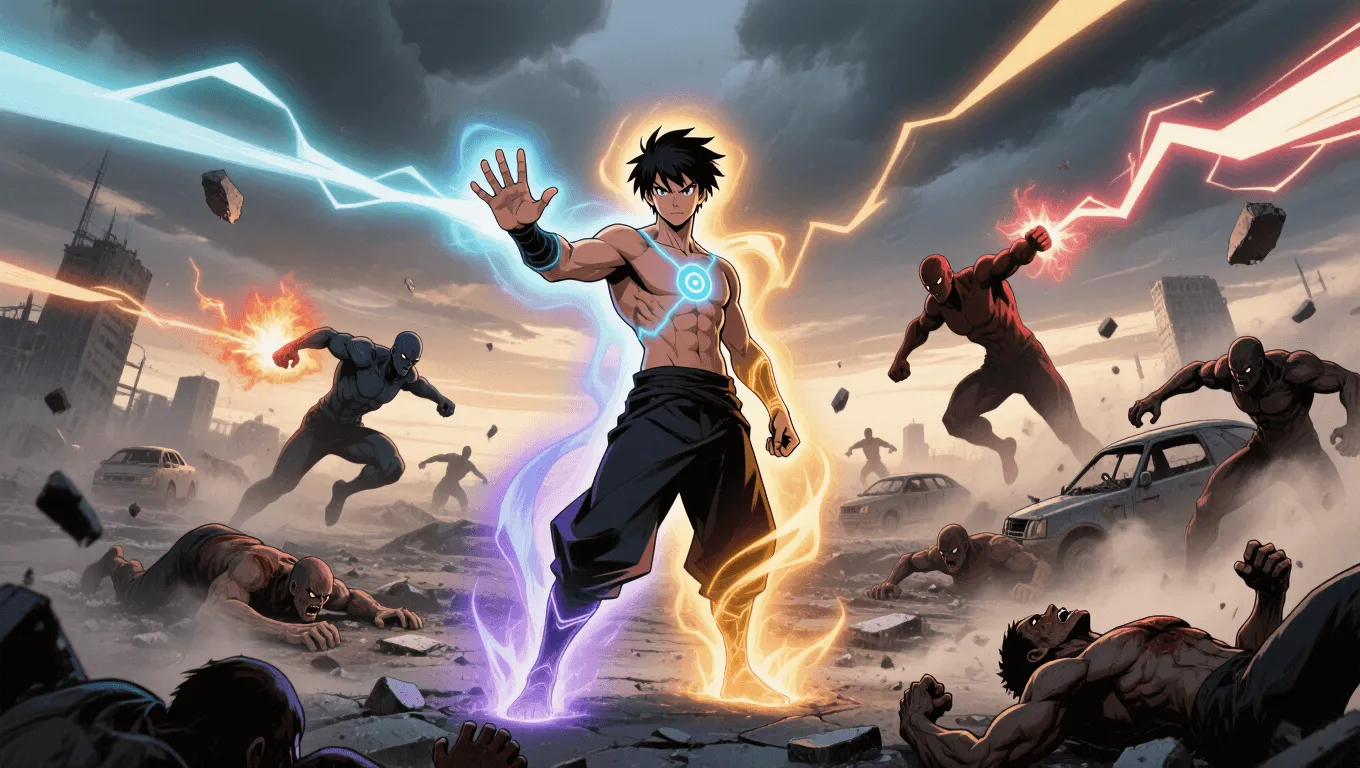
At the highest tier, the user is a walking convergence of superhuman abilities.
-
Large or limitless storage: They can keep numerous powers active or stored.
-
Fusion abilities: Combining multiple absorbed powers to create new, hybrid effects.
-
Passive resistance: They may resist hostile powers or drain them automatically.
-
Battlefield dominance: The longer the fight lasts, the stronger they become as they accumulate more abilities.
This level must be handled with care in game balance. It suits final bosses, legendary NPCs, or epic-tier protagonists whose stories revolve around their overwhelming potential.
Limitations of Using the Power Absorption
To keep Power Absorption interesting and fair, effective limitations are crucial.
-
Dependency on powered targets: In a setting with few superpowered beings, the ability is weak or useless. No targets means nothing to absorb.
-
Compatibility issues: Some abilities may conflict, causing instability or dangerous side effects when stored together.
-
Mental overload: Holding too many powers could fragment the user’s personality, cause memory problems, or trigger identity crises.
-
Moral cost: Permanent theft versions create ethical dilemmas. Stealing powers might leave innocents defenseless or traumatized.
-
Cooldowns and caps: After a powerful absorption, the user may need time to recover before attempting another.
-
Resistance and immunity: Certain characters or artifacts may be explicitly immune, giving storytellers a safety valve against overpowered absorption.
These constraints keep Power Absorption from overshadowing other abilities in your world or system.
Weakness Against What Other Superpowers
Despite its reputation, Power Absorption is far from invincible. It has clear counters that help maintain balance.
-
Power Nullification: A character who can switch off abilities renders absorbed powers useless, turning the absorber into an ordinary person.
-
Mental Shields and Psionic Barriers: Superpowers that fortify the mind or aura can block the absorption process, especially if it relies on psychic contact.
-
Technopathy and Purely Technological Powers: If abilities come from gadgets, exosuits, or cybernetics rather than innate powers, there may be nothing to absorb—only hardware to disable.
-
Reality Anchors: Superpowers or artifacts that lock reality in place can limit or prevent changes in abilities, stopping absorption or making powers static.
-
Distance and Mobility Powers: High-speed movement, teleportation, or intangibility allow opponents to evade the contact or proximity needed to absorb powers.
-
Self-Destructive or Cursed Powers: Some abilities are a trap; absorbing them may harm or corrupt the user. Cursed energy, unstable mutation, or uncontrollable rage powers can all backfire on a careless absorber.
Designing specific weaknesses ensures that Power Absorption does not automatically trump every other entry in your world’s power catalog. For more ideas on potential counters and complementary abilities, browsing a broader superpower list is especially helpful.
Synergistic Power Combos
Power Absorption shines brightest when combined with other abilities and clever team design.
-
Power Detection: Knowing exactly who has which ability lets the absorber prioritize targets and maximize gains. This combo is excellent for strategic campaigns.
-
Power Bestowal: A rare but dramatic synergy—absorb powers, then redistribute them to allies as needed. This turns the user into both collector and commander of abilities.
-
Enhanced Durability or Regeneration: Absorbing unfamiliar or volatile powers can be dangerous; strong defenses make experimental use less risky.
-
Memory or Skill Enhancement: Quickly understanding and mastering new powers becomes easier when the user’s mind is augmented to process fresh information.
-
Time Manipulation: Slow time, absorb the right powers, then resume normal speed with a customized loadout ideal for the current situation.
-
Energy Manipulation: Many absorbed powers produce or manipulate energy; a dedicated energy controller can stabilize, amplify, or refine them.
Because Power Absorption interacts with nearly every other ability type, it features prominently in creative builds and character concepts. Using a random superpower generator can be a fun way to discover unexpected synergies, then overlay Power Absorption as the glue that holds the build together.
Known Users
Many popular characters in comics, games, and television embody aspects of Power Absorption, each with their own twist on the concept.
-
Rogue from the X-Men is a classic example of a touch-based absorber who copies powers, memories, and even personality traits, often struggling with the emotional fallout of her gift.
-
Peter Petrelli from “Heroes” initially mirrors others’ powers through proximity, representing a more empathetic, non-destructive form of absorption.
-
Sylar, also from “Heroes,” demonstrates a darker version that involves dissecting and permanently taking others’ abilities.
-
Hope Summers in Marvel Comics channels and amplifies mutant abilities around her, acting as a living conduit of powers.
For an in-depth look at one of these archetypal power absorbers, you can explore more about Rogue and how her story explores the psychological consequences of living as a permanent collector of other people’s abilities.
These characters showcase the full narrative potential of Power Absorption—from tragic struggle and moral ambiguity to tactical brilliance and world-shaking power escalation.