
Power Detection

Power Detection Video Demo 🎬
Table of Contents
What Is Power Detection
Power Detection is a sensory superpower that allows a character to perceive, identify, and analyze the abilities of others. Instead of firing energy blasts or lifting cars, this power works like a specialized sixth sense focused on superhuman capabilities. A user with this ability can sense nearby powers, read their nature, and often understand their strength or limitations without needing to see them in action.
In many settings, Power Detection appears as a kind of metahuman radar or aura reading. Some characters perceive glowing fields around powered beings. Others hear distinct “tones” linked to different abilities, or receive information as intuitive flashes of understanding. No matter how it is presented, the core idea is the same: the user gains awareness of what kind of powers are present and who possesses them.
Because it is primarily informational, this superpower is often underestimated. Yet in strategy-heavy stories, Power Detection is one of the most valuable abilities on a team, especially when combined with offensive or defensive powers. It fits naturally into any larger superpower wiki of abilities, sitting alongside powers like power copying, nullification, or energy perception.
Core Abilities of Power Detection
At its heart, Power Detection is about information control. Common features of this superpower include:
-
Power Sensing Range
The user can detect the presence of superhuman abilities within a certain radius. At basic levels, this might be just a few meters. Advanced users can scan entire city blocks, facilities, or even an entire battlefield. Some versions allow directional sensing, letting the user point toward the strongest signature. -
Identification of Ability Type
Many users can do more than feel a vague “something.” They can categorize what they sense: physical enhancement, elemental manipulation, telepathy, time control, and so on. This turns Power Detection into a powerful classification tool, allowing quick recognition of threats. -
Power Strength Assessment
Some versions of Power Detection include a sense of scale. A character may feel the difference between a minor pyrokinetic and a world-breaking fire controller. This power level assessment helps determine priority targets and who needs to be avoided. -
Signature Recognition
Each powered individual may have a unique “signature.” With practice, the user can recognize specific people by their power patterns alone, even if they are invisible, shapeshifted, or hidden. This makes Power Detection a strong counter to stealth and disguise. -
Anomaly and Null Zone Awareness
Power Detection sometimes includes the ability to sense where powers fail or are disrupted, such as null fields, anti-magic zones, or technological dampeners. Detecting the absence of powers can be as important as feeling their presence. -
Contextual Insight
In more advanced forms, the user may glean extra details: whether a power is currently active, overcharged, unstable, or suppressed. This “status readout” allows for tactical calls like retreating before a villain goes critical.
Application / Tactical Advantages in Combat
In combat scenarios, Power Detection may not land direct hits, but it can decide who wins the fight. Tactical benefits include:
-
Pre-battle Scouting
Before a confrontation, the user can scan an area for powered opponents, detecting ambushes or hidden threats. Knowing how many enemies there are and what they can do prevents the team from walking into traps. -
Target Prioritization
By reading power levels and categories, the user can quickly call out the biggest threats: “High-level telepath on the rooftop,” or “Time manipulator behind the front line.” This lets allies focus fire or allocate countermeasures correctly. -
Counter-Ability Calls
When the user detects a specific type of ability, they can direct teammates with the right counters. For example, a speedster might be sent to pin down a blaster, while a nullifier is aimed at a reality warper. -
Detection of Hidden Enemies
Invisible, phased, or camouflaged foes still carry their abilities with them. Power Detection can reveal their presence, turning the user into an anti-stealth sensor. -
Avoiding Traps and Overwhelming Forces
If the user senses a cluster of overwhelming power signatures in one direction, the team can change plans, retreat, or approach from another angle. Survival often hinges on avoiding the wrong fight. -
Real-time Battle Updates
As powers activate, weaken, or overload, the user can provide constant updates: “Their barrier is weakening,” or “The energy controller’s output just spiked.” This live intelligence can swing chaotic set pieces in the heroes’ favor.
In essence, Power Detection changes a chaotic battlefield into something more readable and manageable, turning raw chaos into strategizable information.
Level: Level 1 🏙️, Level 2 🌇, Level 3 🌃
Level 1 🏙️ – Instinctive Sensing

At Level 1, the user has a basic, instinctive version of Power Detection:
-
Feels a vague “pressure” or presence when someone nearby has powers.
-
Range is short, usually limited to the same room or a few meters.
-
Little or no detail about what the power is; it might just feel like “danger,” “intensity,” or “strangeness.”
-
May be confused with intuition or gut feelings, especially early in a character’s story.
At this stage, the ability is as much a narrative hint as a tool. It warns of hidden threats, but rarely provides precise data.
Level 2 🌇 – Focused Identification

At Level 2, Power Detection becomes a reliable tactical resource:
-
The user gains a clearer sense of direction and approximate distance to powered individuals.
-
Can roughly categorize abilities: physical enhancement, elemental control, mental powers, tech-based abilities, and so on.
-
Range expands, possibly to a full building, a city block, or a moderate radius.
-
The user can distinguish between weak, moderate, and strong power levels.
-
Recognizes familiar power signatures over time, allowing them to identify known allies or enemies even when not visible.
This level turns the user into a practical “power radar operator” for their team, useful in scouting and mid-scale battles.
Level 3 🌃 – Advanced Power Analysis
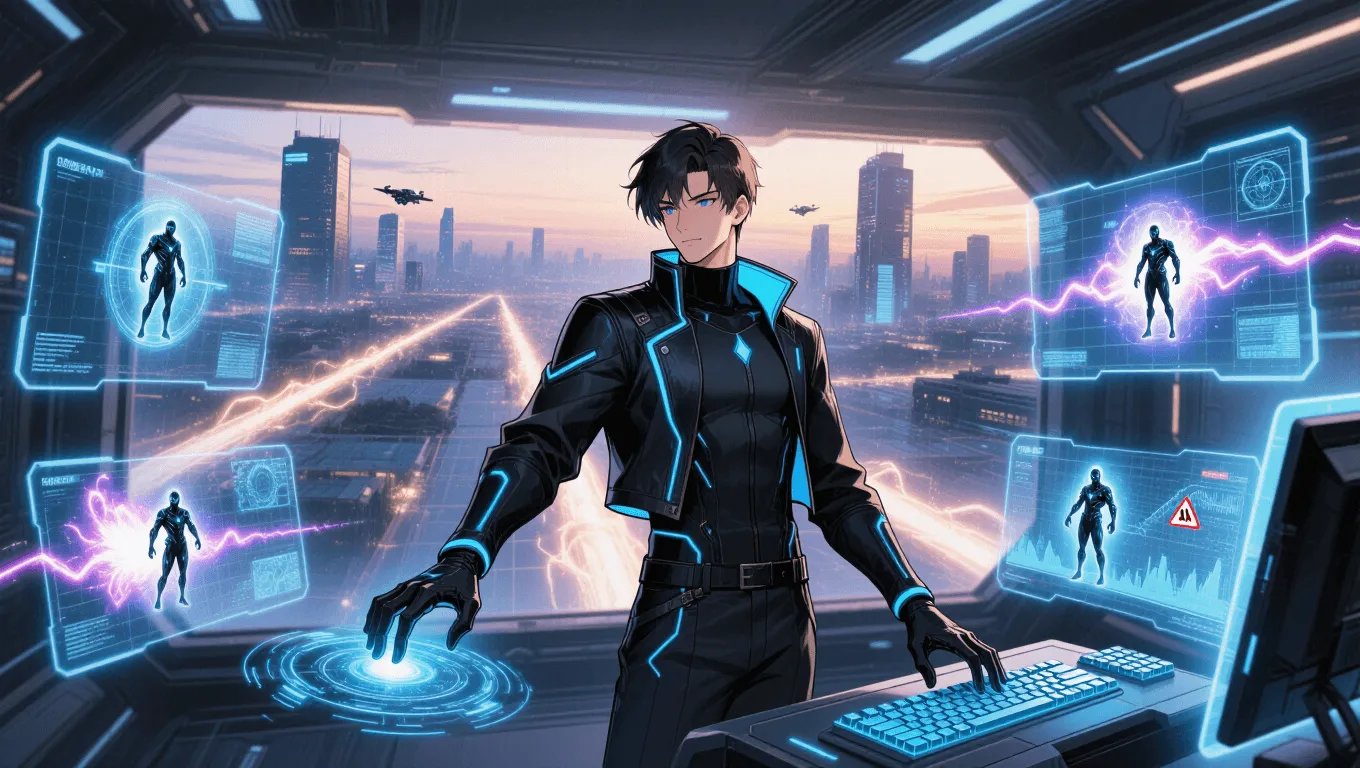
At Level 3, Power Detection reaches its peak as a strategic powerhouse:
-
Wide-area scanning over large zones, potentially entire cities or battlefields.
-
Fine-grained analysis: the user can tell not just type and strength, but aspects like instability, suppression, or multi-layered combinations.
-
Can identify exact individuals by signature alone, even if cloaked, shapeshifted, or partially masked.
-
Detects power interference fields, null zones, and even subtle alterations like stolen or augmented powers.
-
May predict potential synergy or conflicts between abilities, acting as an on-the-fly strategist.
At this tier, Power Detection is almost like a command center built into a single person, supporting operations, diplomacy, and crisis management.
Limitations of using the Power Detection
Despite its advantages, Power Detection is not all-knowing and comes with built-in limits:
-
Finite Range
The user cannot sense everything everywhere. Their detection field may be blocked by distance, materials, or environmental factors. Dense metals, magical wards, or specialized shielding technology can reduce effectiveness. -
Overload and Noise
In crowded areas full of powered beings, the user may become overwhelmed. Too many signatures at once can create sensory noise, making it hard to pick out specific details. -
Line-of-Context, Not Mind Reading
Power Detection reveals abilities, not thoughts or intentions. A hero might sense a strong telekinetic nearby but still have no idea what they plan to do. -
Learning Curve
Recognizing different categories and specific signatures often requires training and repeated exposure. Early on, the user may misinterpret what they sense. -
Dependence and Vulnerability
Overreliance on Power Detection can be a strategic weakness. If the user is knocked out, silenced, or otherwise neutralized, the team loses its main source of battlefield information.
Weakness against what other superpowers
Power Detection has clear counters, especially from abilities that manipulate perception, energy signatures, or reality:
-
Power Concealment / Power Cloaking
Some characters can hide or mask their own energy patterns. These cloaking abilities create false negatives, allowing enemies to slip past undetected. -
Illusion and Psychic Manipulation
Highly skilled illusionists or telepaths may project fake power signatures or scramble what the detector senses. The user might perceive phantom enemies, misjudge locations, or mistake allies for threats. -
Power Nullification Fields
Areas that suppress or dampen powers can also affect Power Detection. Within a null zone, the user’s sensing might drop to nearly zero, or they may only detect the edge of the field, not the individuals inside. -
Technological Jamming
In tech-heavy settings, signal scramblers or specialized armor can interfere with detection. These devices generate “noise,” hiding true signatures among artificial interference. -
Reality-Warping and Dimensional Shifts
Reality warpers and phase-shifters may exist slightly “out of phase” with normal detection. Their abilities can appear fragmented, distorted, or be completely misread.
These counters create tension and keep Power Detection from becoming an unbeatable superpower, ensuring stories remain balanced and interesting.
Synergistic Power Combos
Power Detection shines brightest when combined with complementary abilities. Some potent combinations include:
-
Power Detection + Telepathy
A Power Detection user identifies targets and their likely abilities; a telepath then focuses on the most dangerous minds. Together, they form an elite reconnaissance pair. -
Power Detection + Power Mimicry or Absorption
When a mimic or absorber knows exactly which targets carry the most useful abilities, they can prioritize copying or draining them. This creates a tactical “shopping list” during combat. -
Power Detection + Teleportation or Super Speed
The detector locates threats, while a teleporter or speedster responds instantly, either neutralizing them or rescuing allies before things escalate. -
Power Detection + Defensive Shields
An energy shield user can be directed to protect the team from the most dangerous sources of damage, raising barriers in the right place at the right time. -
Power Detection + Strategic Leadership
Even without flashy attacks, a leader with this superpower can coordinate squads, call out incoming threats, and manage large-scale engagements like a living radar station.
For creators designing characters, combining Power Detection with one or two strong offensive or defensive powers creates a compelling support-leader archetype. For extra inspiration, they can try a random superpower generator to discover abilities that pair well with detection.
Known Users
Many fictional universes include characters with some form of Power Detection, even if it goes by different names like aura sensing, metahuman radar, or ability awareness. A few notable examples and analogues include:
-
Mutant characters who can sense other mutants and their general power levels, acting as trackers or scouts for their teams.
-
Mystic seers who can read magical auras and identify spellcasters or enchanted artifacts.
-
Sci-fi specialists whose cybernetic implants allow them to scan for energy signatures from psionics, cybernetics, or alien technology.
Outside of pure Power Detection, there are characters whose abilities strongly resemble it or include it as part of a broader power set. One example is Professor X, whose telepathy often allows him to locate and identify other mutants, effectively combining mind reading with mutant detection.
In many superhero teams, the Power Detection role is filled by persons like:
-
A dedicated scout who reports power types and locations before the main group arrives.
-
A strategist who stays back, monitoring the battlefield and guiding allies.
-
A hybrid fighter-sensor who joins the front lines but constantly updates the team with new information.
Across comics, games, and role-playing settings, Power Detection remains a versatile, story-friendly superpower. It supports investigation, stealth missions, and large-scale battles, making it a natural fit in any expanded roster of abilities, especially in settings that value planning and teamwork as much as raw destructive force.