
Power Erasure Superpower Guide

Power Erasure Video Demo 🎬
Table of Contents
Power Erasure is a rare and terrifying superpower: the ability to permanently remove another being’s powers. Unlike basic power nullification, which only suppresses abilities for a short time, true Power Erasure rewrites a target’s essence so that their gifts never return. In many superhero universes and tabletop RPGs, this kind of permanent power removal can reshape entire worlds, rewrite balance between factions, and drive unforgettable story arcs.
To understand how to use Power Erasure in a campaign, story, or character build, it helps to break down its core abilities, levels, tactical role, and natural counters.
What Is Power Erasure?
Power Erasure is the superhuman or mystical capability to strip another character of their abilities in a lasting, often irreversible way. It sits at the extreme end of the power-control spectrum:
-
Power negation: temporarily turns powers off.
-
Power suppression: weakens or dampens powers.
-
Power Erasure: deletes powers completely.
In narrative terms, Power Erasure is essentially “ability deletion.” A character who relied on magic, mutant genes, divine blessings, psionics, or technological enhancements loses the effective ability to use them. In some settings this might mean their special energy is gone; in others, their body or soul is rewritten to be “normal.”
Comics offer several inspirations for this concept. The “Decimation” event in Marvel Comics has the Scarlet Witch speak the words “No more mutants,” leading to most mutants across the world losing their powers and becoming ordinary humans.Marvel Database+1 While this is technically reality warping, it’s a strong example of Power Erasure used on a massive scale.
For RPG designers or worldbuilders, Power Erasure can be treated as a meta-ability that targets the source code of other powers: genes, enchantments, contracts with entities, implanted tech, or even conceptual “permissions” in reality.
If more inspiration is needed, creators can browse a broader list of abilities in a dedicated superpower wiki or use a random superpower generator to pair Power Erasure with other abilities.
Core abilities of Power Erasure
While exact details vary by setting, Power Erasure typically includes several core functions.
Permanent depowering
The defining feature is permanence. Once a target’s powers are erased:
-
They can no longer activate their previous abilities.
-
Their body, mind, or soul no longer registers as “powered” to scanners or detection abilities.
-
Standard recharging or rest mechanics do not restore what was lost.
In some worlds only cosmic-scale reality warping, divine intervention, or sophisticated meta-tech can reverse this effect.
Source-agnostic removal
Power Erasure usually works across multiple power sources:
-
Mutant genes or superhuman biology
-
Magic, blessings, and curses
-
Psionic or psychic powers
-
Alien or cosmic energy infusions
-
Symbiotic or parasitic power sources
-
Implanted or bonded techno-organic systems
This makes it more universal than many forms of power nullification, similar in spirit to characters like Leech from the X-Men, whose field disrupts mutant and other paranormal abilities in close range, though his effect is temporary rather than permanent.
Targeted erasure
Depending on how it is defined, Power Erasure can work in one of several targeting modes:
-
Single-power erasure: remove only one specific ability (for example, just a character’s flight, leaving other powers intact).
-
Full kit erasure: strip a target of all supernatural or superhuman abilities.
-
Category erasure: erase all powers of a certain type (all magic, all mutant abilities, all tech-based augmentations, and so on).
Mass-scale variants, inspired by events like “No more mutants,” can affect an entire population at once.
Activation method
The trigger can vary widely to fit the fiction:
-
Eye contact or gaze
-
Touch-based erasure
-
Spoken command, sigil, or spell
-
Line-of-sight targeting
-
Area-based aura or field
-
Ritual or device activation
In some anime, heroes like Shota Aizawa (Eraser Head) famously nullify their opponents’ Quirks simply by looking at them, though in his case the nullification ends when he blinks or looks. Power Erasure can be imagined as a more extreme, permanent version of that concept.
Application / Tactical Advantages in Combat
In battle, Power Erasure is an ultimate control tool. Its presence changes how every other character behaves on the field.
Key tactical advantages include:
-
Boss neutralization
Power Erasure allows a team to turn “impossible” bosses into manageable threats by stripping away invulnerability, regeneration, or reality-bending powers. Once depowered, those enemies can be handled by conventional attacks or captured. -
Threat prioritization
It gives a party an answer to the most dangerous or disruptive opponent. Characters with battlefield-wide control, instant-kill abilities, or unbreakable defenses become the primary targets for erasure. -
Psychological warfare
The mere possibility of losing powers forever terrifies many superpowered foes. This fear can prompt them to retreat, overcommit, or make mistakes, giving heroes or villains using Power Erasure a strong psychological edge. -
Strategic disarmament
In larger conflicts (mutant vs. human, mage guilds vs. anti-magic forces, etc.), a user of Power Erasure can serve as a deterrent or as a weapon of last resort, deciding who gets to remain “special” in the setting. -
Long-term campaign impact
In RPGs, a single successful use against an important NPC can change political maps, break power blocs, or create former legends trying to adapt to ordinary life.
Because of these advantages, most balanced settings keep strict limitations, costs, or narrative consequences attached to Power Erasure.
Level: Level 1 🏙️, Level 2 🌇, Level 3 🌃
Level 1 🏙️ – Instinctive Erasure
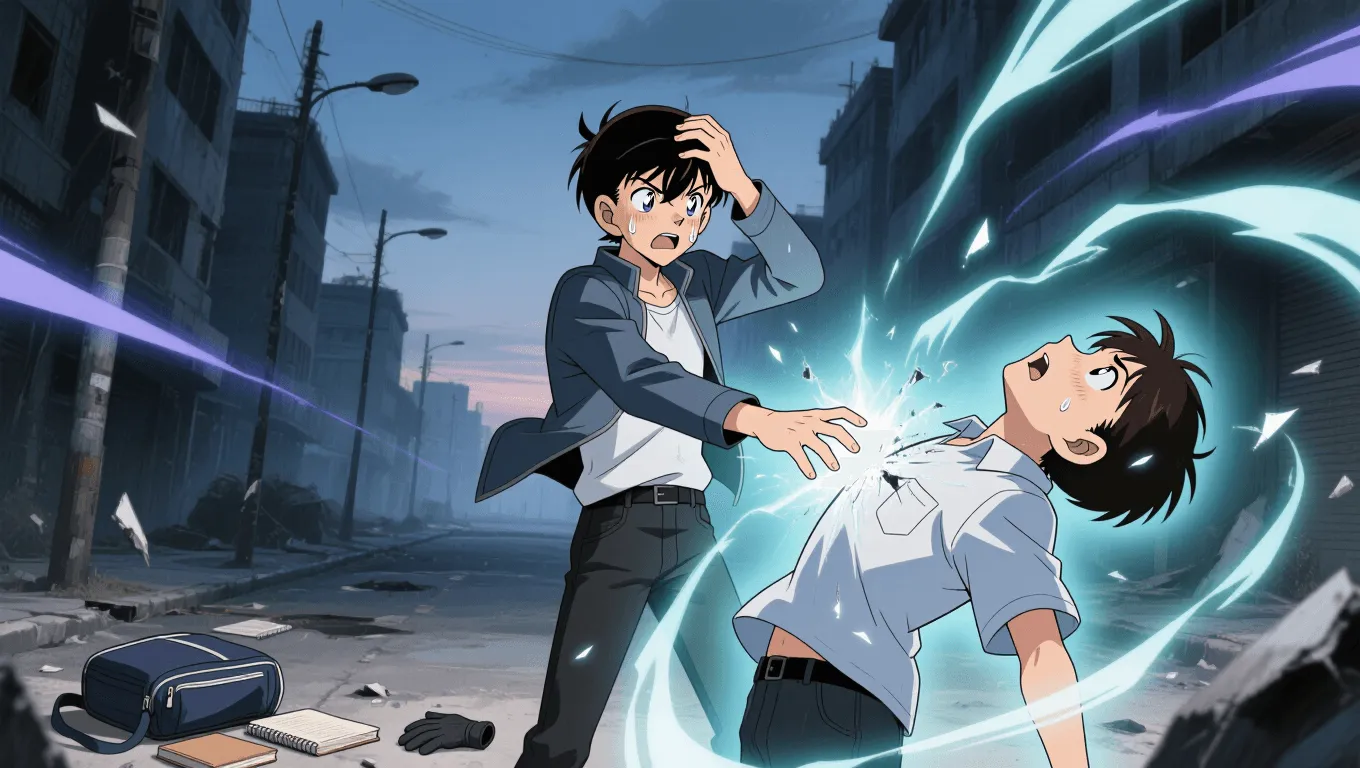
At Level 1, Power Erasure is unstable and limited:
-
Works only at close range, usually via touch or intense focus.
-
Erases a single power or significantly weakens a small power set.
-
The user may not fully control when it triggers under stress.
-
Cooldowns are long—perhaps once per encounter or once per day.
-
The user may feel intense fatigue, headaches, or emotional backlash after use.
Narratively, this level suits origin stories: a frightened teenager accidentally depowers a friend, or a new hero stops a villain but with unexpected consequences.
Level 2 🌇 – Controlled Depowering
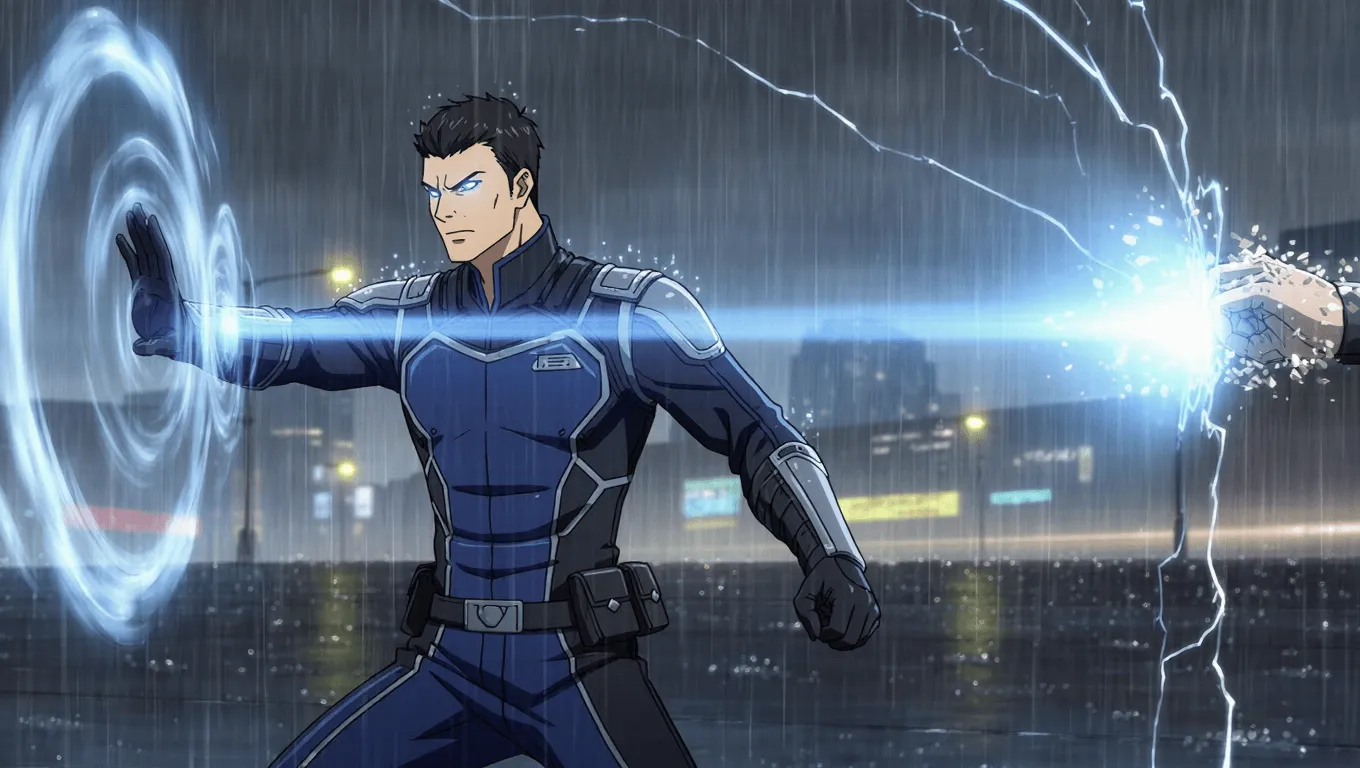
At Level 2, the user gains control and versatility:
-
Can aim at specific powers within a target’s kit.
-
Range increases (short-to-mid range, line of sight, or a narrow cone).
-
Activation becomes deliberate: a gesture, word, or gaze used at will.
-
Side effects on the user lessen, though repeated use is still draining.
-
The user may start to erase empowered items or minor enchantments.
This stage works well for seasoned heroes or villains who use power removal as a precise tool rather than a wild accident.
Level 3 🌃 – Mythic Unmaking

At Level 3, Power Erasure reaches its legendary state:
-
Can strip an entire power set from an individual with a single activation.
-
May affect multiple targets at once (area burst or worldwide event).
-
Works across cosmic scales: gods, demons, and reality warpers can be targeted, subject to narrative rules.
-
Erasure might alter history or the metaphysical “rules” of powers in the world.
This corresponds to world-shaping events like the global depowering of mutants in Marvel’s Decimation era, where an act of power removal reshaped entire franchises.
Limitations of using the Power Erasure
To keep Power Erasure from trivializing every conflict, sensible limitations are usually built in:
-
Line-of-sight or proximity requirements
The user must see or physically reach the target. Stealth, teleportation, or long-range sniping remain valid counters. -
Scale and resistance
Higher-tier beings (cosmic entities, elder gods, multi-dimensional constructs) may resist or require special conditions before their powers can be erased. -
One-shot, high-cost usage
Each use may demand a steep price: life force, sanity, rare reagents, permanent injuries, or the risk of backlash if the attempt fails. -
Moral and social consequences
Permanently erasing someone’s power is often seen as worse than killing them in some heroic cultures. It can alienate allies, violate accords, or provoke revenge from whole factions. -
Limited knowledge
The user might need to understand the target’s power source or structure to erase it safely. Complex or hybrid powers could be partially erased or trigger dangerous side effects. -
Narrative veto
Game masters and writers may simply declare certain central characters or artifacts “uneraseable” to protect the core plot or cosmology.
Weakness against what other superpowers
Even such a formidable ability has natural counters and weaknesses:
-
Power immunity / resistance
Some characters may have abilities that explicitly protect against power manipulation, similar to how certain mutants or magic-users are described as immune to specific forms of psychic or magical interference. -
Reality warping above its level
High-end reality warpers can undo or ignore Power Erasure, rewriting themselves or the universe to restore lost abilities—much like how cosmic or magical retcons restore depowered characters after big comic events. -
Time manipulation
Time travel or precise temporal rewinds can revert a target to a point before their abilities were erased, effectively countering the permanence. -
Illusions and decoys
If the user must see or touch the real target, illusions, clones, or holograms can bait the erasure onto the wrong body. -
Mental domination
Mind control, fear projection, or advanced emotional manipulation can shut down the user’s will, preventing them from activating Power Erasure at pivotal moments. -
Non-power-based threats
Skilled martial artists, tacticians, or mundane snipers are unaffected by Power Erasure because they rely on training and tools rather than innate powers.
These weaknesses help ensure Power Erasure doesn’t overshadow more grounded skills and strategies.
Synergistic Power Combos
Power Erasure becomes even more interesting when paired with complementary superpowers:
-
Power Detection + Power Erasure
A character who can sense or analyze powers (their type, strength, and structure) can guide the erasure user to the most dangerous abilities first, or identify which part of a complex power set to remove. -
Power Bestowal or Augmentation + Power Erasure
One character grants temporary powers or boosts, while the Power Erasure user removes abilities from enemies. Together, they shift the battlefield’s power balance dramatically, empowering allies and permanently downgrading foes. -
Binding or Time Freeze + Power Erasure
Immobilizing or freezing a target in time gives the erasure user a safe window to perform the high-cost, high-focus action needed for permanent removal. -
Memory or Emotion Manipulation + Power Erasure
Erasing powers while also altering memories can create deep drama: former heroes who cannot remember ever having powers, or villains who suddenly realize what they have lost. -
Healing and Restoration Powers
A healer who cannot restore powers might still repair physical or mental damage after erasure scenes, helping depowered individuals adjust and survive.
In a campaign, these combos can define entire teams: one member hunts powers, one erases them, another protects or rehabilitates the victims.
Known Users
Because Power Erasure is conceptually broad, many characters across media show partial or thematic versions of it:
-
Scarlet Witch (Marvel Comics)
During the “House of M” storyline, the Scarlet Witch casts a spell that strips most mutants on Earth of their powers, drastically reducing the mutant population and leaving many iconic characters completely depowered. Her act is one of the clearest large-scale examples of permanent power removal.
A good reference is the character entry for Scarlet Witch, which explores her reality-warping abilities and their consequences. -
Leech (Marvel Comics – X-Men)
Leech is a young mutant whose dampening field nullifies the powers of other mutants and superhumans within a certain radius, temporarily returning them to normal. While his ability is suppression rather than permanent erasure, many RPG interpretations treat him as a conceptual precursor to a true Power Erasure archetype. -
Shota Aizawa, “Eraser Head” (My Hero Academia)
In My Hero Academia, Aizawa’s Quirk, Erasure, cancels out others’ Quirks as long as he maintains eye contact and his eyes remain. Again, this is temporary nullification, but it demonstrates how a gaze-based erasure mechanic can work in combat. -
Original RPG or novel characters
Many homebrew campaigns and original stories feature nameless “Nullifiers,” “Cleansers,” or “Silencers” whose abilities function as full Power Erasure. These characters are often central plot figures—living weapons that governments fear, cults worship, or factions seek to control.
In practice, Power Erasure sits at the intersection of power fantasy and moral dilemma. Whether used as a rare narrative event or as the signature ability of a key character, it forces worlds to confront what powers mean, who deserves to have them, and what happens when that gift is taken away forever.