Power Mimicry: Copying Abilities and Using Them Like a Pro
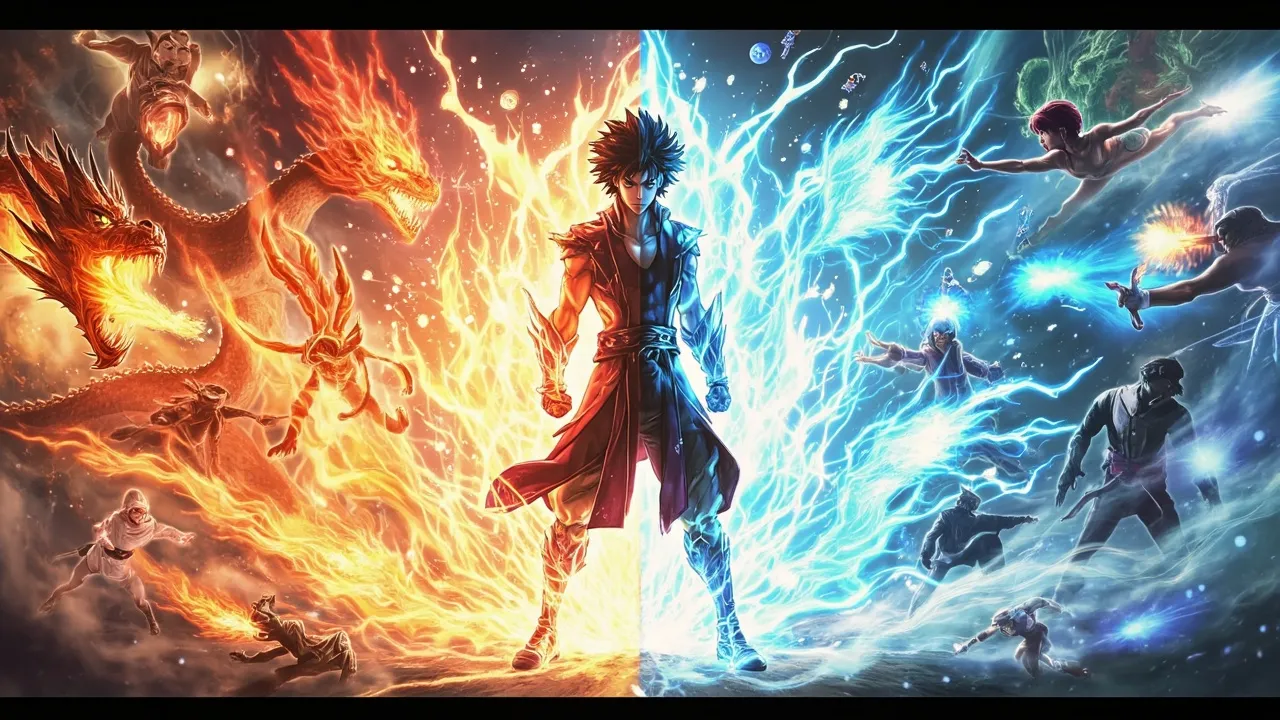
Power Mimicry Video Demo 🎬
Table of Contents
What Is Power Mimicry
Power Mimicry is the superpower that lets a user copy other beings’ abilities and wield them as if they were their own. Instead of training for years or being born with a single fixed gift, a power mimic adapts on the fly—borrowing superhuman strength, elemental control, psychic talents, or even specialized combat skills depending on who (or what) is nearby. In superpower terms, it’s often described with related keywords like ability copying, power duplication, adaptive mimicry, skill replication, and power borrowing.
Because Power Mimicry can shift from moment to moment, it’s one of the most unpredictable powers on any battlefield. It can turn a losing matchup into a stalemate, or a stalemate into a sudden win, simply by taking the opponent’s advantage away and using it back against them. For more power concepts and variations, readers can explore the broader Superpower Wiki or roll a surprise ability on the random superpower generator.
Core abilities of Power Mimicry
Power Mimicry comes in many “rule sets,” and those rules define how dangerous (or fragile) the user becomes.
Common core functions include:
-
Power acquisition: Copy a target’s superpower signature, such as telekinesis, pyrokinesis, superspeed, or shapeshifting.
-
Skill mimicry: Duplicate learned techniques like martial arts, marksmanship, hacking, or pilot instincts (sometimes called talent copying).
-
Attribute mirroring: Replicate physical traits—durability, reflexes, enhanced senses, or regeneration—if the copied power includes them.
-
Power storage: Hold copied abilities for a limited time, swapping between “saved” sets.
-
Power blending: Combine multiple copied abilities into one fighting style (for example, mixing flight with energy blasts).
-
Adaptive calibration: “Auto-tune” the copied power so it functions safely in the mimic’s body, reducing self-injury or overload.
Some versions require touch to copy (often labeled power absorption or power theft), while others work through proximity, sight, DNA sampling, voice imitation, or even empathic/psychic resonance. The stricter the requirement, the easier it is to counter—but also the more balanced it becomes.
Application / Tactical Advantages in Combat
In combat, Power Mimicry is less about raw force and more about control of the matchup. A good mimic fights like a strategist: identify the threat, copy the right tool, and deny the opponent their comfort zone.
Key tactical advantages:
-
Instant counterpicking: If an enemy relies on one defining edge (like invisibility or force fields), copying it can neutralize their entire game plan.
-
Tempo stealing: Mimicry can swing momentum in seconds—especially if the user copies a defensive power first, then pivots to offense.
-
Resource efficiency: Instead of carrying gear or relying on teammates, the mimic becomes a living toolkit.
-
Psychological pressure: Opponents hesitate when every displayed power becomes a potential liability.
-
Learning acceleration: Skill mimicry can copy combat rhythm, stance discipline, and timing, allowing the user to “download” expertise mid-fight.
A mimic’s best habit is restraint. Copying everything is tempting, but smart use means copying only what’s needed, then executing cleanly before the window closes.
Level: Level 1 🏙️, Level 2 🌇, Level 3 🌃
Level 1 🏙️
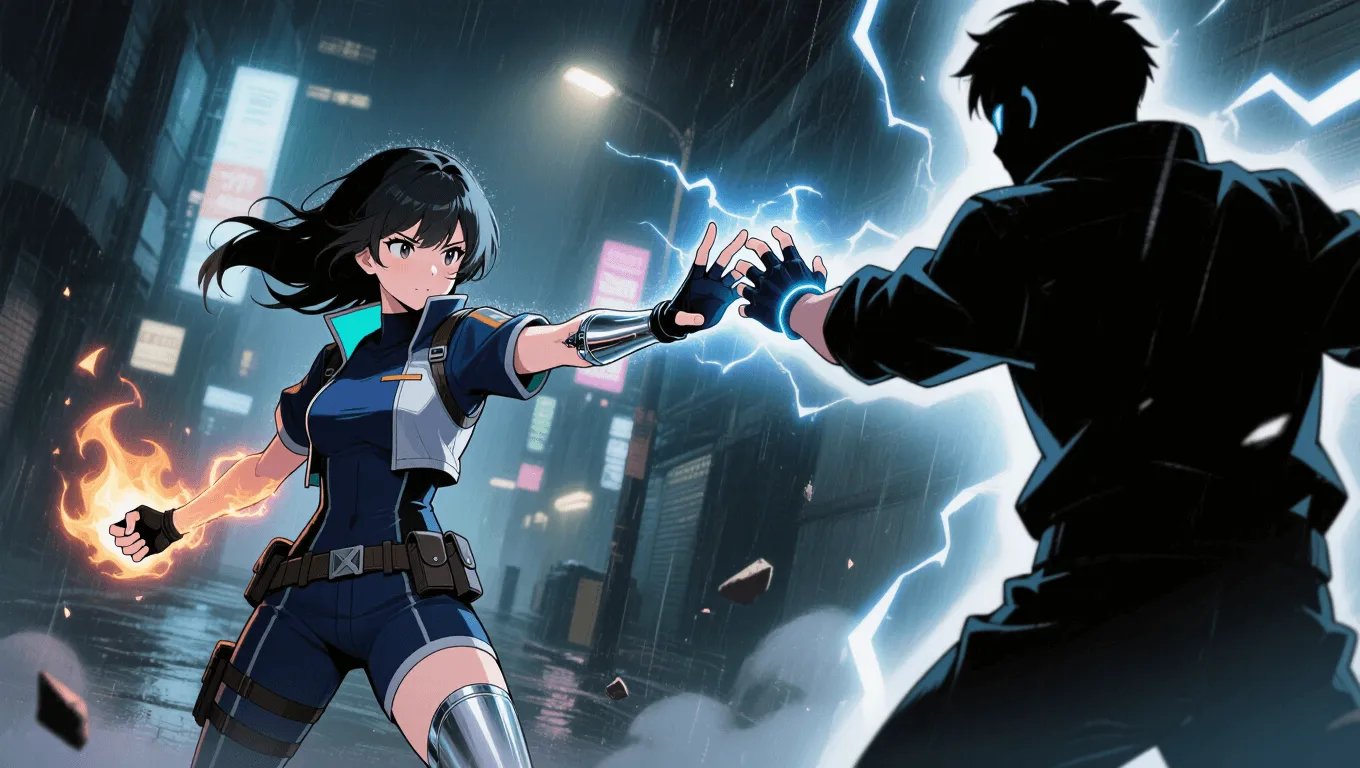
At this stage, Power Mimicry is basic and often unstable.
-
Copy condition is strict (usually touch or very close proximity).
-
One power at a time, short duration (seconds to minutes).
-
Partial copying is common (weaker output, missing fine control).
-
Side effects may include dizziness, sensory overload, or personality “echoes” from the target.
In fights, Level 1 mimics do best with simple borrowed tools: enhanced strength, hardened skin, a short burst of speed, or a single elemental attack they can aim without finesse.
Level 2 🌇
Here, the mimic becomes a true adaptive fighter.

-
Copy range improves (proximity, line-of-sight, or brief contact).
-
Multiple powers can be held (often 2–5), swapped situationally.
-
Better compatibility: the user can operate copied abilities with near-original precision.
-
Basic storage appears, allowing the mimic to keep a copied set longer after leaving range.
Level 2 combat style is about chaining: copy defense, reposition, copy offense, end the fight. The mimic starts to feel less like a mirror and more like a flexible weapons platform.
Level 3 🌃
At the highest tier, Power Mimicry becomes a battlefield-defining threat.

-
Fast acquisition: copying can be nearly instant after meeting conditions.
-
High-capacity loadout: multiple powers layered or fused into hybrids.
-
Selective mimicry: the user can copy only the useful portions (for example, copying flight without copying an unwanted weakness).
-
Deep replication: copied skills, instincts, and energy signatures run smoothly with minimal strain.
At Level 3, a mimic can dismantle teams by turning their strongest members into “supply drops” of abilities. The power becomes less about imitation and more about dominance through adaptation.
Limitations of using the Power Mimicry
Power Mimicry sounds limitless, but it’s usually held back by clear constraints—otherwise it breaks stories and balance.
Common limitations include:
-
Copy conditions: Touch, proximity, sight, or time requirements create openings for enemies to prevent copying.
-
Time limits: Many mimics lose the borrowed power after minutes or hours, forcing constant re-acquisition.
-
Capacity limits: Holding too many abilities can cause mental strain, physical breakdown, or “signal interference.”
-
Compatibility mismatch: Some powers require specialized biology (gills for underwater breathing, alien physiology, magical lineage). The mimic may copy the concept but not the necessary body.
-
Control gap: Copying a power is not always the same as mastering it. Fine control (like delicate telekinesis) may be hard without practice.
-
Feedback and identity bleed: In certain versions, copied memories, emotions, or personality traits leak in, creating confusion or risk of losing self-control.
-
No-copy zones: Powers fueled by artifacts, contracts, or unique cosmic sources may resist duplication.
These limitations are what separate a clever mimic from an unstoppable one: the best users plan around their own rules.
Weakness against what other superpowers
Power Mimicry has natural predators—abilities that deny access, reduce uptime, or punish copying.
Notable counter-types:
-
Power nullification and suppression: If a foe can shut powers down in an area, the mimic loses both the copied ability and the chance to copy again.
-
Anti-magic and warding: If mimicry relies on energy resonance, mystical barriers can block “reading” or duplicating spells.
-
Psychic Shield: Mental defenses can prevent skill copying that depends on telepathy, empathy, or mind-to-mind imprinting.
-
Stealth and invisibility: If the mimic needs line-of-sight or clear targeting, stealth users can starve them of a valid “source.”
-
Long-range artillery: Touch-based mimics struggle against enemies who never let them close distance.
-
Chaos powers and probability manipulation: Unpredictable outcomes can disrupt a mimic’s attempt to plan the “perfect counterpower.”
-
Self-destruct or backlash powers: Some abilities are dangerous to copy—explosive physiology, unstable radiation, cursed transformations—turning mimicry into a trap.
A strong mimic learns not only what to copy, but what not to copy.
Synergistic Power Combos
Power Mimicry becomes even stronger when paired with supportive abilities that stabilize, protect, or extend the copying window. Here are reliable combos seen in superpower builds:
-
Power Mimicry + Psychic Shield: Prevents identity bleed, memory intrusion, and mental sabotage while copying complex psychic talents.
-
Power Mimicry + Healing Factor: Reduces the risk of overload, backlash, or tissue strain from incompatible abilities.
-
Power Mimicry + Energy Absorption: Lets the user safely “feed” copied energy powers (lasers, lightning, plasma) and redirect excess output.
-
Power Mimicry + Phasing: Solves the classic touch-mimic problem by enabling safe approach through obstacles, then a controlled contact.
-
Power Mimicry + Technopathy: Allows the mimic to copy organic powers while also hijacking tech-based threats, covering more matchups.
-
Power Mimicry + Probability Manipulation: Smooths out the risk curve, increasing the odds of copying the right target at the right moment.
-
Power Mimicry + Enhanced Senses or Energy Vision: Helps identify power sources, hidden threats, and the “best donor” in a crowded fight.
Readers who want to mix and match more ability pairings can browse categories and related powers in the Superpower Wiki.
Known Users
Power Mimicry (or close variants like power absorption and power duplication) shows up across comics and superhero fiction. Well-known examples include:
-
Rogue (Marvel Comics) – A mutant famous for absorbing others’ powers and memories through physical contact.
-
Mimic / Calvin Rankin (Marvel Comics) – A mutant who can replicate powers and skills within a range, sometimes juggling multiple abilities at once.
-
Amazo (DC Comics) – An android designed to mimic the Justice League’s powers, often adapting to whatever heroes it faces.
-
Parasite (DC Comics) – A villain known for draining energy and temporarily gaining powers through contact.
These characters highlight how flexible the concept can be: some copies are clean and controlled, others are parasitic and dangerous, and some come with heavy psychological costs—all different “flavors” of Power Mimicry within superhero storytelling.