
Prismatic Paradox Superpower Guide

Prismatic Paradox Video Demo 🎬
Table of Contents
Prismatic Paradox is a reality-bending illusion power that turns the user into a living prism. In this form, they bend light, distort perception, and project convincing illusions that feel almost real. Whether in a tabletop RPG, superhero story, or game build, Prismatic Paradox is ideal for players who enjoy strategy, misdirection, and creative problem-solving over brute force.
If you’re comparing it with other abilities, you can explore more powers in the full superpower wiki or roll something entirely different with a random superpower generator.
What Is Prismatic Paradox?
Prismatic Paradox is a superpower where the user transforms into a prismatic, light-warping form that can bend reality into illusions. Unlike basic illusion manipulation, this power does not just create holograms; it reshapes how others experience space, sound, light, and even time on a perceptual level.
Core themes of Prismatic Paradox include:
-
Light distortion and refraction
-
High-level illusion projection
-
Perception and sensory manipulation
-
Reality-warping effects that feel tangible
-
Battlefield control through confusion and misdirection
In many settings, Prismatic Paradox is classified as an advanced illusion-based superpower, sitting somewhere between classic illusion magic and full-scale reality warping. It’s especially suited to strategists, tricksters, and “glass cannon” controllers who prefer to control the battlefield rather than dominate it with raw damage.
Core Abilities of Prismatic Paradox
While exact mechanics will vary by system, Prismatic Paradox usually includes the following core abilities.
Prismatic Form
The user shifts into a prismatic or crystalline silhouette that refracts light around their body. In this form, they can:
-
Become partially transparent or ghostlike
-
Split their image into several overlapping afterimages
-
Scatter incoming attacks by refracting beams, lasers, or light-based projectiles
This prismatic form often grants minor defensive boosts against light, energy, and visually guided attacks.
High-Fidelity Illusions
At the heart of Prismatic Paradox is advanced illusion manipulation:
-
Project lifelike visual illusions (people, creatures, terrain, structures)
-
Generate complex holographic decoys that mimic movement and behavior
-
Alter the apparent size, shape, or position of objects and allies
-
Overlap multiple illusions to create chaotic, layered environments
These illusions can be localized (small-scale tricks) or wide-area distortion fields, depending on the character’s level.
Sensory Distortion
The power doesn’t just fool the eyes. Through prismatic refraction of reality, the user can subtly influence other senses:
-
Distort sound, making footsteps or voices seem closer or farther away
-
Create illusory echoes, whispers, or battle cries
-
Mask smells or create false scents for tracking creatures
-
Cause enemies to misjudge distances, directions, and speed
This falls under perception manipulation rather than direct mind control, making it harder for some mental defenses to detect.
Reality-Bending Parallax
At higher mastery, Prismatic Paradox can simulate limited reality warping:
-
Create impossible angles, non-Euclidean hallways, or “stairways to nowhere”
-
Make the battlefield feel like it’s twisting, tilting, or folding in on itself
-
Simulate time distortions (slow-motion corridors, looping paths) as illusions
While these effects are still illusions, they are so convincing that victims behave as if reality truly changed, often losing orientation and tactical awareness.
Application / Tactical Advantages in Combat
Prismatic Paradox shines in tactical, battlefield-oriented play. Its illusion-based and light-bending abilities provide several key advantages.
Crowd Control and Confusion
The user can:
-
Split a group of enemies by conjuring fake hazards or illusory walls
-
Lure opponents into ambushes with illusory allies or fake escape routes
-
Mask allies’ movements, making coordinated strikes or retreats safer
By controlling what enemies think they see, the user dictates where the fight happens and on whose terms.
Defensive Deception
Rather than relying on pure durability, Prismatic Paradox offers evasive defense:
-
Create multiple holographic decoys to soak up enemy attacks
-
Make it appear as though attacks passed through the user
-
Alter their own apparent position by half a step, causing attacks to miss
This makes the power ideal for agile, fragile characters who can’t afford to be hit.
Offensive Mind Games
Prismatic Paradox can turn the enemy’s fear and uncertainty into a weapon:
-
Make foes see allies as enemies, breeding hesitation
-
Project illusory reinforcements to intimidate or force surrender
-
Simulate devastating attacks (like falling meteors or collapsing buildings) to provoke panic and misplays
Even if illusions do not deal physical damage, they can cause enemies to waste abilities, stamina, and time.
Level: Level 1 🏙️, Level 2 🌇, Level 3 🌃
Level 1 🏙️ – Spark of the Prism
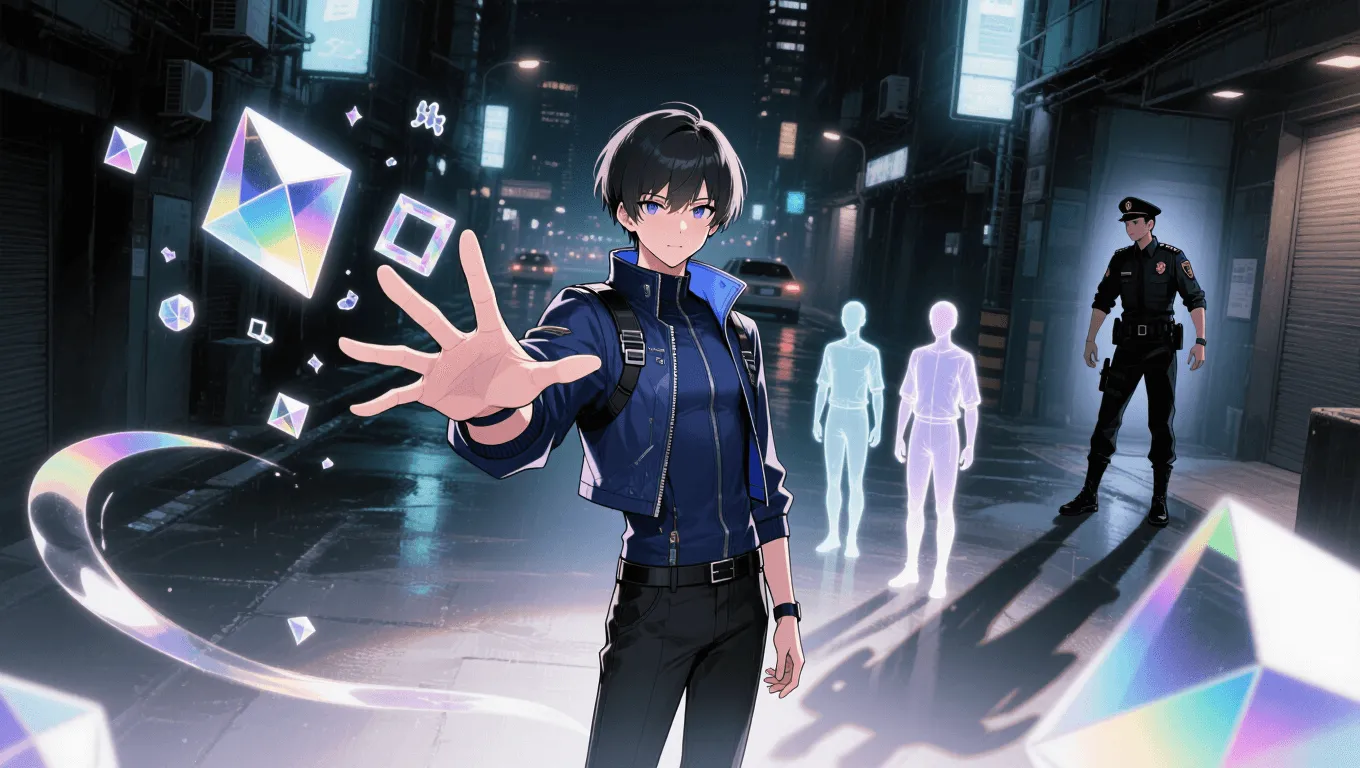
At this beginner stage, the user has just awakened Prismatic Paradox.
Typical capabilities:
-
Simple visual illusions (shapes, silhouettes, small objects)
-
Basic holographic decoys with limited movement
-
Minor light distortion, such as brief flashes or dazzle effects
-
Short-range sensory tricks, like misdirecting a guard around a corner
Limitations at Level 1:
-
Illusions are fragile and often break with close inspection
-
Effects typically influence only one or two targets at a time
-
Requires concentration; any damage or strong distraction may dispel effects
This level is ideal for infiltration, escape scenes, and small skirmishes rather than large-scale battles.
Level 2 🌇 – Shattered Reflections
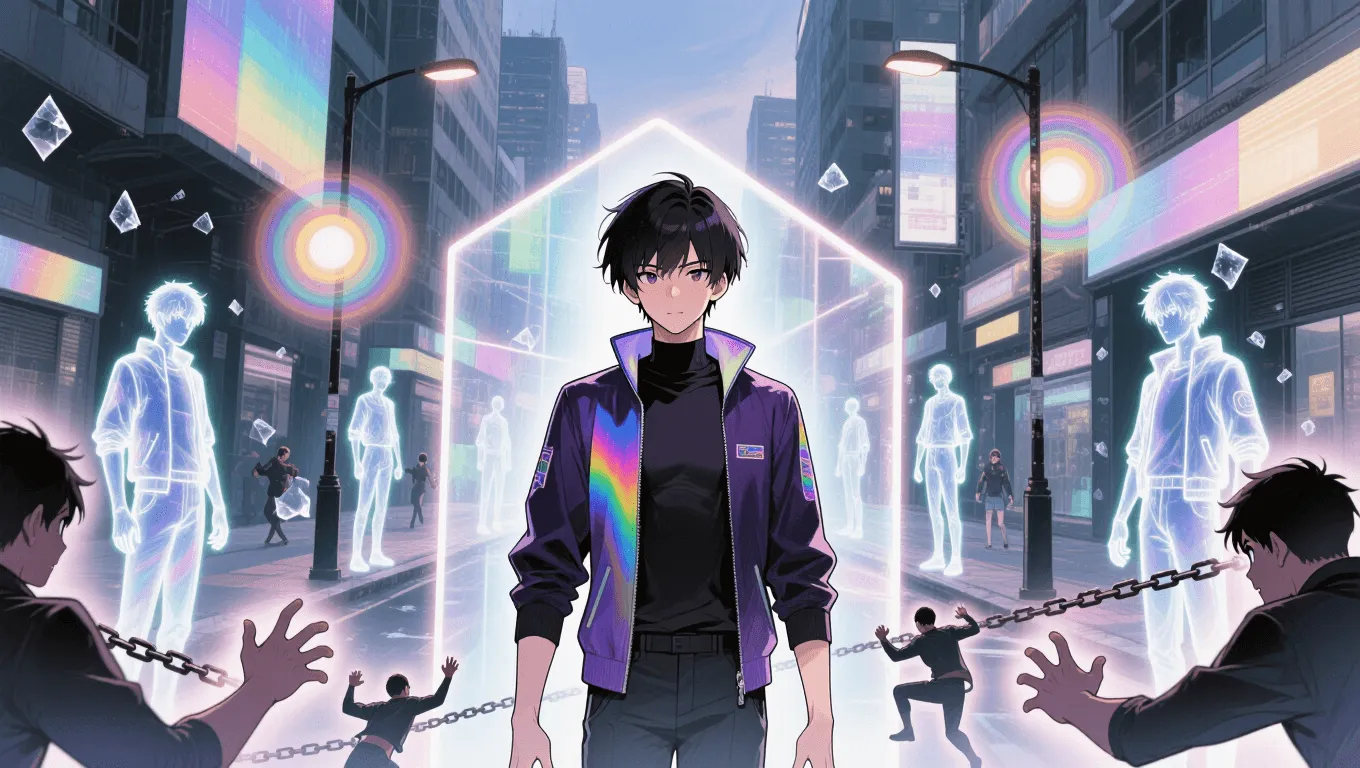
At Level 2, Prismatic Paradox becomes a true battlefield control power.
Expanded capabilities:
-
Wide-area illusion fields disguising entire rooms or streets
-
Multiple realistic holographic decoys, each acting semi-independently
-
Stronger sensory manipulation, including soundscapes and echoing voices
-
Partial light-bending defense, making the user hard to target precisely
At this stage, the user can orchestrate elaborate traps, ambushes, and misinformation campaigns. Enemies may start questioning everything they see.
Level 3 🌃 – Living Paradox
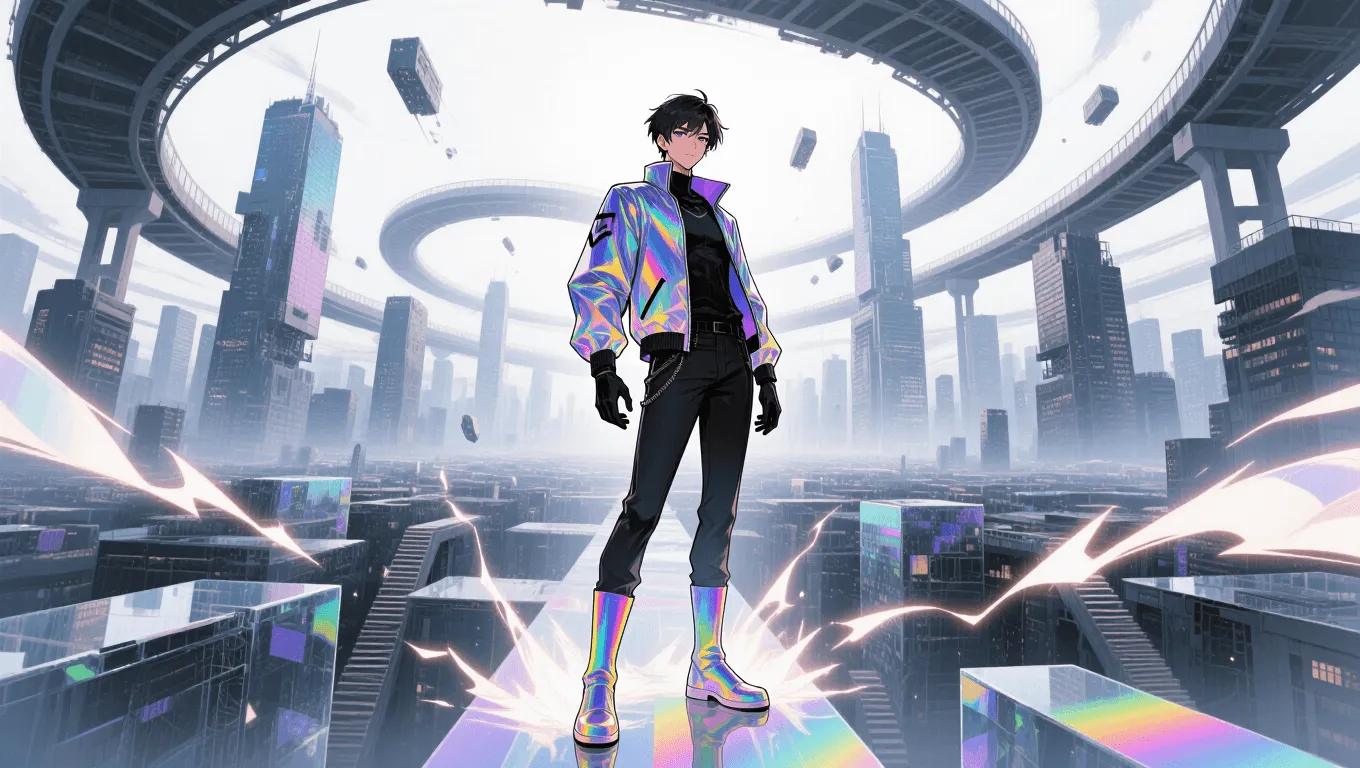
At its apex, Prismatic Paradox becomes a near-mythical illusion power.
Advanced capabilities:
-
City-block scale reality-bending illusions (shifting skylines, impossible geometry)
-
Persistent illusion constructs that last even after the user leaves
-
Layered illusion “mazes” that loop, distort distances, and trap enemies mentally
-
Near-total control over light in a zone, including invisibility or mass blinding
At Level 3, it becomes difficult for anyone without specialized defenses to trust any sensory input. The user is not just casting illusions; they are a walking paradox that redefines what “real” means on the battlefield.
Limitations of Using Prismatic Paradox
No matter how powerful, Prismatic Paradox has clear limitations that keep it balanced in most stories and game systems.
-
Illusions are not inherently physical. Unless combined with other abilities or special rules, illusions cannot directly deal damage or move real objects.
-
Requires perception to work. The power mostly affects those relying on standard senses. Entities without sight, hearing, or normal perception are far less affected.
-
Concentration and mental stamina. Maintaining complex illusions for long periods can cause mental fatigue, headaches, or psychic backlash in some settings.
-
Line of effect limitations. Obstacles, anti-magic fields, or tech dampeners may disrupt light-based illusions, limiting the effective range.
-
Knowledge breaks illusions. Once an opponent knows a particular trick or pattern, they may resist or test illusions more effectively.
These limitations prevent Prismatic Paradox from being an automatic “I win” button and encourage creative, thoughtful use.
Weakness Against What Other Superpowers
Even a reality-bending illusion power has counters. Prismatic Paradox is notably vulnerable to:
-
True Sight / Clairvoyance: Abilities that reveal the “truth” behind illusions can cut straight through prismatic distortions.
-
Emotionless AI or Drones: Units that rely strictly on sensors, data feeds, or non-visual targeting are harder to fool.
-
Sensory Dampening: Powers that remove vision, sound, or other senses entirely may shut down much of the illusion’s effect.
-
Reality Anchoring / Anti-Magic Fields: Abilities that stabilize reality or dispel magical/psionic effects can erase illusions on contact.
-
Telepathy / Mind Shields: Strong mental defenses allow targets to question sensory input and ignore the illusions’ emotional impact.
Players and storytellers can use these weaknesses to create interesting counters and rivalries between characters.
Synergistic Power Combos
Prismatic Paradox becomes dramatically stronger when combined with complementary abilities.
Shadow or Darkness Manipulation
Illusions layered over deep shadows become nearly undetectable:
-
Alter the outline of shadowy figures
-
Hide entire squads inside darkness illusions
-
Turn dark corners into apparent open doors or dead ends
Sound or Vibration Control
Matching visual illusions with perfect sound illusions increases believability:
-
Holographic soldiers whose footsteps, armor clinks, and shouts all sound real
-
Fake explosions accompanied by convincing shockwave audio
-
Confusing enemy echolocation or sonar with distorted echoes
Mind Manipulation or Fear Inducement
When illusions play directly into a target’s fears, they have maximum impact:
-
Hallucinations tuned to individual phobias
-
Illusory monsters that strike where the mind is weakest
-
Whispers that reinforce doubt and paranoia created by mental powers
Mobility or Teleportation
Teleportation and high-speed movement pair beautifully with illusion decoys:
-
Swap positions with a decoy at the last second
-
Teleport while leaving a prismatic afterimage to draw fire
-
Blink through an enemy line while illusions cover the escape route
These combos make Prismatic Paradox a cornerstone power in many party compositions, especially in RPGs and tactical games.
Known Users
Because Prismatic Paradox is a flexible concept, it can fit many character archetypes:
-
The Prismatic Trickster: A street-level illusionist who uses the power for heists and social manipulation rather than mass destruction.
-
The Paradox Sage: A mystic who believes reality is only perception and uses illusions to teach, test, or punish.
-
The Prism Warden: A guardian who protects a city or realm by turning entire districts into illusory mazes for invading forces.
In mainstream comics and fiction, several characters showcase similar illusion and reality-bending themes, such as Mysterio, whose technology-based illusions create cinematic-level deception, or various sorcerers who specialize in illusion magic and light distortion.
When adapting Prismatic Paradox for your own settings, you can draw inspiration from these kinds of illusion specialists, then tune the levels, weaknesses, and combos to match your world’s power scale.