
Probability Manipulation

Probability Manipulation Video Demo 🎬
Table of Contents
Probability Manipulation is the superpower that shifts the odds behind reality itself, causing unlikely events to happen more often or preventing them from happening at all. Instead of throwing fireballs or lifting cars, a user subtly (or dramatically) tweaks chance: a bullet jams at the perfect moment, a roof beam falls two seconds later than it “should,” or a single thrown coin lands exactly where it needs to. In superpower terms, it’s luck manipulation with intent—also known as chance control, odds manipulation, fortune bending, or probability alteration. For more abilities like this, readers can browse the full catalog on the Superpower List page or jump to the random superpower generator homepage.
What Is Probability Manipulation
Probability Manipulation is the ability to influence how likely an outcome is, nudging the universe toward one result over another. It doesn’t have to look flashy. In fact, the power often appears as a chain of “coincidences” that just happen to favor the user—doors unlocked, footing stable, critical hits landing, enemy tech malfunctioning, and danger missing by inches.
At its core, the power treats randomness like a dial. Turn it slightly and everyday events lean in a desired direction. Turn it hard and reality starts to feel scripted: improbable saves, impossible-looking dodges, and cascading mishaps for opponents. Because probability is involved in nearly everything—movement, timing, mechanical failure, human decisions, even tiny environmental factors—this superpower can feel incredibly broad, which is why fiction often frames it as fate manipulation or “being blessed/cursed.”
Some settings call this tychokinesis, a term used for psychic control of chance and luck.
Core abilities of Probability Manipulation
Probability Manipulation can be expressed in multiple “styles,” depending on how the user’s power works and what limits exist in that world.
Luck buff and misfortune debuff
The classic form is a personal good-luck aura paired with enemy bad luck. The user’s shots land more often, escapes open up, and danger seems to miss—while opponents suffer slips, jams, mistimings, and freak accidents. This is sometimes passive, triggered by stress, or active, aimed like a curse.
Outcome steering
Instead of general “luck,” the user chooses a target outcome: make the hostage survive, make the bridge hold for ten more seconds, make the villain’s escape route fail. This is closer to chance control than vague fortune, because it’s goal-based. The universe still finds a path—it’s just guided toward the selected result.
Critical timing manipulation
Many probability users become terrifying in close combat because they “win the moment.” They don’t need super speed if the opponent’s footing fails at the wrong instant, or if a punch that should graze becomes a clean hit. This is odds shifting applied to timing windows: reaction opportunities, openings, and mistakes.
Cascade engineering
Advanced users can set up chain reactions: a small improbable event triggers the next, which triggers the next, creating a domino effect (sometimes literally). This is how probability warping can look like tactical genius—because the battlefield keeps rearranging itself into advantageous patterns.
Defensive improbability
A probability shield isn’t an energy barrier. It’s an ongoing pattern where lethal outcomes keep failing to finalize. Shots miss vitals, blades snag, toxins disperse, falling debris lands just wide. It’s “survival by statistical sabotage.”
Resource and risk control
Outside combat, probability alteration can help with searches, negotiations, stealth, heists, rescues, and investigations: the right clue appears, the guard looks away, the needed tool is available, the one friendly witness happens to be nearby. It’s fortune bending applied to logistics.
Application / Tactical Advantages in Combat
Probability Manipulation is strongest when it is treated like battlefield control rather than a slot machine. The user isn’t merely “lucky”; they reshape how fights unfold.
They can:
-
Force weapon failures: guns jam, safeties stick, power cells misfire, blades chip.
-
Create openings: an opponent blinks at the wrong time, trips on uneven ground, misjudges distance.
-
Improve accuracy: ricochets land perfectly, thrown objects hit switches, cover breaks at the ideal angle.
-
Disrupt coordination: allies collide, comms cut out, timing falls apart.
-
Escape traps: locks fail, restraints loosen, alarms glitch, pursuers take the wrong turn.
-
Turn enemy strength into liability: super strength breaks the floor, high speed runs into sudden debris, ranged attacks hit unstable supports instead of the user.
Because chance control can be subtle, it also excels at psychological warfare. Opponents begin doubting their own skill: “Why does everything keep going wrong?” That hesitation creates more mistakes—feeding the probability user even more advantage.
Level: Level 1 🏙️

At Level 1, Probability Manipulation is mostly personal luck. It looks like:
-
Near-misses instead of clean hits
-
Better-than-average aim and timing
-
Convenient “accidents” that are plausible (a loose cable, a slippery patch, a jammed magazine)
-
Defensive survival spikes under stress
A Level 1 user still loses to superior planning, overwhelming firepower, or hard counters, but they’re frustratingly hard to finish off.
Level: Level 2 🌇

At Level 2, the user can direct luck more deliberately:
-
Assign bad luck to a specific target within range
-
Tilt group outcomes (a squad’s shots miss, a team’s formation breaks)
-
Build short “luck streaks” for a chosen objective (escape, disarm, rescue)
-
Create multi-step cascades (one failure triggers another)
Here, probability warping becomes a real combat style: the user isn’t just surviving—they’re controlling tempo and forcing errors.
Level: Level 3 🌃
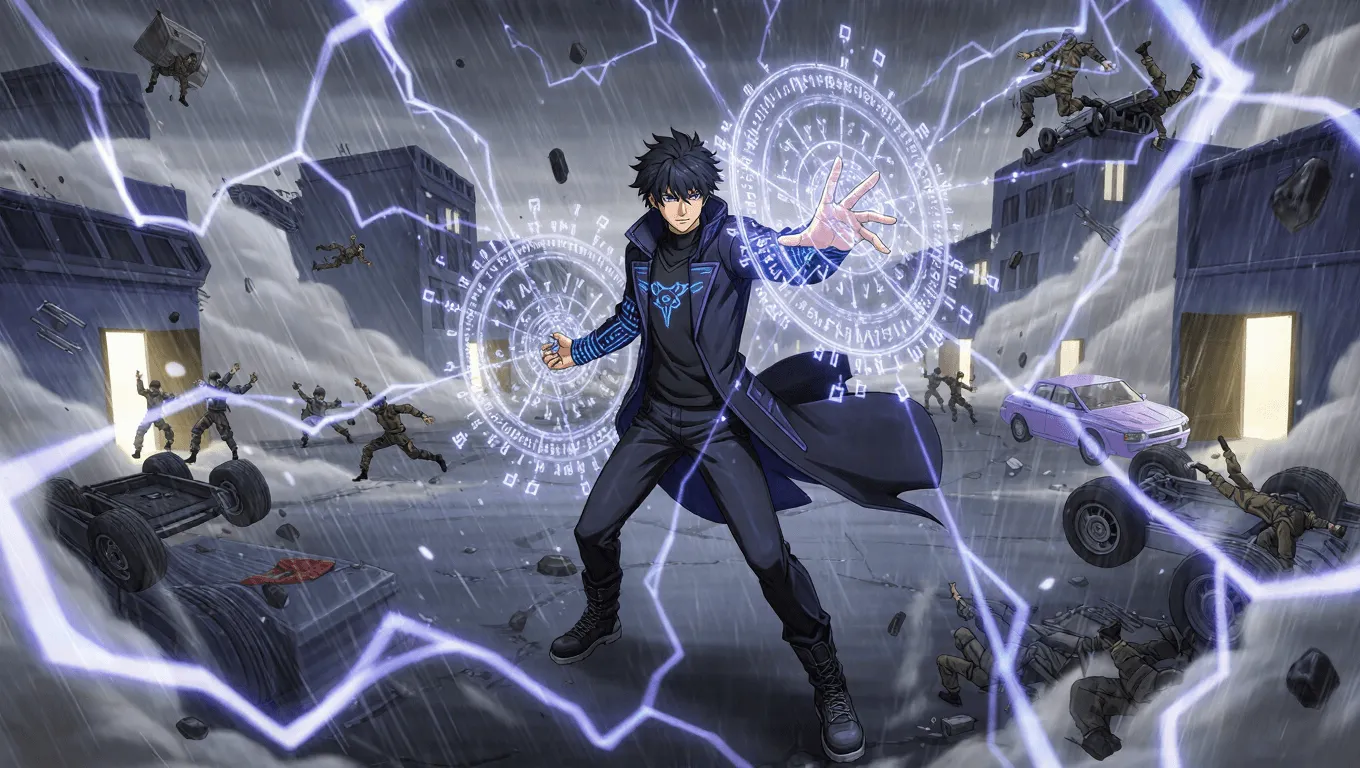
At Level 3, Probability Manipulation becomes reality’s steering wheel:
-
High-precision outcome steering over complex scenarios
-
Massive cascades across environments (structures, vehicles, crowds, weather timing)
-
Probability “locks” that keep a condition true for a window (no lethal hits land, the target cannot be found, the escape route remains open)
-
Battlefield-wide misfortune fields that degrade enemy plans continuously
At this level, fights can feel unfair. The counterplay shifts from “hit them harder” to “break the conditions that let probability be influenced.”
Limitations of using the Probability Manipulation
Even when fiction depicts it as godlike, Probability Manipulation becomes more interesting (and balanced) when it has clear constraints.
-
It usually cannot make the impossible happen. It can push unlikely events, but not violate absolute rules of the setting. A common limiter is that outcomes must be physically plausible, just improbable.
-
Stronger shifts cost more. Tiny nudges are easy; massive miracles drain stamina, focus, or emotional stability.
-
Precision may be limited. Some users can’t pick the exact method—only the direction (good for me, bad for them). The universe decides how.
-
Range and awareness matter. Many versions require line of sight, proximity, or at least knowledge of the situation. “I want the engine to fail” is easier if the user can see the vehicle and its context.
-
Backlash and balancing effects are common. Overuse may cause rebound bad luck, equal-and-opposite misfortune, or collateral chaos that harms allies. Longshot’s luck is often portrayed as failing or backfiring when used selfishly or pushed too hard.
-
Moral and tactical ambiguity: preventing a disaster might shift that “bad outcome” elsewhere. Some stories treat probability as a zero-sum ledger.
Weakness against what other superpowers
Probability Manipulation is potent, but it isn’t unbeatable. Several power categories naturally pressure it:
-
Immutability and fixed-state abilities: Powers that cannot be altered, re-rolled, or influenced by outside forces can resist odds shifting by making outcomes “non-negotiable.”
-
Reality anchoring and causality locking: If a power pins events to a determined track, chance control loses room to operate.
-
Time Manipulation: Rewinds, time stops, or timeline edits can bypass probability games by changing when and how outcomes occur.
-
Precognition and perfect prediction: If an opponent reliably knows the most likely branch and adjusts instantly, probability tricks lose surprise value. (This can become a chess match: prediction versus rerolls.)
-
Power negation and dampening fields: If probability alteration is treated as an aura/field, nullifiers can shut it down.
-
Wide-area devastation: Huge explosions, indiscriminate environmental wipes, or saturation attacks can overwhelm “lucky dodges” by reducing the number of survivable branches.
-
Information denial: Illusions, stealth, or sensory suppression can limit what outcomes the user can meaningfully steer, especially if their power depends on awareness or line of sight.
Synergistic Power Combos
Probability Manipulation becomes even deadlier when paired with powers that provide information, control, or reliable finishing options.
-
Technopathy: Chance control makes devices fail; technopathy ensures they fail in the exact way needed. Together, they can crash drones, jam comms, and turn smart weapons into liabilities.
-
X-ray Vision: Seeing through cover helps the user choose the best “probability path” (which wire to cut, which lock pin to nudge, which angle creates the safest escape).
-
Energy Vision: If the user can perceive energy flows, they can steer odds toward overload points, weak links, and optimal timing for disruptions.
-
Gravity Manipulation: Gravity sets trajectories; probability sets “the perfect fluke.” This combo creates impossible-looking ricochets, midair saves, and precision environmental kills.
-
Structure Weakening: Weaken a support beam, then let probability do the rest—collapse happens at the exact second an enemy commits to a position.
-
Replication/Duplication: Multiple bodies mean multiple attempts. Probability manipulation turns those attempts into near-guaranteed success while spreading risk.
-
Sonic Manipulation: Sound can destabilize structures and balance; odds shifting decides whose footing fails and which resonance becomes catastrophic.
Known Users
-
Domino (Marvel Comics) is widely described as having subconscious probability-altering powers that create “good luck” for her and misfortune for opponents.
-
Black Cat (Marvel Comics) is often depicted with the psionic ability to alter probability fields, commonly manifesting as “bad luck” for enemies.
-
Scarlet Witch (Marvel Comics) was originally portrayed with hex powers that caused unlikely events and “bad luck,” with later stories reframing and expanding her abilities.
-
Longshot (Marvel Comics) is famously associated with probability-altering “luck” powers that can become fickle or backfire depending on use and mindset.
-
Jinx (DC Comics) has been given probability manipulation in some modern continuities, alongside her magical skill set.
For an example of a classic probability user in comics, see Domino.