
Psychic Navigation

Psychic Navigation Video Demo 🎬
Table of Contents
Psychic Navigation is a perception-based superpower that lets a user locate people, places, or objects through extrasensory awareness rather than normal sight, sound, or technology. Instead of relying on maps, GPS signals, or line-of-sight tracking, the Psychic Navigation user follows an intuitive mental “pull” that functions like a psychic compass. In many settings, this reads as clairvoyant tracking, mind-sense, or remote locating—an ability that turns the world into a living map and helps a character move with eerie certainty.
For readers who enjoy comparing abilities, Psychic Navigation also fits neatly into many broader categories found in a Superpower Wiki style archive: it overlaps with extrasensory perception, telepathic sensing, and even astral scouting, depending on how it’s expressed.
What Is Psychic Navigation
At its core, Psychic Navigation is the ability to find a target using non-physical senses. The target might be a specific person, an unfamiliar building, a hidden base, a lost artifact, or even a “destination concept” such as “the safest exit” or “the nearest water source.” The defining trait is that navigation happens through psychic information—signals gathered from the mind, the environment, or some metaphysical layer of reality.
In storytelling terms, Psychic Navigation often appears as:
-
A mental arrow pointing toward a target
-
A “tug” in the chest or behind the eyes
-
A sudden, detailed inner map of streets and corridors
-
A pulse of certainty when facing the correct direction
-
A brief flash of the target’s location (clairvoyant snapshot)
Unlike simple super-senses, Psychic Navigation is goal-oriented. It doesn’t just increase perception; it organizes perception into a route and a destination.
Core abilities of Psychic Navigation
Psychic Navigation can be a single focused talent or a bundle of related sensing techniques. Common core abilities include:
-
Target lock: The user establishes a psychic “signature” for a person, place, or object and can re-locate it later. This may be based on memory, a name, a photo, a personal item, or a brief initial encounter.
-
Directional sense: The user knows which way to move, even across complex terrain, dense cities, underground tunnels, or shifting labyrinths.
-
Distance intuition: The user estimates how far away the target is, sometimes as a number, sometimes as a feeling (near, far, closing, fleeing).
-
Route optimization: Rather than only pointing toward the target, the power suggests viable paths—shortcuts, safe corridors, low-visibility alleys, or the least guarded entry.
-
Obstacle awareness: The user senses barriers between them and the target (locked doors, dead ends, collapsing floors, sealed vaults), often as “resistance” along the psychic line.
-
Environmental anchoring: The user maintains orientation in disorienting conditions such as smoke, darkness, storms, illusions, or unfamiliar architecture.
-
Remote locating: Some users can “ping” the target and receive a mental impression of the surrounding area, resembling remote viewing or scrying without a physical focus.
-
Living-network sensing: Advanced forms can read crowds as a map of minds, using the presence of thought and emotion to triangulate a specific individual.
Depending on the setting, Psychic Navigation may also connect to psychometry (reading traces from objects), astral projection (scouting from an out-of-body perspective), or empathic tracking (following emotional residue like a scent trail).
Application / Tactical Advantages in Combat
Psychic Navigation shines in combat because it attacks one of the most fragile resources on a battlefield: information. Knowing where an enemy is, where they will run, and where the exits are can decide a fight before the first strike lands.
Key tactical advantages include:
-
Countering stealth: Invisible foes, shadow-walkers, and silent assassins lose much of their advantage when the user can “feel” where they are.
-
Ambush prevention: The user senses flanking routes, hidden doors, or approaching hostile signatures.
-
Pursuit dominance: Escape becomes difficult when the user can track a target across rooftops, subway lines, forests, or crowded marketplaces.
-
Objective control: In hostage scenarios or artifact recovery missions, the user can locate the objective fast and reduce time exposed to enemy fire.
-
Team coordination: A Psychic Navigation user can act as a battlefield guide—calling positions, directing allies through safe lanes, and preventing friendly units from being isolated.
-
Urban warfare advantage: Dense cities become predictable. The user can route around chokepoints, locate high ground, and identify where an enemy force is likely to set up.
-
Hit-and-run efficiency: The user strikes, relocates, and re-engages from an unexpected angle while always knowing the fastest retreat path.
Level: Level 1 🏙️
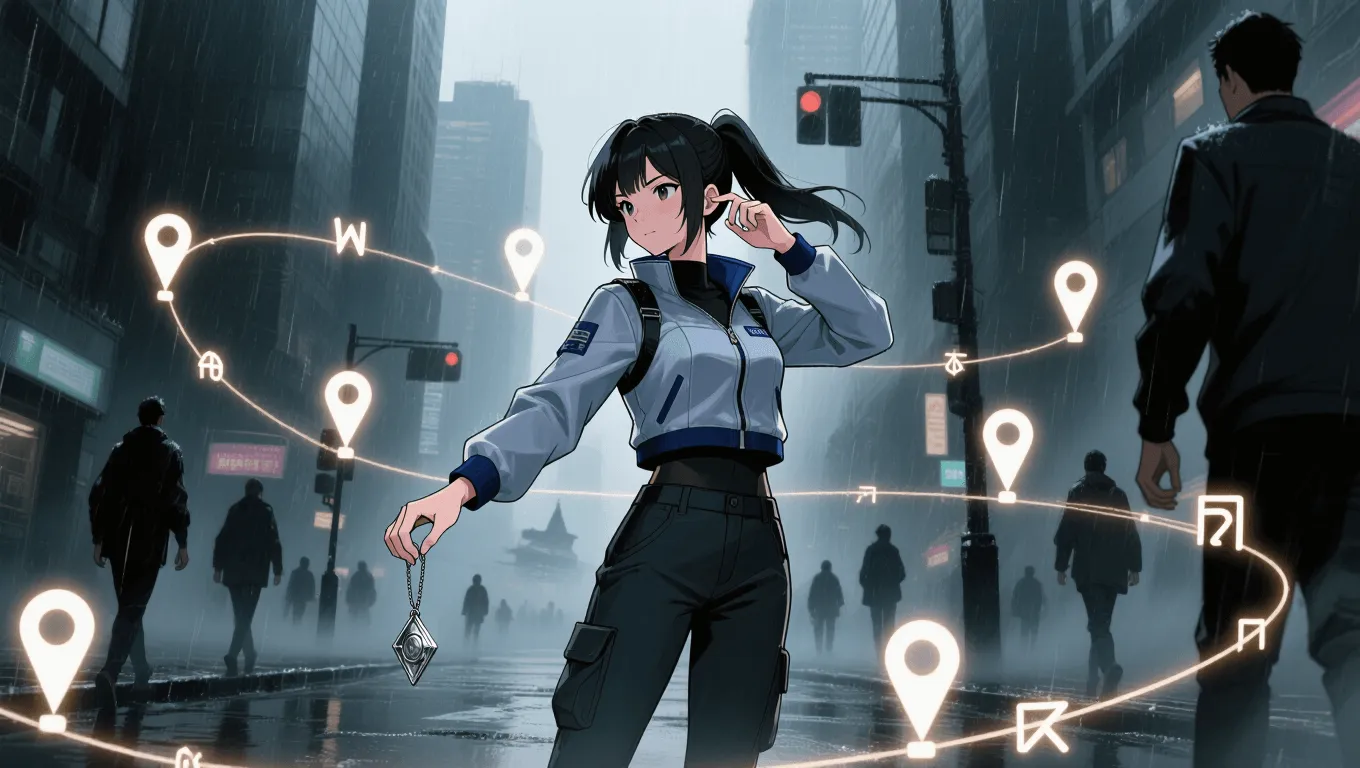
At Level 1, Psychic Navigation behaves like a reliable internal compass with occasional flashes of insight.
-
The user can locate familiar places and known individuals within a limited range (often city-block to neighborhood scale).
-
Tracking works best with a strong anchor: a clear mental image, a recent encounter, a name tied to emotional significance, or a personal item.
-
The power provides direction and basic distance sense, but not detailed route planning.
-
It helps with disorientation (fog, darkness, crowded streets) but can be disrupted by stress or sensory overload.
In combat, Level 1 is excellent for avoiding ambushes and staying oriented during chaotic fights.
Level: Level 2 🌇
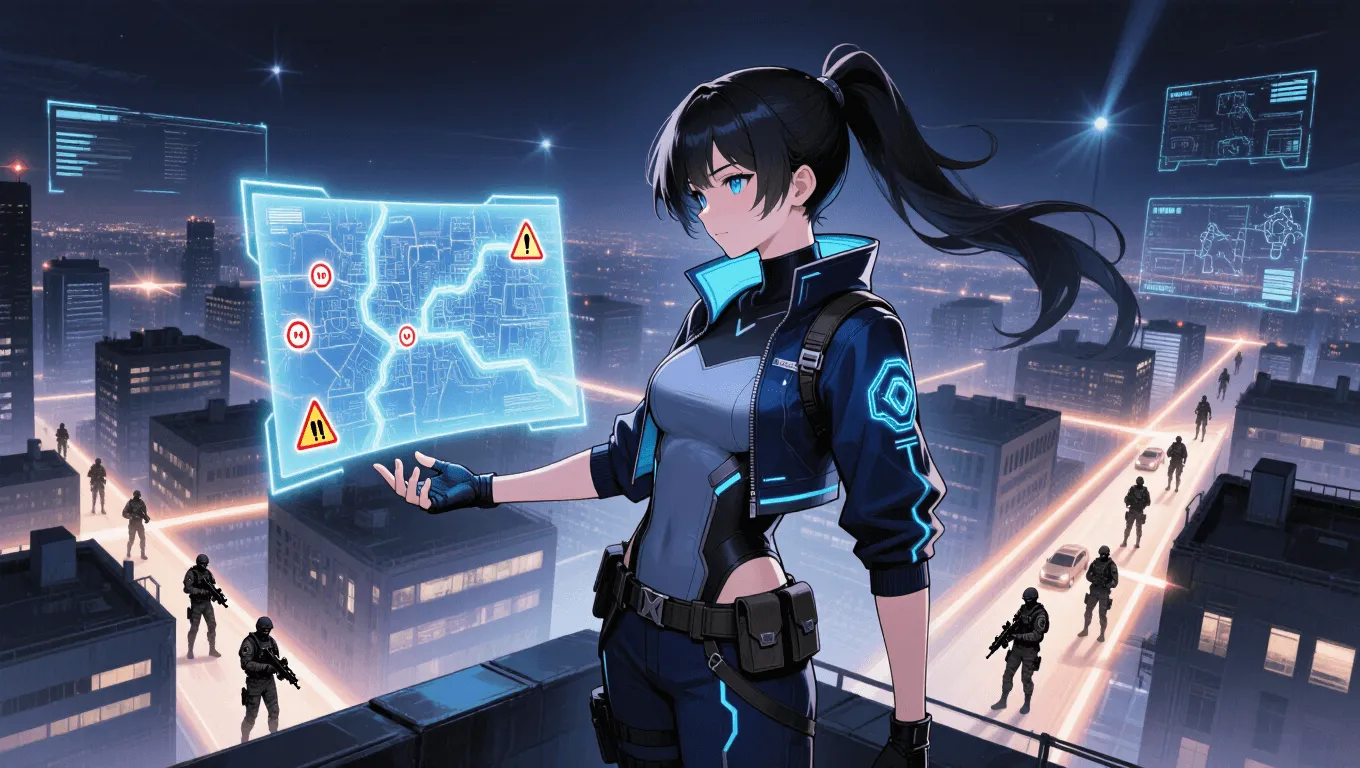
At Level 2, Psychic Navigation becomes tactical-grade tracking with usable battlefield intelligence.
-
The user can lock onto targets they have only briefly encountered and maintain the lock across wider ranges (often across a city).
-
The power suggests routes, not just directions, and can “warn” of obstacles or heavy resistance along a path.
-
Tracking can persist through crowds, decoys, and partial line breaks (such as a target entering a building or vehicle).
-
The user may receive short remote impressions: a hallway layout, nearby guards, or the emotional “noise” of a crowd.
In combat, Level 2 enables coordinated team maneuvers, precise interception, and strong counter-stealth performance.
Level: Level 3 🌃
At Level 3, Psychic Navigation approaches strategic omnipresence within the user’s practical limits.

-
The user can locate targets at extreme distances (city-to-region scale, sometimes beyond), especially if the target is emotionally significant or psychically “loud.”
-
Navigation includes multi-route forecasting: the user can sense likely escape paths and cutoffs, predicting where to intercept.
-
Advanced users can distinguish real targets from psychic bait by reading signature consistency, intent, or emotional resonance.
-
Remote locating becomes clearer and more stable, sometimes resembling a real-time mental map.
-
The user may maintain multiple locks at once (tracking a squad, monitoring allies, and keeping a route to extraction open simultaneously).
In combat, Level 3 is a force multiplier: the user becomes the team’s living navigation system, pursuit specialist, and anti-ambush radar all at once.
Limitations of using the Psychic Navigation
Psychic Navigation is powerful, but it is not a perfect “win button.” Its limits usually fall into a few predictable categories:
-
Anchor dependency: Many versions require a target link—name, face, personal item, or prior contact. Without an anchor, the user may only find general categories (nearest exit, nearest living mind).
-
Signal noise: Crowds, mass panic, psychic storms, or emotionally charged battlefields can distort the mental “compass,” creating false pulls or multiple overlapping pings.
-
Range and stamina: Long-distance tracking can cause headaches, nosebleeds, exhaustion, or cognitive fatigue. Sustained locks may require focus that competes with fighting.
-
Ambiguity: The power may indicate direction without context. “That way” is useful, but it doesn’t always explain whether the target is above, below, behind reinforced walls, or moving fast.
-
Ethical friction: Locating minds can brush against privacy themes. In many worlds, moral codes, laws, or psychic etiquette restrict how openly the ability can be used.
-
Countermeasures exist: Shielding, signature masking, and dimensional tricks can blunt or break a lock.
Good worldbuilding often treats Psychic Navigation like a specialized sense: strong in its niche, but vulnerable to interference and misdirection.
Weakness against what other superpowers
Psychic Navigation has clear counters, especially from powers that disrupt information, identity, or spatial continuity:
-
Psychic Shield: Mental barriers can block sensing, scramble signature reads, or cause the user to “bounce” off a defended mind.
-
Illusion Casting: High-grade illusions can generate convincing false trails, fake emotional residue, or decoy signatures that pull the navigator off course.
-
Teleportation: If a target can blink across long distances or skip through portals, the navigator may lose time recalibrating, especially if the teleport breaks the psychic “line.”
-
Dimensional Travel: Moving into pocket dimensions, astral planes, or sealed spaces may sever detection entirely unless the navigator can sense across planes.
-
Identity Shifting: Shape-shifting, aura masking, and power mimicry that alters a target’s psychic signature can confuse a lock—particularly at lower levels.
-
Reality Warping: Changes to geography, causality, or spatial rules can invalidate route optimization and distort mental maps.
-
Nullification: Anti-psychic fields and ability suppression can shut the power down at the worst moment.
In balanced matchups, Psychic Navigation is strongest against stealth and escape, but weakest against dedicated mind defense and space-bending movement.
Synergistic Power Combos
Psychic Navigation becomes terrifying when paired with abilities that convert information into guaranteed impact:
-
Telepathy: Reading surface thoughts can sharpen target locks, confirm identity, and reveal intent, turning a vague “pull” into precise tracking.
-
Clairvoyance or Remote Viewing: Psychic Navigation can provide the direction while clairvoyance supplies a clear snapshot of the destination.
-
Astral Projection: The navigator finds the target, then scouts the route safely out-of-body to plan an entry.
-
Enhanced Accuracy: Once the navigator calls an enemy position, precision shooters or ranged specialists can capitalize immediately.
-
Phasing: Knowing exactly where an objective is makes intangibility far more effective—walls stop being barriers when the route is certain.
-
Technopathy: In modern settings, psychic locating plus camera access creates a near-perfect pursuit net: the mind finds the target, the city’s sensors confirm movement.
-
Gravity Manipulation or Gravity Negation: A navigator can guide allies through vertical routes—rooftops, midair paths, and sudden drops—while controlling terrain.
-
Psychic Shield: Pairing offense and defense allows the team to track others while resisting counter-scrying and mental jamming.
To explore other abilities that pair well, many readers like to browse a broader catalog on a superpower list page or roll unusual combinations on a random superpower generator.
Known Users
Psychic Navigation appears across fiction under names like mind tracking, psychic sensing, or telepathic triangulation. While exact mechanics vary, several characters are commonly portrayed with comparable “locate by extrasensory perception” feats:
-
Martian Manhunter (DC Comics): Frequently depicted as a high-level telepath who can detect and locate minds over large areas, making him a strong example of psychic locating and navigation. See more on the character’s background here: https://en.wikipedia.org/wiki/Martian_Manhunter
-
Madame Web (Marvel Comics): Often associated with psychic awareness and farsight-like perception, sometimes guiding others toward people or events through extrasensory insight.
-
Professor X (Marvel Comics): Telepathy (often amplified by Cerebro) is portrayed as capable of locating individuals by their mental presence, mirroring the target-lock concept in many Psychic Navigation builds.
In a world of heroes and villains, Psychic Navigation is less about raw damage and more about certainty. When a character always knows where to go—and where everyone else is—the battlefield stops being a maze and becomes a map written directly into the mind.