
Reactive Adaptation

Reactive Adaptation Video Demo 🎬
Table of Contents
Reactive Adaptation is a survival-focused superpower that instantly evolves a user’s defenses to match new threats or harsh environments. Instead of relying on pre-planned techniques, the body (or power source) analyzes danger in real time and generates the exact resistance, immunity, or countermeasure needed to stay alive. In practice, Reactive Adaptation can look like rapid mutation, adaptive physiology, spontaneous evolution, or “reactive evolution” that turns vulnerability into advantage within seconds.
For readers building characters or comparing abilities, it helps to browse a wider catalog of powers on the Superpower Wiki page or discover unexpected ability pairings through the random superpower generator.
What Is Reactive Adaptation
At its core, Reactive Adaptation is automatic, threat-driven evolution. The user does not simply “get stronger” in a generic way; they become specifically suited to the danger at hand. If the threat is fire, the power may generate heat-resistant skin. If the threat is drowning, it may produce gills. If the threat is vacuum, it may remove the need for oxygen. The key idea is targeted survival optimization.
This makes Reactive Adaptation different from slow, natural evolution or deliberate body-altering powers. It is immediate, reactive, and often unconscious. In many interpretations, the ability chooses the most efficient solution, even if the user would prefer a different outcome.
Core abilities of Reactive Adaptation
Reactive Adaptation commonly expresses through a handful of “modules” that can mix and match depending on the setting.
-
Rapid resistance development: Instant tolerance to toxins, radiation, extreme heat/cold, pressure, corrosives, pathogens, or sonic assault.
-
Environmental survival shifts: Gills, night vision, thermal regulation, vacuum survival, and pressure-proof physiology.
-
Damage response evolution: Reinforced bones, armored plating, shock absorption, elastic organs, and self-sealing wounds to prevent bleed-out.
-
Energy and force counters: Insulation against electricity, diffusion layers against lasers, anti-kinetic buffering against blunt trauma, and vibration damping against sonic attacks.
-
Sensory and cognition upgrades: Threat detection, low-light vision, enhanced reflex arcs, accelerated pattern learning, or heightened situational awareness.
-
Escape adaptations: When “winning” is less likely than surviving, the power may prioritize evasion—camouflage, burrowing, chemical smoke, or rapid locomotion changes.
Some fictional examples emphasize that the adaptation can be wildly creative: turning the user into energy, producing unfamiliar organs, or selecting non-combat answers like forced relocation away from the threat.
Application / Tactical Advantages in Combat
Reactive Adaptation can be a nightmare to fight because it punishes repetition. The longer an opponent relies on one damage type or one strategy, the more likely the user becomes resistant, then immune, and finally capable of countering it.
Level: Level 1 🏙️
At Level 1, Reactive Adaptation behaves like a fast, defensive toolkit.

-
Quick resistance: The user gains partial protection from common threats (heat, cold, pepper spray, tasers).
-
Basic survival reflexes: The body prevents shock, slows poison spread, and reinforces vulnerable areas.
-
Situational senses: Better low-light vision, sharper hearing, or threat awareness for ambush prevention.
Tactically, Level 1 excels at buying time. The user can stay standing through surprise attacks, escape traps, and outlast “burst damage” opponents who expect a quick finish.
Level: Level 2 🌇
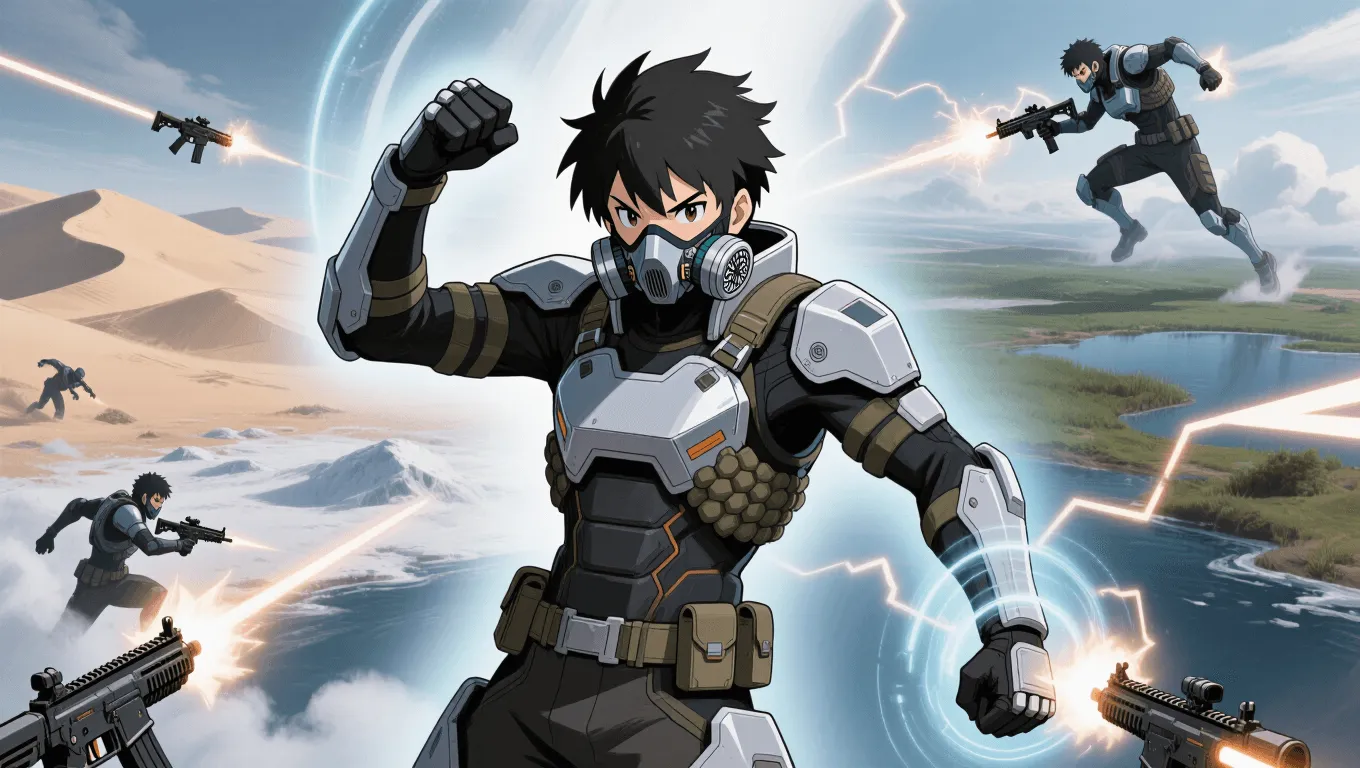
At Level 2, the power becomes a mid-fight problem solver.
-
Multi-layer defenses: Armor plating plus toxin filters plus shock absorption, all stacking as the fight continues.
-
Counter-evolution: The user not only resists an attack, but develops a response that punishes it (reflective surfaces vs. lasers, insulating tissue vs. electricity, vibration-canceling structures vs. sound).
-
Terrain mastery: The body adapts to sand, snow, swamp, underwater combat, or thin air with minimal performance loss.
At this stage, Reactive Adaptation supports “adaptive combat pacing.” The user can deliberately stall, forcing opponents to reveal their full kit—then harden against it.
Level: Level 3 🌃
At Level 3, Reactive Adaptation becomes a strategic trump card.

-
Near-immunity loops: Repeated exposure can lead to extreme resistance or functional immunity against specific damage types or tactics.
-
Unpredictable transformations: The power may create exotic biology or physics-adjacent defenses (energy-form states, hyper-dense plating, rapid regeneration triggers).
-
Adaptation chaining: Survive one threat, gain a tool that helps counter the next, creating a snowball effect.
In high-tier portrayals, the “best survival option” might be refusing the fight entirely—instant relocation, forced phasing-like evasions, or other escape-first outcomes when a threat is overwhelming.
Limitations of using the Reactive Adaptation
Reactive Adaptation sounds unstoppable until its constraints are made explicit. Good worldbuilding and balanced gameplay usually lean on these limits:
-
It is reactive, not proactive: The user often must be exposed to danger before the defense appears. The first hit can still hurt.
-
The power may choose unwanted solutions: It tends to prioritize survival efficiency, not user preference, style, or ethics.
-
Adaptations can be narrow: Resistance to “fire” might not equal resistance to “plasma,” “holy flame,” or “reality-burn,” depending on rules.
-
Overload and multi-vector attacks: Simultaneous threats (poison + telepathy + gravity crush) can outpace adaptation speed or split the response.
-
Temporary vs. permanent shifts: Some settings treat changes as short-lived, reverting after the stimulus ends; others make them persistent with consequences.
-
Biological and psychological side effects: Rapid mutation can strain metabolism, distort identity, or create body-horror drawbacks (painful changes, instability, loss of fine motor control).
-
Countermeasure discovery: Clever enemies can probe with low-risk attacks to “map” how the power responds, then exploit the gaps.
A common storytelling twist is that Reactive Adaptation can inadvertently isolate the user: relationships, lifestyle, and self-image suffer when the body becomes a constantly changing survival engine.
Weakness against what other superpowers
Reactive Adaptation is strongest against straightforward damage and predictable hazards. It struggles most against powers that bypass “defense” entirely or remove the adaptation engine.
-
Power Nullification: Turning the ability off prevents the evolution response from happening at all.
-
Reality Warping: If the rules of biology or causality are rewritten, adaptation may never get a fair chance to respond.
-
Time Stop and Speed Supremacy: If the user is defeated before the adaptation can trigger, the power becomes irrelevant.
-
Mind Control and Illusion Casting: Reactive Adaptation defends the body, not necessarily decision-making; tricking the user into self-defeat can bypass durability.
-
Existence Erasure and True Damage: Attacks framed as unavoidable or “absolute” can ignore conventional resistances.
-
Sealing, Banishment, or Containment: Being trapped in stasis, a pocket dimension, or an unbreakable prison can be a “loss without damage.”
-
Entropy/Decay Manipulation: Effects that degrade structure at a conceptual level can outpace biological solutions, especially if they scale infinitely.
In short: Reactive Adaptation answers threats it can sense, interpret, and biologically counter. Abstract, instant, or rule-breaking powers are its natural predators.
Synergistic Power Combos
Reactive Adaptation becomes far more reliable when paired with powers that reduce surprise, provide energy, or cover non-physical attack vectors.
-
Healing Factor: Regeneration buys time for the adaptation to “come online” after the first hit.
-
Psychic Shield: Protects the mind while the body adapts, closing a major exploit path.
-
Energy Absorption: Converts incoming attacks into fuel, enabling faster or stronger adaptations.
-
Precognition: Lets the user brace before impact, shrinking the “reactive lag” window.
-
Technopathy: Provides rapid analysis of engineered threats (nanites, gas weapons, EM traps) and helps neutralize them while adaptation catches up.
-
Teleportation: Complements the power’s survival logic—escape when the threat curve spikes, re-engage when conditions favor the user.
-
Environmental Manipulation (light, sound, weather): Forces opponents into predictable attack patterns, making it easier to adapt and then counter.
A classic combo strategy is “probe, learn, counter.” Reactive Adaptation handles learning; partner powers handle forcing the opponent to reveal their kit.
Known Users
Reactive Adaptation shows up across comics and pop culture under names like reactive evolution, instant adaptation, or spontaneous evolution.
-
Darwin (Armando Muñoz), Marvel Comics: A mutant whose power is explicitly described as reactive evolution—his body continuously transforms to adapt to danger and hostile environments.
Outbound reference: https://en.wikipedia.org/wiki/Darwin_(character) -
Doomsday, DC Comics: Commonly portrayed as an evolving engine that becomes resistant (sometimes effectively immune) to what previously defeated him, making repeat tactics unreliable.
Outbound reference: https://en.wikipedia.org/wiki/Doomsday_(DC_Comics)
These characters illustrate two popular “flavors” of the power: Darwin-style automatic survival adaptation that can produce surprising solutions, and Doomsday-style escalation that punishes anyone who tries the same finishing move twice.