
Reactive Adaptation/Evolution
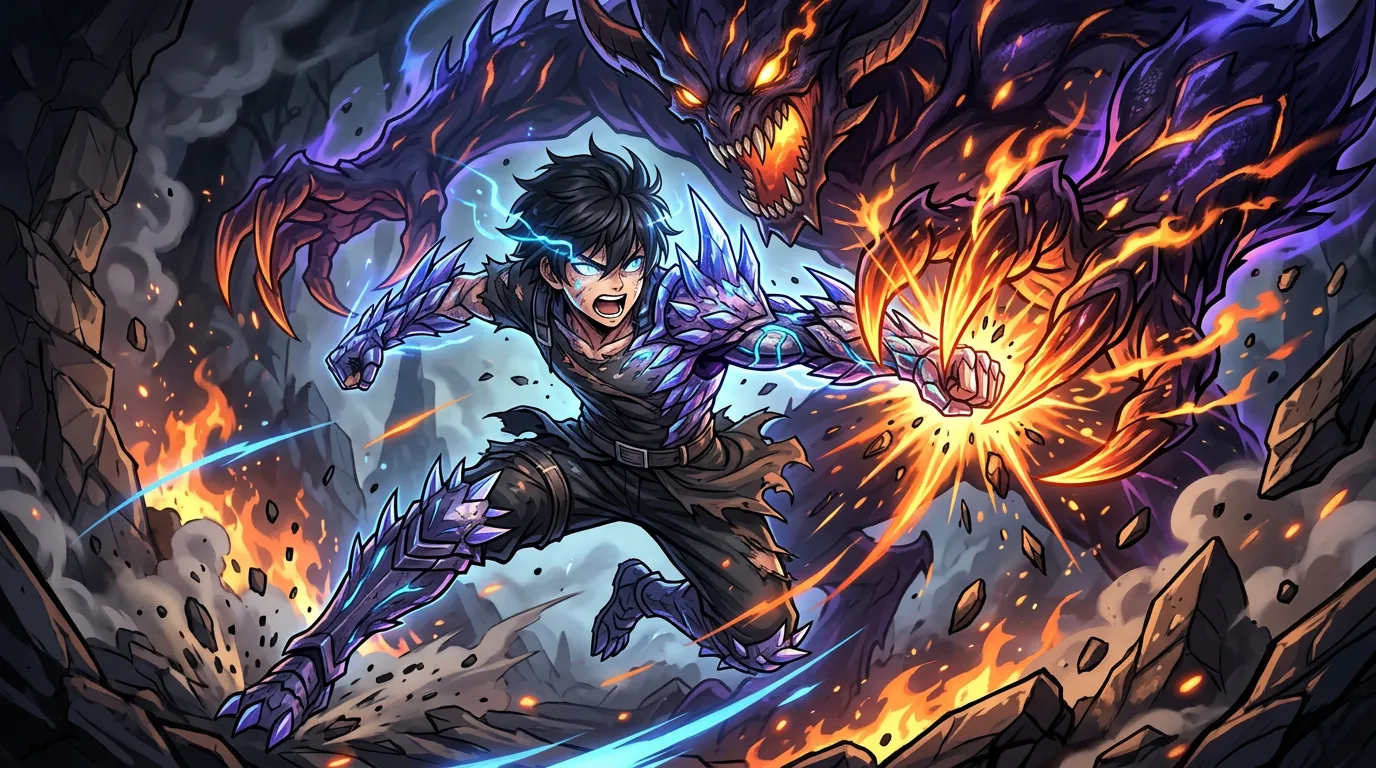
Reactive Adaptation/Evolution Video Demo 🎬
Table of Contents
- Reactive Adaptation/Evolution Video Demo 🎬
- What Is Reactive Adaptation/Evolution
- Core Abilities of Reactive Adaptation/Evolution
- Application / Tactical Advantages in Combat
- Level: Level 1 🏙️, Level 2 🌇, Level 3 🌃
- Limitations of Using the Reactive Adaptation/Evolution
- Weakness Against What Other Superpowers
- Synergistic Power Combos
- Known Users
Reactive Adaptation/Evolution is one of the most dangerous and versatile survival-based superpowers in fiction. This ability allows a character to instantly or gradually evolve new defenses, resistances, or biological upgrades in response to threats, injuries, environments, or enemy attacks. Whether facing fire, poison, psychic assaults, or extreme pressure, the user’s body and mind adapt rapidly to survive.
Unlike static durability powers, Reactive Adaptation/Evolution continuously changes according to circumstances. A user might initially be vulnerable to electricity, but after repeated exposure, they could develop insulation, energy absorption, or even electrical manipulation. This makes the power highly unpredictable and incredibly difficult to counter.
This adaptive superpower is commonly associated with ultimate survivors, evolving monsters, bio-engineered beings, and cosmic entities. It overlaps with abilities such as regeneration, biological manipulation, mutation, and adaptive evolution. Many fans searching through a list of superpowers consider Reactive Adaptation/Evolution among the strongest defensive abilities because it can potentially overcome almost any challenge over time.
Characters with this power often become stronger the longer they fight, forcing enemies to end battles quickly before adaptation becomes unstoppable.
What Is Reactive Adaptation/Evolution
Reactive Adaptation/Evolution is the ability to evolve in direct response to danger, stress, damage, or environmental changes. The adaptation may be biological, energetic, mental, spiritual, technological, or even metaphysical depending on the setting.
The power functions like accelerated evolution compressed into seconds, minutes, or hours rather than millions of years. Instead of remaining static, the user constantly develops new traits to counter threats.
Examples of adaptive changes include:
- Developing fireproof skin after being burned
- Growing gills underwater
- Becoming immune to toxins
- Evolving stronger muscles against powerful opponents
- Creating mental resistance to telepathy
- Forming armor-like skin after repeated attacks
- Adapting to zero gravity or harsh space environments
Some versions are automatic survival instincts, while others allow conscious control over evolution choices.
Reactive Adaptation/Evolution differs from ordinary healing because it improves the user instead of simply restoring them. Every battle becomes a learning experience that permanently upgrades survivability.
This power is often connected to mutation, survival instinct, and evolutionary supremacy. On many random ability generators such as a random superpower generator, adaptive evolution powers are considered high-tier because they scale endlessly with conflict.
Core Abilities of Reactive Adaptation/Evolution
Threat-Based Evolution
The user evolves specifically against whatever threatens them most. If attacked by ice powers, their body may generate internal heat or thermal insulation.
This targeted adaptation makes the power extremely efficient in combat situations.
Rapid Resistance Development
Users can gain immunity or resistance after exposure to harmful effects such as:
- Radiation
- Poison
- Disease
- Fire
- Electricity
- Psychic attacks
- Sonic attacks
- Gravity manipulation
Repeated exposure usually strengthens the adaptation further.
Environmental Survival
Reactive evolution allows survival in otherwise impossible locations, including:
- Deep oceans
- Outer space
- Volcanic zones
- Frozen wastelands
- Toxic atmospheres
- High-pressure environments
The body evolves necessary organs and protections automatically.
Combat Evolution
During battle, the user may evolve:
- Faster reflexes
- Greater strength
- Enhanced senses
- Improved durability
- Energy resistance
- New offensive capabilities
This creates a dangerous snowball effect where prolonged combat favors the adaptive fighter.
Regenerative Enhancement
Some users develop improved healing after sustaining injuries. The body learns from damage and prevents similar injuries from occurring again.
For example, broken bones may heal denser and stronger than before.
Adaptive Intelligence
Advanced users can evolve mentally as well as physically. They may rapidly improve strategic thinking, memory, learning speed, or resistance to mind control.
Mutation Generation
The power may generate temporary or permanent mutations such as:
- Extra limbs
- Wings
- Claws
- Organic armor
- Energy organs
- Enhanced sensory structures
The mutations usually reflect survival needs.
Application / Tactical Advantages in Combat
Reactive Adaptation/Evolution excels in prolonged conflicts where the user has time to analyze and respond to enemy abilities.
Countering Enemy Powers
An adaptive fighter becomes increasingly difficult to defeat because enemy techniques lose effectiveness over time.
A fire manipulator may dominate initially, but repeated attacks eventually create fire immunity within the adaptive user.
Endless Scaling Potential
Unlike fixed-power characters, adaptive beings can theoretically continue growing stronger indefinitely if exposed to increasingly dangerous situations.
This makes them terrifying in wars of attrition.
Battlefield Survival
Even if heavily injured, the user may evolve emergency survival mechanisms such as:
- Reinforced organs
- Pain suppression
- Enhanced regeneration
- Auto-defense reflexes
This allows continued combat under extreme conditions.
Adaptation Through Failure
Every defeat provides evolutionary data. Losing a battle today may ensure victory tomorrow.
Some adaptive entities intentionally expose themselves to danger to evolve faster.
Weaponized Evolution
Certain users evolve offensive adaptations too, including:
- Acidic blood
- Energy spikes
- Biological weapons
- Enhanced claws
- Sonic screams
- Toxic secretions
These traits often emerge naturally based on threats faced.
Psychological Warfare
Opponents may become terrified after realizing their attacks are no longer effective. This mental pressure can lead enemies to panic or overextend themselves.
Level: Level 1 🏙️, Level 2 🌇, Level 3 🌃
Level 1 🏙️ – Basic Survival Adaptation
At this level, the user develops moderate resistances over time.

Abilities may include:
- Minor poison resistance
- Limited temperature adaptation
- Slow defensive evolution
- Enhanced healing
- Improved stamina after stress
Adaptations usually require repeated exposure and may fade eventually.
Level 2 🌇 – Advanced Reactive Evolution
The user evolves rapidly during active combat or environmental exposure.

Capabilities include:
- Near-instant resistances
- Temporary mutation creation
- Rapid organ adaptation
- Energy resistance
- Enhanced combat reflexes
- Accelerated regeneration
At this stage, defeating the user becomes progressively harder during prolonged encounters.
Level 3 🌃 – Absolute Evolutionary Supremacy
The user evolves on a massive biological or cosmic scale.

Potential powers include:
- Adapting to reality-warping attacks
- Surviving planetary destruction
- Infinite evolutionary growth
- Instant immunity generation
- Evolution beyond physical limitations
- Adapting to conceptual or magical attacks
At maximum potential, the user may become virtually unstoppable because existence itself constantly upgrades them against threats.
Limitations of Using the Reactive Adaptation/Evolution
Despite its incredible versatility, Reactive Adaptation/Evolution has weaknesses and restrictions.
Adaptation Requires Exposure
Most versions require the user to experience the threat before adapting. This means an overwhelmingly powerful first attack can still kill them instantly.
Evolution Takes Time
Some adaptations are not immediate. Fast opponents may exploit this delay before resistances fully develop.
Energy Consumption
Constant evolution may consume massive amounts of biological or supernatural energy, leading to exhaustion.
Mutation Instability
Frequent evolution can cause uncontrollable mutations, loss of humanity, or mental instability.
Limited Adaptation Capacity
Certain users can only maintain a finite number of adaptations simultaneously.
Unknown Threats
Completely alien or incomprehensible powers may bypass adaptation mechanisms temporarily.
Emotional and Psychological Limits
Fear, confusion, or trauma can disrupt adaptive efficiency in some versions of the ability.
Weakness Against What Other Superpowers
Reactive Adaptation/Evolution is powerful, but several abilities can counter it effectively.
Reality Warping
Reality manipulators can alter existence faster than adaptation can respond.
Instant Erasure
Powers that completely erase matter, souls, or concepts may bypass survival evolution entirely.
Time Manipulation
Stopping time or reversing evolution can prevent adaptive processes from occurring.
Probability Manipulation
Manipulating luck and probability can force impossible failures despite adaptation.
Mind Control
If the user lacks mental adaptation speed, psychic domination may end the fight quickly.
Power Nullification
Ability suppression prevents evolutionary mechanisms from functioning.
Speed Blitzing
Extremely fast opponents can eliminate adaptive users before evolution activates.
Synergistic Power Combos
Reactive Adaptation/Evolution becomes even more dangerous when paired with complementary superpowers.
Regeneration
Healing allows survival long enough for adaptations to occur.
Biological Manipulation
Direct control over biology improves evolutionary precision and mutation efficiency.
Superhuman Durability
Higher durability provides more time for defensive evolution during combat.
Energy Absorption
Absorbing hostile energy accelerates adaptation while empowering the user simultaneously.
Shapeshifting
Shapeshifting enhances physical flexibility, allowing more advanced mutations.
Superhuman Intelligence
Advanced intellect helps users understand threats and evolve strategically.
Immortality
An immortal adaptive being can theoretically evolve forever.
Known Users
Several famous fictional characters display forms of Reactive Adaptation/Evolution.
Doomsday
One of the most iconic adaptive monsters in comic history. Doomsday resurrects stronger after every death, becoming immune to whatever killed him previously. His appearances are closely tied to DC Comics lore.
The Borg
The Borg Collective continuously adapts shields and technologies against enemy attacks, making repeated strategies ineffective. Their evolution is central to the Star Trek universe.
Cell
Cell evolves through absorption and combat experience, constantly improving his biological abilities during battle. The character originates from Dragon Ball.
Darwin
Darwin possesses reactive evolution that automatically grants whatever power is necessary for survival. His powers are featured in Marvel Comics.
Alex Mercer
Alex Mercer adapts biologically by consuming genetic material and evolving deadly new abilities. The character appears in the Prototype franchise.