
Retrocognition

Retrocognition Video Demo 🎬
Table of Contents
What Is Retrocognition
Retrocognition is a perception-based psychic ability that lets a person see, sense, or even briefly experience events that already happened. Instead of guessing from clues or learning from records, a retrocognitive user receives direct past knowledge—like a living replay of a moment that is no longer there. In parapsychology it is also called postcognition, meaning awareness of past events that could not be learned by normal means, a term associated with early psychical research.
In stories and games, Retrocognition often shows up as past vision, time sight, or forensic clairvoyance. It may arrive as clear “memory movies,” fragmented flashes, emotional impressions, or a full sensory overlay where the present and the past feel stacked together.
For readers building a larger set of abilities, Retrocognition fits neatly among perception powers on a broader Superpower Wiki, and it pairs especially well with results from a random superpower generator when creating investigators, seers, and battlefield analysts.
Core abilities of Retrocognition
Retrocognition is flexible, and most versions of the power include a few core functions:
-
Past-event viewing: Observing a prior moment as imagery, sound, or an immersive scene, sometimes from a “camera angle” that can drift through the environment.
-
Past-location imprint reading: Sensing what occurred in a place (a room, alley, battlefield) by detecting lingering psychic residue, emotional echoes, or temporal “static.”
-
Object-based flashbacks (psychometry overlap): Triggering visions by touching an item that was present during a key event—weapon, clothing, photograph, or artifact.
-
Timeline pinpointing: Locking onto a specific date/time window, then scanning forward or backward through the past like scrubbing a recording.
-
Truth filtering (advanced): Distinguishing genuine past impressions from misleading emotions, assumptions, or implanted memories.
Because it is a perception power, Retrocognition often behaves like a specialized form of clairvoyance—except the target is the past rather than distance.
Application / Tactical Advantages in Combat
Retrocognition is not always a “blast power,” but it can be brutally effective in fights because information decides outcomes. In combat and crisis situations, it functions like a tactical replay system.
Key advantages include:
-
Ambush reconstruction: If an ally falls or a squad gets hit, a retrocognitive user can quickly confirm where the shots came from, what triggered the trap, and which escape route the attacker used.
-
Enemy pattern discovery: Rewinding earlier engagements reveals an opponent’s tells, timing, and preferred angles—useful against speedsters, snipers, and stealth specialists.
-
Trap and hazard detection: By reading a location’s recent past, the user can identify tripwires, hidden mines, cursed glyphs, or recently opened secret doors.
-
Weapon provenance: Touching a weapon can reveal who last used it, how, and for what purpose—turning battlefield salvage into actionable intel.
-
Interrogation support: Retrocognition can verify claims by “watching” the relevant past event instead of relying on testimony.
When used creatively, Retrocognition also supports morale and coordination: it can confirm that a teammate’s suspicion is correct, settle disputes fast, and prevent friendly-fire misunderstandings caused by illusions or chaos.
Level: Level 1 🏙️
At Level 1, Retrocognition behaves like short-range, short-duration past sensing.

-
Sees brief flashes tied to strong emotion or violence (shouts, gunshots, panic).
-
Reads the past of a small area (a single room, a doorway, a few meters of corridor).
-
Needs a strong anchor such as physical contact with an object, bloodstain, or fresh scorch mark.
-
Gains impression-level info: who was here, roughly what happened, and which direction they went.
Combat use at this stage is quick confirmation: “Someone hid behind that pillar,” or “A blade came from the left.”
Level: Level 2 🌇
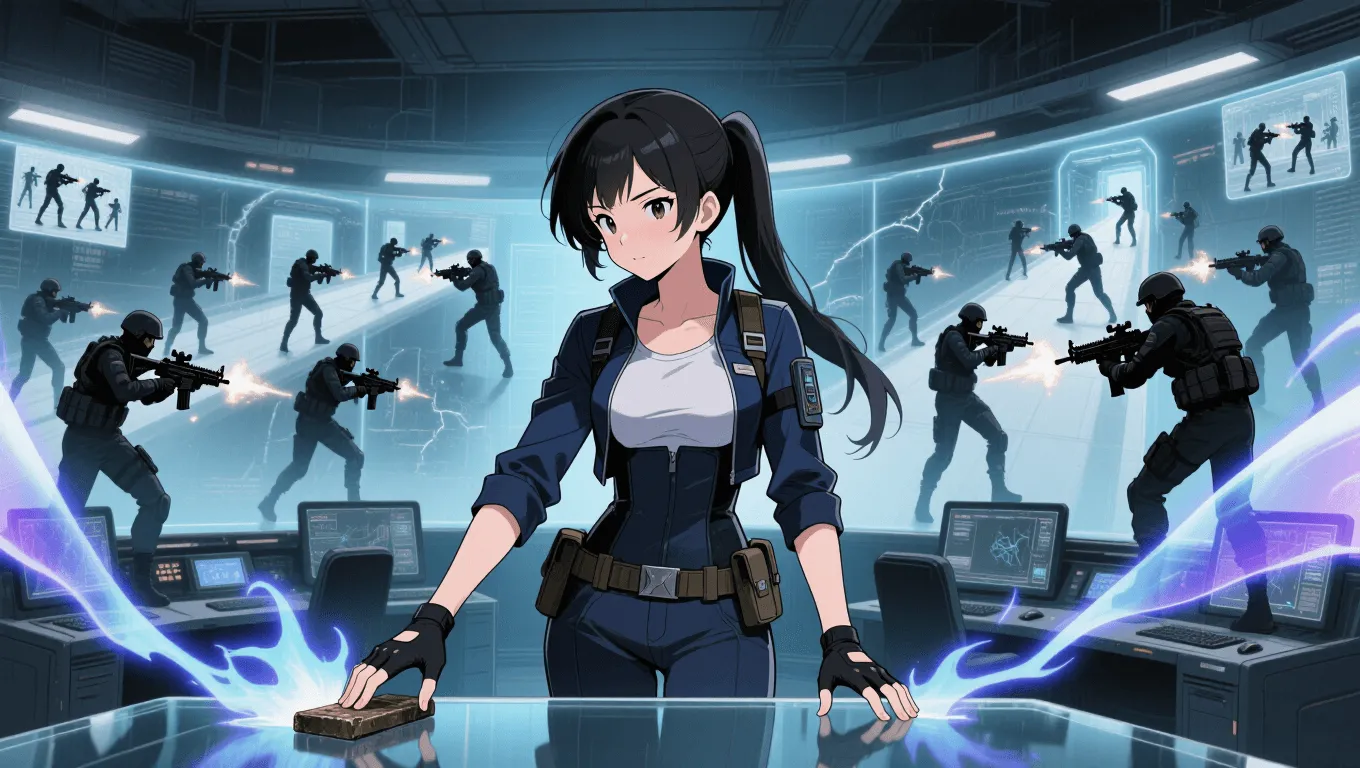
At Level 2, the user can treat the past like a navigable scene.
-
Chooses a clearer time window (minutes to days, sometimes weeks depending on the setting).
-
“Moves” through a past event to inspect corners, ceilings, and hidden positions.
-
Separates multiple layers of activity (distinguishing an earlier skirmish from a later cleanup).
-
Uses psychometry reliably: touching an item triggers a coherent replay, not just fragments.
Combat use becomes strategic: the user can map enemy routes, identify leadership roles, and predict where reinforcements will come from based on what already happened.
Level: Level 3 🌃
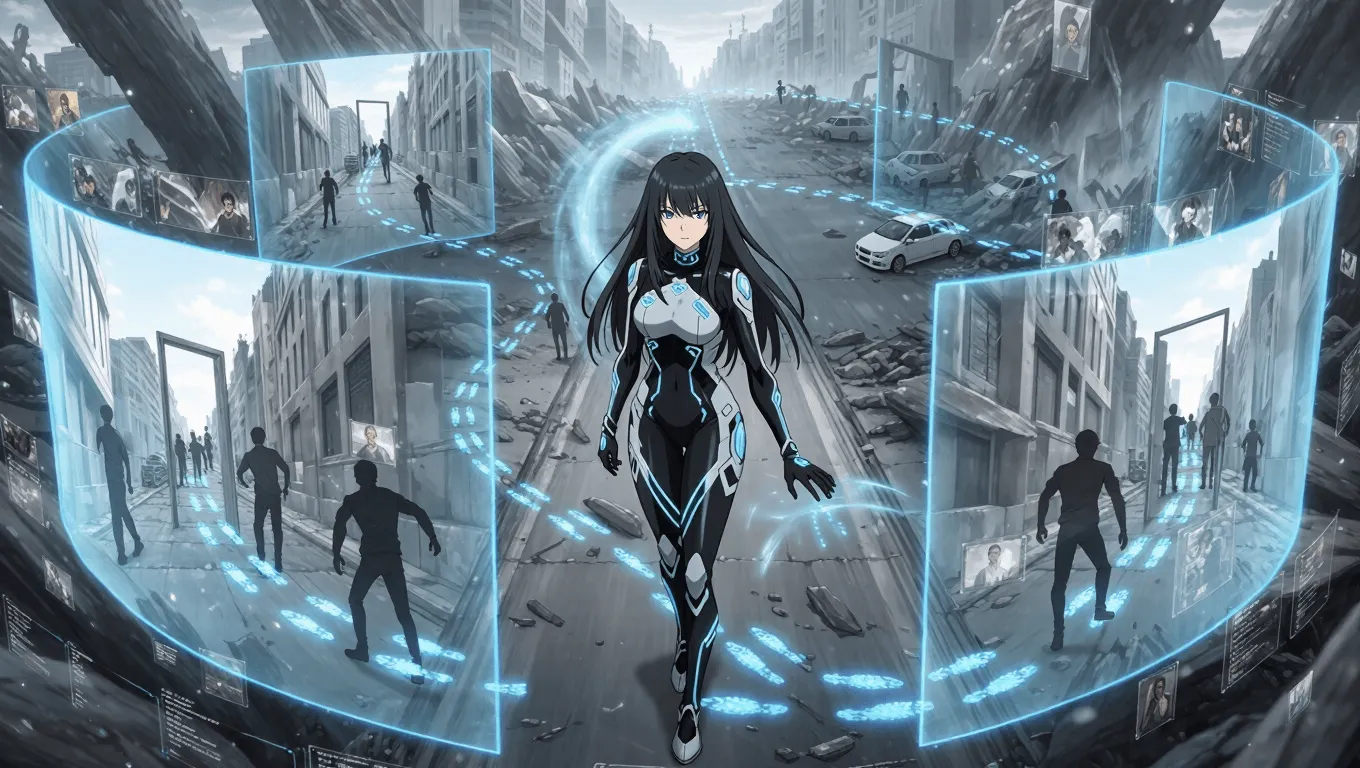
At Level 3, Retrocognition becomes high-grade temporal perception with near-forensic precision.
-
Scans wide zones (whole buildings, city blocks, large battlefields).
-
Tracks specific targets through their past footprints (following a person’s recent movement trail).
-
Extends the “lookback” much farther, potentially months, years, or longer in some worlds.
-
Improves clarity and context: not only what happened, but why it happened (motives inferred from consistent actions, repeated meetings, exchanged items).
At this level, Retrocognition can dismantle enemy plans before they repeat them. Even in fast-moving battles, the user can reconstruct an opponent’s first strike and counter the second.
Limitations of using the Retrocognition
Retrocognition is powerful, but it is rarely simple. Common limitations keep it fair and story-friendly:
-
Anchors and proximity: Many users need to be near the location or touch an object linked to the event. Without an anchor, the “signal” is weak.
-
Temporal noise: Busy locations have too many overlapping impressions. The past becomes crowded, like multiple recordings playing at once.
-
Emotional contamination: A user may feel what happened—fear, rage, grief—which can cause hesitation, trauma responses, or misinterpretation.
-
Fragmentation: The power may reveal only highlights, not full context. A user might see a victim fall but not see who pushed them.
-
Subjective viewpoint: Some versions show events from a limited angle, like standing where the user is now, which can hide key details.
-
Cooldowns and fatigue: Repeated use can cause migraines, nausea, dissociation, insomnia, or sensory overload.
-
Cannot change the past: Retrocognition is knowledge, not time travel. It reveals what happened; it does not rewrite it.
In parapsychology terms, it is framed as knowledge of past events “not learned by normal means,” but that does not guarantee perfect clarity or completeness—many depictions stress that it is difficult to interpret responsibly.
Weakness against what other superpowers
Retrocognition loses value when the past is hidden, altered, or drowned in misleading data. It is especially vulnerable to powers that manipulate information.
-
Psychic Shield: Mental barriers can block retrocognitive “reads,” especially when the target is a person’s psychic signature rather than a room.
-
Memory Alteration: If memories or perceptions were rewritten at the time, the retrocognitive replay may reflect the altered imprint instead of the objective truth.
-
Illusion Casting: Illusions used during the original event can become part of the recorded scene, tricking the viewer into chasing ghosts.
-
Time Manipulation: Temporal rewinds, loops, or edits can scramble what “the past” even means in a location, producing contradictory layers.
-
Reality Warping: If reality itself was rewritten, the past impressions may reconfigure too, leaving no stable reference.
-
Invisibility and Erasure abilities: Powers that remove traces—sound, heat, scent, footprints, spiritual residue—reduce the anchors Retrocognition depends on.
-
Psionic Interference: Telepaths or psionic disruptors can flood the area with psychic static, overwhelming the user’s signal with noise.
In short: Retrocognition is strongest against ordinary deception, and weakest against superhuman deception.
Synergistic Power Combos
Retrocognition becomes far more dangerous when paired with powers that act on the intel it provides.
-
Telepathy: Confirms identities and motives by matching past scenes with current thoughts, and helps interpret unclear flashes.
-
Psychometry: A natural extension—objects become portable “evidence reels,” allowing past reads away from the original scene.
-
Enhanced Accuracy: Turns reconstructed enemy habits into precise counterstrikes—perfect for snipers, archers, and ranged casters.
-
Technopathy: Links past vision to security systems: the user identifies where cameras were disabled; the technopath restores logs or reroutes feeds.
-
Invisibility or Stealth: After learning patrol routes from prior cycles, the team slips through the same gaps without repeating mistakes.
-
Teleportation: Lets allies immediately exploit discovered shortcuts, hidden rooms, or escape paths revealed by the past.
-
Psychic Shield: Protects the retrocognitive user from backlash, intrusive emotional residue, and hostile mind games while reading.
-
Probability Manipulation: Stacks the odds so the team avoids repeating the exact chain of events that led to earlier losses.
-
Energy Absorption: Useful when the past reveals an enemy’s preferred element; the absorber prepares in advance.
These combos make Retrocognition a backbone ability for squads: it creates the plan that other powers execute.
Known Users
Retrocognition shows up across comics, novels, and screen fiction under names like past vision and postcognition. A few notable examples include:
-
Blindfold (Ruth Aldine) (Marvel Comics) – Listed among her mutant abilities as retrocognition alongside clairvoyance and precognition.
-
Doctor Manhattan (Watchmen/DC) – Often portrayed as perceiving time non-linearly, including awareness of past events.
-
Johnny Smith (The Dead Zone) – Experiences psychic visions that can include past-related impressions.
-
Ghost of Christmas Past (A Christmas Carol) – A classic supernatural guide that reveals prior events.