
Self-Spawn
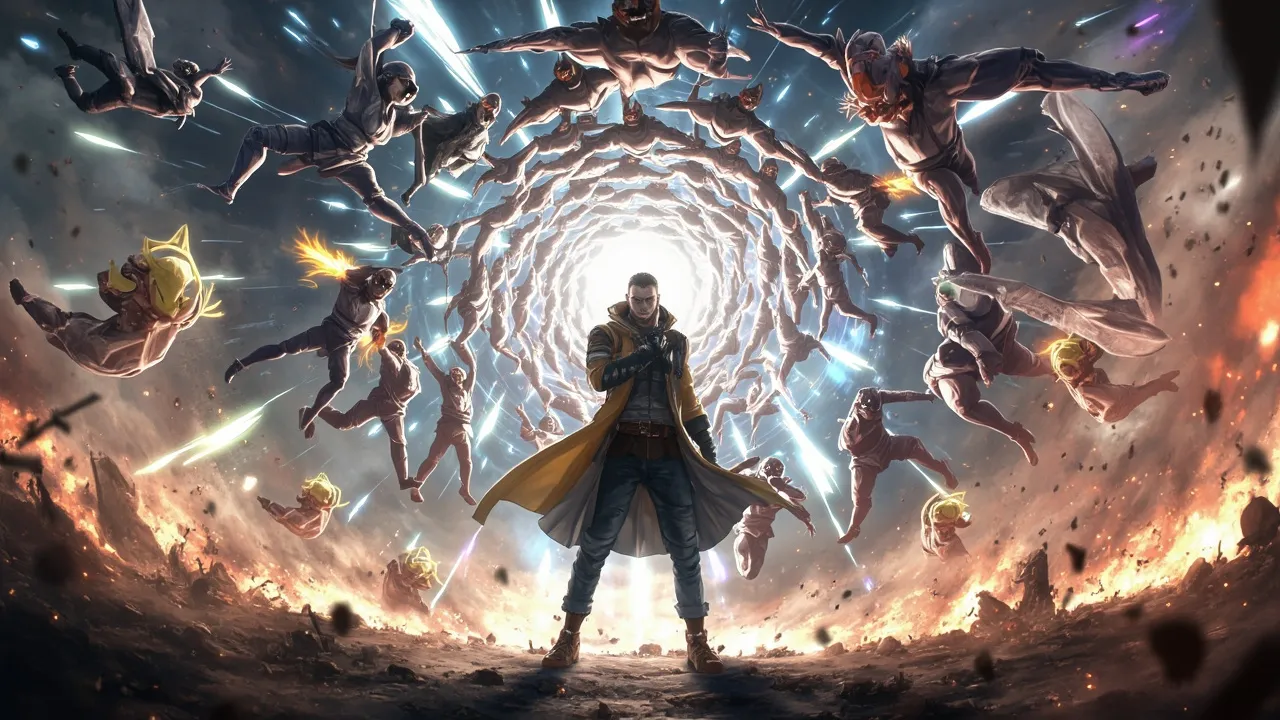
Self-Spawn Video Demo 🎬
Table of Contents
What Is Self-Spawn
Self-Spawn is the ability to create independent copies of oneself or generate detachable extensions of the body that can act separately. A Self-Spawn user can split into multiple “selves” (often called duplicates, doubles, or dupes) to overwhelm opponents, multitask across a battlefield, or place decoys in harm’s way while the original stays safer. Depending on how the power expresses, these offshoots may look identical, share a mental link, inherit skills, or function like remote-controlled body parts—such as an arm that detaches to restrain a target or a shadowy echo-body sent ahead to scout.
Readers exploring similar abilities can browse related entries in the broader superpower list or roll surprising abilities on the random superpower generator.
Core abilities of Self-Spawn
Self-Spawn tends to show up in a few recognizable “modes.” Some users gain one mode; high-level users blend them fluidly.
-
Self duplication: The user produces one or many fully formed clones that look and sound like the original. These copies may be temporary constructs, biological duplicates, or energy-based replicas.
-
Independent copies: Duplicates can think, react, and improvise on their own, allowing parallel decision-making. This is what makes Self-Spawn so dangerous in chaotic fights.
-
Detachable extensions: Instead of full bodies, the user creates separable limbs, tendrils, extra arms, or segmented “body modules” that can grapple, shield, or perform fine tasks at a distance.
-
Re-merge and reintegration: Many versions of the power allow the user to reabsorb spawned selves, consolidating memories, learned skills, and sensory data back into the “prime” body.
-
Distributed presence: With enough spawned instances, the user can be “everywhere at once” in a practical sense—holding multiple angles, guarding multiple allies, or covering exits.
-
Spawn gear echo: In some interpretations, clothing and handheld items replicate with the body, but often vanish when the duplicate is destroyed or reabsorbed (a common constraint in clone-style powers).
-
Identity partitioning: Some users can assign roles to each spawn—scout, bruiser, medic, infiltrator—creating a tactical squad made of the same person.
Application / Tactical Advantages in Combat
Self-Spawn is a battlefield economy power: it increases actions per second, angles of attack, and problem-solving bandwidth.
-
Swarm pressure: Multiple bodies can rush simultaneously, forcing defenders to split attention and resources. Even elite fighters struggle when surrounded.
-
Flanking and crossfire: Spawns can take high-ground, backline, and side angles at once, turning cover into a liability.
-
Decoys and misdirection: A spawned double can bait a super attack, trigger traps, or draw snipers while the prime body relocates.
-
Live reconnaissance: One or more copies can scout corridors, rooftops, or adjacent rooms, feeding real-time intel back to the user if a link exists.
-
Capture and restraint: Detachable extensions shine here—extra hands for disarms, multiple limbs for joint control, or segmented bodies that “pile on” to immobilize.
-
Attrition immunity (partial): If spawned bodies can be dismissed or sacrificed, the user can trade expendable bodies for time, positioning, or information.
-
Objective control: Self-Spawn dominates capture points, hostage shielding, evacuation escorting, and “hold the line” missions by simply being in more places.
Level: Level 1 🏙️
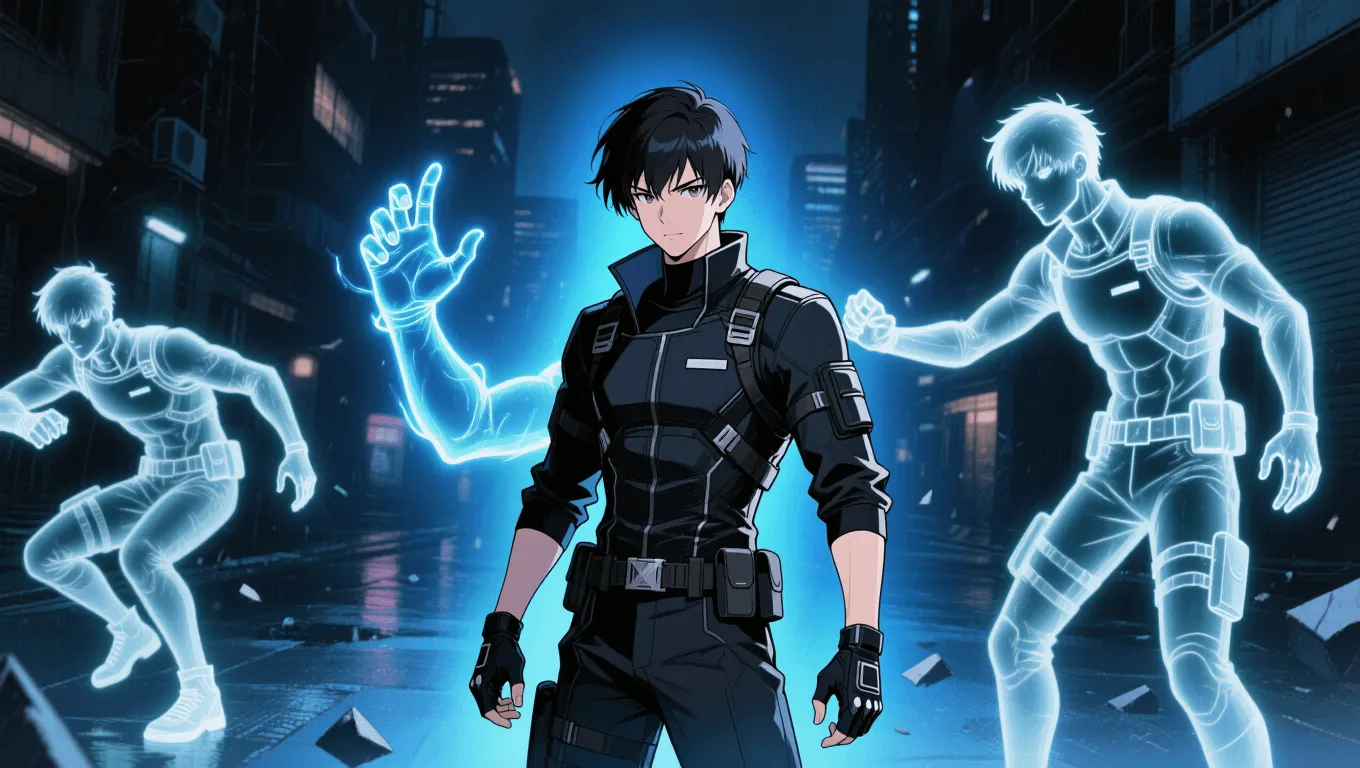
At Level 1, Self-Spawn is limited and tactical rather than overwhelming.
-
Creates 1–2 copies or a small detachable extension (extra arm, floating hand, short-range tether).
-
Short duration and short range; spawns may be fragile or fade quickly.
-
Minimal autonomy: copies follow simple commands or mirror the prime body’s intent.
-
Best uses: quick decoys, brief flanks, door-opening from cover, emergency blocking, and distraction plays.
Level: Level 2 🌇
At Level 2, Self-Spawn becomes a true combat multiplier.

-
Creates several independent copies, or multiple detachable extensions at once.
-
Basic autonomy and role assignment: scout-copy, guard-copy, attacker-copy.
-
Re-merge begins to matter: information and learned micro-skills return to the prime body.
-
Best uses: coordinated pincer attacks, rotating fresh bodies into the front line, multi-directional suppression, and simultaneous rescue + combat.
Level: Level 3 🌃
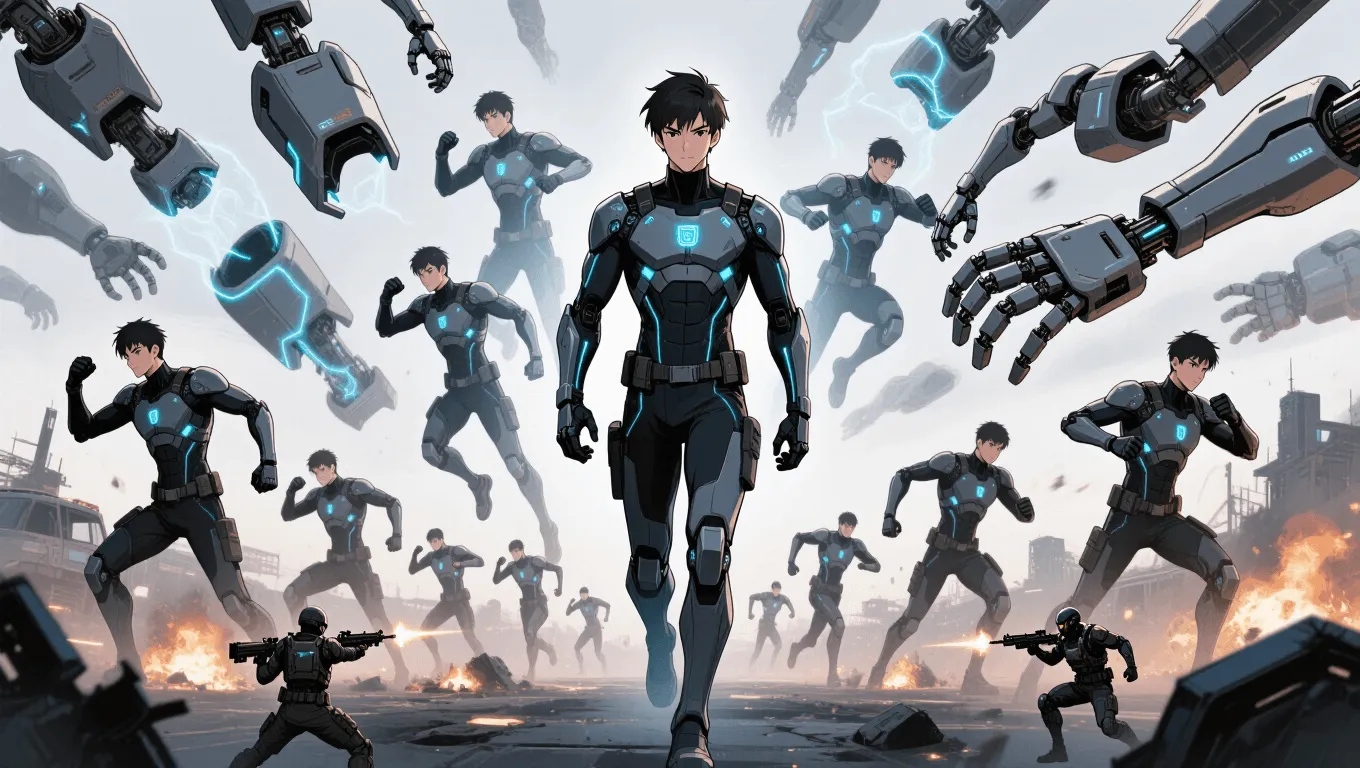
At Level 3, Self-Spawn approaches “self-made squad” territory.
-
Produces large numbers of duplicates or modular body swarms (arms, torsos, segments) that operate in a coordinated network.
-
Advanced reintegration: consolidated memories, practiced techniques, and sensory maps merge back into a more capable prime.
-
Strategic dominance: the user can run infiltration, sabotage, and frontline assault concurrently.
-
Best uses: battlefield saturation, near-constant pressure, layered deception (fake prime, fake retreat, fake injury), and overwhelming capture control.
Limitations of using the Self-Spawn
Self-Spawn looks unstoppable until its constraints are understood. Most versions of the power come with hard tradeoffs that opponents can exploit.
-
Energy and stamina drain: Creating and maintaining spawns often costs metabolic energy, focus, or a limited “spawn budget.” Exhaustion can collapse the network.
-
Shared damage or feedback: Some users feel pain from destroyed copies, suffer psychosomatic backlash, or experience partial injury transfer upon reintegration.
-
Fragility of duplicates: Spawns may be less durable than the original, especially if they are energy constructs or time-limited echoes.
-
Link saturation: A mental link can become noisy. Too many viewpoints at once can overload attention, causing hesitation or poor coordination.
-
Range limits: Spawns may weaken with distance, lose connection beyond a radius, or become uncontrollable if too far from the prime body.
-
Identity drift: Independent copies can develop divergent priorities, especially if they operate for long periods. Reabsorbing them may cause emotional instability, memory confusion, or personality blending.
-
Resource conservation rules: Some settings impose “mass/energy conservation” style limits—splitting makes each body lighter or weaker, or the total strength is divided among copies.
-
Tell patterns: Skilled enemies look for the prime by watching for subtle differences—breathing rhythm, stance habits, or the one body that avoids risk.
Weakness against what other superpowers
Self-Spawn has clear counters—especially abilities that punish crowds, disrupt coordination, or invalidate decoys.
-
Area-of-effect elemental powers: Wide firestorms, lightning fields, freezing blasts, and shockwaves can wipe out clustered spawns and force costly respawns.
-
Telepathy and mind control: If copies share a mental channel, a psychic attacker can exploit it to confuse coordination, inject false signals, or trace the prime.
-
Energy absorption: If duplicates are energy constructs, absorbers can drain them rapidly, turning the user’s swarm into fuel for the enemy.
-
Gravity manipulation and crowd control: Pinning multiple bodies at once, increasing local gravity, or immobilizing terrain reduces the action advantage Self-Spawn relies on.
-
Time stop / time dilation: Slowing or freezing the battlefield eliminates the benefit of extra bodies by removing the user’s ability to coordinate and adapt in real time.
-
Reality alteration: High-tier reality warping can simply negate duplication, merge copies forcibly, or rewrite the rules that allow spawning.
-
Precision targeting and tracking: Enhanced accuracy plus tracking senses (aura sight, scent lock, signature detection) can identify the prime and ignore decoys.
-
Disintegration / corrosion effects: If a setting treats spawns as “linked instances,” anti-regeneration, decay, or disintegration can be especially punishing during reintegration.
Synergistic Power Combos
Self-Spawn becomes terrifying when paired with powers that fix its classic problems: fragility, coordination overload, and limited durability.
-
Healing Factor: Lets the prime body safely reabsorb damaged spawns, smoothing injury transfer and making attrition strategies viable.
-
Enhanced Stamina: Extends spawn uptime and allows sustained multi-front operations without collapse.
-
Psychic Shield: Protects the shared channel from intrusion, preventing telepathic disruption and identity hijacking.
-
Technopathy: Turns spawned copies into a distributed hacking team—multiple terminals breached at once, simultaneous drone control, or synchronized sabotage.
-
Invisibility or Merging Vision: Creates invisible scouts or near-undetectable flanking doubles for high-value ambushes.
-
Teleportation: Copies can “blink” into formation instantly, creating sudden surround tactics or rapid objective captures.
-
Density Control: Allows heavy tank-copies for shielding and light scout-copies for speed, balancing roles across the swarm.
-
Energy Absorption / Energy Conversion: Powers up spawned bodies after they soak attacks, turning enemy fire into a resource.
Known Users
Self-Spawn-style abilities show up across comics and superhero fiction under names like self-duplication, self-replication, and body division.
-
Jamie Madrox (Multiple Man) — A Marvel character known for creating duplicates of himself, with stories often exploring reintegration, identity, and the tactical value of “dupes.”
-
Dupli-Kate (Invincible) — Frequently depicted generating numerous duplicates at will, using swarm tactics and reintegration as a core fighting style.
-
Triplicate Girl (Luornu Durgo) — A DC character associated with dividing into multiple bodies, often leveraging the split for teamwork-like combat advantages.