
Solid Merging Superpower Guide

Solid Merging Video Demo 🎬
Table of Contents
Solid Merging is a superpower that allows a character to merge their body into solid matter and move freely inside it. Instead of simply becoming intangible, the user blends with walls, floors, rock, metal, or other solid structures, travelling through them as if they were open space. In many RPGs and superhero settings, Solid Merging sits alongside phase shifting and intangibility as a powerful mobility and stealth ability, but it has its own unique rules, strengths, and risks.
To explore how Solid Merging compares to other abilities, players and creators can browse the wider list of superpowers or experiment with new builds using a random superpower generator.
What Is Solid Merging?
Solid Merging is the ability to fuse one’s body with solid materials and navigate within them. The user does not simply pass “through” objects as a ghost might. Instead, their physical form becomes partially or wholly unified with the chosen material.
In practical terms, a Solid Merging user can:
-
Step into a wall, pillar, or boulder.
-
Move through the interior of that structure.
-
Exit from another point, often far away from where they entered.
This makes Solid Merging a specialized form of matter traversal or structural phasing. It is tied to solids specifically: stone, wood, metal, concrete, crystal, and similar materials. Liquids and gases are normally treated differently and may require separate powers.
Unlike generic intangibility, Solid Merging often implies:
-
A focus on environmental use (buildings, terrain, tunnels).
-
A sense of orientation inside structures.
-
A degree of vulnerability tied to the material the user is merged with.
This makes it ideal for characters who specialize in ambush tactics, infiltration, and creative use of the environment.
Core Abilities of Solid Merging
Matter Fusion
The core of Solid Merging is the power to fuse the user’s body with solid matter. Their atoms or energy field blend with the structure, allowing them to exist “inside” it without crushing or suffocating.
Common features of matter fusion:
-
Entry on contact: touching a surface is enough to begin merging.
-
Controlled depth: the user can choose how far into the material they want to sink.
-
Full-body or partial merging: advanced users might merge only their arm or torso for tactical tricks.
Subterranean and Structural Travel
Once inside solid matter, the user can move as if swimming through a dense but obedient medium. This creates powerful mobility options:
-
Travelling under streets via bedrock or foundations.
-
Passing through walls, floors, and ceilings to bypass doors and traps.
-
Approaching targets from beneath or within cover.
In many systems, movement speed inside matter is initially slower than normal but can increase as the user improves, approaching or even exceeding normal running speed at higher levels.
Selective Intangibility and Re-emergence
Solid Merging users can choose where and how to re-emerge:
-
Poking a hand or weapon out of a wall to attack, then withdrawing.
-
Stepping fully out of a mural, statue, or column behind an enemy.
-
Reappearing on ceilings or high walls to gain strategic vantage points.
This partial emergence is one of the strongest aspects of the superpower, enabling hit-and-run strikes and near-unreachable firing positions.
Sensory Extension Through Matter
More advanced forms of Solid Merging often grant enhanced spatial awareness within the material:
-
Feeling vibrations, footsteps, or impacts that travel through the structure.
-
Detecting hollow spaces, tunnels, and hidden chambers.
-
Gaining a “map-like” sense of connected walls and supports.
This turns the user into a living seismic sensor, especially effective in stone-heavy or urban environments.
Defensive Applications
Solid Merging also functions as a defensive ability:
-
Evading gunfire or energy blasts by slipping into a wall.
-
Avoiding explosions by “sinking” beneath the surface.
-
Using thick rock or reinforced metal as a buffer against damage.
However, this defense is only as safe as the material itself. If the structure is damaged or manipulated, the user can be harmed while merged.
Application / Tactical Advantages in Combat
In combat and tactical scenarios, Solid Merging is a versatile and often terrifying ability.
Key combat applications include:
-
Infiltration and espionage: Walk into secured vaults, command rooms, or prisons by merging through fortified walls, bypassing locks and cameras.
-
Ambush attacks: Hide fully inside a wall or floor, then erupt behind, above, or below enemies at the perfect moment.
-
Flanking and repositioning: Ignore cover and chokepoints by moving through structures, appearing in ideal firing lines or melee positions.
-
Escape and evasion: Vanish into the nearest solid surface when overwhelmed, reappearing at a safer location.
-
Environmental control: Attack from within pillars or support beams, forcing enemies to abandon cover or risk having their own fortifications turned against them.
In an RPG context, a Solid Merging character excels as:
-
A scout, surveying interior layouts without opening doors.
-
An assassin, performing surprise strikes and disappearing.
-
A skirmisher, constantly changing angles and avoiding return fire.
-
A saboteur, reaching critical weak points like generators or structural supports.
Power Levels of Solid Merging
Level 1 🏙️ Street-Level Merging
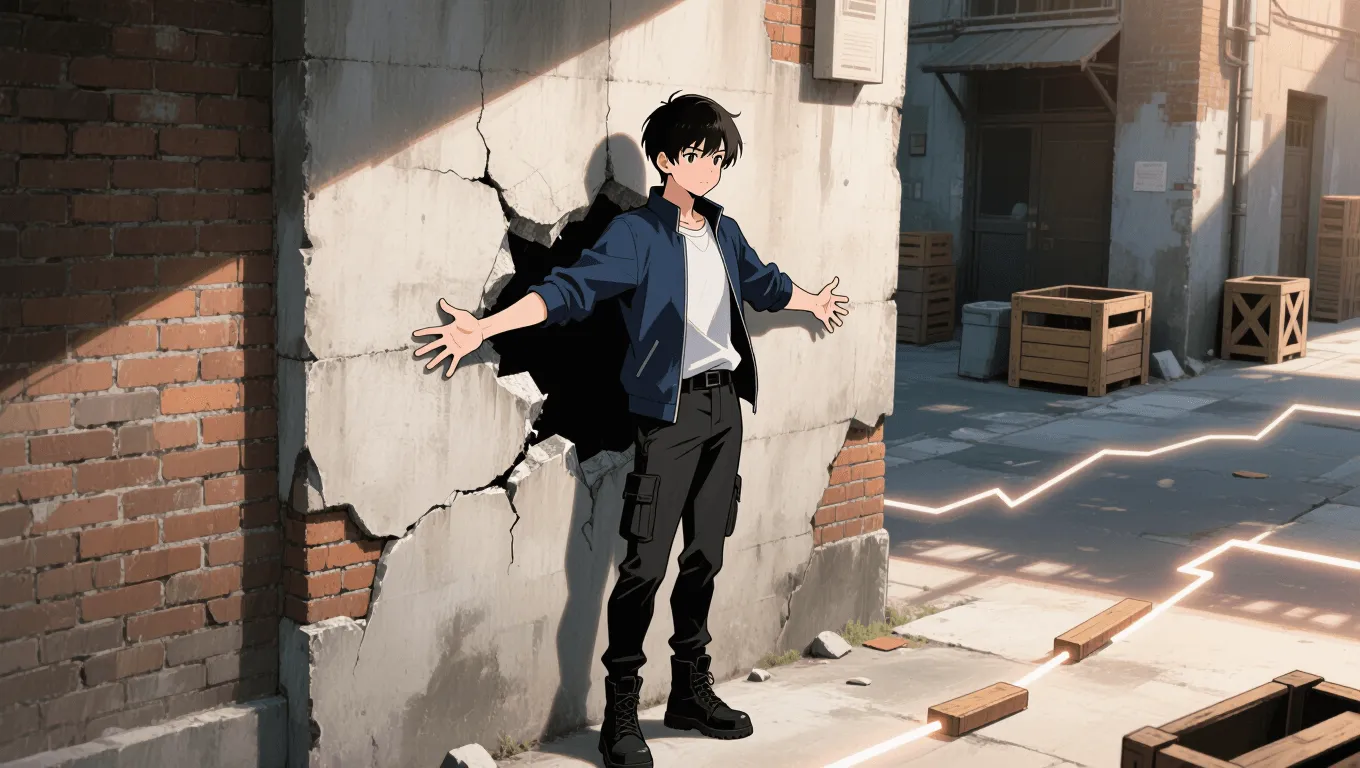
At Level 1, the user has beginner-level Solid Merging:
-
Can merge with common building materials like wood, brick, concrete, and stone.
-
Entry and exit points must be close together; long-distance travel through matter is limited.
-
Movement speed inside solids is slow, more like wading through thick mud.
-
Time limit applies; staying merged too long causes exhaustion, disorientation, or partial ejection.
-
Sensory perception is basic, mostly limited to feeling general vibrations.
At this stage, Solid Merging is best used for short-range ambushes, quick escapes through nearby walls, and small infiltration tasks.
Level 2 🌇 Advanced Structural Phasing

At Level 2, the user’s control and range improve significantly:
-
Can travel extended distances within continuous solid structures (across an entire building or city block).
-
Movement speed through matter approaches normal walking or running speed.
-
Gains better spatial awareness, able to identify rooms, corridors, and load-bearing supports.
-
Partial merging becomes precise: exposing only a hand, weapon, or eye through surfaces.
-
Can handle more diverse materials, including some metals and reinforced structures.
This level supports complex tactics: multi-point ambushes, deep infiltration of enemy fortresses, and coordinated strikes from multiple angles within the same encounter.
Level 3 🌃 Master of the Terrestrial Veil
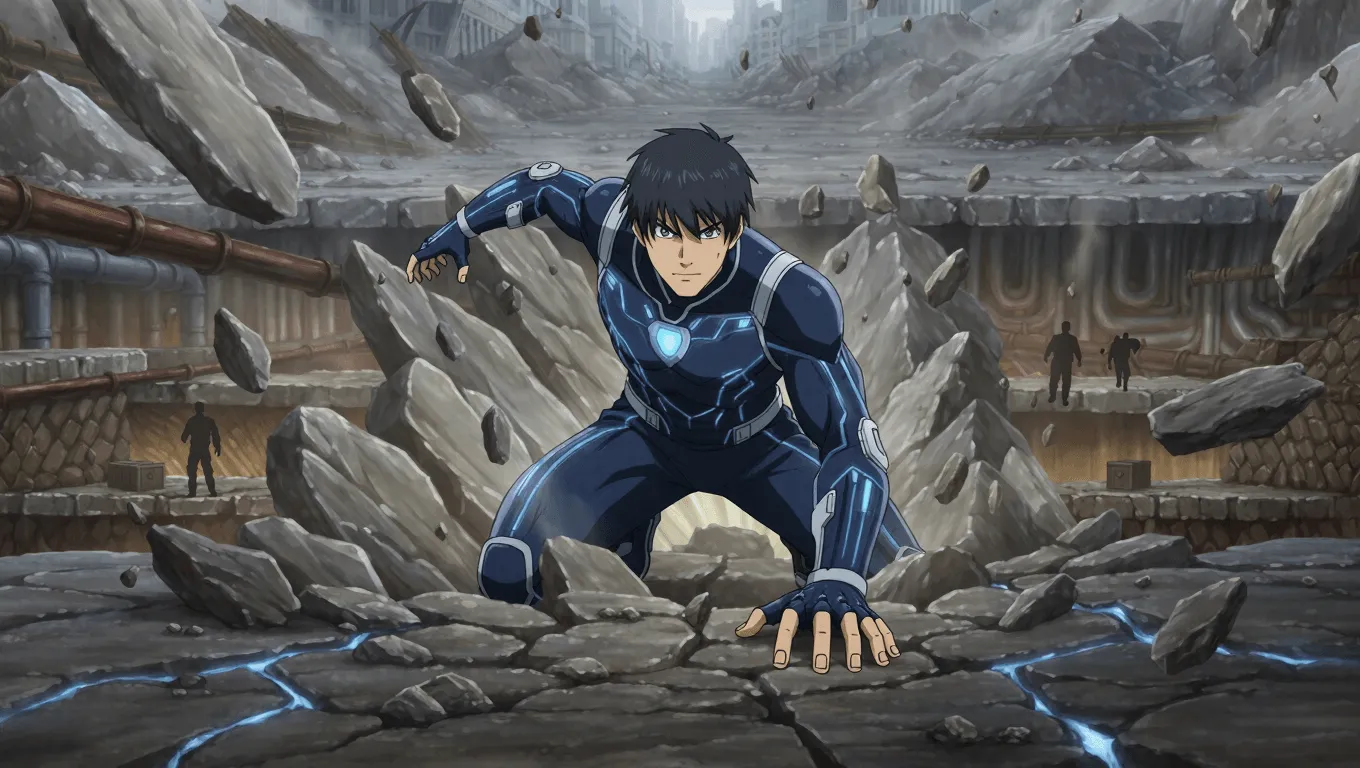
At Level 3, the user is a master of Solid Merging:
-
Can traverse vast areas by moving through bedrock, foundations, and interconnected structures.
-
Movement through matter can be faster than normal running, allowing near-teleport-style repositioning.
-
Can bring limited cargo or even allies into solid matter, escorting them through walls or underground routes.
-
Exhibits near-perfect spatial mapping, sensing stress points, cavities, and hidden passageways in incredible detail.
-
Resists some attempts to dislodge them from matter, clinging to structures even under heavy shock.
At this point, Solid Merging becomes a battlefield-defining power. The user can appear almost anywhere there is solid ground or architecture, making them extremely difficult to contain or predict.
Limitations of Using Solid Merging
Despite its impressive strengths, Solid Merging has important weaknesses and constraints:
-
Material dependence: The user must have access to suitable solid matter. Open fields, sky battles, or bodies of water greatly reduce effectiveness.
-
Disorientation: Travelling inside structures can be disorienting, especially for beginners. Losing a sense of direction may cause the user to resurface in the wrong place or at the wrong time.
-
Time and stamina limits: Maintaining the merged state usually drains energy. Overuse can cause fatigue, pain, or forced ejection from the material.
-
Vulnerability via the medium: While merged, the user shares the fate of the structure. If it is shattered, melted, or warped, the user can suffer severe damage.
-
Difficulty with exotic materials: Dense alloys, magical metals, force-field-reinforced walls, or hyper-dense alien stone might resist or block Solid Merging completely.
-
Interaction limits: Inside solids, the user often cannot interact easily with the outside world. Communication, item use, or spellcasting may be restricted.
-
Risk of entrapment: Traps that alter the terrain, cage the user in a sealed block, or remove all surrounding solid matter can leave them stuck or forcibly expelled into danger.
These limitations provide natural balancing points in stories and games, ensuring Solid Merging remains powerful but not unbeatable.
Weakness Against What Other Superpowers
Solid Merging is particularly vulnerable to certain other superpowers and abilities:
-
Earth and metal manipulation: Characters who can shape stone, concrete, or metal can twist or crush the very material the user is merged with, threatening to injure or immobilize them.
-
Vibration and sonic powers: Shockwaves and tremors travel well through solids. A tremor-based attack can rattle or destabilize a Solid Merging user, forcing them out or causing internal trauma.
-
Heat and energy projection: Superheated beams, lava generation, or energy fields can melt or destabilize structures, making them unsafe to occupy.
-
Power negation and suppression: Abilities that temporarily cancel powers can eject the user from solid matter, often leaving them stunned and exposed.
-
Power detection and sensing: Superhuman senses that detect life, energy signatures, or anomalies in matter can reveal a hidden Solid Merging user, removing the element of surprise.
-
Spatial or dimensional manipulation: If the structure is warped, folded, or partially shifted into another dimension, the user’s merged body can be fragmented or displaced.
In campaigns or stories, these opposing powers create natural counters, forcing a Solid Merging character to plan carefully and avoid overconfidence.
Synergistic Power Combos
Solid Merging becomes even more impressive when combined with other superpowers:
-
Earth or metal control: Merge into rock, then reshape it from inside, creating sudden spikes, cages, or collapsing tunnels beneath enemies.
-
Stealth and invisibility: Combine conventional stealth with structural hiding; even if someone can perceive invisible foes, they may struggle with an enemy literally inside the wall.
-
Enhanced senses: Pair Solid Merging with seismic sense or extrasensory perception to become an unparalleled scout, reading entire buildings or underground complexes like open books.
-
Teleportation: Teleport between sections of rock or reinforced structures, then merge again, creating complex movement patterns that are nearly impossible to track.
-
Density manipulation: Adjust personal density while merged, making it easier to move through harder materials or to anchor firmly against external forces.
-
Power augmentation or bestowal: A support character who boosts or shares Solid Merging can turn a whole team into a squad of wall-walking infiltrators.
These combinations can shape entire encounter designs, dungeon layouts, and tactical puzzles in RPGs.
Known Users
While Solid Merging as defined here is a specific concept, several well-known characters in comics and animation have powers that resemble or overlap with it:
-
Kitty Pryde – Also known as Shadowcat, she phases through walls and floors, often using buildings and terrain as cover for stealth and strike tactics.
-
Vision – A synthetic hero who can alter his density, allowing him to pass through structures and appear from within solid matter to attack or defend.
-
Mirio Togata (Lemillion) – From various anime and manga settings, his permeation ability lets him phase through walls and floors, performing surprise attacks similar to a Solid Merging specialist.
-
Ghost-like or spectral heroes – Many ghost-themed characters can enter walls, floors, or objects, approximating Solid Merging as a supernatural phase-shifting power.
These examples give creators a reference point for how Solid Merging might look and feel in action, and how to adapt it for their own campaigns, stories, and character builds. For more inspiration and variations, exploring the broader superpower wiki collection or rolling a new ability with the random superpower generator can help fill out a complete superpowered world around Solid Merging.