
Spectral Sonata

Spectral Sonata Video Demo 🎬
Table of Contents
What Is Spectral Sonata
Spectral Sonata is a sound-based superpower where music becomes a weapon. By playing spectral notes on an instrument or through the voice, the user unleashes waves of ethereal devastation that can damage, disrupt, or dismantle anything in their path. Unlike simple sonic scream abilities, Spectral Sonata fuses sound manipulation, ghostly energy, and precise musical control into a single, devastating art form.
In most settings, the power manifests as shimmering, translucent soundwaves shaped like notes, staves, or harmonic rings. These spectral vibrations interact with both the physical and spiritual worlds, allowing the user to shatter barriers, disorient minds, and even harm intangible entities such as ghosts or astral projections. It is a perfect fit for characters built around music, cursed instruments, bardic magic, or supernatural orchestras.
For those interested in exploring similar abilities, the wider list of superpowers is a helpful reference, and a quick spin with a random superpower generator can spark even more musical or sonic-themed concepts.
Core Abilities of Spectral Sonata
Spectral Note Projection
The core feature of Spectral Sonata is the ability to project visible, spectral notes that carry destructive energy. Each note is more than sound; it is a compressed packet of ethereal force.
Common applications include:
-
Launching single “projectile notes” that hit like kinetic blasts
-
Firing fast musical volleys, like an arpeggio of striking projectiles
-
Sustaining a long chord that acts like a continuous beam or cutting line
-
Creating cascading scales that ripple outward in expanding rings
These attacks combine the concepts of sonic blasts, concussive force, and occult energy. They can batter armor, crack stone, and disrupt shields that are sensitive to vibration or magical resonance.
Ethereal Soundwaves and Ghostly Damage
Spectral Sonata does not rely only on air vibrations. The notes are infused with ethereal energy, allowing them to affect creatures and structures otherwise immune to mundane sound.
This means the power can:
-
Harm ghosts, spirits, and astral beings
-
Disrupt magical constructs or wards that resonate at specific frequencies
-
Interfere with psychic or telepathic links by “jamming” them with harmonic noise
-
Damage energy fields or hard-light constructs that respond to vibration
Because these waves are partly otherworldly, they can bypass some physical defenses, making Spectral Sonata especially dangerous to foes who rely on intangibility or phase-shifting.
Harmonic Area Control
By playing chords rather than single notes, the user can create persistent zones of spectral resonance. Within these zones, reality is subtly “tuned” to the user’s melody.
Examples of harmonic control:
-
A low, pulsing bassline that slows movement and saps stamina
-
A dissonant chord that causes nausea, vertigo, or loss of balance
-
A high, trembling tremolo that shatters glass, weakens walls, or rattles armor
-
A soothing motif that calms allies, stabilizing their focus and morale
This gives Spectral Sonata a strong battlefield control aspect, letting the user shape the tempo and flow of combat.
Resonant Senses and Sonar
Spectral Sonata users often gain heightened “listening” senses tied to their power. By sending out quiet spectral notes, they can read the echoes and build a mental map of their surroundings.
This sonar-like function can:
-
Detect hidden enemies behind walls or in darkness
-
Reveal invisible or cloaked opponents through subtle distortions
-
Pinpoint structural weak spots that can be targeted with focused notes
-
Track movement by shifts in ambient resonance
This turns the user into an acoustic scout, making ambushes and stealth tactics much harder to use against them.
Application / Tactical Advantages in Combat
Crowd Control and Suppression
Broad chords and sweeping arpeggios excel at affecting large groups. A single, well-timed dissonant blast can:
-
Knock back multiple enemies
-
Interrupt spellcasting or ranged attacks
-
Stun weaker foes or leave them reeling
In mass battles, Spectral Sonata functions like a living artillery piece, laying down zones of dangerous sound that enemies must avoid or endure.
Precision Strikes and Structural Damage
By focusing on one sharp note, the user can perform surgical strikes:
-
Shattering a weapon without harming its wielder
-
Collapsing a specific piece of cover
-
Targeting hinges, joints, or exposed machinery
-
Cracking or destabilizing heavily armored points
This precision makes the power extremely versatile: it can destroy obstacles, disable vehicles, or open escape routes without excessive collateral damage—assuming the user has the control to do so.
Psychological Warfare
Music is deeply tied to emotion, and Spectral Sonata exploits this. Subtle variations in melody and rhythm can instill fear, confusion, or despair in enemies while inspiring courage in allies.
A user might:
-
Play a haunting motif that erodes morale over time
-
Use abrupt, jarring chords to break concentration
-
Shift into a heroic theme that rallies nearby comrades to fight harder
This turns every battle into a performance, where the soundtrack literally decides who wins.
Anti-Stealth and Anti-Magic
Because the power reads and manipulates vibrations, it is highly effective against:
-
Stealth users relying on invisibility or darkness
-
Illusionists whose constructs can be “out of tune” with physical reality
-
Mages who must maintain delicate energy patterns to sustain spells
A single sweeping note can reveal hidden figures, unravel illusions, or destabilize ritual magic.
Level: Level 1 🏙️, Level 2 🌇, Level 3 🌃
Level 1 🏙️ – Street-Level Virtuoso
At Level 1, Spectral Sonata is relatively localized and modest in raw power, suitable for urban heroes or beginning campaign characters.
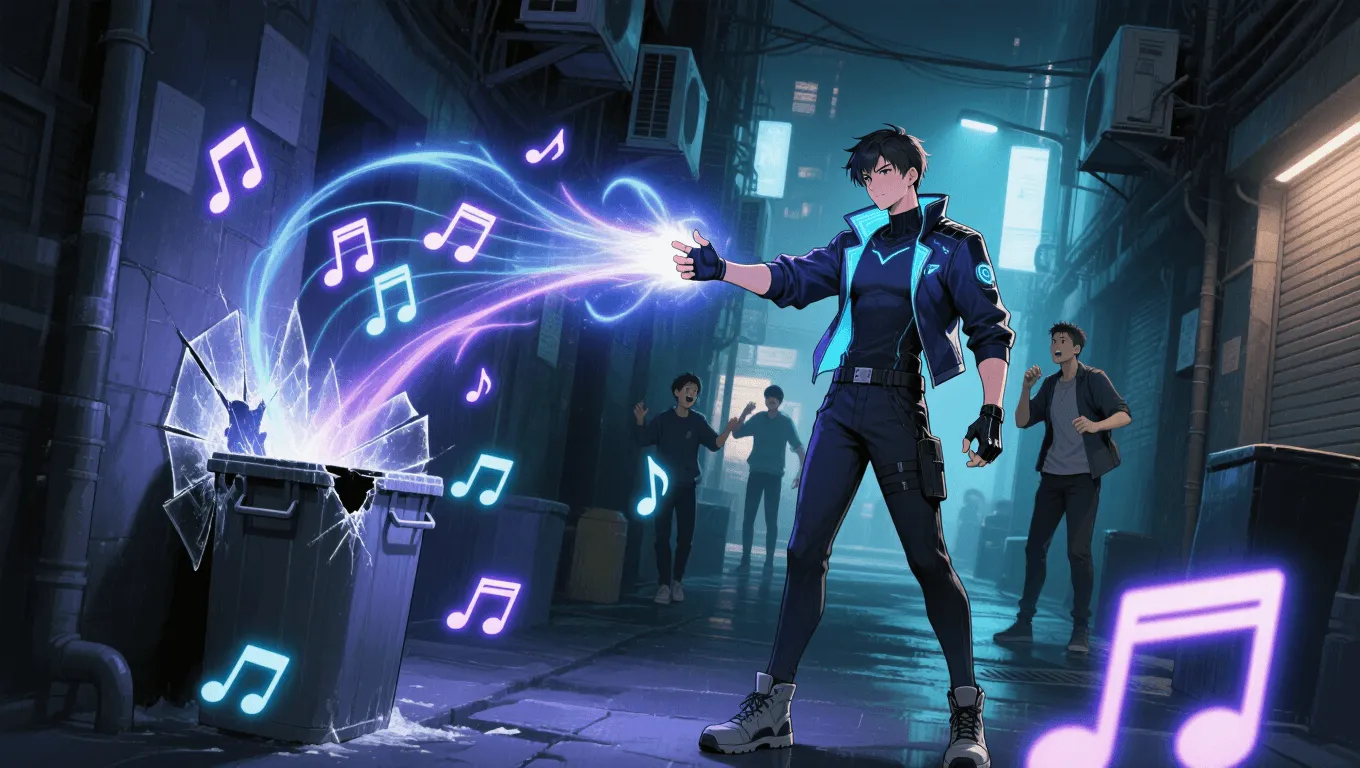
Typical capabilities:
-
Short-range spectral note blasts strong enough to knock back or bruise
-
Limited shockwave chords that can crack glass and dent light materials
-
Basic sense of resonance, allowing rough detection of movement nearby
-
Simple emotional influence through music (mild courage, discomfort, or unease)
At this stage, the user must rely heavily on tactics, positioning, and perhaps martial skill or gadgets. Long performances may cause fatigue or hoarseness, and misplayed notes can fizzle or even backfire slightly.
Level 2 🌇 – City-Scale Conductor
At Level 2, the power extends across city blocks and becomes a major strategic asset.

New enhancements:
-
Medium-range spectral beams capable of tearing through concrete or armor
-
Area-of-effect shockwaves that can topple vehicles or scatter squads
-
Refined resonance mapping, revealing hidden enemies and structural weak points
-
Stronger emotional and mental impact, with chords that can stun or panic crowds
-
Ability to shape temporary walls or domes of spectral sound as barriers
The user starts to function like a living siege engine and support caster combined. However, the energy cost increases, and sustained high-intensity performances may risk physical strain, migraines, or temporary hearing issues, depending on the setting.
Level 3 🌃 – Cosmic Maestra of the Void
At Level 3, Spectral Sonata becomes a high-tier or cosmic-level power, suitable for mythic campaigns.
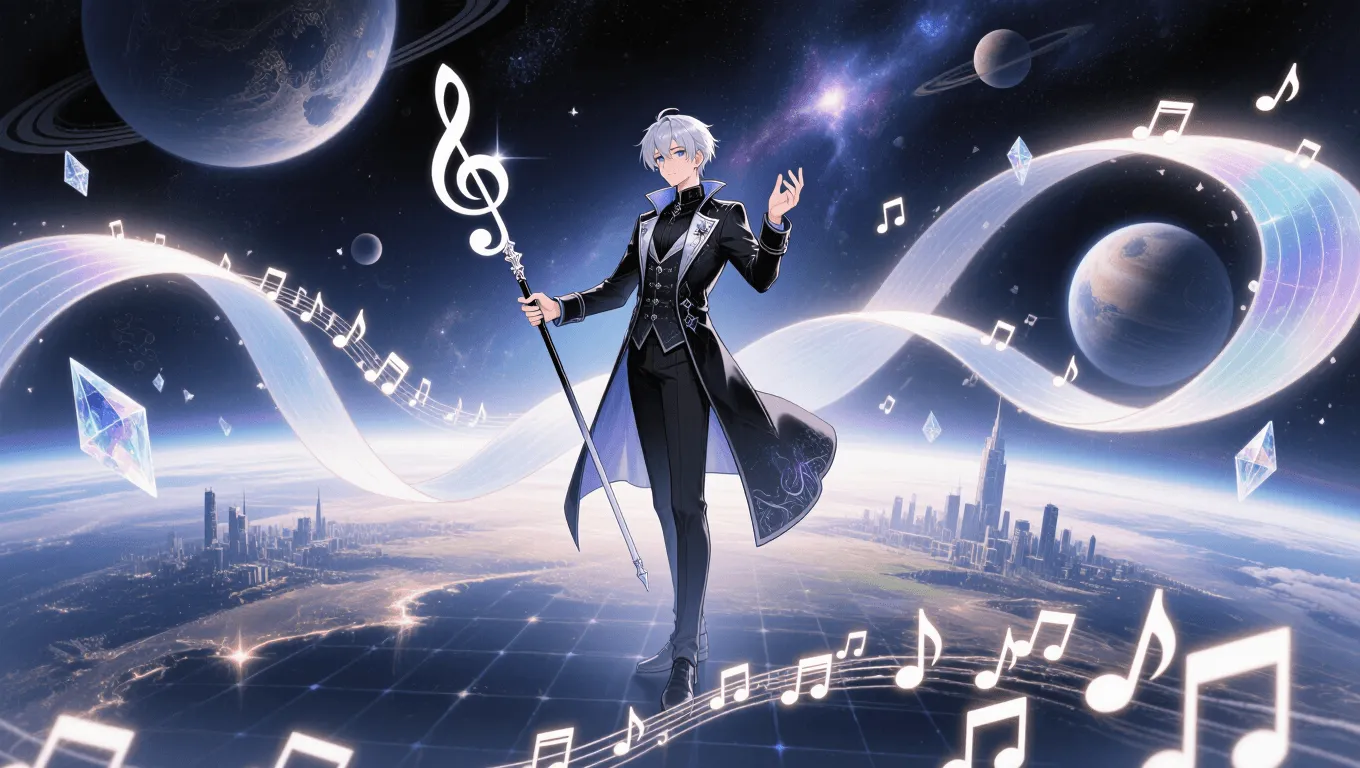
Potential feats:
-
Planet-spanning notes that can be heard in the minds of entire populations
-
Ethereal symphonies that disrupt dimensional barriers or affect other planes
-
Utterly destructive chords capable of disintegrating large structures
-
Near-perfect resonance sense, mapping entire battlefields with a few notes
-
Ability to rewrite local laws of physics by tuning reality to new “keys” in small zones
At this level, a single misplayed chord could cause catastrophic collateral damage. The user effectively conducts reality, but must manage immense responsibility and risk.
Limitations of Using the Spectral Sonata
Despite its grandeur, Spectral Sonata has clear limitations that help keep it balanced in RPGs and stories.
Key drawbacks include:
-
Dependence on performance: The user usually needs an instrument, voice, or similar medium. Gagging, breaking the instrument, or silencing them can dramatically weaken the power.
-
Line-of-sight or propagation limits: Structures, soundproofing, or anti-vibration fields can block or dampen the effects.
-
Concentration requirement: Complex melodies or multi-layered harmonies demand intense focus. Distractions, injuries, or mental interference can disrupt the performance.
-
Physical strain: Extended high-intensity use can damage vocal cords, cause severe fatigue, or induce headaches and nosebleeds.
-
Friendly fire: Area-wide chords and shockwaves can easily harm allies if the user is reckless or rushed.
Narratively, these limitations create tension: the character is powerful, but must protect their means of expression and choose when to unleash full performances.
Weakness Against What Other Superpowers
Spectral Sonata is strong, but not unbeatable. It has distinct vulnerabilities against certain superpower types:
-
Silence and nullification: Powers that create zones of silence, absorb sound, or negate abilities can shut the Sonata down entirely.
-
Vibration immunity: Some foes may have bodies, armor, or fields tuned to be unaffected by vibration, drastically reducing the damage.
-
Mental interference: Illusions, fear, or mind control can scramble the user’s concentration, leading to misplayed notes or failed performances.
-
Speed and teleportation: High-speed or teleporting opponents can move out of blast areas before the chord fully propagates, or appear behind the user during long builds.
-
Sound redirection: Sound manipulation or reflection powers may bend or bounce the spectral waves back toward the user, turning their own attack into a threat.
These counters make Spectral Sonata a power that thrives when supported by allies who can protect the performer and manage counters.
Synergistic Power Combos
Spectral Sonata shines when combined with complementary abilities. Some potent combos include:
-
Illusion Casting + Spectral Sonata: Illusions synchronized with music can disorient enemies while the real spectral notes deal damage from unexpected angles.
-
Telekinesis + Spectral Sonata: Telekinesis can reposition instruments, amplify reverberations with moving surfaces, or hold foes in place for maximum effect.
-
Elemental Control (Air or Water) + Spectral Sonata: Air and water are excellent carriers of sound; manipulating them can focus or amplify the spectral waves for greater range and precision.
-
Time Dilation + Spectral Sonata: Temporarily slowing time for the user allows them to perform incredibly elaborate “instant” pieces that release as a single overwhelming chord.
-
Light Manipulation + Spectral Sonata: Visualizing the music with synchronized light constructs enhances the psychological impact and can blind or distract foes as the sound strikes.
In team-based campaigns, pairing a Spectral Sonata user with defensive shielders, stealth scouts, or battlefield controllers creates an extremely flexible and cinematic party.
Known Users
While Spectral Sonata is a custom superpower concept, it has clear thematic cousins in existing media and comics. These characters can inspire how a Spectral Sonata user might look or fight.
-
A villainous violinist reminiscent of DC’s Fiddler, whose magically enhanced instrument generates destructive soundwaves and hypnotic melodies. Wikipedia
-
A heroic singer inspired by Marvel’s Songbird, who shapes sound into solid constructs and soaring wings of pure resonance. Wikipedia
-
A banshee-like antihero echoing DC’s Silver Banshee, whose deadly wail drains life-force and reduces victims to husks—a darker, more necromantic take on spectral sound. Wikipedia
-
A disciplined mutant similar to Marvel’s Banshee, using finely tuned sonic screams for flight, concussive blasts, and sonar-like sensing. Wikipedia
In an original setting, Spectral Sonata users might be:
-
A haunted conservatory prodigy whose cursed piano channels the voices of the dead
-
A spacefaring bard-knight whose cosmic lute tunes the vacuum itself
-
A cloaked “sound assassin” who plays silent-looking notes that only manifest as devastation at the target location
These archetypes show how flexible Spectral Sonata can be, fitting everything from tragic villains to inspirational heroes, all built around the chilling beauty of music turned into weaponized, ethereal sound.