
Superpower Manipulation: The Ultimate Meta-Ability

Superpower Manipulation Video Demo 🎬
Table of Contents
- Superpower Manipulation Video Demo 🎬
- What Is Superpower Manipulation?
- Core Abilities of Superpower Manipulation
- Application / Tactical Advantages in Combat
- Level: Level 1 🏙️, Level 2 🌇, Level 3 🌃
- Limitations of Using the Superpower
- Weakness Against What Other Superpowers
- Synergistic Power Combos
- Known Users
Superpower Manipulation is a rare meta-ability that allows a character to alter, combine, or control any superpower. Instead of having one fixed gift, the user interacts directly with the powers of others, changing how those abilities function in real time. This makes Superpower Manipulation one of the most feared and versatile forms of power manipulation in any universe.
In many settings, a character with this gift does not shine because of raw strength alone, but because they can rewrite the rules of everyone else’s abilities. They can weaken a powerhouse, upgrade an ally, or fuse powers into something entirely new. For players and creators designing characters, it sits at the top tier of concepts listed in any superpower list, and it is a favorite result for anyone hitting a random superpower generator hoping for “the most broken power.”
What Is Superpower Manipulation?
Superpower Manipulation is the ability to sense, understand, and then directly influence other superhuman abilities. It is often treated as a “meta power,” because it operates above normal abilities rather than beside them.
Depending on the story, this can include:
-
Copying or mimicking powers
-
Enhancing or weakening existing abilities
-
Turning powers off completely
-
Changing how an ability expresses itself (for example, turning fire into light)
-
Combining two or more powers into a new effect
Unlike simple power mimicry or absorption, Superpower Manipulation is about control and customization. A mimic only borrows; a manipulator edits. Where power absorption takes and keeps an ability, power manipulation can restructure it, switch it on or off, or reshape it for a new purpose.
Because it focuses on interaction with abilities rather than muscles or weapons, Superpower Manipulation scales extremely well. The stronger the surrounding powers, the more dangerous the manipulator becomes.
Core Abilities of Superpower Manipulation
While the exact details change between settings, most versions of Superpower Manipulation share several core functions.
Power Perception and Analysis
The first step is power detection. The user can sense that someone has an ability and understand its structure:
-
Identifying what kind of energy, magic, or mutation fuels it
-
Reading its limits, range, and trigger
-
Spotting flaws or loopholes
This analysis happens very quickly in combat, allowing the manipulator to find weaknesses or improvement points.
Power Alteration and Tuning
Once a power is understood, the user can tune it like a dial:
-
Boosting strength, range, or duration
-
Restricting or narrowing a power to make it safer or more precise
-
Redirecting side effects or collateral damage
For example, a wild telekinetic might get their ability refined into fine control, or a weak pyromancer might gain hotter flames and larger blasts.
Power Copying and Stealing
Many versions of Superpower Manipulation include copying or stealing abilities:
-
Temporary copying, where the user borrows a power for a short time
-
Long-term copying, where abilities are added to a personal library
-
Power theft, where the original owner loses their ability entirely
This moves beyond simple power mimicry because the manipulator may also tweak the copied version to better fit their style.
Power Combination and Fusion
A signature feature of advanced power manipulation is the fusion of multiple powers into hybrid abilities, such as:
-
Combining fire control with flight to make a rocket-like propulsion
-
Merging healing and force fields to create regenerative shields
-
Fusing gravity control and speed to produce devastating kinetic strikes
This fusion can create completely new move sets that no single power could achieve alone.
Power Suppression and Nullification
Finally, Superpower Manipulation often includes power nullification:
-
Silencing a specific ability for as long as contact or focus is maintained
-
Creating “dead zones” where powers do not function
-
Forcing powers to misfire, backfire, or behave unpredictably
This is why power manipulators are natural counters to overpowered enemies and to entire teams built around ability synergy.
Application / Tactical Advantages in Combat
In combat, Superpower Manipulation is less about throwing the biggest attack and more about controlling the entire battlefield.
-
Against a brute, the manipulator can drain strength or convert durability into sluggish movement.
-
Against a speedster, they can cap maximum speed or add inertia to limit quick turns.
-
Against a mage, they can disrupt spell casting, re-route energy, or steal spells mid-channel.
Tactically, this offers several advantages:
-
Crowd Control: By selectively suppressing the most dangerous opponents, the manipulator can turn a hopeless fight into a fair battle.
-
Adaptive Strategy: The more varied the enemy team, the more options the manipulator gains. Every new power becomes a potential weapon.
-
Team Support: They can enhance allies, stabilize unstable abilities, or fuse team powers into combo moves, turning a group into a single coordinated engine.
-
Information Edge: Power analysis reveals hidden threats, backup abilities, and weak points that others would miss.
In role-playing games or strategic storytelling, Superpower Manipulation gives incredible flexibility. The character can serve as a controller, support, or even a frontline threat, depending on how they use their meta-ability.
Level: Level 1 🏙️, Level 2 🌇, Level 3 🌃
To keep Superpower Manipulation playable and understandable, it helps to frame it in levels of mastery.
Level 1 🏙️ – Basic Power Influence

At Level 1, the user has limited but useful power manipulation:
-
Detects nearby powers and gets a rough sense of their type
-
Slightly boosts or weakens a single ability at a time
-
Can briefly “jam” an enemy ability with concentration
Here, the character is a support specialist, not a one-person army. They might help an ally hit harder or soften a villain long enough for the team to land a finishing blow.
Level 2 🌇 – Adaptive Power Control

At Level 2, the user becomes a serious battlefield factor:
-
Reads the structure of powers in detail
-
Copies one or two abilities at a time for temporary use
-
Strongly suppresses or amplifies powers within a limited range
-
Starts to combine compatible powers into basic hybrids
A Level 2 manipulator can flip the flow of a fight by taking a key power off the board or turning an ally into a temporary powerhouse. They are capable of both offense and high-level control.
Level 3 🌃 – Master of All Powers
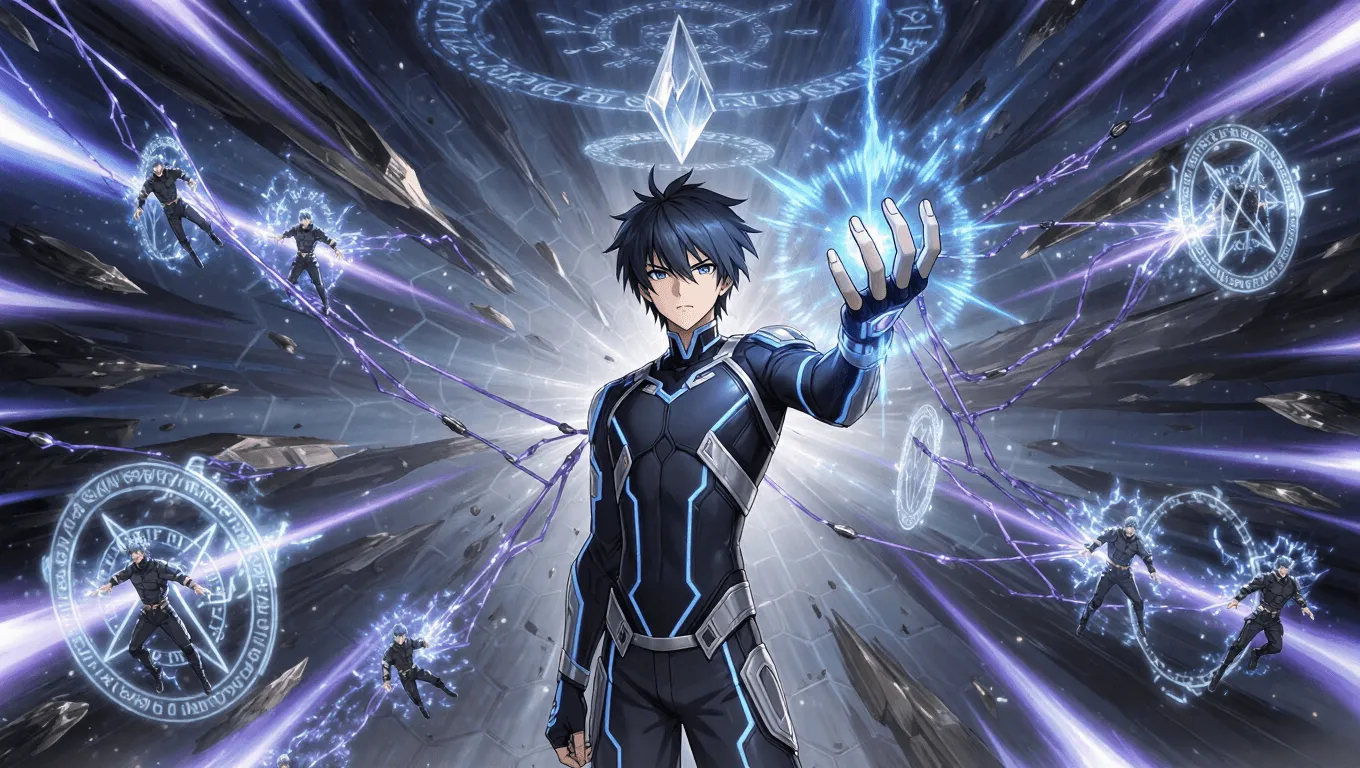
At Level 3, Superpower Manipulation reaches its mythic form:
-
Instantly analyzes and interacts with almost any ability
-
Copies, edits, and reassigns powers across multiple targets
-
Creates complex fusion abilities and chained combos
-
Establishes wide nullification fields where chosen powers cannot operate
This is the stage where the character can rewrite an entire superpowered battle like a script. To keep stories balanced, Level 3 is often reserved for final bosses, cosmic guardians, or legendary figures.
Limitations of Using the Superpower
Even a meta power needs clear limits to stay interesting.
-
Cognitive Load
Understanding and handling multiple abilities at once is mentally taxing. The user may suffer from overload, headaches, confusion, or miscalculations if they try to manipulate too many powers simultaneously. -
Range and Line of Sight
Superpower Manipulation often requires the user to be within a certain distance or have a clear line of sight. Barriers, wards, or dimensional separation can block their influence. -
Learning Curve
Exotic or alien abilities may take time to decode. The first encounter with a new type of power might only allow partial control, with full manipulation unlocked after repeated exposure. -
Energy or Stamina Costs
Constantly rewriting powers can drain the user’s own energy. Long battles, large-scale nullification, or multiple fusion constructs might quickly exhaust them. -
Moral and Social Consequences
Stealing, shutting off, or rewriting someone’s powers can raise ethical issues. Allies may fear a teammate who can remove their identity-defining abilities, leading to distrust or isolation. -
Special Exemptions
Certain forces, such as reality-warping artifacts, divine blessings, or purely conceptual abilities, may sit outside the normal rules and resist manipulation entirely.
Weakness Against What Other Superpowers
Despite its versatility, Superpower Manipulation has real weaknesses.
-
Non-Powered Opponents: Purely human foes with high skill, technology, or tactics give the manipulator less to work with, forcing them into a more conventional fight.
-
Mind Shields and Mental Defense: If the power operates through perception or understanding, telepathic shields or anti-detection powers can hide the structure of abilities.
-
Chaos, Probability, or Luck Powers: Powers that alter probability or introduce pure randomness make it difficult to predict outcomes, reducing the manipulator’s control.
-
Time Manipulation: A time controller who acts faster than the manipulator can freeze, rewind, or skip moments before power changes take effect.
-
Absolute Immunity or Power Lock: Some characters may have specific resistance to power manipulation, such as abilities that cannot be altered or fields that block external interference.
In a balanced setting, these counters prevent Superpower Manipulation from becoming an automatic win button.
Synergistic Power Combos
Superpower Manipulation shines brightest when combined with other abilities.
-
Super Intelligence: A genius-level mind can rapidly model complex powers and invent creative combos. Together, they form a living optimization engine for abilities.
-
Precognition or Danger Sense: Seeing future outcomes lets the manipulator choose exactly which changes to make in order to create the best timeline.
-
Enhanced Durability or Regeneration: Since the user is a high-value target, toughness and healing help them survive long enough to control the battlefield.
-
Information or Data-Based Powers: Technopathy, clairvoyance, or data absorption can gather information on powers across worlds, feeding the manipulator an endless database of abilities.
-
Resource Creation: Powers that generate energy, constructs, or minions can be upgraded or modified by manipulation, multiplying their effectiveness exponentially.
In team-based stories or games, pairing a power manipulator with a diverse cast creates endless strategic possibilities.
Known Users
While “Superpower Manipulation” is often a fan-made or game term, many famous characters in comics and television display related abilities:
-
Peter Petrelli from Heroes starts with empathic power mimicry, later evolving toward a controlled form of ability adaptation.
-
Sylar from Heroes demonstrates an intuitive understanding of how powers work, combined with a lethal method of acquisition.
-
Rogue from the X-Men absorbs powers and memories through touch, sometimes permanently, acting as a dangerous form of power theft.
-
Hope Summers from the X-Men can copy and enhance mutant abilities around her, serving as a living amplifier and adapter.
-
All For One from My Hero Academia steals, stockpiles, and redistributes quirks, behaving much like a villainous version of full power manipulation.
For example, Rogue provides a classic template for a character whose life and identity are defined by the ability to take and use other people’s powers, even if her exact mechanics differ from full-spectrum Superpower Manipulation.
These characters show how flexible the concept can be. Whether framed as a curse, a weapon, or a responsibility, Superpower Manipulation remains one of the most intriguing and customizable abilities in any superpowered setting.