
Twilight Manipulation

Twilight Manipulation Video Demo 🎬
Table of Contents
- Twilight Manipulation Video Demo 🎬
- What Is Twilight Manipulation
- Core abilities of Twilight Manipulation
- Application / Tactical Advantages in Combat
- Level: Level 1 🏙️, Level 2 🌇, Level 3 🌃
- Limitations of using the Twilight Manipulation
- Weakness against what other superpowers
- Synergistic Power Combos
- Known Users
What Is Twilight Manipulation
Twilight Manipulation is the ability to shape twilight’s light and atmosphere to obscure, reveal, or empower. It draws power from the liminal lighting found at dawn and dusk, when the Sun is below the horizon but the sky still glows with diffuse illumination. In the real world, twilight is that in-between daylight produced by scattered sunlight when the Sun has dipped below the horizon, creating a soft, low-angle glow rather than direct beams.
In superpower terms, Twilight Manipulation treats that in-between illumination as something tangible: a blend of dim light, long shadows, and cool-toned ambience that can be pushed, stretched, condensed, and “tuned.” Users often describe it as controlling the penumbra (the half-shadow where edges blur), bending the blue hour into a cloak, or sharpening dusk into a spotlight. The power is not just darkness control and not just light control—it’s the ability to command the transition zone between them.
Twilight itself is sometimes categorized into phases, including civil twilight (when the Sun is up to 6 degrees below the horizon). That phase matters because it’s bright enough for meaningful visibility, yet dim enough for concealment tricks—an ideal playground for this ability.
Twilight Manipulation is popular in stealth, scouting, and tactical duels because it can both hide movement and expose hidden threats, depending on how the user “colors” the dusk.
Naturally, readers who enjoy powers like this can browse more abilities in the Superpower Wiki or roll something unexpected from the random superpower generator.
Core abilities of Twilight Manipulation
Twilight Manipulation tends to manifest as a toolkit rather than a single trick. Common core abilities include:
Twilight veiling and low-light camouflage
A user can thicken ambient dusk into a twilight veil that softens outlines, blurs edges, and makes silhouettes hard to track. This is not full invisibility; it’s visual ambiguity. Opponents might see motion but struggle to identify distance, direction, or weapon placement.
Shadow-light fusion shaping
Instead of creating pure darkness or harsh brightness, the user blends the two into a controllable gradient. This lets them:
-
Expand penumbra zones (areas of half-shadow)
-
Compress twilight into tighter “pockets” for hiding
-
Smooth harsh edges to remove visual cues like corners, doorways, or cover boundaries
Reveal and highlight effects
Twilight can also be tuned to reveal. By pushing contrast in the environment, the user can make a hidden figure’s outline “pop” as a darker silhouette against a brighter haze, or as a pale contour against a dim background. In practice, this looks like controlled backlighting, rim lighting, or selective gloom that points at what the user wants seen.
Dusk sight and perception tuning
Many Twilight Manipulation users gain a form of dusk sight: enhanced comfort in dim lighting, reduced glare sensitivity, and improved detection of subtle movement. Rather than seeing through walls, they see through confusion—spotting the detail that twilight normally hides.
Crepuscular constructs
Some users can form semi-solid twilight constructs: brief barriers, tendrils, nets, or decoy shapes. These constructs are usually short-lived and strongest at the edges—like a foggy wall that still catches a blade.
Twilight empowerment
A defining feature is empowerment through the transition state itself. The user can “charge” their body (or allies) with twilight energy to gain short boosts such as:
-
Faster reaction time in dim environments
-
Improved balance and quiet movement
-
Reduced visibility to casual observers
-
Minor endurance boosts while in dusk-like lighting
Because twilight is neither day nor night, this empowerment often feels like adaptability: better performance in uncertain conditions.
Application / Tactical Advantages in Combat
Twilight Manipulation thrives in fights where control of visibility equals control of outcome.
Battlefield obscuring without total blackout
A full blackout can be risky: it blinds allies as much as enemies. Twilight Manipulation can dim a space just enough to interfere with aim, reading body language, and tracking projectiles—while still leaving the user (and trained teammates) functional. This makes it ideal for coordinated squads.
Misdirection and angle control
Twilight is excellent for making opponents misjudge angles. A user can:
-
Hide a step-in by erasing foot shadows
-
Fake distance by shifting background contrast
-
Create a “false open lane” that is actually a trap corridor
In close combat, even a half-second of uncertainty can decide a match.
Controlled reveals for counter-stealth
Against invisibility-like abilities or opponents using cover, the user can flip tactics: pull contrast toward the target, create backlight behind suspected hiding spots, or dim everything except a narrow “search cone” of twilight.
Debuff-style pressure
In many interpretations, twilight carries a psychological weight: it can feel eerie, quiet, and uncertain. While this is not the same as emotion manipulation, the ambience can still rattle focus. In RPG terms, Twilight Manipulation can impose penalties such as reduced accuracy, slowed targeting, or increased reaction delay—especially for enemies who rely on sharp vision.
Tempo advantage through dusk empowerment
When the user can empower themselves in dim conditions, they often fight like a duelist who controls pacing: retreat into a twilight pocket, recharge slightly, and re-enter at a better angle.
Level: Level 1 🏙️, Level 2 🌇, Level 3 🌃
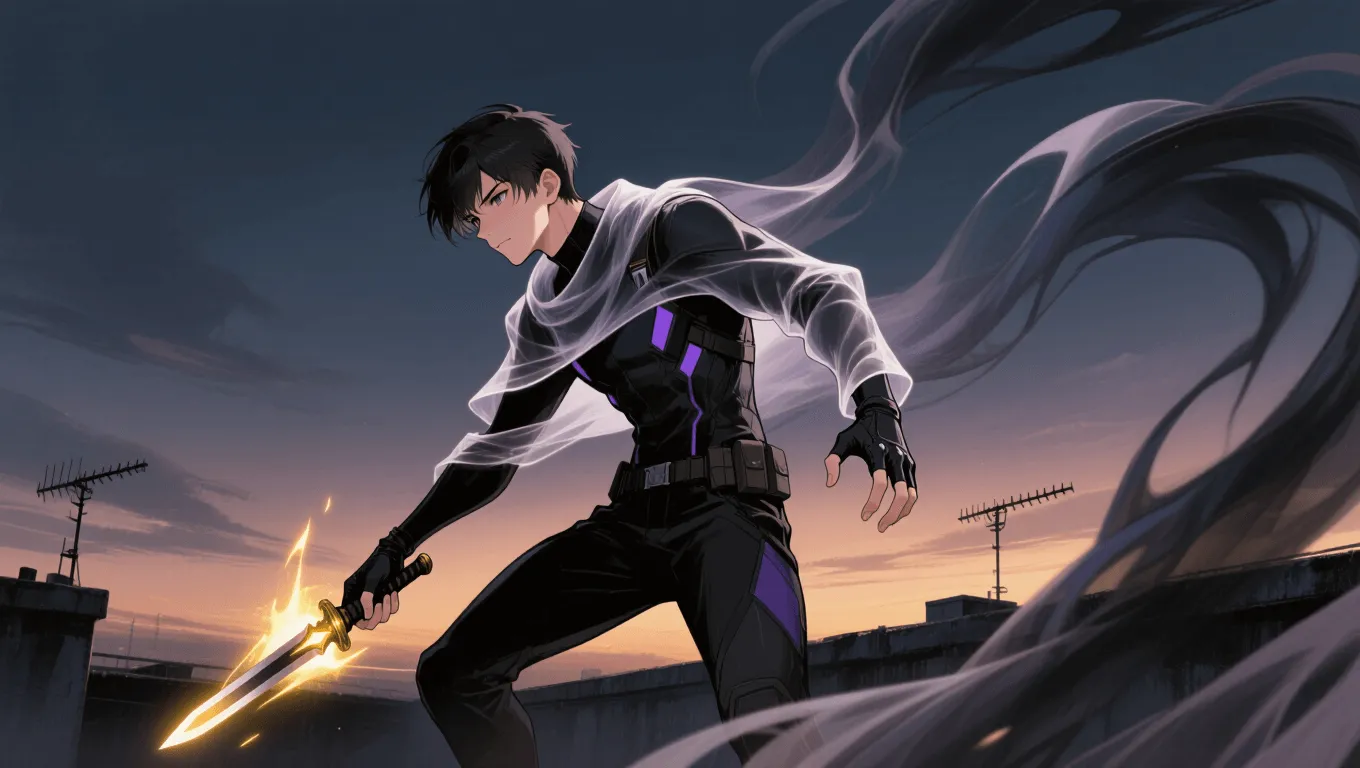
Level 1 🏙️: Streetlight dusk tricks
At Level 1, Twilight Manipulation is tight-range and environment-dependent.
-
Creates small twilight veils around the user or a single target
-
Softens outlines for stealth approaches
-
Produces quick highlight flashes to reveal a hidden hand or weapon
-
Enables basic dusk sight (reduced glare, better dim-light navigation)
Combat style: ambush, evasive movement, short misdirection bursts.
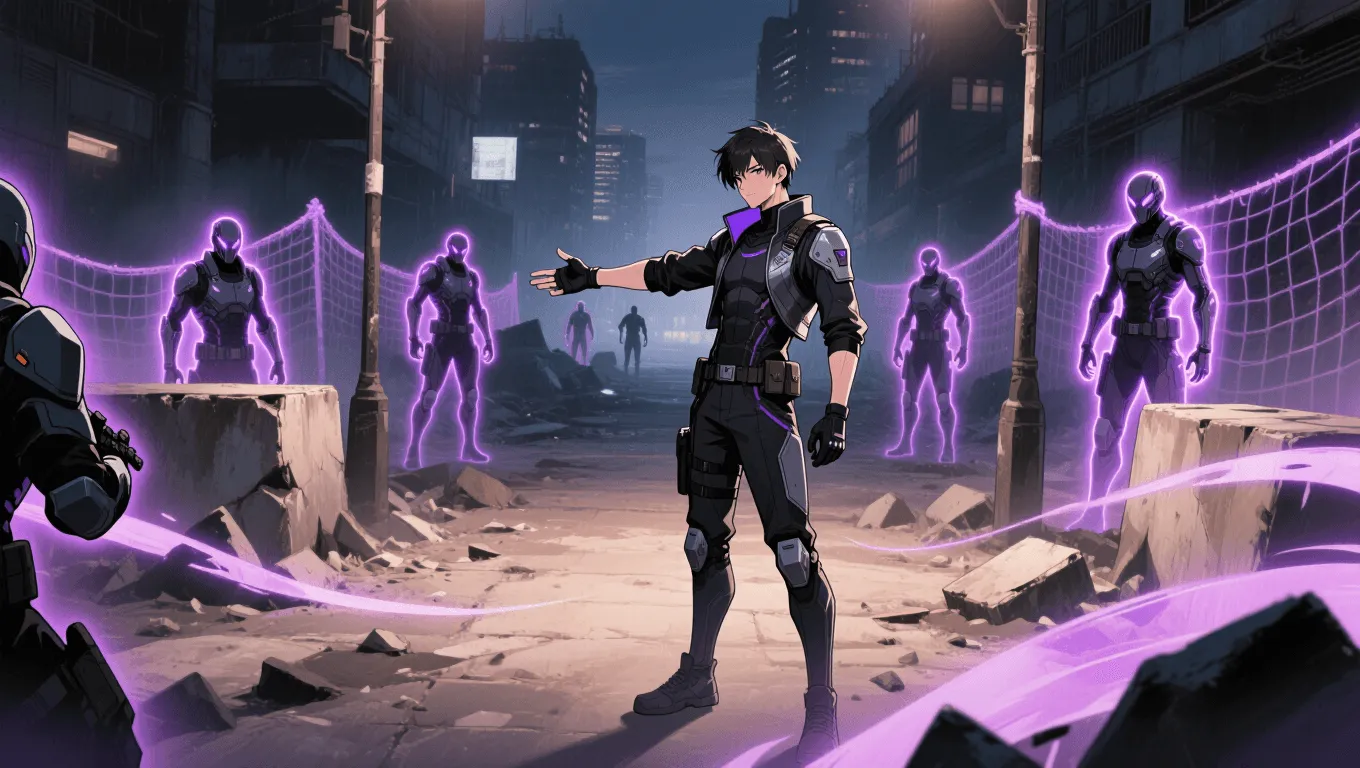
Level 2 🌇: Area control and team utility
At Level 2, the user can shape twilight across a room, alley, or battlefield segment.
-
Establishes zones of dim visibility that hinder enemy aim
-
Forms simple twilight constructs (short barriers, nets, decoys)
-
Applies selective reveal effects, like outlining enemies moving behind cover
-
Provides limited twilight empowerment to allies within the zone
Combat style: battlefield controller, scout leader, counter-stealth specialist.
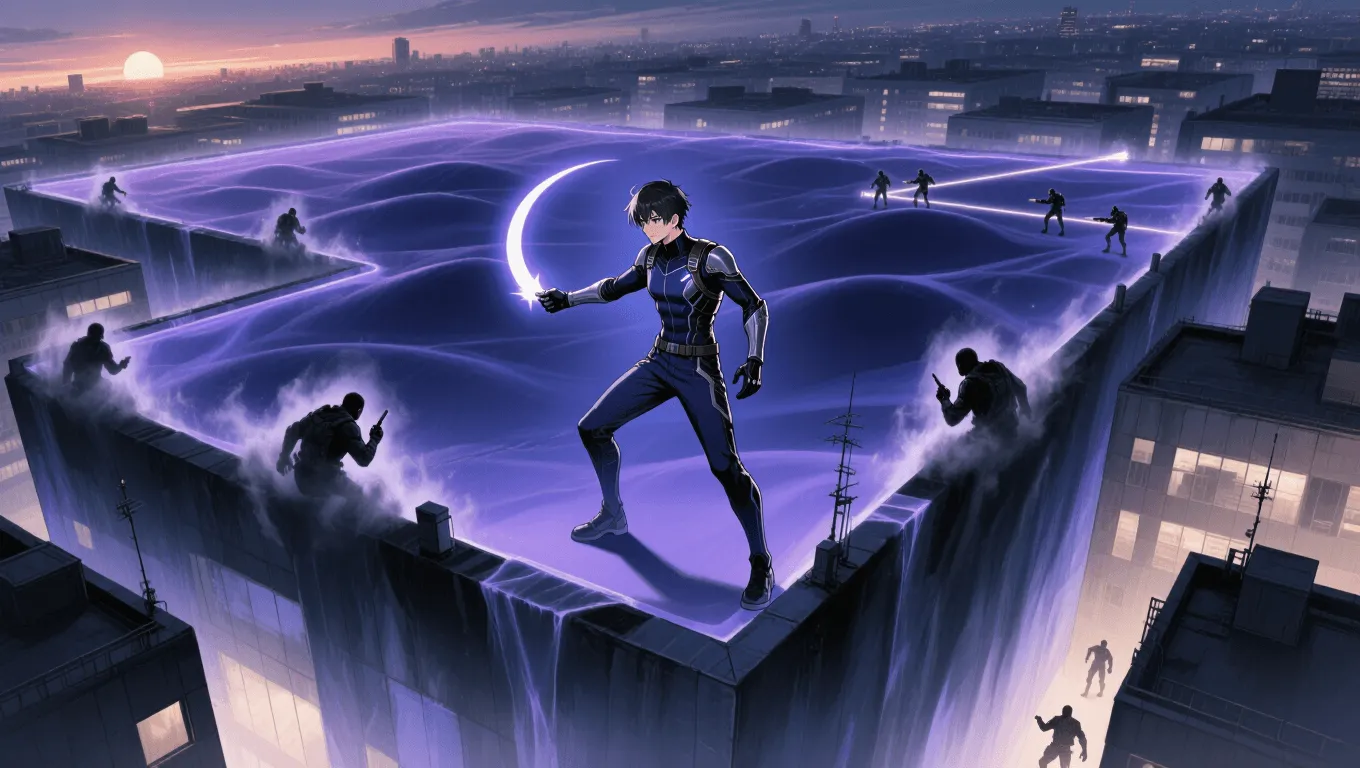
Level 3 🌃: Twilight domain mastery
At Level 3, the user treats twilight as a flexible “domain” that follows intent.
-
Maintains large, stable twilight fields across multiple structures or wide outdoor spaces
-
Tunes the environment with high precision (contrast sculpting, moving penumbra walls)
-
Creates convincing decoy silhouettes and layered veils
-
Grants significant dusk empowerment: fast repositioning, silent footwork, and near-constant misdirection in twilight conditions
Combat style: domain tactician—denies enemy information while feeding allies clarity.
Limitations of using the Twilight Manipulation
Twilight Manipulation can be powerful, but it is not limitless.
Needs usable lighting conditions
The ability is strongest during natural dawn/dusk and in dim environments where “twilight-like” lighting exists. In harsh midday sun, there may be too much direct light to sculpt effectively. In pitch-black voids, there may be too little light to shape. (Some users can simulate twilight, but that usually costs more energy and is less stable.)
Limited spectrum and “blue hour bias”
Twilight commonly skews toward cool tones and softer illumination.
That means the user’s effects may trend toward blue-gray haze, muted contrast, and gentle gradients rather than bright, saturated colors. Against opponents with specialized low-light optics, that subtlety can be less effective.
Concentration and sensory load
Shaping a whole environment’s contrast is mentally demanding. The user must track angles, moving targets, and how shadows fall. Under stress, veils may flicker, highlights may misfire, or constructs may crumble.
Exposure risk if overused
A common drawback is telltale ambience: foggier edges, unusual halos, or a “dusk tone” that gives away manipulation. Skilled enemies learn to recognize that signature and respond with wide-area attacks, scanning tech, or brute-force lighting changes.
Empowerment is situational
Twilight empowerment often requires the user (or ally) to remain within a suitable twilight field. If forced into open daylight or a bright floodlit corridor, the boost can drop sharply.
Weakness against what other superpowers
Twilight Manipulation is a visibility-based power, so it struggles against abilities that override vision rules entirely.
-
Light Manipulation or intense illumination powers: Floodlights, flares, or photokinesis can blow out contrast tricks and erase penumbra zones by overwhelming them with brightness.
-
Shadow Manipulation at extreme levels: Pure darkness control can swallow twilight gradients, leaving the user without the “in-between” medium they rely on.
-
Enhanced senses beyond sight: Echolocation, tremor-sense, scent tracking, and psychic perception can bypass twilight veils.
-
Energy Absorption: If the setting treats twilight as a usable energy, an absorber could drain the field and weaken constructs or empowerment effects.
-
True invisibility or intangibility: Twilight reveals can help, but if an opponent has perfect concealment or can’t be physically blocked, constructs and zone control lose some bite.
In general, Twilight Manipulation dominates against normal vision users and average stealth tactics, but it is less reliable against non-visual hunters or opponents who can rewrite lighting conditions.
Synergistic Power Combos
Twilight Manipulation becomes much stronger when paired with powers that exploit confusion, repositioning, or sensory advantage.
-
Phasing: A phasing ally can move through walls while twilight veils hide their approach, making ambush angles nearly impossible to predict.
-
360-Degree Vision: Twilight can reduce enemy targeting while the 360-degree observer eliminates blind spots, turning a chaotic dusk field into a controlled arena.
-
Electromagnetic Manipulation: Disrupting cameras, drones, and sensors while twilight obscures line-of-sight creates a layered stealth package (visual + electronic).
-
Enhanced Accuracy: A teammate with precision aiming benefits from reveal tuning—targets are outlined, range feels clearer, and openings are easier to read.
-
Sonic Manipulation: Twilight fields mask movement while sonic bursts control space; together they can force enemies into predictable routes.
Used well, Twilight Manipulation is less about winning by damage and more about winning by information control—making allies see what matters and enemies see what the user wants.
Known Users
Twilight Manipulation is a specific label, but many fictional characters demonstrate closely related control over darkness-light interplay, shadow fields, or dim-zone empowerment.
-
Cloak (Tyrone Johnson) — A Marvel character whose powers are tied to the Darkforce Dimension, including teleportation via Darkforce and darkness-based effects, which resemble the “obscure and reposition” side of twilight-style combat.
-
Dagger (Tandy Bowen) — Cloak’s counterpart, associated with Lightforce and the creation of light-based weapons and cleansing effects, aligning with the “reveal and empower” side of twilight-adjacent powers.
-
The Shade (Richard Swift) — A DC Comics character known for shadow manipulation and related abilities (such as generating darkness and shaping shadow constructs), which parallels advanced twilight field control in many RPG interpretations.