
Vortex Breath
Vortex Breath Video Demo 🎬
Table of Contents
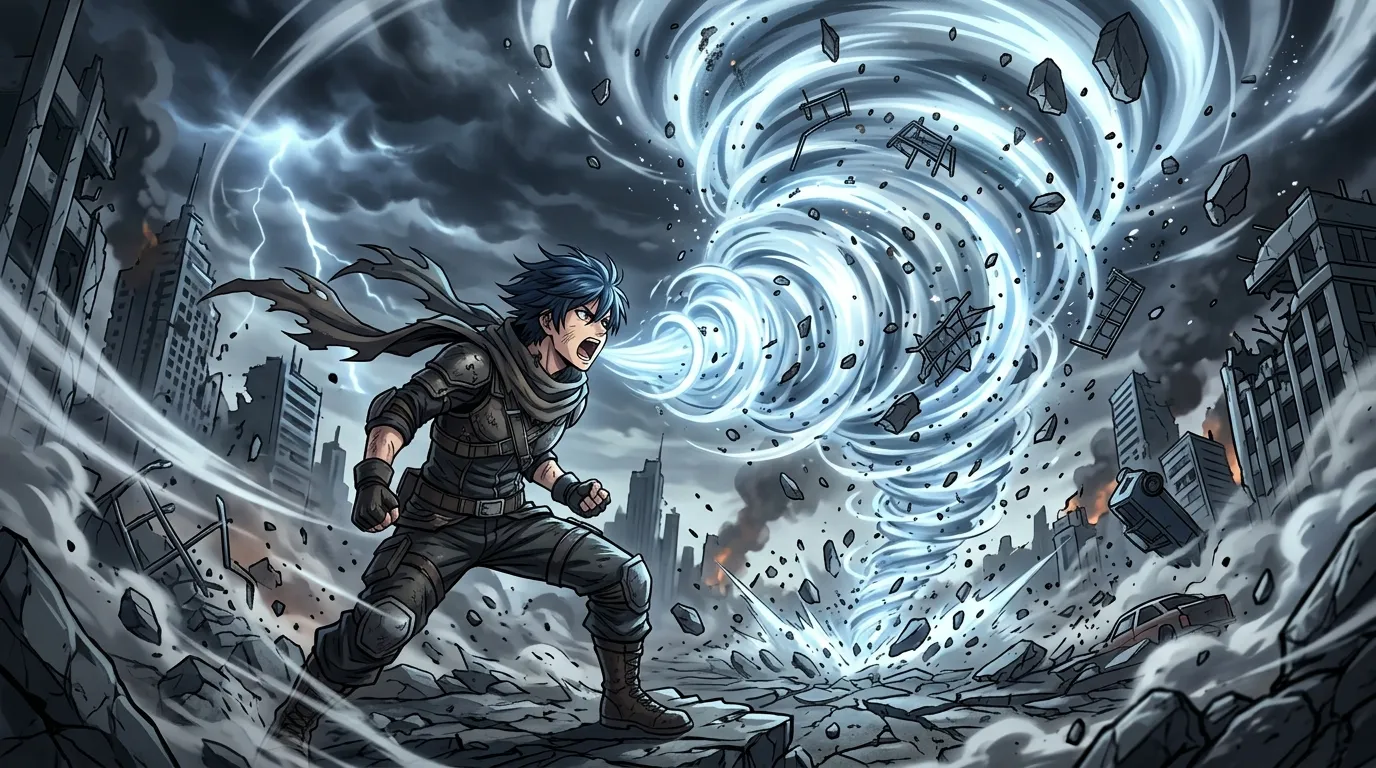
Vortex Breath is a powerful wind-based ability that allows a character to inhale or exhale massive streams of air strong enough to create destructive vortices, cyclones, and spiraling gusts. Unlike ordinary wind manipulation, Vortex Breath focuses specifically on concentrated airflow generated directly through breathing. This gives the user incredible offensive and defensive potential, ranging from launching tornado-like blasts to pulling enemies into violent spirals.
As one of the more visually impressive elemental abilities found across fiction, Vortex Breath combines aspects of aerokinesis, sonic pressure, and force manipulation. Characters with this ability can dominate battlefields through crowd control, environmental destruction, and mobility advantages. Fans exploring unique powers can also browse the complete superpower list or discover random abilities through the random superpower generator.
What Is Vortex Breath
Vortex Breath is the ability to generate powerful rotational winds through inhalation or exhalation. The airflow is not merely strong air pressure; it forms organized spirals and vortex systems capable of lifting objects, redirecting projectiles, or devastating entire areas.
The core concept behind the power revolves around compressed air movement. By manipulating pressure, speed, and rotation, the user can produce miniature cyclones, vacuum funnels, slicing wind spirals, or hurricane-force blasts.
Depending on the setting, Vortex Breath may be magical, biological, elemental, or energy-based. Some users possess dragon-like lungs capable of generating extreme atmospheric pressure, while others channel supernatural wind energy through breathing techniques.
The power commonly overlaps with:
- Wind manipulation
- Air cannon abilities
- Cyclone generation
- Vacuum breathing
- Tornado projection
- Pressure-wave attacks
- Elemental breath powers
Unlike general aerokinesis, Vortex Breath usually requires deliberate breathing motions, making respiration directly tied to combat effectiveness.
Core Abilities of Vortex Breath
Cyclone Exhalation
The most recognizable technique involves expelling a spiraling stream of compressed air that behaves like a tornado. These attacks can:
- Knock enemies backward
- Tear apart structures
- Launch debris as shrapnel
- Disrupt formations
- Create airborne hazards
Advanced users can control the direction, width, and intensity of the vortex.
Vacuum Inhalation
Some Vortex Breath users can inhale with enormous force, creating temporary vacuum effects. This allows them to:
- Pull opponents closer
- Disarm enemies
- Absorb smoke or toxins
- Redirect incoming projectiles
- Suffocate flames
This defensive application can completely alter battlefield positioning.
Air Pressure Manipulation
The spiraling winds generated by Vortex Breath often carry immense pressure. Users may compress air into concentrated bursts capable of cracking armor or smashing walls.
High-pressure vortex streams can even function like invisible blades.
Flight and Mobility
Rotational airflow beneath the user may provide lift and propulsion. By directing wind currents around themselves, users can:
- Glide through the air
- Hover briefly
- Increase jumping distance
- Accelerate movement
- Cushion falls
Elite users may ride self-created tornado columns.
Environmental Control
Because vortices affect the surrounding atmosphere, Vortex Breath can reshape environments during combat. Dust storms, fog dispersal, sand cyclones, and flying debris become tactical tools.
In open areas, the power becomes especially dangerous.
Sonic Wind Effects
Rapidly rotating air can generate deafening frequencies or sonic booms. Some Vortex Breath techniques include:
- Sound-based disorientation
- Eardrum damage
- Shockwave creation
- Vibrational destruction
This makes the ability effective against both physical and sensory defenses.
Application / Tactical Advantages in Combat
Battlefield Control
Vortex Breath excels at area denial. Tornado-like currents force opponents to reposition constantly while disrupting ranged attacks and coordinated assaults.
Enemies trapped inside a vortex may become helpless targets.
Crowd Suppression
Wide airflow attacks are highly effective against multiple enemies. A single rotational blast can scatter entire groups, making Vortex Breath ideal for large-scale conflicts.
Projectile Redirection
Rotating wind barriers can alter the trajectory of arrows, bullets, energy blasts, or thrown weapons. Skilled users essentially create a spinning shield around themselves.
Vertical Combat Superiority
The ability to launch enemies upward or manipulate aerial movement grants major positional advantages. Opponents without flight capabilities may struggle against airborne vortex users.
Terrain Destruction
Vortex Breath can uproot trees, collapse buildings, and destabilize surfaces. This makes it particularly dangerous in urban environments where debris becomes secondary weaponry.
Suffocation and Oxygen Manipulation
Some advanced users manipulate oxygen flow within localized areas. By creating pressure vacuums or oxygen-depleted zones, they can weaken enemies without direct contact.
Level: Level 1 🏙️, Level 2 🌇, Level 3 🌃
Level 1 🏙️ – Street Level Vortex Breath
At the beginner stage, the user can generate strong gusts and small rotating winds.

Capabilities include:
- Knocking back opponents
- Deflecting lightweight projectiles
- Producing small whirlwinds
- Enhancing jumps
- Clearing smoke or gas
The user still relies heavily on stamina and lung capacity.
Level 2 🌇 – City Level Vortex Breath
Intermediate users gain substantial control over pressure and rotation.

Abilities may include:
- Tornado-sized exhalations
- Sustained flight
- Large-scale vacuum suction
- Wind blades
- Multi-target crowd control
- Environmental manipulation
At this stage, Vortex Breath becomes devastating in military or urban combat situations.
Level 3 🌃 – Catastrophic Vortex Breath
Top-tier users can manipulate atmospheric systems on a massive scale.

Potential feats include:
- Creating hurricanes
- Generating city-destroying cyclones
- Producing hypersonic wind streams
- Altering weather patterns
- Creating massive vacuum zones
- Controlling multiple vortex systems simultaneously
These users essentially weaponize atmospheric physics.
Limitations of Using the Vortex Breath
Dependence on Breathing
Because the power originates from respiration, anything restricting breathing severely weakens the ability.
Examples include:
- Poison gas
- Water submersion
- Choking attacks
- Lung injuries
- Suffocation
- Exhaustion
A damaged respiratory system can completely disable the power.
Physical Strain
Generating massive pressure places enormous stress on the lungs, throat, diaphragm, and chest muscles.
Overuse may cause:
- Internal bleeding
- Vocal damage
- Fatigue
- Oxygen deprivation
- Muscle tearing
Environmental Resistance
Enclosed spaces may reduce airflow effectiveness. Underground tunnels or vacuum environments limit vortex formation.
Likewise, extremely dense or magically stabilized environments may resist atmospheric manipulation.
Friendly Fire Risks
Large vortex attacks are difficult to control precisely. Allies may become trapped or injured by collateral debris and pressure waves.
Energy Consumption
In supernatural settings, Vortex Breath may consume magical energy, stamina, chi, or life force. Sustained vortex creation can rapidly drain the user.
Weakness Against What Other Superpowers
Earth Manipulation
Heavy stone barriers and dense terrain can disrupt airflow patterns. Earth-based powers may anchor opponents against suction forces.
Gravity Manipulation
Gravity users can counter aerial displacement and suppress vortex lift effects entirely.
Vacuum Manipulation
Characters who remove air from the battlefield can neutralize Vortex Breath by eliminating the medium required for wind generation.
Fire Manipulation
Although wind often strengthens fire, highly skilled fire users can turn vortex currents into dangerous infernos that threaten the Vortex Breath user as well.
Sound Immunity
Since some techniques rely on sonic pressure and vibration, opponents immune to sound-based attacks may resist several advanced applications.
Ice Manipulation
Extreme cold can alter airflow behavior and freeze moisture inside vortex systems, destabilizing attacks.
Synergistic Power Combos
Vortex Breath + Lightning Manipulation
Spinning storms filled with electricity create devastating thunder cyclones capable of widespread destruction.
Vortex Breath + Fire Breath
Combining rotational winds with flames creates fire tornadoes that spread rapidly across battlefields.
Vortex Breath + Flight
Natural aerial mobility dramatically increases maneuverability and attack precision.
Vortex Breath + Enhanced Lungs
Superhuman respiratory systems allow greater airflow pressure and longer sustained vortex attacks.
Vortex Breath + Weather Manipulation
Users capable of controlling weather can amplify atmospheric instability for continent-level storm creation.
Vortex Breath + Sonic Scream
Pairing rotational winds with destructive sound waves creates devastating pressure attacks capable of rupturing structures and disorienting enemies simultaneously.
Known Users
Many fictional characters possess abilities similar to Vortex Breath, even if the exact term is not always used.
Tornado
The mutant hero Storm from Marvel Comics demonstrates advanced cyclone and atmospheric manipulation that resembles high-level Vortex Breath techniques.
Dragon-Type Creatures
Many dragons across fantasy fiction weaponize spiral wind breath attacks capable of leveling castles or creating aerial storms.
Airbenders
Characters from Avatar: The Last Airbender frequently employ spinning air funnels and vortex-based combat methods closely related to Vortex Breath.
Mythological Wind Spirits
Various mythologies feature gods and spirits capable of inhaling or exhaling storms, hurricanes, and destructive winds. These beings often serve as ancient inspirations for modern vortex-based superpowers.
Anime Wind Users
Numerous anime characters channel rotating wind streams through martial arts breathing techniques, often generating tornado punches, vacuum blasts, or spiraling dragon winds.