
Access and Occlusion: Opening and Sealing Anything at Will
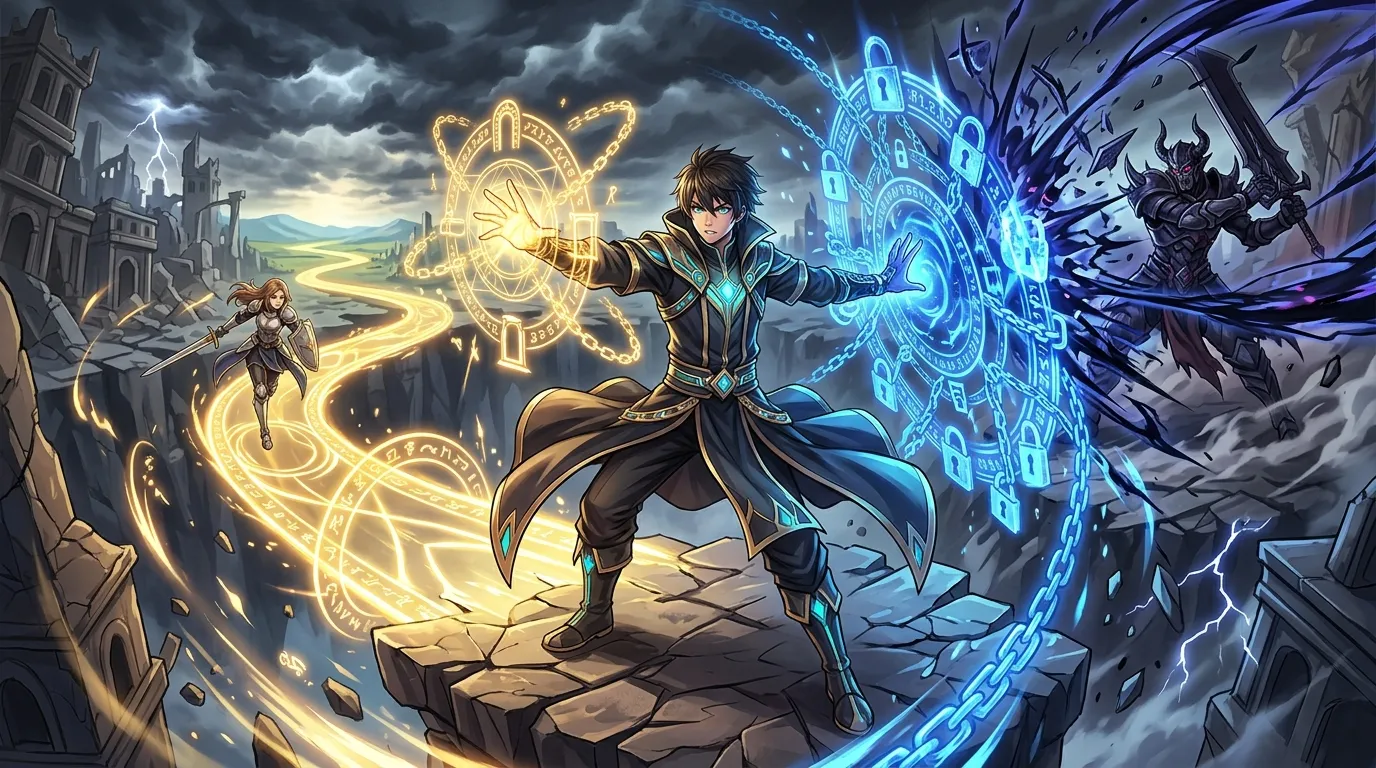
Access and Occlusion Video Demo 🎬
Table of Contents
- Access and Occlusion Video Demo 🎬
- What Is Access and Occlusion
- Core abilities of Access and Occlusion
- Application / Tactical Advantages in Combat
- Level: Level 1 🏙️, Level 2 🌇, Level 3 🌃
- Limitations of using the Access and Occlusion
- Weakness against what other superpowers
- Synergistic Power Combos
- Known Users
Access and Occlusion is a reality-bending superpower that governs one deceptively simple idea: what can be reached, known, or used—and what cannot. Instead of merely creating barriers, the user can open or seal paths, lock or unlock knowledge, and even grant or deny abilities as if the universe itself runs on permissions. In stories and RPG settings, it’s often framed as access manipulation, authorization control, or “cosmic lock-and-key” power, because it treats doors, secrets, and powers like systems that can be toggled on and off.
For readers exploring abilities across genres, it fits naturally alongside other powers in the Superpower Wiki, and it pairs well with surprises from the random superpower generator.
What Is Access and Occlusion
At its core, Access and Occlusion is the power to control availability.
- Access refers to enabling: opening routes, revealing hidden information, allowing entry, and granting use of an ability or resource.
- Occlusion refers to restricting: sealing routes, obscuring information, denying entry, and suppressing abilities or functions.
Unlike a simple forcefield or a normal lock, this power can apply to abstract targets (like a memory, a spell, a technique, a “system” in a magical world, or even a social role such as “only the rightful bearer may wield this weapon”). When used cleverly, Access and Occlusion can feel like the perfect counter to brute force—because it doesn’t break the wall; it simply makes the wall irrelevant, or makes the doorway “not a doorway anymore.”
Core abilities of Access and Occlusion
Access and Occlusion usually expresses as a toolkit. A user might specialize in one angle, but the full power set can include:
- Path opening and closure
- Open sealed doors, bypass locked gates, create temporary “routes” through spaces that normally don’t connect.
- Seal passageways, collapse shortcuts, or “close” a route so it cannot be traversed.
- Knowledge unlocking and concealment
- Reveal hidden text, decrypt ciphers intuitively, access restricted archives, or “unlock” understanding of a concept.
- Occlude facts, blur memories, hide clues, or make certain knowledge unreachable (even if it’s written plainly).
- Ability granting and suppression
- Temporarily enable a technique, awaken latent talent, or allow the use of a power that was blocked.
- Seal an opponent’s skill, interrupt spellcasting, deny activation conditions, or impose “permission required” rules.
- Permission rules and keyed conditions
- Bind access to identities, vows, bloodlines, tokens, spoken phrases, time windows, or locations.
- Create layered locks (multi-factor access) and nested seals that require specific counters.
- Seal crafting and lock breaking
- Place seals that persist as wards, sigils, or intangible “locks” on a target.
- Break seals placed by other powers, provided the user can read the “locking logic.”
- Selective occlusion fields
- Create zones where certain actions fail: teleportation denied, weapons won’t draw, magic won’t form, memories won’t stick, or senses cannot perceive specific objects.
Application / Tactical Advantages in Combat
In combat, Access and Occlusion is less about damage and more about control. It wins fights by deciding what the battlefield allows.
- Disarm without touching: Occlude access to a weapon’s release mechanism, ammunition feed, or “wield permission.”
- Cancel enemy openers: Seal activation requirements (gestures, words, line-of-sight, energy channels).
- Force positioning: Open a safe route for allies while sealing flanking paths for enemies.
- Create tempo swings: Deny the opponent’s signature move for two seconds—long enough to end the fight.
- Turn defenses into traps: Seal exits, occlude retreat options, then open only the path that leads into a prepared ambush.
- Counter stealth and deception: Unlock hidden presences or reveal the “true” object behind an illusion by granting access to correct perception.
A skilled user fights like a systems engineer: identifying dependencies, bottlenecks, and permissions, then flipping the switches.
Level: Level 1 🏙️, Level 2 🌇, Level 3 🌃
Level 1 🏙️
At Level 1, the power behaves like advanced locking and unlocking within obvious boundaries.
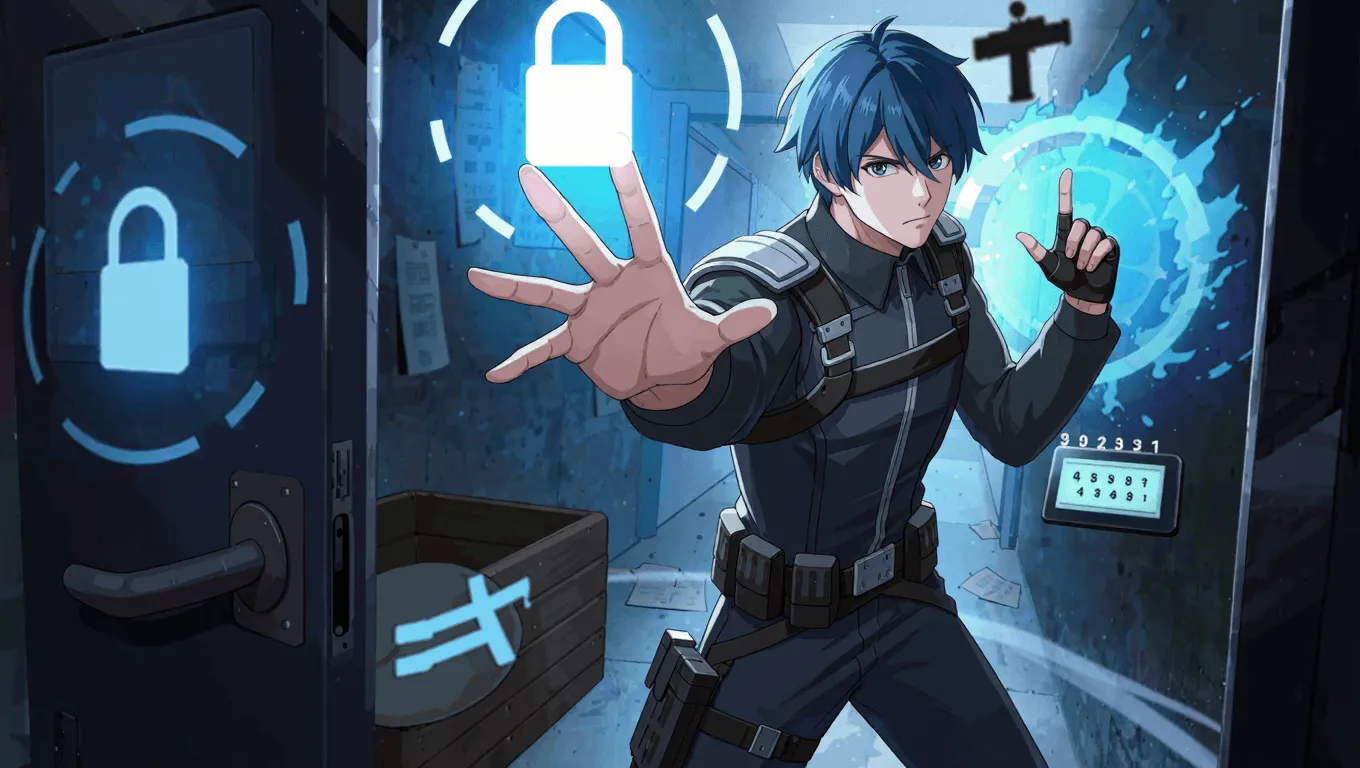
- Opens or seals physical doors, simple containers, basic barriers, and straightforward routes.
- Temporarily occludes a single action type (for example: “no gunfire in this room” or “no sprinting”).
- Unlocks surface knowledge: passwords, basic codes, obvious hidden compartments, or the gist of a document.
- Limit is usually proximity and line-of-effect (the user must “target” the lock, door, or rule clearly).
Typical combat use: deny a weapon, lock a doorway, or open an escape route.
Level 2 🌇
At Level 2, Access and Occlusion becomes an abstract control power that can target systems and abilities.

- Seals techniques and powers by disrupting their activation conditions.
- Opens restricted pathways like warded corridors, pocket-dimension entrances, or magically “keyed” gates.
- Creates conditional permissions (“Only allies can cross this threshold” or “Only those who speak the passphrase can perceive this object”).
- Occludes knowledge more aggressively: hiding a clue from investigation, blurring key memories, or preventing a target from recalling a name or spell pattern.
Typical combat use: suppress a boss ability, isolate enemies by sealing routes, or reveal hidden threats.
Level 3 🌃
At Level 3, the power approaches narrative authority over access itself.
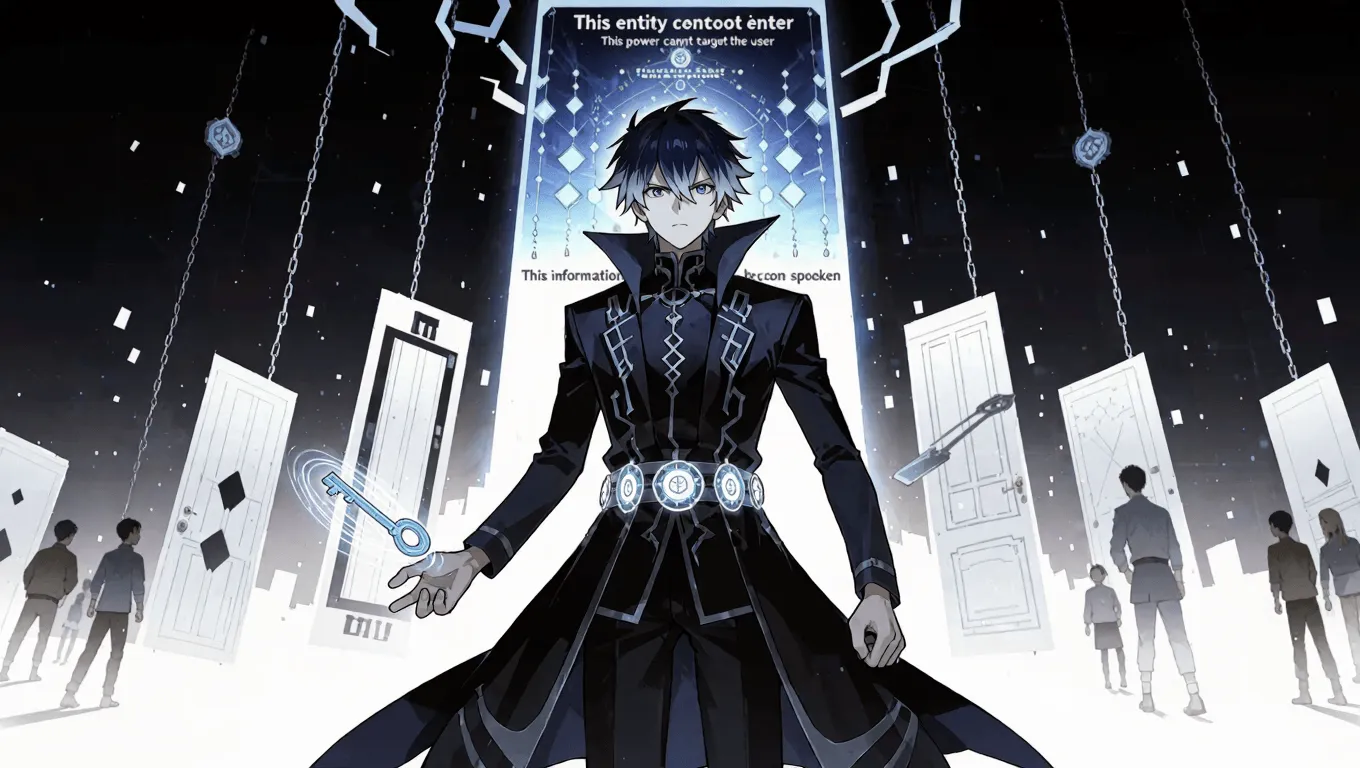
- Treats distance, containment, and capability as permissions—opening impossible routes or sealing conceptual exits.
- Enforces layered seals that act like laws: “This entity cannot enter,” “This power cannot target the user,” “This information cannot be spoken.”
- Unlocks deep understanding (instant comprehension of complex systems) or occludes truth at scale (misdirecting entire groups, nullifying investigative progress).
- Can “re-key” reality: changing who qualifies as authorized, or rewriting what counts as a valid method to break the seal.
Typical combat use: shut down entire categories of threat, restructure the battlefield, or end conflicts by preventing escalation.
Limitations of using the Access and Occlusion
Even a permission-based superpower needs boundaries, or it becomes unfun and unstoppable. Common limitations include:
- Scope clarity: The user must define what is being opened or sealed. Vague targets (“seal all bad things”) fail or backfire.
- Resistance and hierarchy: Powerful wards, ancient artifacts, or higher-order magic may resist being re-keyed. The user might need time, focus, or a “lock-reading” step first.
- Tradeoffs: Opening one path may require closing another, or granting access might weaken an existing occlusion.
- Cognitive load: Managing multiple locks, layered conditions, and exceptions can overwhelm the user mid-fight.
- Rebound risk: Sealing an ability doesn’t erase the opponent’s power source; it can build pressure and cause a burst when the seal breaks.
- Ethical friction: Occluding knowledge (especially memories) can have social and moral consequences, and may destabilize allies’ trust.
In many settings, the cleanest balancing rule is that the power controls access, not existence: it can deny use, entry, or comprehension, but it doesn’t automatically destroy the thing.
Weakness against what other superpowers
Access and Occlusion excels against predictable systems, but it struggles against powers that ignore rules or rewrite them faster.
- Chaos Manipulation: If reality behaves inconsistently, locks and permissions become unreliable.
- Reality Anchoring: Anchors can “pin” pathways and permissions, preventing re-keying or sealing from taking hold.
- Omniscience or Perfect Awareness: If a target inherently knows truths, occluding knowledge may be resisted or immediately bypassed.
- Adaptive Evolution: An opponent that rapidly changes activation methods can dodge suppression (“new key each second”).
- Absolute Nullification: If another power simply turns off all powers in an area, Access and Occlusion cannot establish locks or openings.
- Time Stop or Time Rewind: Seals placed during stopped time may not register normally, or rewinds can undo the permission change.
A practical counter-strategy is unpredictability: constantly shifting tactics, activation conditions, and battle rhythm makes the access-controller spend effort just to keep up.
Synergistic Power Combos
Access and Occlusion becomes terrifying when paired with powers that provide reach, information, or enforcement. A few standout combos:
- Teleportation or Portal Travel: Open routes that shouldn’t exist, then seal pursuit behind the team.
- Barrier Creation: Build walls, then add permissions so only allies can pass. This creates “selective walls” instead of absolute ones.
- Enhanced Wits: Rapid analysis helps the user identify hidden dependencies—turning the fight into a solved puzzle.
- Illusionary Magic: Occlude the enemy’s access to correct perception while unlocking allies’ ability to see through deception.
- Darkness Mimicry or Twilight Manipulation: Reduce visibility while selectively unlocking allied navigation routes and sealing enemy escape angles.
- Emotion Manipulation: Deny access to courage, focus, or aggression while unlocking calm and coordination for the user’s side.
In team play, this superpower often acts as the battlefield controller: not the finisher, but the reason the finisher lands cleanly.
Known Users
Access and Occlusion is a broad concept, so it often appears in fiction through characters who open dimensional paths, place seals, or gate mystical knowledge behind keyed conditions. Not every depiction uses the exact label, but the theme is consistent:
- Doctor Strange — A master of the mystic arts who is frequently portrayed using spells, wards, and dimensional techniques that evoke unlocking routes and sealing threats. Outbound reference: Doctor Strange (Marvel).
- Doctor Fate — A magic user associated with cosmic order and supernatural knowledge, commonly framed with artifacts and structured spellwork that aligns with sealing and authorized access. Outbound reference: Doctor Fate (DC).
- Zatanna — Often depicted as an exceptionally powerful magician whose spellcasting can reshape circumstances, making her a natural fit for “open/close” magical solutions in many storylines. Outbound reference: Zatanna (DC blog).