
Darkness Mimicry

Darkness Mimicry Video Demo 🎬
Table of Contents
What Is Darkness Mimicry
Darkness Mimicry is the power to become living shadow: a light-absorbing, semi-physical (or fully intangible) form that moves like darkness itself. A user doesn’t just control shadows around them—they transform into them, adopting the traits people associate with darkness: silent motion, muted presence, and the ability to slip through gaps where a solid body would fail.
In most interpretations, this “umbra form” behaves like a mobile absence of light. It can swallow illumination, blur the user’s outline, and turn the body into a shifting silhouette that is hard to strike, hard to track, and even harder to contain. Readers who want to compare similar abilities can browse the full catalog on the site’s superpower wiki list, or discover unexpected pairings through the random superpower generator.
Core abilities of Darkness Mimicry
Darkness Mimicry tends to express as a toolkit of shadow-physics. Exact capabilities vary by setting, but the core package usually includes the following.
Light absorption and visibility suppression
In shadow form, the body reduces or consumes ambient light. That can dim flashlights, swallow highlights, and make the user look like a moving patch of night rather than a person. Some versions can “drink” beams of light, weakening illumination in a radius and creating reliable cover even in partially lit spaces.
Intangibility and phasing
A signature trait is intangibility: attacks pass through, bullets lose meaning, and physical barriers become negotiable. This can be full intangibility (no physical contact possible) or selective phasing (the user chooses what to ignore and what to touch). In Marvel-style portrayals of darkness-as-a-medium, darkness is described as more than “no light”—it is a substance that absorbs light, which helps explain how a shadow body can be both present and not fully solid.
Shadow-body reshaping
A living shadow can stretch, flatten, and contort. The user can slip under doors, flow through vents, widen into a cloak-like mass, or compress into a thin stripe across a wall. Even when not fully intangible, this reshaping makes grapples unreliable and restraints easier to escape.
Stealth amplification
Darkness Mimicry excels at stealth without needing invisibility in the strict sense. Footsteps soften, the silhouette blends into dim backgrounds, and the user can “ride” existing shadows to minimize contrast. In many depictions, shadow form also dampens heat signature and reduces reflective surfaces, making the user less visible to sensors.
Fear and disorientation effects
Some versions add a psychological layer: proximity to living darkness triggers primal unease, distorted perception, or nightmare imagery. A well-known comic example describes the darkness as numbing cold and capable of provoking terrifying visions and even madness with prolonged exposure.
Mobility through shadow pathways
At higher tiers, the user can treat shadows as connected terrain. Instead of walking across open ground, they “step” from one patch of darkness to another, shorten distances, or vanish into a dark pocket and emerge elsewhere. Comic portrayals of darkness-linked teleportation commonly describe travel via a shadow realm that acts like a shortcut space.
Application / Tactical Advantages in Combat
Darkness Mimicry is a combat multiplier because it attacks the fundamentals: targeting, timing, and certainty. Opponents want a stable silhouette to hit and a predictable body to restrain. A living shadow denies both.
Survivability and damage avoidance
Phasing invalidates most blunt force, blades, and projectiles. Even partial intangibility forces enemies to switch to area effects, energy, or specialized containment—often mid-fight, under pressure. If the user can selectively solidify, they can “ghost” through a strike and counter while the attacker is off-balance.
Positioning, flanking, and extraction
A shadow body can cross kill zones by hugging darkness, slipping through cracks, or traversing ceilings as a flattened smear. This makes flanking easy and rescues even easier: the user can envelop an ally, drag them into concealment, or remove them from line-of-sight before the enemy can follow.
Battlefield control via illumination denial
Light absorption becomes a soft form of crowd control. By dimming key angles, the user reduces enemy accuracy, disrupts communication, and makes coordinated fire harder. Even without creating “new” darkness, they can deepen existing shadows and widen the areas where stealth movement is safe.
Psychological pressure and tempo control
Living darkness changes how opponents fight. People hesitate when they cannot judge distance, cannot confirm hits, and cannot track movement. Fear and disorientation effects—when present—turn that hesitation into panic, creating openings for disarms, escapes, or non-lethal takedowns.
Level: Level 1 🏙️, Level 2 🌇, Level 3 🌃
Level 1 🏙️
At this stage, Darkness Mimicry is primarily a transformation with modest benefits.

- Shadow form grants enhanced stealth, reduced visibility, and minor reshaping (stretching limbs, flattening briefly).
- Partial intangibility works in bursts (short phasing through a strike, sliding through a narrow gap).
- Light absorption is subtle: small dimming in a close radius rather than blackout.
- Best use: ambushes, escapes, infiltration, and avoiding single-target attacks.
Level 2 🌇
The user becomes a true living shadow with reliable combat applications.

- Sustained intangibility is possible, with selective solidity for grapples or strikes.
- Shadow-body reshaping becomes advanced (flowing under doors, compressing into vents, widening into a cloak-like mass).
- Light absorption becomes tactical: snuffing small light sources, weakening beams, and deepening surrounding shadows.
- Shadow-step mobility appears: short-range movement between nearby shadow patches.
- Best use: hit-and-fade combat, extraction of allies, bypassing fortified positions.
Level 3 🌃
Darkness Mimicry becomes an apex stealth-defense power with battlefield impact.
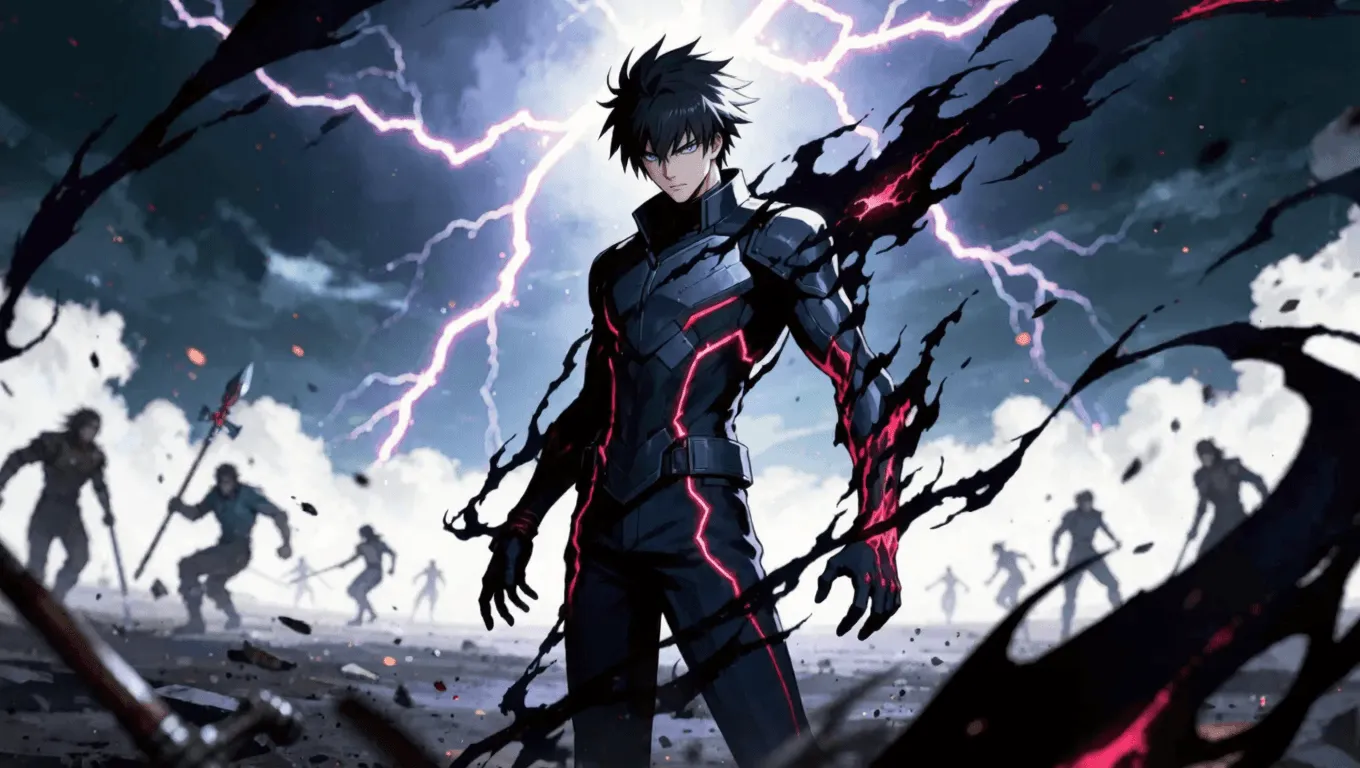
- Near-total intangibility and high-speed phasing allow the user to ignore most physical threats.
- Large-area light suppression can turn arenas into low-visibility zones.
- Shadow travel expands: long-range shadow-stepping or shortcut-style movement through a dark medium.
- Psychological darkness effects can escalate into panic, hallucinations, or incapacitating dread in vulnerable targets.
- Best use: dismantling squads, bypassing security layers, and winning fights by denying sightlines and certainty.
Limitations of using the Darkness Mimicry
Even the best shadow powers carry constraints. These limitations keep Darkness Mimicry dramatic and balanced.
Dependence on lighting conditions
Bright, uniform illumination reduces available cover. In an all-white, high-lumen environment, there may be fewer usable shadows to blend with, and the user may appear as a stark silhouette rather than a hidden smear.
Energy and stamina costs
Sustained intangibility and large-area light absorption often drain the user. Many settings treat phasing as metabolically expensive or mentally taxing, especially if the user is also reshaping, moving rapidly, and maintaining stealth.
Selective solidity is a double-edged sword
If the user must become solid to attack, interact, or carry allies, that moment can be exploited. Skilled opponents bait solidity windows with feints, traps, or timed area effects.
Containment and dispersion risks
Some versions of shadow form can be disrupted by wind-like forces, vacuum effects, or high-frequency energy that “scatters” the shadow mass. If the user’s form is treated as particulate darkness rather than a cohesive body, dispersion becomes a real threat.
Psychological side effects
Darkness-as-a-medium is sometimes portrayed as predatory, inducing hunger for light or feeding on fear. A prominent comic depiction describes a constant hunger that can be soothed by consuming light and warns that prolonged exposure to the darkness can break a target’s sanity.
Weakness against what other superpowers
Darkness Mimicry is strong, but it has clean counters—especially powers that remove its preferred conditions.
Light Manipulation and photokinesis
Hard, wide-spectrum light can eliminate hiding places, increase contrast, and force the user into a more visible silhouette. Continuous, high-intensity light is also the most common way to disrupt shadow-stepping.
Energy blasts and area-of-effect attacks
Even if the user can phase, persistent area hazards (expanding shockwaves, radiation zones, sustained beams) can make it difficult to re-solidify safely or to remain near allies.
Matter manipulation and containment fields
Powers that reshape the environment into sealed containers, bind space, or generate force fields can limit a shadow’s routes. If the user needs line-of-sight to a shadow patch, barriers that block angles can reduce mobility.
Holy energy and purification-style powers
Many fantasy settings treat “pure light” or sanctified energy as more than brightness—something that rejects corruptive darkness. These abilities can force involuntary solidity, weaken fear effects, or cleanse shadow bonds.
Environmental manipulation that removes cover
Fog-clearing wind, terrain flattening, or reflective surfaces can turn a stealth-friendly battlefield into an exposed one. If the user’s advantage is concealment, anything that increases visibility is a direct threat.
Synergistic Power Combos
Darkness Mimicry pairs extremely well with abilities that either create better shadows or exploit the confusion shadows cause.
- Teleportation or Portal Creation
Shadow-stepping plus teleportation turns positioning into a constant disadvantage for enemies. The user can appear behind cover, strike, vanish, and reappear from an angle that ignores defensive lines. - Smoke Mimicry or Mist Generation
Smoke provides mobile “shadow texture” by breaking sightlines and lowering contrast. Combined with a shadow body, it becomes difficult to confirm where the user begins and the fog ends. - Silence Aura or Sound Dampening
Darkness Mimicry already leans stealthy; removing sound makes it oppressive. Guards lose the two biggest tracking tools at once: sight and hearing. - Illusion Casting
A living shadow can act as the “real” threat while illusions supply decoys. The user can draw fire through intangibility while illusions provoke wasted attacks and broken formation. - Fear Manipulation
If the setting allows darkness to induce dread, dedicated fear powers amplify it into a reliable crowd-control engine. Enemies hesitate, scatter, and stop coordinating—exactly what a shadow fighter wants. - Enhanced Senses
Night vision, echolocation, or extrasensory perception offsets the user’s own low-light battlefield. Darkness Mimicry users often dim rooms; pairing with a sense advantage ensures allies aren’t blinded by the strategy.
Known Users
- Cloak (Tyrone Johnson) – A classic example of darkness-linked transformation and intangibility, with teleportation tied to a dark medium and a symbiotic balance with a light-based partner.
Outbound reference: Marvel.com character profile - Nightshade (Eve Eden) – A shadow-powered heroine whose abilities are commonly described in terms of shadow manipulation, absorption, teleportation, and intangibility.
- Obsidian (often portrayed as a living shadow) – Frequently cited in power indexes as a character who can merge into shadow and become a living darkness form.