
Color Vision
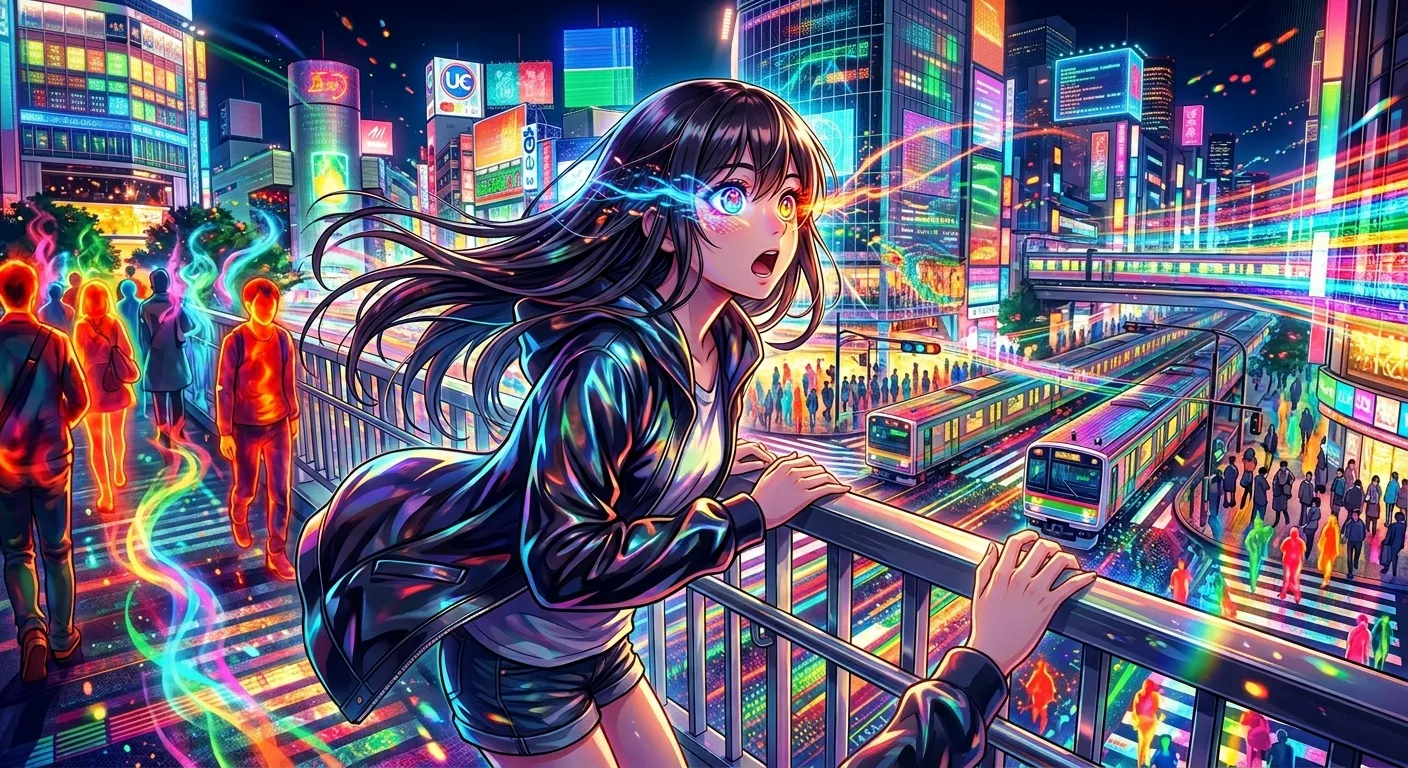
Color Vision Video Demo 🎬
Table of Contents
Color Vision is a sensory superpower that lets a character perceive a vastly expanded color spectrum beyond normal human sight. Instead of seeing the world in the familiar “millions of colors,” Color Vision adds new layers of hue, saturation, and hidden wavelength detail, making environments feel richer and more information-dense. This ability often resembles superhuman color perception, extended spectrum vision, or even hyperspectral vision, where tiny differences in light become readable clues. For readers who enjoy comparing abilities, Color Vision fits neatly alongside many other powers in the superpower wiki and can inspire fresh character builds through the random superpower generator.
What Is Color Vision
At its core, Color Vision means the user’s eyes and brain can detect and interpret more of the light spectrum than an ordinary person can. Humans generally perceive a narrow band of light; Color Vision widens that band and increases resolution within it, allowing the user to notice “impossible” shades and gradients.
In grounded terms, it can be imagined as an extreme form of color discrimination and chromatic sensitivity. In more fantastic terms, it becomes spectrum awareness: the user doesn’t just see colors, they read the story hidden inside them. A faint discoloration on a wall might reveal a secret door. A barely-there tint shift in fog might outline a moving target. A shimmering edge around a person might betray camouflage tech or energy shielding.
Some versions of this power resemble tetrachromacy, a real phenomenon where extra color channels can increase color differentiation. But Color Vision usually goes much further than biology, extending into ultraviolet vision, infrared-adjacent perception, and other “between the colors” sensations that normal eyes can’t access.
Core abilities of Color Vision
Color Vision can manifest in several core abilities, depending on the setting’s power scale:
- Expanded color range: The user perceives additional bands of color outside standard vision, often described as new hues that don’t even have names.
- Extreme gradient detection: Tiny shade differences become obvious, allowing the user to spot stains, residue trails, disturbed dust, or altered paint.
- Material and chemical reading: Many substances reflect light differently; Color Vision can make plastics, metals, inks, and chemicals “look distinct” at a glance.
- Heat-adjacent pattern reading: Even without full thermal sight, the user can detect subtle radiance shifts, warm fingerprints, or recently handled objects as faint chromatic changes.
- Camouflage and illusion detection: When concealment relies on tricking typical vision, Color Vision can reveal mismatch seams, projection artifacts, or unnatural blending.
- Distance color clarity: Far-away targets stay color-true instead of washing out, helping identify uniforms, markings, blood, or signals across range.
- Micro-expression and health cues: Changes in skin tone, blood flow, bruising, or stress coloration can become readable, functioning like visual lie detection.
- Low-light color retention: Some users keep accurate color perception in dusk or shadow, rather than losing color detail as normal vision does.
In many stories, Color Vision also overlaps with “aura sight” or energy tint perception, where magic, radiation, or power fields appear as visible color signatures. That interpretation makes Color Vision a hybrid of perception and analysis: it turns the world into a living map of signals.
Application / Tactical Advantages in Combat
Color Vision is deceptively combat-relevant because fights are full of fast, subtle information. The user gains advantages in targeting, tracking, deception resistance, and environmental control.
Target identification becomes faster because the user can pick out tiny differences: a disguised opponent’s makeup tone, a color-shifted mask, a camo pattern that fools standard eyes but not expanded spectrum sight. In crowded zones, Color Vision can isolate a specific person by their unique “color fingerprint,” such as the exact shade of fabric dye, the tint of a weapon’s finish, or a distinctive residue on gloves.
Tracking is where Color Vision shines. Footprints become more readable when dust is disturbed. Blood trails are clearer across varied surfaces. Recently touched objects may show faint warmth-linked coloration. Even airflow effects can be inferred if smoke, powder, or mist forms subtle color gradients.
Battlefield awareness improves too. The user can quickly scan for tripwires, pressure plates, hidden ink marks, laser emitters, surveillance devices, or concealed doors by noticing reflective properties and spectral inconsistencies.
Color Vision also supports psychological combat. If the user can read micro-flush changes in skin tone, they can predict intent, fear spikes, or deception cues. That makes feints easier to spot and intimidation easier to apply, because the user sees exactly when an opponent’s confidence wavers.
Finally, Color Vision can amplify teamwork. The user can act as a live sensor, calling targets, marking threats, reading signals, and guiding allies through smoke, low light, or confusion.
Level: Level 1 🏙️, Level 2 🌇, Level 3 🌃
Level 1 🏙️
At Level 1, Color Vision is a powerful upgrade to everyday sight.

- Sees more shades and finer gradients than normal people.
- Spots dye differences, residue, bruises, and hidden markings easily.
- Detects visual camouflage flaws and basic illusion seams.
- Maintains better color accuracy in dim lighting than average vision.
This level is perfect for scouts, detectives, snipers, and tacticians who rely on fast reads and environmental details.
Level 2 🌇
At Level 2, Color Vision becomes extended spectrum vision with strong combat utility.

- Perceives parts of the spectrum beyond ordinary human sight, often described as ultraviolet-adjacent or infrared-adjacent cues.
- Reads chemical traces and material signatures more reliably.
- Detects active concealment tech and higher-grade visual deception more often than not.
- Tracks targets through complex terrain by following faint spectral trails.
At this stage, Color Vision acts like a lightweight scanning system built into the senses: quick, silent, and hard to counter unless the enemy understands how it works.
Level 3 🌃
At Level 3, Color Vision becomes hyperspectral perception: the user doesn’t just see color, they interpret hidden data.
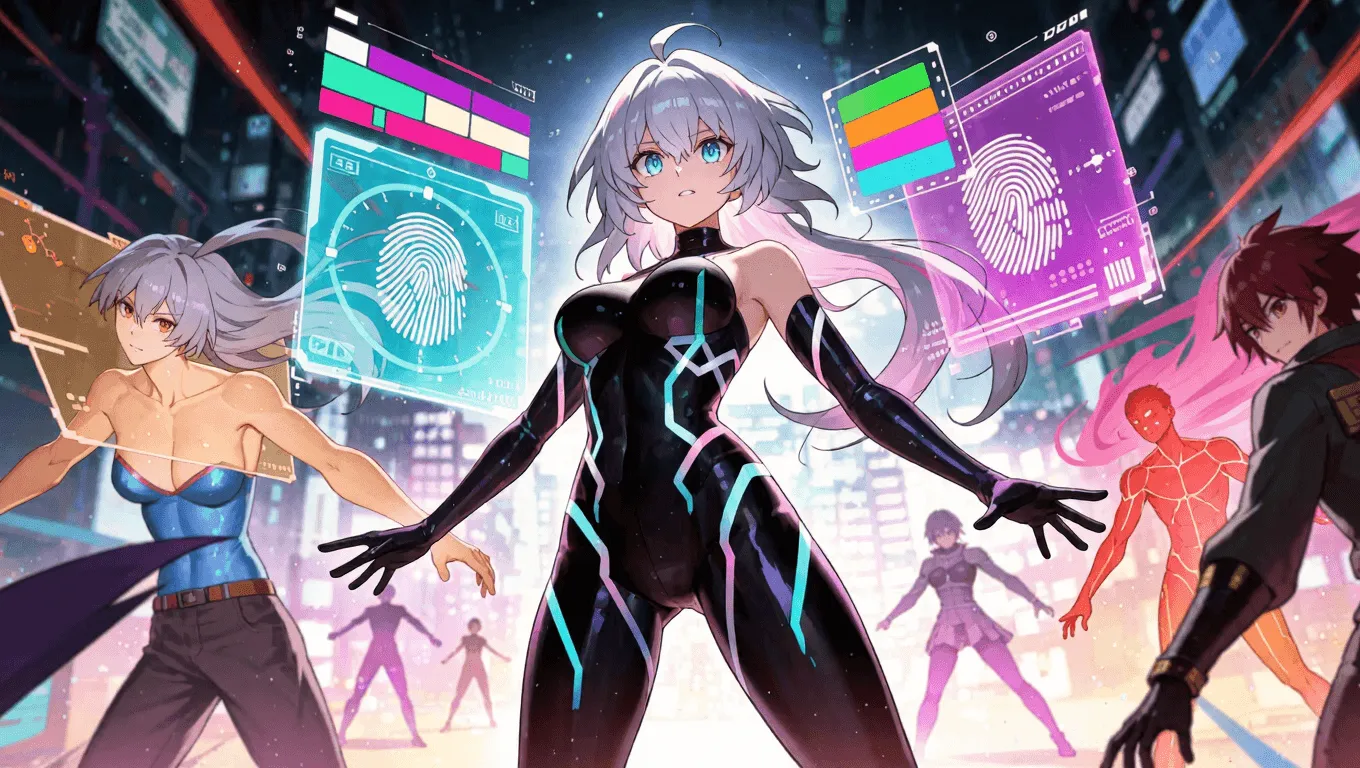
- “Spectral fingerprinting” identifies substances, inks, powders, and residues almost instantly.
- Energy and power effects may display as visible color fields, making magical traps, radiation zones, or active abilities easier to read.
- Highly resistant to illusions that rely on normal sensory assumptions, because the user checks multiple wavelength cues at once.
- Combat prediction improves when micro-color shifts reveal muscle tension, blood flow changes, and stress patterns.
At this level, Color Vision is less like eyesight and more like a real-time analysis overlay. The environment becomes a readable interface.
Limitations of using the Color Vision
Even strong sensory powers have tradeoffs, and Color Vision can create its own problems.
Information overload is the classic drawback. Seeing extra hues, extra gradients, and extra spectral signals can be distracting—especially in chaotic scenes with fire, neon, smoke, magic effects, or flashing lights. The user may need training to avoid “chasing details” while missing the bigger threat.
Lighting conditions still matter. Heavy darkness, total occlusion, or environments with limited light sources reduce the amount of usable information. If Color Vision relies on reflected light, it cannot read what light cannot reach.
Certain materials can confuse the read. Highly reflective surfaces, glittering particles, prismatic effects, or shifting holograms can produce false signals. Likewise, deliberate countermeasures—like spectrum-scrambling camouflage, multi-layered dyes, or reflective cloaks—can muddy a target’s outline.
Physiological strain is another limitation. Extended spectrum perception can mean higher neural processing costs, causing headaches, eye fatigue, or nausea if the user pushes it too hard or spends too long in high-stimulation settings.
Finally, Color Vision is perception, not guaranteed understanding. The user might detect something unusual without knowing what it means. A strange tint could be poison, paint, magic residue, or harmless dust—interpretation depends on training and context.
Weakness against what other superpowers
Color Vision can be countered by powers that remove light, distort perception, or overwhelm the senses:
- Darkness Manipulation: If an area is deprived of usable light, Color Vision loses its primary input.
- Light Absorption: Similar to darkness control, this can erase reflections and flatten the visual world.
- Blinding Light or Flash Generation: Overexposure can wash out the expanded spectrum and force the user into defensive shutdown.
- Illusion Casting: High-level illusions that simulate multi-wavelength cues can trick Color Vision if the illusion is sophisticated enough.
- Invisibility: True invisibility that bends or removes the target’s light signature can defeat Color Vision unless secondary cues remain.
- Smoke and Obscurant Control: Dense particulates scatter light and reduce clarity, limiting the advantage of fine gradient detection.
- Psychic Interference: If the power depends heavily on brain processing, mind-based disruption can scramble interpretation even if the eyes still “see.”
- Sensory Overload: Abilities that bombard vision with chaotic patterns, strobe effects, or hallucinations can force the user to disengage.
In short, Color Vision is strongest when the user controls their sensory environment and weakest when the enemy controls the light, the clutter, or the user’s mind.
Synergistic Power Combos
Color Vision becomes far more dangerous when paired with powers that exploit information.
- Enhanced Wits: Superhuman analysis turns spectral detail into instant strategy, making Color Vision feel like battlefield prediction.
- Light Vision or Light Manipulation: The user can illuminate targets at specific angles or wavelengths, revealing hidden seams, residue, or traps.
- Twilight Manipulation: Controlling dusk-like lighting conditions can preserve visibility for the user while degrading it for opponents.
- Digital Vision: Combines physical spectral data with data-layer overlays, turning tracking into a complete “signature hunt.”
- Ink Manipulation: Color Vision can detect micro-ink trails, hidden messages, or living ink constructs even when they blend into surfaces.
- Psychic Navigation: If the user can locate targets mentally, Color Vision helps confirm identity and track physical movement without mistake.
- Concussion Beams: Color Vision identifies weak points in materials and structures so blasts can be aimed for maximum collapse or disarmament.
- Environmental Adaptation: Lets the user operate in extreme glare, toxic haze, underwater distortion, or alien lighting where normal sight struggles.
These combos emphasize what Color Vision does best: gathering accurate detail and turning it into decisive action.
Known Users
Color Vision appears in fiction both as a dedicated ability and as part of broader “enhanced senses” packages. Characters with electromagnetic-spectrum sight are often portrayed as able to see beyond what humans can perceive.
- Vision (Marvel Comics) is described as being able to see parts of the electromagnetic spectrum invisible to the human eye, which fits many higher-level interpretations of Color Vision.
- Superman is famously associated with multiple advanced vision powers (such as X-ray vision), and many stories portray Kryptonian perception as extending beyond typical human limits, making him a frequent reference point for expanded-spectrum sight concepts.