
Duplication (Temporal)
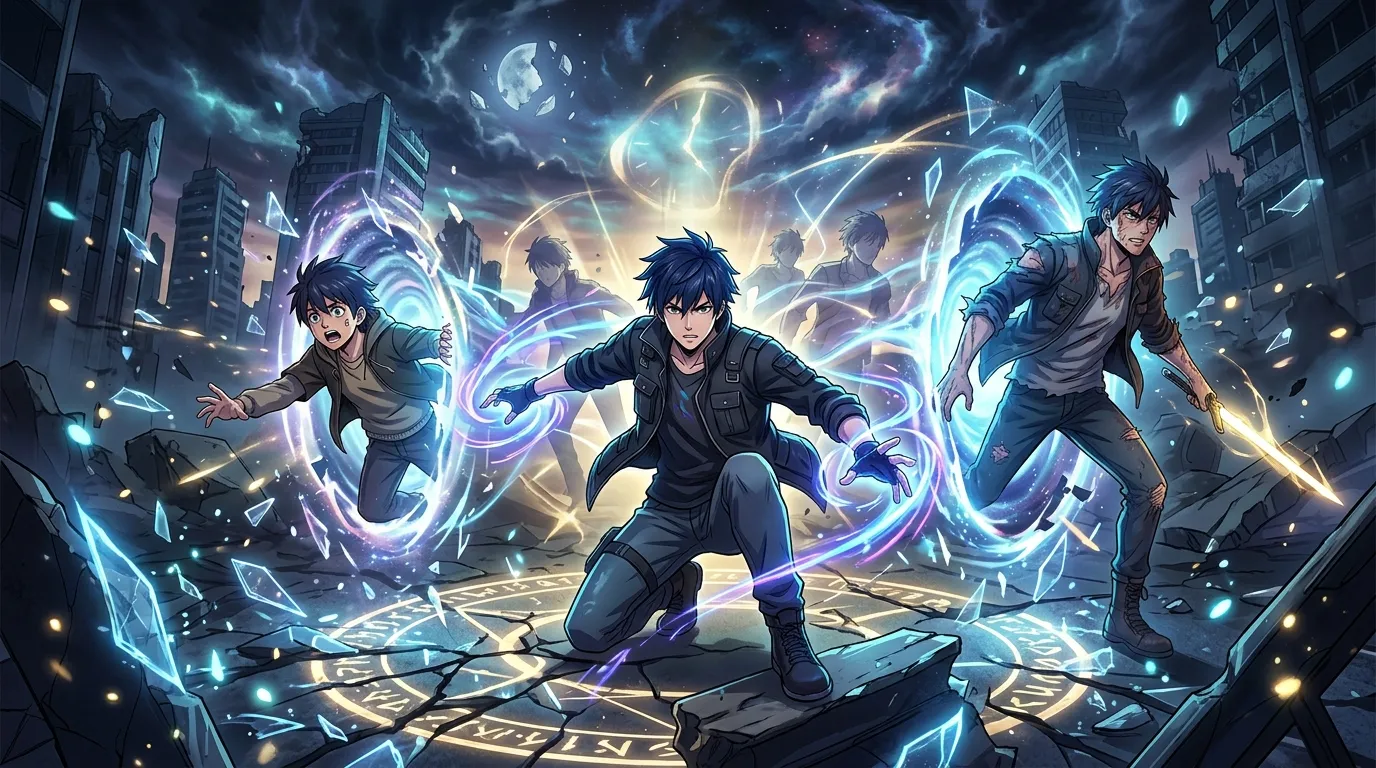
Duplication (Temporal) Video Demo 🎬
Table of Contents
- Duplication (Temporal) Video Demo 🎬
- What Is Duplication (Temporal)
- Core Abilities of Duplication (Temporal)
- Application / Tactical Advantages in Combat
- Level: Level 1 🏙️, Level 2 🌇, Level 3 🌃
- Level 1 🏙️ — Limited Temporal Duplication
- Level 2 🌇 — Advanced Timeline Coordination
- Level 3 🌃 — Infinite Temporal Legion
- Limitations of Using the Duplication (Temporal)
- Weakness Against What Other Superpowers
- Synergistic Power Combos
- Known Users
Temporal Duplication is one of the most dangerous and intellectually complex abilities in fiction. Unlike ordinary cloning powers, Duplication (Temporal) allows a user to summon alternate versions of themselves from the past or future into the current timeline. These duplicates are not artificial copies—they are genuine versions of the same individual pulled across time. This creates a unique blend of time manipulation, self-coordination, and multiversal strategy that can overwhelm enemies and reshape events.
Among the many abilities featured on the superpower list, Temporal Duplication stands out because it combines tactical foresight with sheer numerical advantage. A single user can effectively become an army composed entirely of themselves. Whether used for combat, intelligence gathering, or timeline engineering, this power creates endless possibilities.
For readers exploring strange and powerful abilities through the random superpower generator, Temporal Duplication represents one of the highest-tier temporal abilities imaginable.
What Is Duplication (Temporal)
Duplication (Temporal) is the ability to bring alternate temporal versions of oneself into the current moment. These versions may originate from:
- The user’s past
- The user’s future
- Divergent timelines
- Alternate outcomes
- Potential futures that have not yet occurred
Unlike standard duplication powers, the summoned selves possess their own memories, experiences, injuries, and emotional states based on the timeline they came from.
For example:
- A future self may possess knowledge of upcoming events.
- A past self may retain younger physical abilities.
- An alternate self may have chosen a completely different life path.
The result is a coordinated network of the same person operating simultaneously across time.
This ability often appears in stories involving paradoxes, destiny, or temporal warfare.
Core Abilities of Duplication (Temporal)
Summoning Past Selves
The user can pull earlier versions of themselves into the present timeline.
Advantages include:
- Access to youthful stamina
- Earlier emotional mindsets
- Skills previously mastered
- Forgotten memories
A veteran fighter could summon their teenage self for agility while maintaining present-day tactical expertise.
Summoning Future Selves
Future duplicates are significantly more dangerous.
These versions may possess:
- Knowledge of future events
- Advanced combat experience
- Future technologies
- Greater mastery of powers
However, future selves may also carry trauma, corruption, or timeline instability.
Simultaneous Self Coordination
All versions share deep psychological compatibility.
This allows:
- Near-perfect teamwork
- Predictive synchronization
- Instant tactical adaptation
- Shared instincts
An opponent fighting one version is effectively fighting all of them simultaneously.
Timeline Skill Accumulation
Some users gain temporary access to the skills or memories of summoned selves.
Examples include:
- Future martial arts techniques
- Knowledge from alternate careers
- Scientific discoveries
- Emotional experiences
This makes the user constantly evolve during battle.
Recursive Combat Strategies
Advanced users can create layered temporal loops.
Examples include:
- A future self warning the present self
- A past self setting traps beforehand
- Multiple selves attacking from different timeline positions
Enemies may become trapped in endlessly repeating tactical failures.
Temporal Replacement
Some users can swap places with another temporal self.
This allows:
- Dodging fatal attacks
- Replacing injured versions
- Escaping dangerous situations
- Rewriting immediate outcomes
The battlefield becomes nearly impossible to predict.
Application / Tactical Advantages in Combat
Overwhelming Numerical Superiority
The simplest advantage is numbers.
Even one skilled combatant becomes devastating when multiplied across time.
An enemy may face:
- Ten future warriors
- Five alternate tacticians
- Multiple synchronized attackers
Every duplicate already understands the others perfectly.
Adaptive Countering
Future selves may already know the enemy’s tactics.
This creates near-perfect counterplay.
An opponent could discover that:
- Every attack is anticipated
- Every trap already failed in another timeline
- Every weakness is known beforehand
The user effectively weaponizes future experience.
Information Warfare
Temporal duplicates are exceptional spies and strategists.
Future selves can reveal:
- Political outcomes
- Battle results
- Hidden betrayals
- Technological developments
This allows the user to manipulate events before they occur.
Sacrificial Tactics
Because summoned selves originate from alternate timelines, users may employ dangerous sacrificial maneuvers.
Examples include:
- Suicide attacks
- Timeline collapse detonations
- Decoy selves
- Risk-heavy strategies
This creates moral and philosophical complications since the duplicates are real individuals.
Temporal Ambushes
The user can coordinate attacks across different moments in time.
An enemy may experience:
- Simultaneous attacks from multiple angles
- Delayed paradox strikes
- Future-triggered explosions
- Time-loop traps
Combat becomes multidimensional rather than linear.
Psychological Warfare
Facing multiple versions of the same opponent is mentally devastating.
Enemies may suffer from:
- Confusion
- Fear
- Identity destabilization
- Temporal paranoia
Some foes become incapable of trusting cause and effect itself.
Level: Level 1 🏙️, Level 2 🌇, Level 3 🌃
Level 1 🏙️ — Limited Temporal Duplication
At this stage, the user can summon only one or two nearby temporal selves.
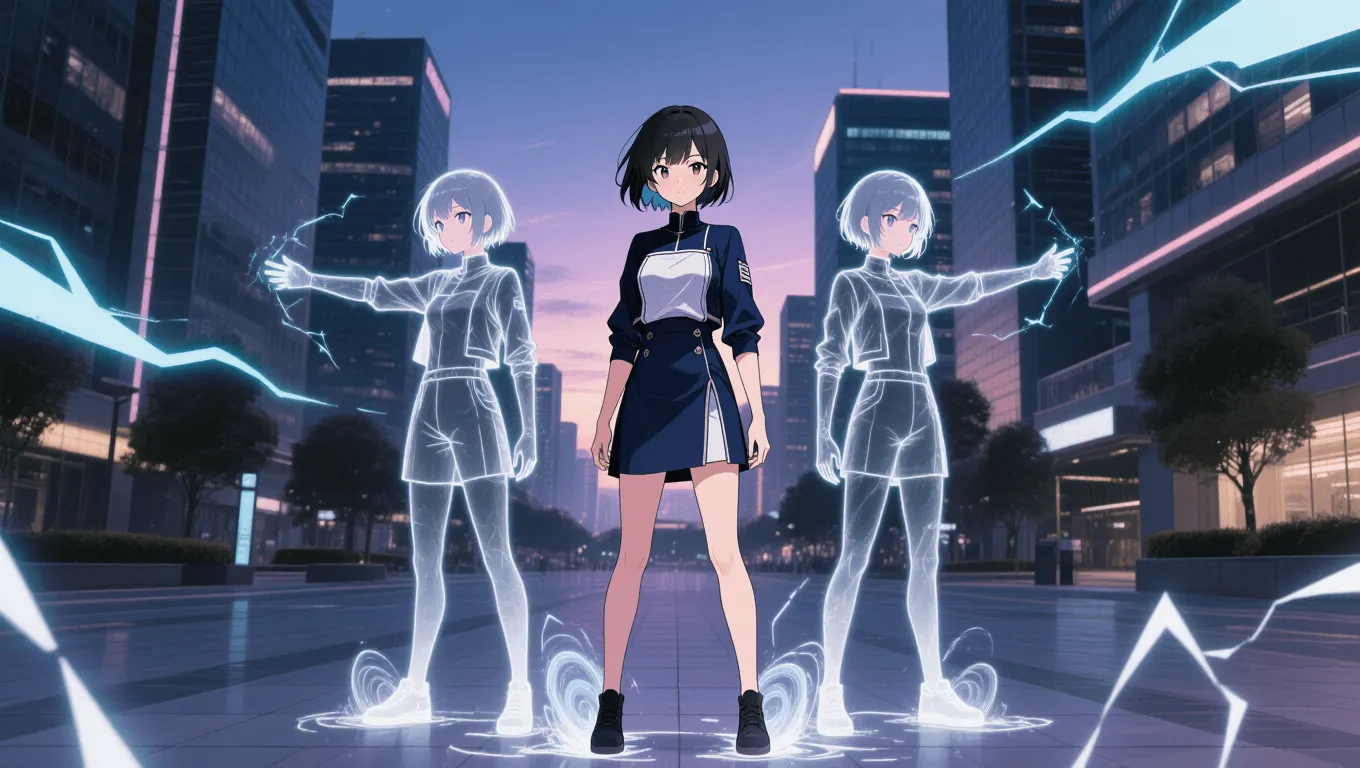
Capabilities include:
- Short-duration duplicates
- Minor future glimpses
- Basic teamwork
- Limited memory sharing
Weaknesses remain severe because paradoxes are unstable.
Typical power scale:
- Street-level combat
- Tactical dueling
- Small-scale missions
Level 2 🌇 — Advanced Timeline Coordination
The user gains control over multiple temporal versions simultaneously.
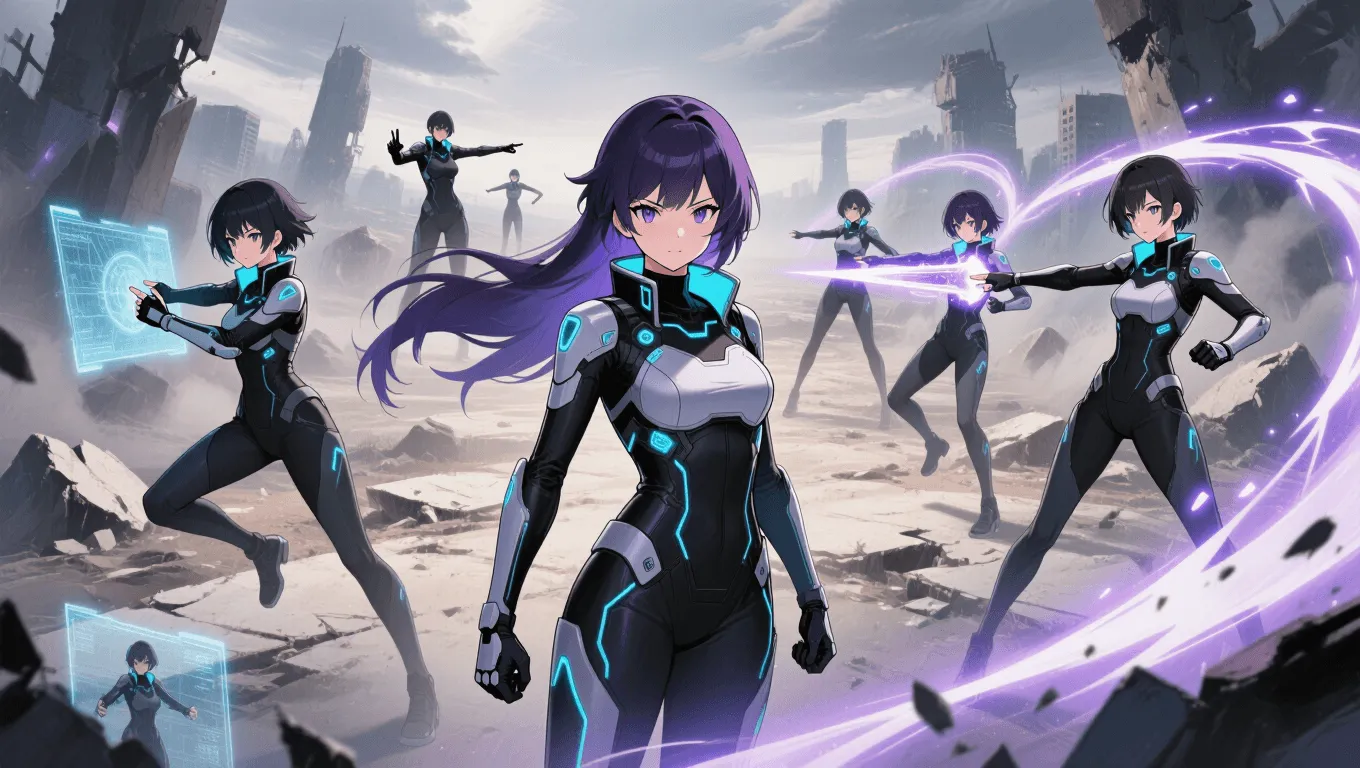
Abilities now include:
- Long-duration manifestations
- Future tactical forecasting
- Recursive teamwork
- Timeline branching awareness
The user can dominate large battlefields and manipulate events strategically.
Typical power scale:
- Military operations
- City-scale conflicts
- Large temporal conspiracies
Level 3 🌃 — Infinite Temporal Legion
At maximum mastery, the user can access countless versions of themselves from endless timelines.
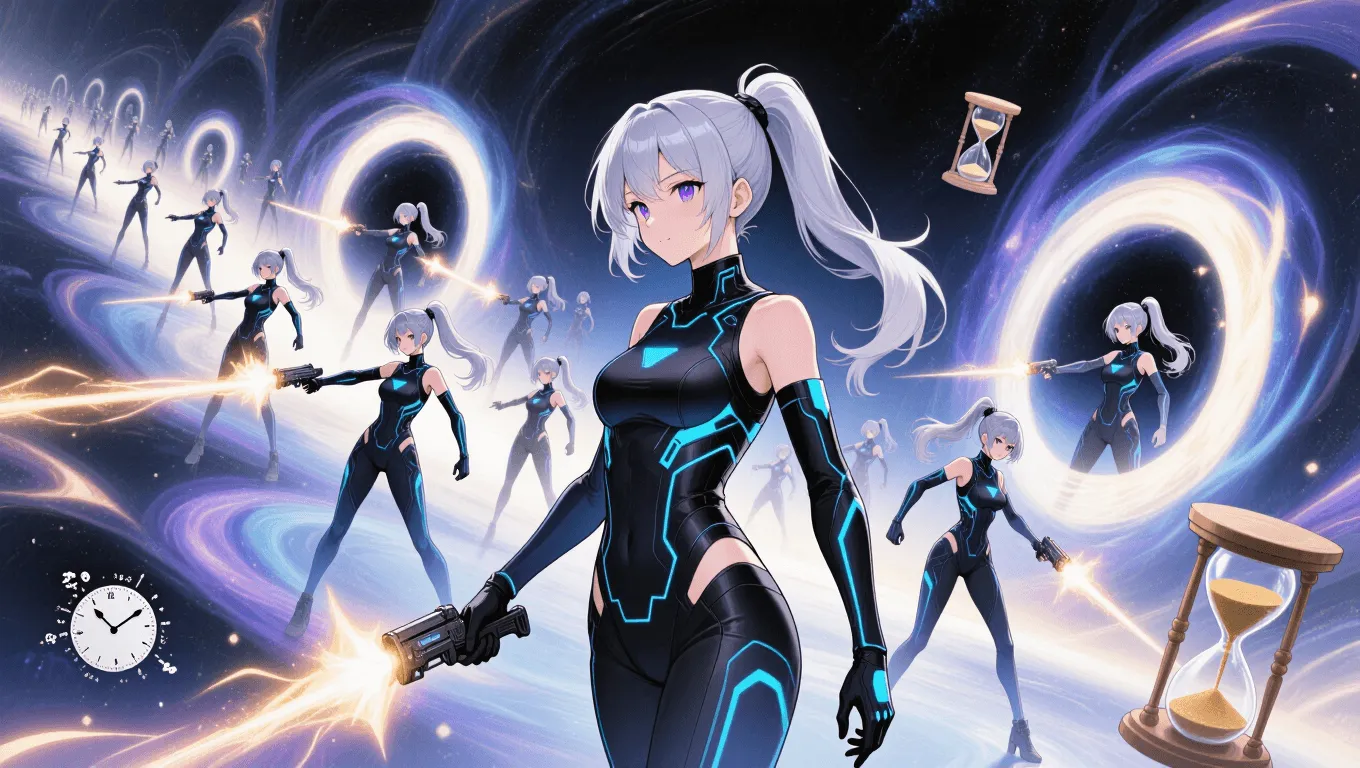
Capabilities may include:
- Infinite self-armies
- Reality-level timeline rewriting
- Self-reinforcing paradox loops
- Omnitemporal awareness
- Near-immortality through replacement selves
At this point, defeating the user becomes almost impossible because another version can always arrive from a different timeline.
Typical power scale:
- Universal threats
- Timeline wars
- Cosmic temporal governance
Limitations of Using the Duplication (Temporal)
Paradox Instability
Too many interacting selves can destabilize causality.
Possible consequences include:
- Timeline fractures
- Memory corruption
- Reality collapse
- Duplicate erasure
The more versions summoned, the greater the risk.
Mental Overload
Sharing experiences across timelines can overwhelm the mind.
Users may experience:
- Identity confusion
- Memory fragmentation
- Emotional collapse
- Temporal schizophrenia
Distinguishing the “original” self may become impossible.
Duplicate Independence
Future selves are still independent beings.
They may:
- Disagree with the present self
- Hide information
- Pursue their own agendas
- Betray the user
Not every temporal version remains loyal.
Temporal Exhaustion
Maintaining timeline connections consumes immense energy.
Overuse may cause:
- Aging acceleration
- Cellular degradation
- Temporal displacement
- Chronological burnout
Some users literally age decades after major battles.
Timeline Vulnerability
If the main timeline changes drastically, duplicates may vanish instantly.
This makes the power unstable in chaotic environments.
Weakness Against What Other Superpowers
Temporal Duplication has several dangerous counters.
Reality Manipulation
Reality warpers can erase timelines entirely, preventing duplicates from existing.
Time Stop
Users of time-freezing powers can immobilize all summoned selves simultaneously.
Probability Manipulation
Luck-based abilities may force paradox failures or timeline collapses.
Memory Erasure
Since coordination relies heavily on shared knowledge, memory attacks are devastating.
Dimensional Sealing
Spatial imprisonment can isolate temporal duplicates from their source timeline.
Existence Erasure
Absolute erasure abilities can remove all timeline variants at once.
Synergistic Power Combos
Temporal Duplication becomes terrifying when combined with other abilities.
Precognition
Future sight combined with future selves creates nearly unavoidable victory conditions.
Telepathy
Mental communication allows instant synchronization between duplicates.
Regeneration
Even if several selves die, surviving versions can continue fighting indefinitely.
Chronokinesis
Direct time manipulation dramatically strengthens duplicate control.
Portal Creation
Portals allow temporal selves to attack from multiple locations simultaneously.
Adaptive Evolution
Each duplicate can evolve differently, creating specialized temporal variants.
Known Users
Kang the Conqueror
One of the most famous temporal characters in Marvel Comics, Kang the Conqueror frequently interacts with alternate and future versions of himself across timelines. His variants often cooperate—or wage war against one another. Learn more at Marvel’s official character page.
Multiple Batman Variants
In DC’s multiverse stories, Batman has encountered alternate and future versions of himself that fight alongside or against him during timeline crises.
Rick Sanchez
Rick Sanchez frequently interacts with alternate-dimensional and timeline versions of himself, effectively creating temporal duplication scenarios involving coordinated variants.
The Council of Reeds
Mister Fantastic has worked alongside alternate versions of himself known as the Council of Reeds, showcasing the terrifying intelligence potential of coordinated temporal duplicates.
Future Trunks
Future Trunks demonstrates many thematic elements of temporal duplication through timeline interaction, future intervention, and alternate-self paradoxes.