
Enhanced Durability
Enhanced Durability Video Demo 🎬
Table of Contents
- Enhanced Durability Video Demo 🎬
- What Is Enhanced Durability
- Core abilities of Enhanced Durability
- Application / Tactical Advantages in Combat
- Level: Level 1 🏙️**, Level 2** 🌇**, Level 3** 🌃
- Limitations of using the Enhanced Durability
- Weakness against what other superpowers
- Synergistic Power Combos
- Known Users
Enhanced Durability is a defensive superpower that lets a character withstand damage that would seriously injure or kill normal beings. Instead of relying on dodging or barriers, the durable character survives hits head-on—shrugging off blunt trauma, blades, bullets, falls, and even explosive shockwaves depending on the power’s strength. In RPG terms, Enhanced Durability is the foundation of a tank build: it increases survivability, extends time on the front line, and enables riskier plays that would be impossible for fragile fighters.
For readers exploring related abilities, it pairs naturally with many powers listed on the superpower list, and it often shows up in unexpected combinations generated by a random superpower generator.
What Is Enhanced Durability
Enhanced Durability is the capacity to resist, absorb, or ignore physical harm beyond ordinary biological limits. It can manifest as armor-like skin, hardened bones, shock-absorbing tissue, dense musculature, adaptive cells, a protective energy sheath, or supernatural resilience. Some versions are close to invulnerability (near-total immunity to conventional injury), while others function as heavy damage resistance, reducing harm rather than eliminating it.
This superpower is frequently described using adjacent keywords such as superhuman durability, imperviousness, nigh-invulnerability, resilience, damage resistance, toughness, and kinetic dampening. The exact “rules” depend on the setting: one world may treat durability as a passive trait always active, while another treats it as a power that must be consciously braced or fueled.
Core abilities of Enhanced Durability
Enhanced Durability typically includes several layered benefits. A character may have all of them, or only a specific subset.
- Impact resistance and shock absorption: The body disperses force across a wider area, reducing broken bones, internal bleeding, and concussions. This is the classic “takes a punch from a super-strong opponent and stands up” effect.
- Cut, pierce, and ballistic resistance: Skin, armor plates, or tissue density makes stabbing and slashing less effective. At higher tiers, it becomes bulletproof skin or full ballistic immunity.
- High pressure tolerance: Durable bodies can endure crushing forces (collapsing walls, vehicular impacts, superhuman grapples) without catastrophic failure.
- Reduced pain response: Some versions include elevated pain tolerance, allowing the character to keep functioning even while injured.
- Environmental toughness: Depending on the fiction, durability may extend to heat, cold, radiation, toxins, or vacuum-like conditions. This is not guaranteed—many durable characters resist punches but still need oxygen.
- Structural stability: Joints, spine, and internal organs are less prone to tearing and rupture, allowing extreme feats like stopping a heavy object or surviving long falls.
A key point is that Enhanced Durability does not automatically mean enhanced strength. A character might be hard to injure yet still unable to lift much more than normal—making them a “wall” rather than a “bulldozer.”
Application / Tactical Advantages in Combat
Enhanced Durability is a combat multiplier because it changes decision-making. A fragile fighter must avoid risk; a durable fighter can accept risk deliberately to control the battlefield.
- Frontline control: Durable characters can hold chokepoints, body-block corridors, and force enemies to reposition. They can “anchor” a team formation.
- Safe trading: When the durable fighter can survive exchanges, they can trade hits to land decisive grabs, disarms, or crowd-control moves.
- Interrupts and pressure: Durability allows walking through light attacks to interrupt casting, charging, or aiming. Even if the durable character is not fast, they can be relentless.
- Baiting and counterplay: A classic tactic is feigning vulnerability to draw enemies into overcommitting—then punishing them while they are in recovery frames.
- Objective play: In RPG or MOBA-style fights, durability is perfect for capturing objectives under fire, carrying allies to safety, or stalling until reinforcements arrive.
Level: Level 1 🏙️**, Level 2** 🌇**, Level 3** 🌃
Level 1 🏙️
At Level 1, Enhanced Durability resembles peak-human toughness taken several steps further. The character resists bruising, sprains, and fractures, and can survive impacts that would hospitalize others.
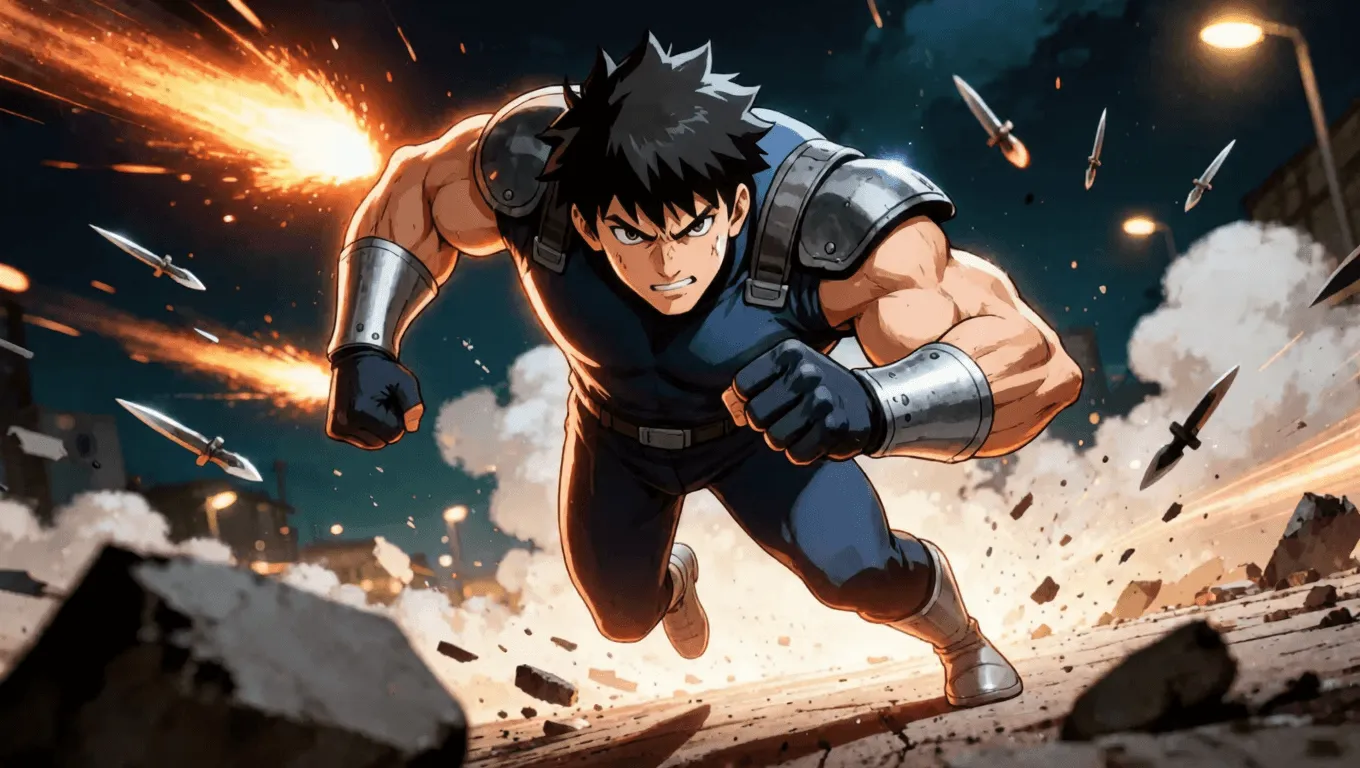
- Typical feats: Taking a hard fall with manageable injury, resisting small blades, tanking non-lethal blunt strikes.
- Combat role: Brawler, bodyguard, distraction.
- Practical edge: The user can keep fighting after being clipped, shoved, or slammed—perfect against street-level threats.
Level 2 🌇
At Level 2, the durability becomes clearly superhuman. Conventional weapons lose reliability, and heavy impacts stop being fight-ending events.
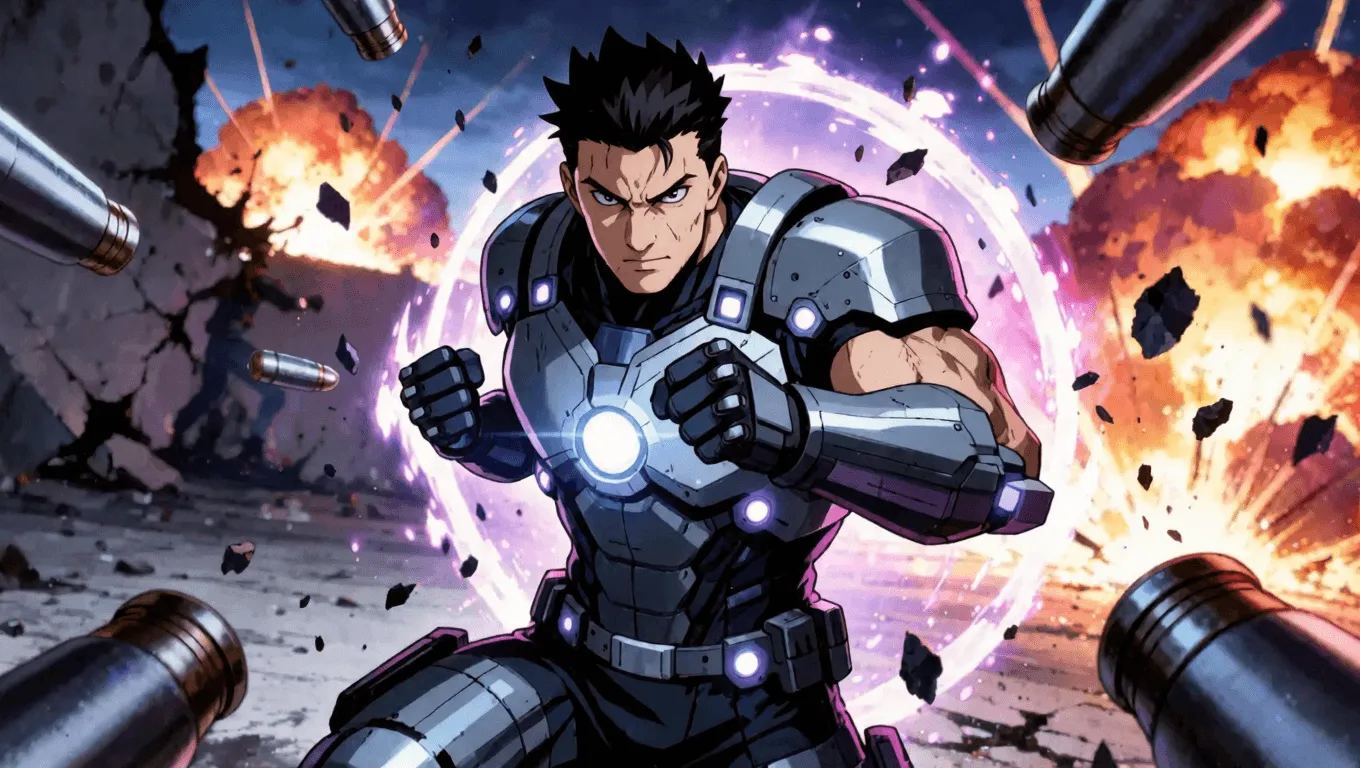
- Typical feats: Withstanding serious beatdowns, resisting many bullets or shrapnel types, surviving crashes, reducing explosion shock damage at moderate range.
- Combat role: True frontline tank, breacher, hostage-rescue shield.
- Practical edge: The user can break enemy lines by advancing through danger zones that others cannot cross.
Level 3 🌃
At Level 3, Enhanced Durability approaches the fantasy of invulnerability. Damage must be specialized, reality-bending, or scaled to extreme levels to matter.
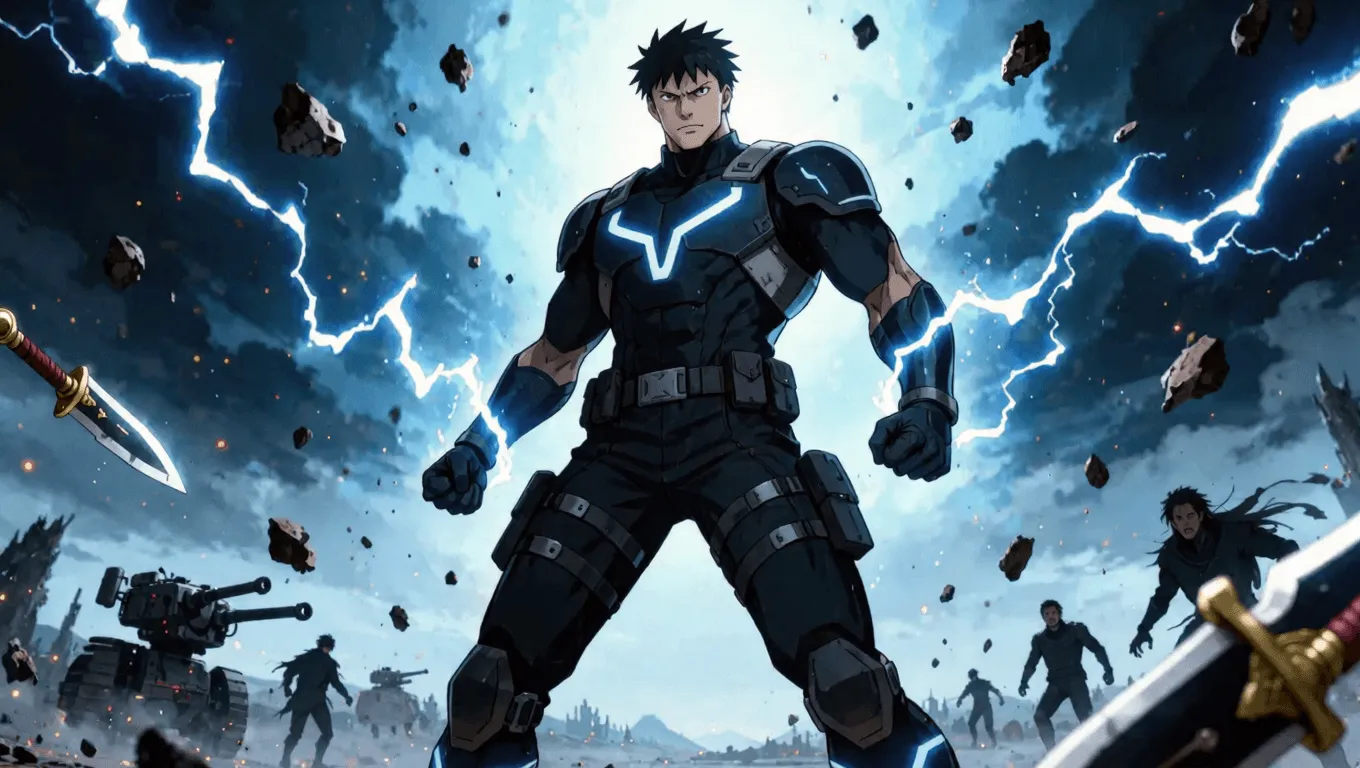
- Typical feats: Near-total immunity to small arms, severe resistance to heavy weapons, surviving devastating kinetic impacts, functioning after attacks that would annihilate a normal body.
- Combat role: Siege breaker, raid boss archetype, living barricade.
- Practical edge: The user forces opponents to change strategies entirely—shifting fights away from direct damage and toward control, bypass, or power negation.
Limitations of using the Enhanced Durability
Even the toughest character has constraints. Good stories—and balanced RPG mechanics—make those constraints matter.
- Not all damage types are covered: Many durable characters resist physical trauma but remain vulnerable to poison, radiation, electricity, acid, or extreme heat/cold unless explicitly protected.
- Internal vulnerabilities: A body can be “hard outside, fragile inside.” Sonic vibration, pressure waves, or precision attacks may bypass surface armor and damage organs.
- Energy and stamina costs: In some settings, durability is fueled by metabolism, magic, or concentration. Long fights can drain the user until their resistance weakens.
- Mobility tradeoffs: Extra density, armor plating, or reinforced tissue can reduce speed, flexibility, or stealth. Being hard to hurt does not guarantee being hard to hit.
- Cumulative trauma: Damage resistance is not the same as damage immunity. Repeated impacts can still cause microfractures, fatigue, inflammation, or internal stress that adds up over time.
- Restraints still work: Durability does not automatically prevent grapples, entanglement, sedation, containment fields, or battlefield removal (dropping the tank into a pit is still effective).
Weakness against what other superpowers
Enhanced Durability is strongest against straightforward physical attackers and weakest against abilities that bypass durability entirely or attack from angles toughness cannot cover.
- Durability negation and true damage: Powers that ignore armor, nullify defenses, or directly inflict “conceptual” harm can cut through even top-tier toughness.
- Molecular or atomic manipulation: If an enemy can rearrange matter, dissolve bonds, or phase objects through barriers, toughness becomes less relevant.
- Intangibility and phasing attacks: An intangible opponent can bypass exterior protection to strike organs, disrupt the nervous system, or remove oxygen.
- Telepathy and mind control: A durable body does not help if the mind is compromised. Mental attacks can force surrender or self-sabotage.
- Reality warping: If the rules of physics can be rewritten, durability becomes negotiable.
- Extreme corrosion and acid generation: Chemical destruction can break down tough surfaces over time, especially if the durability is mostly kinetic.
- Sonic and vibration manipulation: Resonance-based attacks can rattle internal structures, potentially bypassing thick skin and armor.
- Energy drain and power nullification: If durability is a powered state, draining or canceling it can instantly expose the user to normal harm.
Synergistic Power Combos
Enhanced Durability becomes far more dangerous when paired with complementary powers that cover its blind spots or amplify its frontline pressure.
- Regeneration or healing factor: Durability reduces incoming damage; regeneration erases what gets through. Together, they create the classic “unkillable” bruiser.
- Super strength: A durable character who can also hit hard becomes a true close-range terror—able to trade blows with confidence and win exchanges.
- Force fields: A layered defense solves the “wrong damage type” problem. Toughness handles impacts while shields block heat, radiation, or exotic energy.
- Kinetic redirection or absorption: Turning absorbed force into speed, shockwaves, or stored power rewards the user for getting hit—making enemies hesitate.
- Enhanced reflexes: Durability plus reaction speed is oppressive: the user can dodge the few attacks that bypass toughness while ignoring the rest.
- Size alteration or density control: Becoming heavier or larger increases stability and reduces knockback, letting the user hold ground and dominate space.
- Pain suppression / mental fortitude: If the user stays calm under pressure, they can exploit durability tactically rather than simply endure.
Known Users
Enhanced Durability shows up across superhero fiction as “unbreakable skin,” “impervious organic armor,” or “rock-like bodies” that resist injury.
- Luke Cage (Marvel Comics) – Portrayed as gaining bulletproof skin from a prison experiment and using that toughness to protect others.
- Colossus (Piotr Rasputin) (Marvel Comics) – Converts his body into an organic steel-like form that grants a high degree of imperviousness to injury.
- The Thing (Ben Grimm) (Marvel Comics) – A rocky, massively resilient powerhouse and cornerstone frontline fighter for the Fantastic Four.