
Mysticism
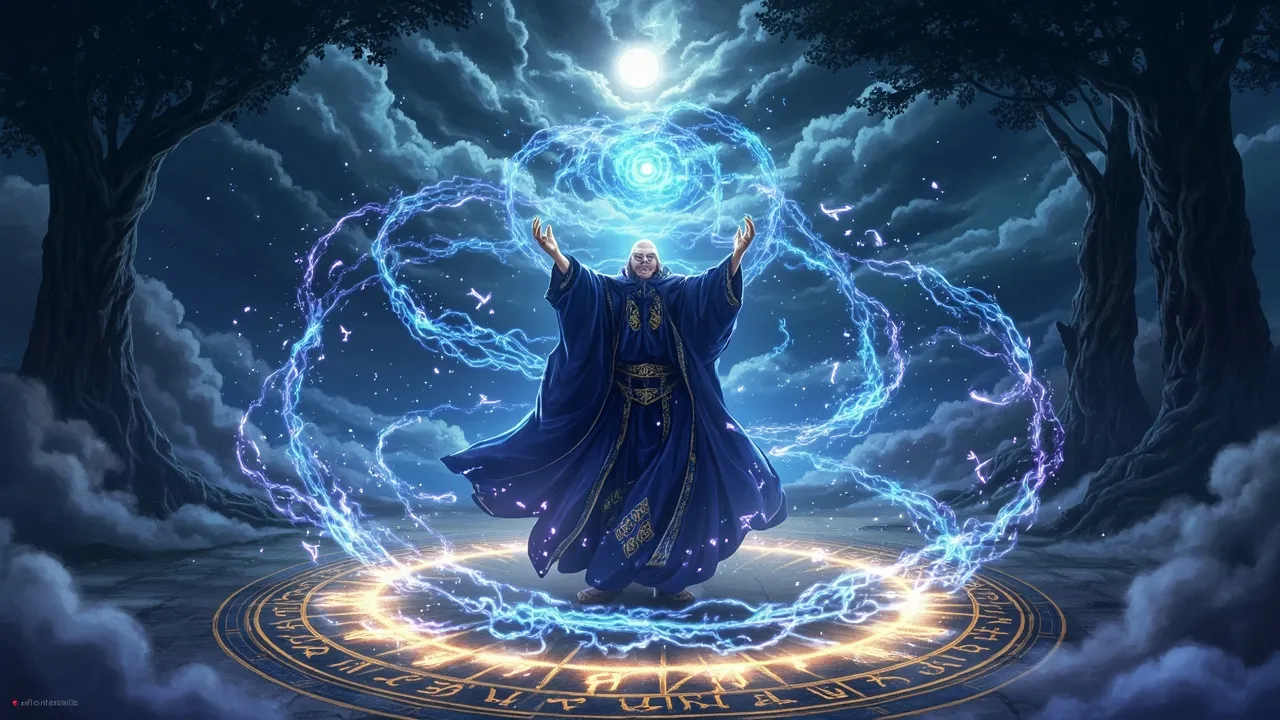
Mysticism Video Demo 🎬
Table of Contents
What Is Mysticism
Mysticism is a superpower rooted in practiced supernatural skill rather than a single “one-button” effect. A Mysticism user studies diverse mystical arts—ritual magic, spellcasting, sigilcraft, and esoteric techniques—to influence reality through intention, symbols, and spiritual force. Within the first moments of encountering Mysticism, it’s clear the main advantage is versatility: the user can adapt by choosing the right rite, charm, ward, or incantation for the situation.
Unlike powers that operate purely on instinct, Mysticism often relies on knowledge, discipline, and correct procedure. The user might recite an invocation, draw runes, prepare talismans, mix alchemical reagents, or enter a trance to channel mystic energy. In many settings, Mysticism bridges the visible and invisible—spirits, astral planes, hidden truths, lingering curses, and protective sanctums—making it equally suited for investigation, defense, and carefully planned offense.
Core abilities of Mysticism
Mysticism typically expresses as a toolkit of supernatural practices. Individual users may specialize, but the broad “Mysticism” umbrella can include many of the following core abilities:
-
Ritual magic and spellcasting: Casting structured spells through spoken words, gestures, focus objects, or prepared circles. This can range from simple cantrips (sparks of light, minor illusions) to complex ceremonies that reshape an area.
-
Wards and protective barriers: Creating magical shields, sanctified boundaries, anti-entity wards, and defensive glyphs that repel spirits, curses, or hostile energies.
-
Sigils, runes, and talismans: Inscribing symbols that store effects—seals that lock doors, charms that dampen fear, runes that trigger when crossed, or talismans that resist poison or mind influence.
-
Divination and scrying: Reading omens, using mirrors or bowls, interpreting symbolic “threads” of probability, or contacting an oracle-like state to gather intelligence.
-
Summoning and binding: Calling entities (spirits, elementals, familiars) and negotiating, commanding, or binding them with contracts and circles. Advanced users can dismiss or banish hostile presences.
-
Enchantment and hexwork: Imbuing items with temporary magical properties or placing debuffs—slow, disorientation, misfortune, weakness—through curses and counter-curses.
-
Astral projection and spirit work: Separating consciousness to scout, communicate, or traverse non-physical realms. This can be used for infiltration, reconnaissance, or evasion.
-
Healing rites and cleansing: Closing wounds, neutralizing toxins, stabilizing the dying, breaking possession, or purifying corrupted areas, often at a cost of stamina or materials.
-
Alchemy and potioncraft: Brewing elixirs for resilience, heightened senses, sleep, antidotes, or temporary power boosts. Reliability depends on ingredient quality and preparation time.
-
Reality “nudging”: Many systems treat Mysticism as influencing probability and metaphysical rules rather than brute-forcing physics. Effects can be subtle but impactful when layered.
Because Mysticism is broad, its strength comes from preparation and correct matching: the right ritual for the right threat, performed under the right conditions.
Application / Tactical Advantages in Combat
In combat, Mysticism thrives on control, disruption, and layered defense. A skilled user rarely tries to overpower a brawler head-on; instead, they change the battlefield and the opponent’s options.
Common tactical advantages include:
-
Pre-fight preparation: Placing wards on armor, preloading talismans, setting trigger glyphs, and brewing quick-use drafts. Even simple preparations can swing a fight.
-
Zone control: Circles that slow enemies, seals that block passages, fog illusions that break line of sight, or sanctums that weaken summoned creatures.
-
Debuffing and misdirection: Hexes that drain stamina, confuse targeting, induce heavy limbs, or distort perception. Illusory doubles and phantom sounds can create openings.
-
Counter-summoning and banishment: Against entities or conjured threats, Mysticism can be uniquely effective—severing bindings, dispelling constructs, or exorcising parasites.
-
Utility under pressure: Smoke-like veils, short-range teleport steps (in some interpretations), spectral hands, or emergency wards that buy time to escape.
-
Non-lethal options: Sleep sigils, binding cords, fear dampeners, or pacification rites can end fights without collateral damage—valuable in crowded locations.
Mysticism also shines in “information warfare.” A scrying glance can reveal hidden enemies, a curse can force a weapon to jam at the worst moment, and a ward can stop a stealth power from functioning inside its boundary.
Level: Level 1 🏙️
At Level 1, Mysticism is practical and limited—more like a capable occult practitioner with real results.

Typical capabilities:
-
Minor wards that reduce harm, soften impacts, or repel weak spirits.
-
Basic sigils and charms: luck nudges, mild fear resistance, simple traps (flash glyphs, trip-hexes).
-
Small illusions: muffled footsteps, brief mirages, distracting whispers.
-
Simple cleansing: easing nausea, reducing bleeding, calming panic.
-
Ingredient-dependent alchemy: a few reliable potions if prepared in advance.
Combat profile:
-
Best used defensively and tactically. The user buys time, disrupts an attacker, and escapes or sets up allies.
-
Casting is slower, and interruptions can ruin a spell.
Level: Level 2 🌇
At Level 2, the user’s repertoire expands, and they can cast more reliably under stress.
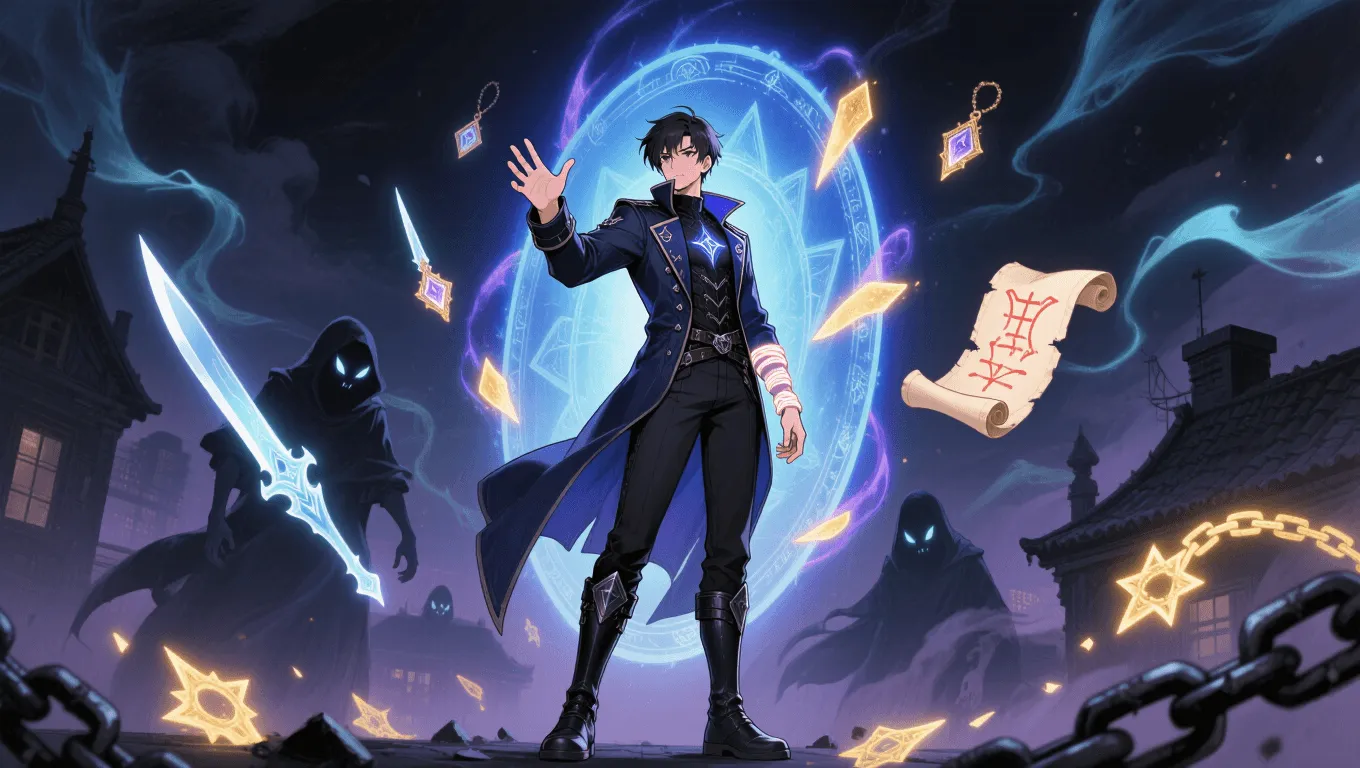
Typical capabilities:
-
Stronger barrier wards that can block attacks for short windows.
-
Scrying and detection: sensing curses, hidden entities, or magical residues; locating a target via symbolic links.
-
Binding and banishment: restraining summoned beings, breaking minor possessions, dispelling hostile enchantments.
-
Weapon and armor enchantment: temporarily empowering a blade, reinforcing clothing against burns, or adding impact-dampening.
-
Robust hexwork: slowing reflexes, draining focus, or scrambling coordination.
Combat profile:
-
The user can shape a skirmish: wall off lanes, punish pursuit, and force enemies into unfavorable angles.
-
They begin to function as a counter to other supernatural powers—especially those reliant on summoned constructs or spiritual influence.
Level: Level 3 🌃
At Level 3, Mysticism becomes a high-tier, reality-influencing discipline. The user can combine multiple practices quickly and sustain complex effects.
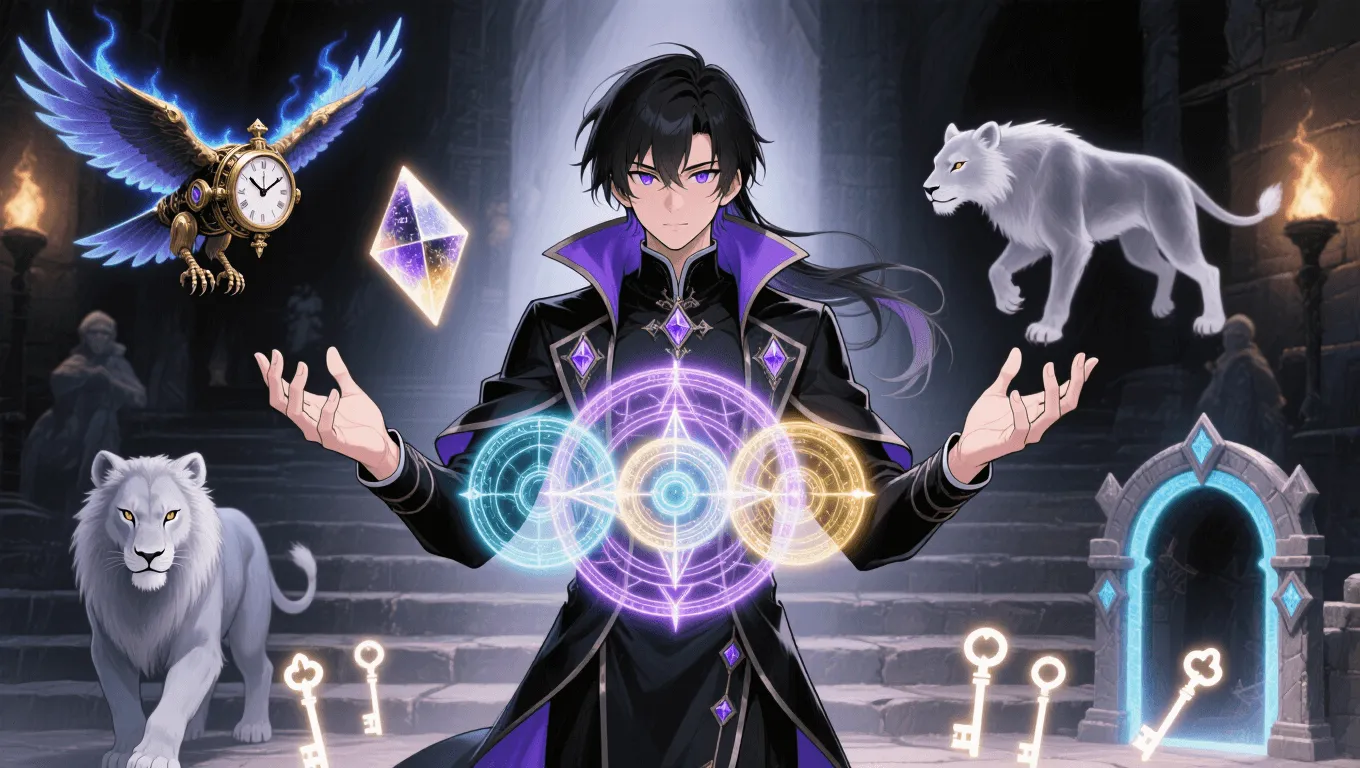
Typical capabilities:
-
Layered sanctums: overlapping wards that stack protections, repel intrusions, and dampen hostile powers inside a defined space.
-
Advanced summoning: calling powerful allies or forces with negotiated terms; creating semi-autonomous constructs or familiars.
-
Deep divination: predictive flashes, strong remote viewing, and reading “metaphysical pressure” before danger strikes.
-
High-grade dispelling: unraveling enchantments, severing bindings, and cleansing entrenched curses from people or places.
-
Complex transmutation (setting-dependent): alchemical changes, material reinforcement, or symbolic “keys” that unlock impossible doors.
Combat profile:
-
A Level 3 user can control tempo: deny enemy advantages, rewrite the battlefield, and end fights through binding, banishment, or overwhelming spiritual force.
-
The biggest threat is not raw damage—it’s inevitability. Opponents find their options shrinking as wards close, hexes stack, and escape routes seal.
Limitations of using the Mysticism
Mysticism’s flexibility comes with real constraints. These limitations keep it from being a flawless solution:
-
Preparation and resources: Many effects require components—chalk, salt, candles, herbs, relics, or crafted talismans. Running out of supplies narrows options fast.
-
Casting time and focus: Even talented users may need a breath, a phrase, or a gesture. Loud environments, pain, or surprise attacks can disrupt a rite.
-
Knowledge barrier: Mysticism is learned. Mispronounced incantations, flawed sigils, or sloppy circles can backfire, fizzle, or produce unintended outcomes.
-
Symbolic rules: Some settings require “links” (true names, personal items, blood, locations, lunar timing). Without the right link, long-range or targeted magic weakens.
-
Mental and spiritual fatigue: Channeling mystic energy drains stamina and concentration. Overcasting can cause burnout, hallucinations, or vulnerability to possession-like effects.
-
Moral and narrative costs: Binding entities, invoking curses, or using forbidden rites may carry consequences—debts, spiritual attention, or corruption—depending on the world’s rules.
-
Counter-magic exists: Wards can be broken, spells can be dispelled, and rituals can be interrupted by clever enemies.
Weakness against what other superpowers
Mysticism is strong, but certain powers naturally pressure its weak points—time, focus, and dependence on metaphysical “channels.”
-
Anti-magic and nullification: Powers that suppress supernatural effects can shut down wards, dispel constructs, or make incantations fail outright.
-
Psychic Shield: If a Mysticism user relies on mental intrusion, suggestion, or fear projection, strong mental barriers can block the effect and reflect backlash.
-
Enhanced Speed or Tachyon Mimicry: Extremely fast opponents can prevent casting by never allowing distance or time for gestures and symbols.
-
Electromagnetic Manipulation: In tech-heavy settings, EM disruption can wreck enchanted devices, interfere with ritual tools, or overload protective charms that store energy.
-
Order Manipulation: If an opponent can impose rigid cosmic laws, they may “overwrite” flexible mystical rules, collapsing illusions and stabilizing probability against magic.
-
Energy Absorption / Energy Conversion: If spells manifest as energy, an absorber can drink the attack, while a converter can turn it into something harmless (or worse, return it).
-
Light Manipulation: Mysticism often uses concealment and illusion; light control can reveal hidden sigils, expose astral residue, or burn through shadowy veils.
-
Retrocognition and Divination: Information powers can uncover the ritual setup, identify the caster’s anchors, and dismantle traps before they trigger.
In practice, Mysticism loses hardest to opponents who deny setup, force constant movement, or break concentration.
Synergistic Power Combos
Mysticism becomes frightening when paired with complementary abilities—either to secure casting time or to enhance the effects of rituals. For more ability pairings, readers can browse the broader catalog on the Superpower Wiki.
-
Mysticism + Divination: Divination finds the right moment; Mysticism delivers the decisive ritual. Together they enable ambush-proof planning and “always prepared” counters.
-
Mysticism + Phasing: Intangibility helps the caster reposition safely, avoid interruptions, and place sigils in otherwise unreachable locations.
-
Mysticism + Light Manipulation: Light can power sanctums, expose hidden entities, and amplify illusions. The caster can craft radiant wards or blinding glyph detonations.
-
Mysticism + Emotion Manipulation: Emotion control can weaken willpower and resistance, making curses stick and banishment rites easier to enforce.
-
Mysticism + Creation: Creation supplies ritual components on demand—chalk, salt, candles, ink—solving one of Mysticism’s biggest logistical weaknesses.
-
Mysticism + Psychic Navigation: Psychic tracking provides the target’s “trail,” while Mysticism uses that link for scrying, cleansing, or protective intervention.
-
Mysticism + Dark Arts: Dark Arts offers raw, risky power; Mysticism offers structure and safety. Combined, they can produce potent curses with better containment.
-
Mysticism + Enhanced Stamina: Longer endurance means longer rituals, stronger sustained wards, and fewer openings caused by fatigue.
A fun way to explore unexpected pairings is to roll abilities through a random superpower generator and imagine how Mysticism adapts to whatever comes up.
Known Users
Because Mysticism is a broad umbrella, many comic universes feature iconic practitioners who embody ritual magic, arcane study, and supernatural problem-solving:
-
Doctor Strange (Marvel Comics): A master of the mystic arts known for wards, astral projection, dimensional travel, and spellcraft.
-
Zatanna Zatara (DC Comics): A stage magician who channels real magic through incantations and precision.
-
John Constantine (DC Comics/Vertigo): An occult detective specializing in rituals, bargains, banishment, and dangerous knowledge.
-
Scarlet Witch (Marvel Comics): Often associated with chaos magic, probability bending, and high-tier reality-altering spellwork.
-
Raven (DC Comics): A practitioner of dark and empathic magic with strong defensive and summoning elements.
-
Brother Voodoo (Marvel Comics): A mystic connected to spirit work, possession defense, and ritual practice.