
Spatial Manipulation: Mastering Space Itself
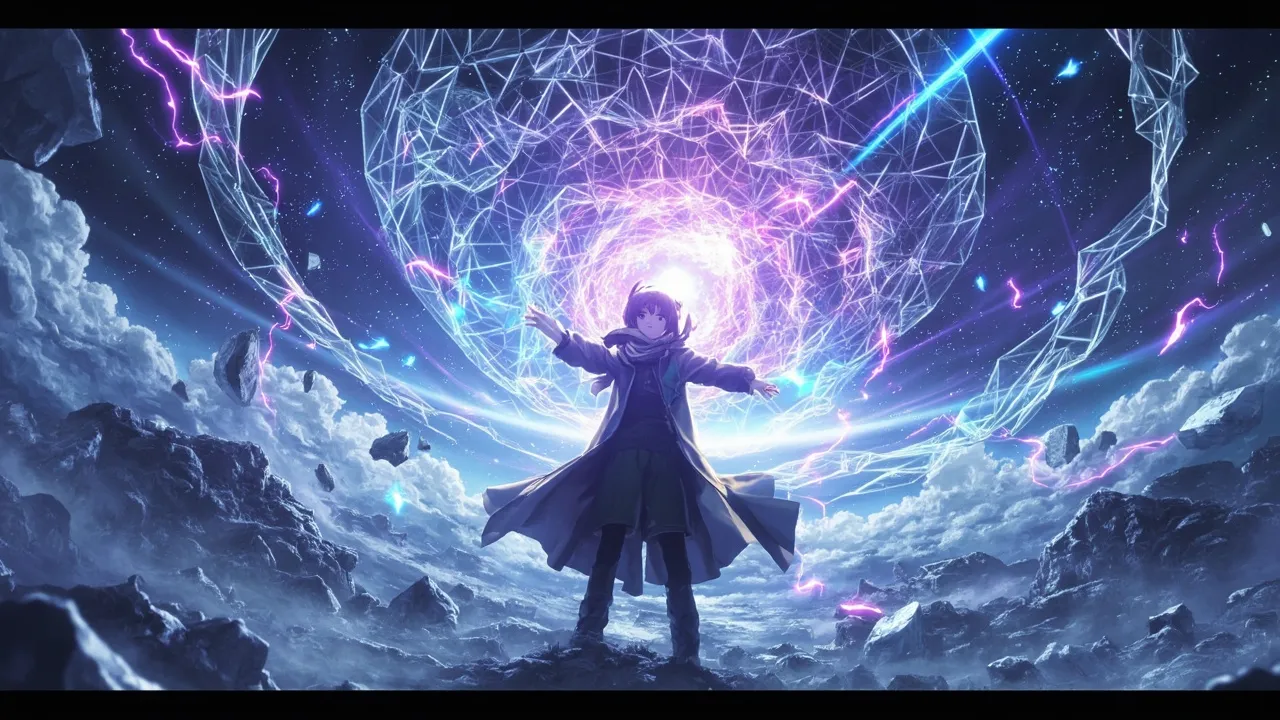
Spatial Manipulation Video Demo 🎬
Table of Contents
- Spatial Manipulation Video Demo 🎬
- What Is Spatial Manipulation
- Core Abilities of Spatial Manipulation
- Application / Tactical Advantages in Combat
- Level: Level 1 🏙️, Level 2 🌇, Level 3 🌃
- Limitations of Using the Spatial Manipulation
- Weakness Against What Other Superpowers
- Synergistic Power Combos
- Known Users
Spatial Manipulation is one of the most versatile and powerful abilities in fiction, allowing its user to bend, warp, and control the very fabric of space. Whether used for teleportation, creating dimensional traps, or distorting distances, Spatial Manipulation gives its wielder unparalleled control over positioning and movement. As a core ability featured in many entries on the superpower list, this power stands out for its strategic depth and near-limitless applications in both combat and exploration.
What Is Spatial Manipulation
Spatial Manipulation refers to the ability to control space itself—the invisible structure that defines distance, direction, and position. A user with this power can alter how space behaves, enabling them to fold distances, create portals, compress areas, or even isolate sections of reality.
Unlike simple teleportation, Spatial Manipulation is far broader. It encompasses a range of abilities such as spatial warping, dimensional folding, pocket dimension creation, and spatial anchoring. This makes it one of the most complex and dangerous powers, as it directly interferes with the laws of physics.
At its core, Spatial Manipulation allows the user to redefine “where” things are, making distance meaningless and positioning entirely fluid.
Core Abilities of Spatial Manipulation
Teleportation and Spatial Folding
One of the most recognizable aspects of Spatial Manipulation is teleportation. By folding space, the user can connect two distant points instantly, allowing seamless travel without crossing the space in between.
This can be used for:
- Instant movement across short or vast distances
- Dodging attacks by shifting position
- Rapid deployment in combat scenarios
Spatial Distortion
Users can stretch, compress, or twist space to create unpredictable environments. For example, a straight path can be turned into an endless loop, or a small area can be expanded into a vast field.
This ability enables:
- Disorienting enemies
- Creating impossible geometries
- Altering battlefield layouts in real time
Portal Creation
Spatial Manipulation allows for the creation of stable or unstable portals connecting two locations. These portals can be used offensively or defensively.
Applications include:
- Redirecting attacks
- Creating escape routes
- Transporting objects or allies
Dimensional Trapping
Advanced users can isolate targets in separate spatial zones or pocket dimensions. These traps can immobilize enemies or remove them from reality entirely.
Examples include:
- Spatial prisons
- Infinite loops
- Sealed dimensional pockets
Spatial Compression and Expansion
The user can compress space to increase density or expand it to create distance. This ability can enhance attacks or provide defensive advantages.
Uses include:
- Crushing targets by collapsing space
- Creating barriers by stretching distance
- Enhancing speed perception by reducing travel space
Application / Tactical Advantages in Combat
Spatial Manipulation is a tactical powerhouse in combat due to its control over positioning and movement.
Absolute Mobility
The user can move freely across the battlefield, ignoring obstacles, terrain, or distance. This makes them extremely difficult to hit and allows constant repositioning.
Battlefield Control
By warping space, the user can reshape the battlefield to their advantage. Enemies can be separated, trapped, or forced into disadvantageous positions.
Attack Redirection
Incoming attacks can be redirected through portals or warped space, turning an opponent’s offense into self-inflicted damage.
Defensive Superiority
Instead of blocking attacks, the user can simply alter space so attacks never reach them. For example:
- Increasing distance between themselves and threats
- Redirecting trajectories
- Creating spatial shields
Psychological Warfare
Enemies facing Spatial Manipulation often struggle to understand what is happening. Disorientation, confusion, and fear become powerful tools in weakening opponents.
Level: Level 1 🏙️, Level 2 🌇, Level 3 🌃
Level 1 🏙️ – Basic Spatial Control
At this level, the user can perform limited spatial alterations:

- Short-range teleportation
- Minor spatial distortions
- Small portal creation
Limitations are significant, including range restrictions and high energy costs. Precision may also be inconsistent.
Level 2 🌇 – Advanced Spatial Warping
The user gains greater control and versatility:
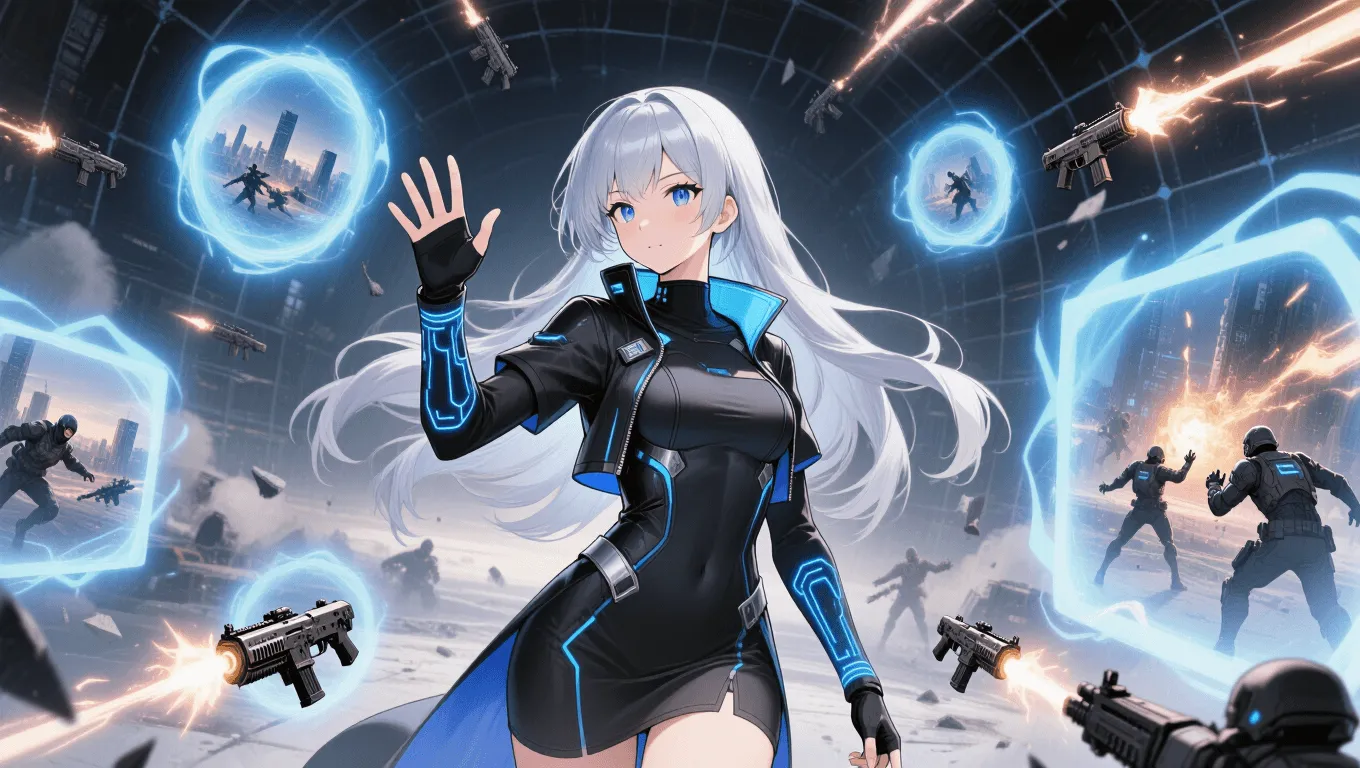
- Long-range teleportation
- Stable portals
- Battlefield-scale spatial distortion
They can manipulate space more precisely, allowing for tactical combat usage and multi-target control.
Level 3 🌃 – Absolute Spatial Authority
At this level, the user becomes a master of space itself:
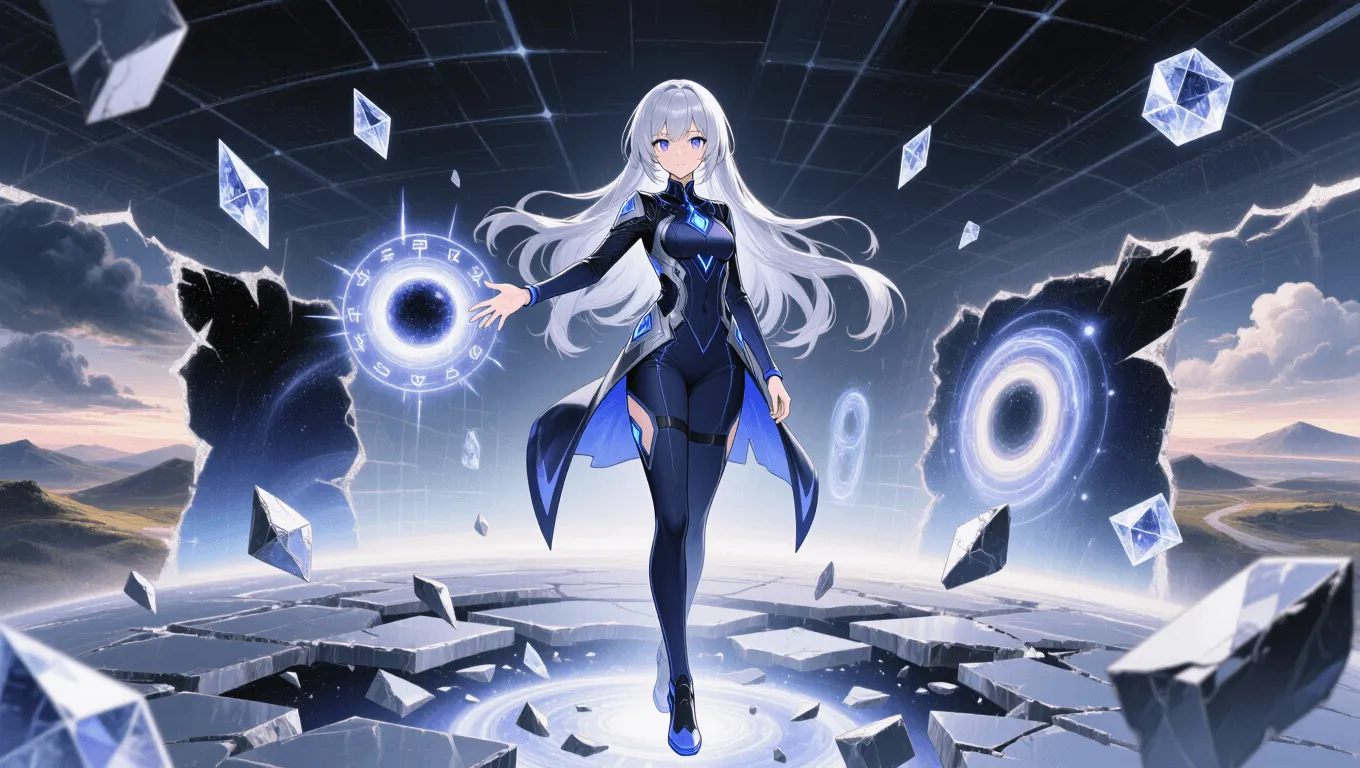
- Create and destroy dimensions
- Trap enemies in infinite or sealed spaces
- Rewrite spatial laws within an area
Distance becomes irrelevant, and the user can dominate entire environments effortlessly.
Limitations of Using the Spatial Manipulation
Despite its immense power, Spatial Manipulation comes with several limitations that prevent it from being truly unstoppable.
High Energy Consumption
Altering space requires immense energy. Frequent or large-scale manipulations can quickly exhaust the user.
Precision Requirement
Small errors in spatial control can lead to dangerous consequences, such as:
- Misaligned teleportation
- Collapsing unstable portals
- Unintended spatial distortions
Mental Strain
Maintaining multiple spatial constructs—such as portals or warped zones—can strain the user’s concentration and cognitive capacity.
Range Constraints
Lower-level users are limited by distance. Even advanced users may have boundaries depending on their mastery.
Environmental Stability
Certain environments may resist spatial manipulation, especially areas with strong energy fields or dimensional instability.
Weakness Against What Other Superpowers
Spatial Manipulation, while powerful, is not invincible and can be countered by other abilities.
Time Manipulation
Time-based powers can override spatial changes by freezing or rewinding events, negating spatial advantages.
Reality Manipulation
Users who can alter reality itself can bypass or undo spatial distortions entirely.
Energy Nullification
Powers that suppress or cancel abilities can prevent spatial manipulation from activating.
Gravity Manipulation
Extreme gravitational forces can distort space in ways that interfere with controlled manipulation.
Precognition
Opponents who can predict movements may anticipate teleportation or spatial shifts, reducing their effectiveness.
Synergistic Power Combos
Spatial Manipulation becomes even more formidable when combined with complementary abilities.
Telekinesis
Combining spatial control with telekinesis allows precise movement of objects through warped space, increasing attack versatility.
Time Manipulation
Together, these powers create near-absolute control over spacetime, enabling instant repositioning and temporal advantage.
Energy Projection
Energy attacks can be redirected through portals, allowing unpredictable and multi-directional strikes.
Invisibility
A user who can manipulate space and remain unseen becomes nearly impossible to track or target.
Dimensional Awareness
Enhanced perception of dimensions improves accuracy and control, reducing risks associated with spatial errors.
For more creative combinations, exploring the random superpower generator can inspire unique and powerful builds.
Known Users
Spatial Manipulation appears frequently in fiction, often associated with highly intelligent or god-like characters.
One notable example is Doctor Strange, who uses spatial warping and portal creation through mystical means. His ability to fold space and manipulate dimensions demonstrates many aspects of this power.
Another example is characters who control portals or dimensions in science fiction and anime, often depicted as strategic fighters who dominate through positioning rather than brute force.
These characters highlight how Spatial Manipulation is less about raw strength and more about control, intelligence, and creativity.
Spatial Manipulation remains one of the most dynamic and strategic abilities in any superpower framework. Its ability to redefine distance, reshape environments, and control movement ensures its place as a top-tier power in both combat and storytelling.