
Vibration Emission: Harnessing Destructive Resonance Power
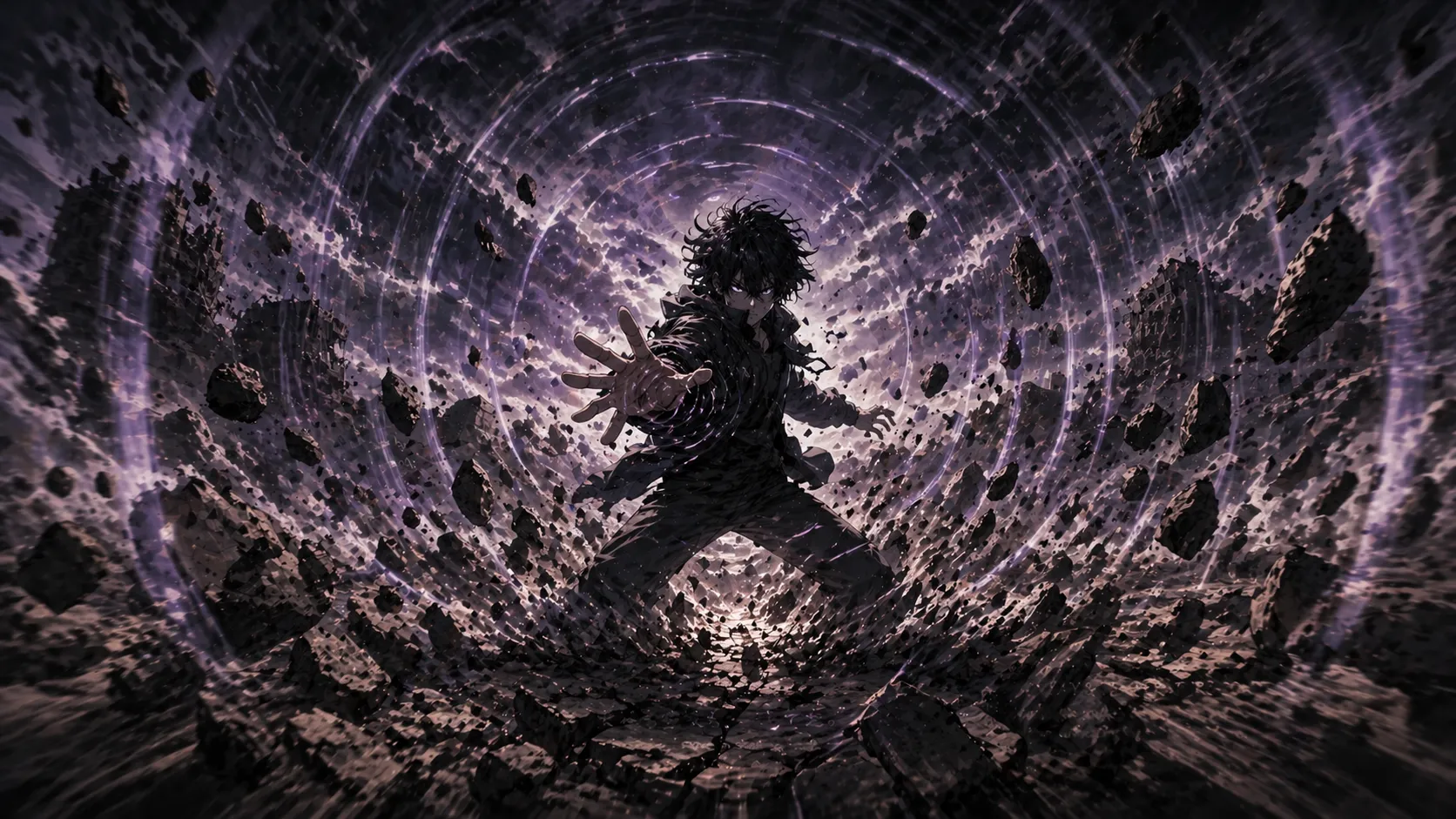
Vibration Emission Video Demo 🎬
Table of Contents
- Vibration Emission Video Demo 🎬
- What Is Vibration Emission
- Core Abilities of Vibration Emission
- Application / Tactical Advantages in Combat
- Level: Level 1 🏙️, Level 2 🌇, Level 3 🌃
- Limitations of Using the Vibration Emission
- Weakness Against What Other Superpowers
- Synergistic Power Combos
- Known Users
What Is Vibration Emission
Vibration Emission is a formidable superpower that allows its user to generate and release powerful vibrational waves capable of shaking, destabilizing, or even shattering objects and environments. Whether subtle or catastrophic, these vibrations can travel through air, solid matter, or even energy fields, making Vibration Emission one of the most versatile and destructive abilities in the broader spectrum of powers listed on superpower list.
At its core, Vibration Emission revolves around controlling oscillations—rapid movements of particles that create forceful waves. These vibrations can be tuned for different effects, such as disorienting enemies, collapsing structures, or unleashing focused shockwaves. Users of this power often resemble living seismic weapons, capable of mimicking earthquakes, sonic blasts, or resonance-based destruction.
Unlike simple force projection abilities, Vibration Emission requires precision and control. A skilled user can target specific frequencies to exploit structural weaknesses, while an inexperienced one may cause widespread collateral damage.
Core Abilities of Vibration Emission
Shockwave Generation
The most basic ability is emitting raw vibrational energy outward as shockwaves. These waves can knock back enemies, rupture surfaces, or create wide-area destruction.
Resonance Manipulation
Advanced users can tune vibrations to match the natural frequency of objects. This causes resonance, dramatically amplifying damage and allowing even small vibrations to shatter solid materials like glass, metal, or stone.
Seismic Simulation
By directing vibrations into the ground, users can simulate earthquakes. This ability can destabilize terrain, topple structures, or create fissures.
Sonic Disruption
Vibration Emission can also manifest as high-frequency sound waves. These can disorient opponents, damage hearing, or interfere with communication and electronics.
Internal Vibration Attacks
Instead of external blasts, some users can send vibrations directly into a target’s body or structure, bypassing outer defenses and causing internal damage.
Defensive Vibrational Fields
By surrounding themselves with controlled vibrations, users can deflect incoming attacks, disrupt projectiles, or reduce impact force.
Application / Tactical Advantages in Combat
Vibration Emission offers immense versatility in combat scenarios, making it effective across close-range, mid-range, and even environmental warfare.
Area Control
Wide-range shockwaves can control battlefield space, forcing enemies to keep their distance or risk being overwhelmed by continuous tremors.
Armor Penetration
Unlike physical strikes, vibrations can bypass traditional armor by traveling through it. This makes heavily armored opponents vulnerable.
Structural Destruction
Users can collapse buildings, bridges, or terrain to reshape the battlefield. This is particularly effective in urban combat environments.
Crowd Disruption
Low-frequency vibrations can destabilize footing and balance, making it difficult for multiple enemies to coordinate or advance.
Precision Targeting
Highly skilled users can focus vibrations into narrow beams or points, allowing for surgical strikes without collateral damage.
Psychological Warfare
Constant tremors and unseen forces can instill fear and confusion in opponents, reducing morale and effectiveness.
Level: Level 1 🏙️, Level 2 🌇, Level 3 🌃
Level 1 🏙️

At this stage, the user can emit basic vibrations capable of shaking small objects or knocking back opponents. Control is limited, and attacks are often broad and unfocused.
Level 2 🌇

The user gains improved control and power. They can generate stronger shockwaves, induce localized tremors, and begin experimenting with resonance effects. Precision and tactical application improve significantly.
Level 3 🌃
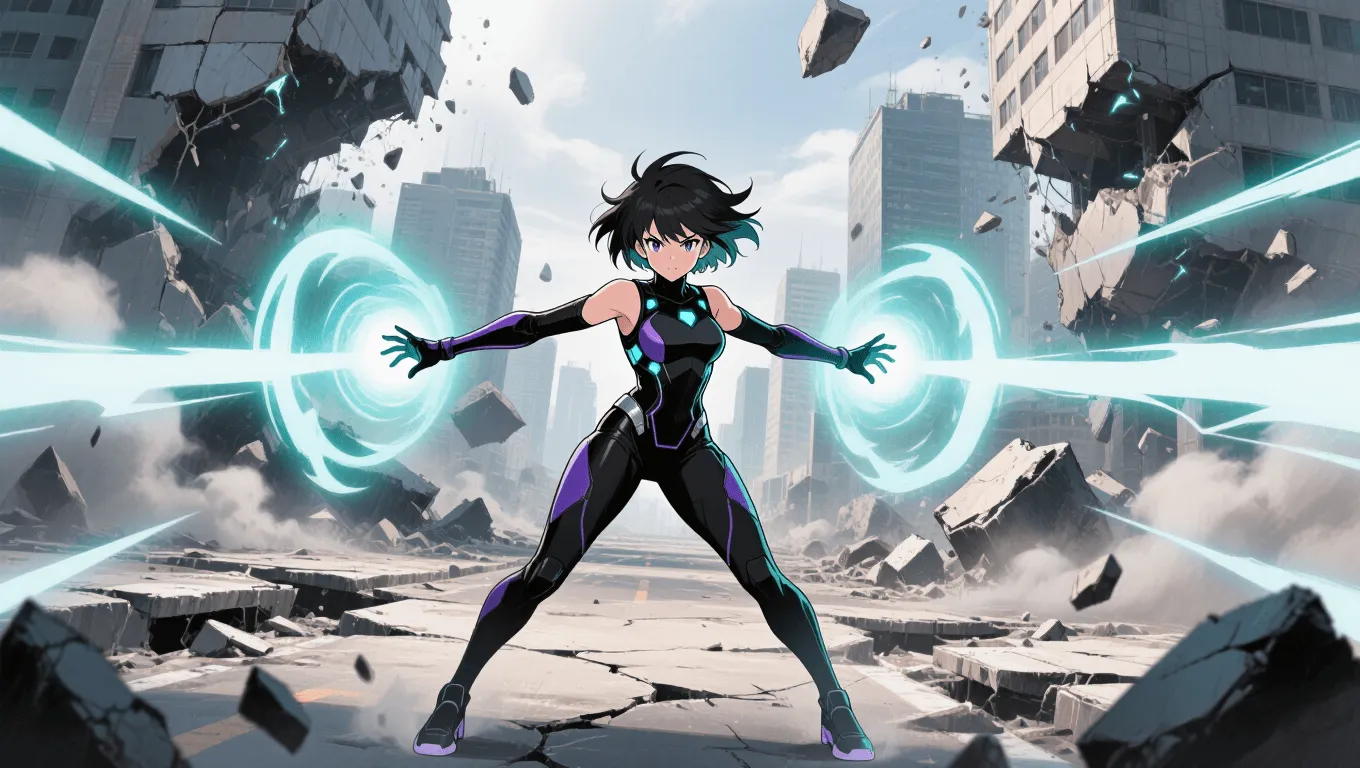
At peak mastery, the user can manipulate vibrations with extreme precision and devastating power. They can cause massive earthquakes, shatter reinforced materials, and target internal structures with pinpoint accuracy. At this level, Vibration Emission becomes a city-level or even global threat.
Limitations of Using the Vibration Emission
Despite its power, Vibration Emission comes with several important limitations.
Energy Consumption
Generating powerful vibrations requires significant energy. Extended use can exhaust the user quickly, especially when maintaining high-frequency or large-scale effects.
Lack of Control
Without precise control, vibrations can spread unpredictably, causing unintended damage to allies or surroundings.
Environmental Dependency
Certain environments absorb or dampen vibrations. Soft materials like sand or thick insulation can reduce effectiveness.
Feedback Risk
Improper use may cause vibrations to reflect back toward the user, potentially causing self-inflicted harm.
Precision Requirement
Resonance-based attacks require accurate frequency matching. Without this, the user loses one of their most powerful advantages.
Weakness Against What Other Superpowers
Vibration Emission is powerful, but it is not without counters.
Dampening Abilities
Powers that absorb or nullify energy, such as energy absorption or vibration dampening, can significantly reduce effectiveness.
Intangibility
Characters with phasing or intangibility can avoid physical vibration damage entirely.
Teleportation
Teleportation-based abilities can evade shockwaves and reposition quickly, making it difficult for vibration users to land decisive hits.
Force Fields
Strong energy shields can disperse or block vibrational waves, especially if designed to counter kinetic or sonic attacks.
Elasticity
Flexible or elastic materials and powers can absorb vibrations instead of breaking, reducing damage output.
Synergistic Power Combos
Vibration Emission becomes even more dangerous when combined with complementary abilities.
Sound Manipulation
Combining with sound-based powers enhances sonic attacks, allowing for more precise and destructive resonance control.
Earth Manipulation
This synergy amplifies seismic effects, enabling large-scale environmental destruction and terrain control.
Super Strength
Pairing physical force with vibrational energy creates devastating melee attacks capable of shattering almost anything.
Energy Projection
Adding energy-based attacks allows for hybrid assaults that combine raw power with vibrational penetration.
Enhanced Perception
Abilities like kinetic or structural vision help users identify weak points, maximizing the effectiveness of resonance attacks.
For those exploring combinations, the random superpower generator can help discover unique pairings and build creative power sets.
Known Users
One of the most iconic examples of vibration-based power in fiction is Whitebeard from the anime and manga One Piece. Whitebeard wields the power of the Gura Gura no Mi, allowing him to create massive shockwaves capable of tilting the seas and destroying entire landscapes.
Another notable user is Black Canary from DC Comics. Her Canary Cry is a sonic-based attack that utilizes intense vibrations to incapacitate enemies and shatter objects.
In the X-Men film series, Banshee demonstrates similar abilities through powerful sonic screams that function as vibrational attacks.
These characters highlight the versatility of Vibration Emission, showcasing both its destructive potential and its tactical applications across different universes.