
Wind Vision

Wind Vision Video Demo 🎬
Table of Contents
What Is Wind Vision
Wind Vision is a perception-and-control superpower that lets a user see wind patterns as if they were visible trails, maps, or flowing ribbons across the environment. Within the first moments of using Wind Vision, the user can read how air moves around walls, through door cracks, across rooftops, and over terrain—then direct that flow with precise intent. Unlike generic wind manipulation, Wind Vision emphasizes atmospheric awareness first: it turns airflow into actionable information, and that information becomes control.
In practical terms, Wind Vision functions like a real-time wind “HUD.” The user interprets pressure shifts, turbulence, vortices, and drafts to predict motion, spot hidden threats, and shape air currents for offense, defense, and mobility. Fans of aerokinesis-style abilities often describe it as airflow detection plus gust steering, bundled into one tactical sense.
Readers exploring similar abilities can browse more entries in the Superpower Wiki or discover unexpected powers via the random superpower generator.
Core abilities of Wind Vision
Wind Vision typically includes two intertwined skill sets: wind perception and wind direction.
- Wind pattern sight
The user perceives air currents, turbulence, pressure gradients, and microclimates. This can look like ripples around corners, spirals above heated surfaces, or steady streams through open corridors.
2. Airflow prediction
By reading how wind bends and accelerates, the user can anticipate how smoke, gas, sound, scent, dust, arrows, and even thrown weapons may drift or curve.
3. Wind direction and shaping
The user can redirect wind flow: strengthening a tailwind, canceling a crosswind, creating a downdraft, or sculpting a localized vortex. This is often called gust control or airflow steering.
4. Micro-burst generation
Instead of summoning storms, Wind Vision users excel at short, precise bursts—like a sudden shove of air to break aim, stagger a target, or slam a door shut.
5. Vortex and eddy control
With enough mastery, the user can induce spinning pockets of air that act like rotating shields, suction traps, or deflection cones.
6. Environmental scanning
Because air moves around objects, Wind Vision can “outline” hidden geometry: gaps, vents, moving bodies behind thin barriers, and openings concealed by darkness.
Common secondary keywords tied to Wind Vision include atmospheric perception, aerokinetic senses, turbulence mapping, airflow tracking, and wind manipulation.
Application / Tactical Advantages in Combat
Wind Vision is deceptively dangerous because it upgrades both decision-making and execution. It can turn a chaotic battlefield into a readable system of vectors and zones.
- Anti-ambush awareness
Footsteps disturb air. A cloak flutters. A door crack exhales a draft. Wind Vision can flag motion that normal sight misses, especially in dim light or smoke. - Projectile management
The user can reduce enemy accuracy by introducing crosswinds, lift their own throws with a tailwind, or create small deflection streams to nudge incoming arrows and bullets off-line (how effective this is depends on power level and projectile speed). - Zone control
Wind Vision can create “bad air” lanes: corridors where opponents fight a headwind, lose balance, or can’t hear commands clearly due to buffeting airflow and pressure pops. - Stealth and misdirection
By redirecting air, the user can carry sound away, push scent trails in false directions, or swirl dust to create visual confusion without committing to a full smoke screen. - Mobility and spacing
Short bursts can enhance jumps, soften landings, or add lateral movement—useful for dodging melee rushes and repositioning behind cover.
Level: Level 1 🏙️, Level 2 🌇, Level 3 🌃
Level 1 🏙️
At Level 1, Wind Vision is a strong sensory edge with limited force.
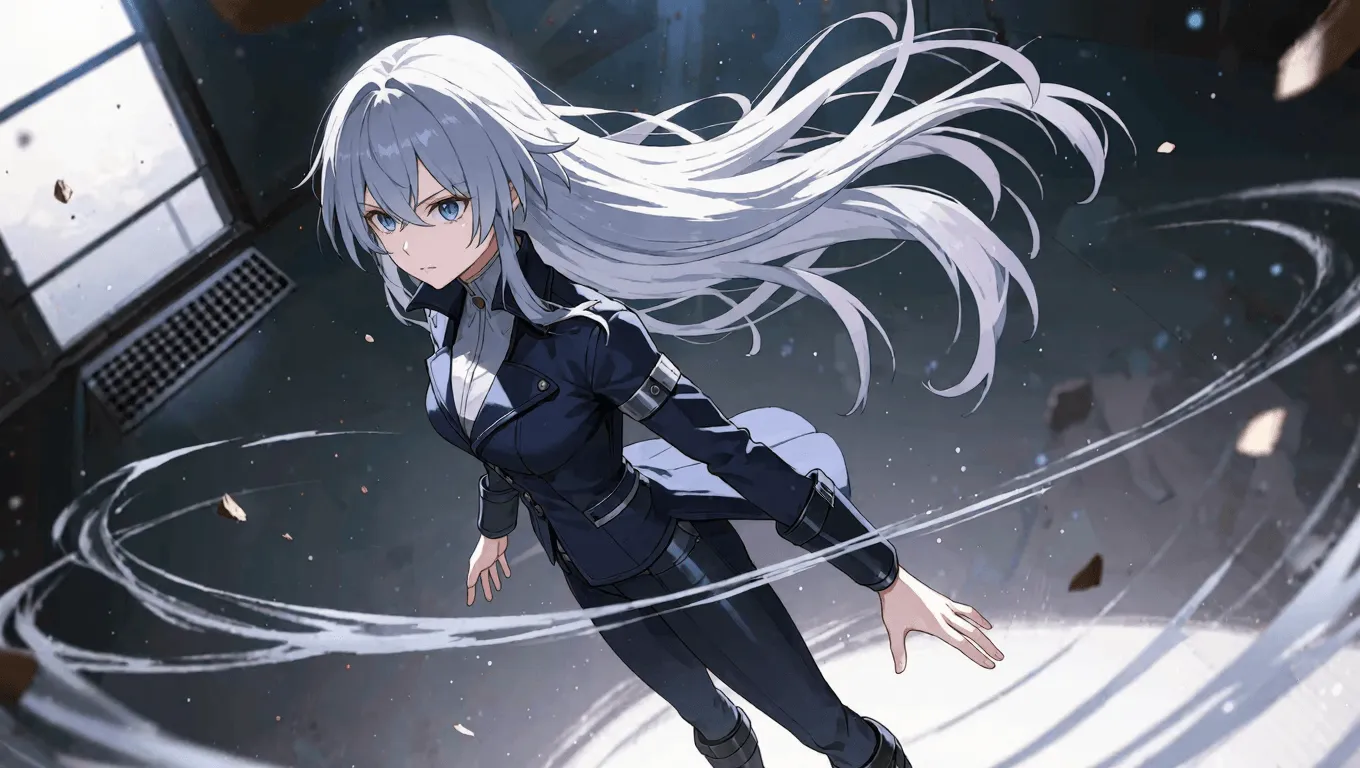
- Sees major wind streams and drafts within a modest range (often line-of-sight).
- Can redirect light breezes: closing distance faster with a tailwind, disrupting aim, or nudging light objects.
- Excels at reading environments: identifying open windows, ventilation routes, and “wind shadows” behind cover.
Typical combat use: tracking movement through dust or fog, predicting thrown weapons, and creating small gusts to interrupt attacks.
Level 2 🌇
At Level 2, the power becomes a battlefield tool.

- Reads complex turbulence around crowds, buildings, and vehicles.
- Shapes air into sustained patterns: steady headwinds, rotating eddies, and angled downdrafts.
- Can reliably deflect light projectiles and destabilize enemy footing.
- Gains “air geometry” sense: locating vents, thin walls, and hidden passages by how air behaves.
Typical combat use: controlling lanes, protecting allies with deflection streams, and using suction pockets to pull enemies off balance.
Level 3 🌃
At Level 3, Wind Vision approaches advanced aerokinesis, with perception guiding near-surgical control.

- Tracks multiple moving targets by their airflow signatures.
- Creates robust vortices, localized pressure drops, and tight wind barriers.
- Can weaponize airflow with cutting-speed streams or impact bursts (still localized rather than continent-scale storms).
- Performs multi-step airflow tactics: redirecting smoke, then using that swirl as cover, then launching a compressed gust strike from the blind side.
Typical combat use: dominating open terrain, negating ranged squads, and turning the environment into a dynamic trap network.
Limitations of using the Wind Vision
Wind Vision can be powerful, but it is rarely “always on” without tradeoffs.
- Cognitive load and overstimulation
Air is everywhere. In crowded cities, storms, or industrial zones, the amount of airflow data can overwhelm focus and cause mistakes. - Line-of-effect constraints
Many users need a path for air to travel. Sealed rooms, airtight armor, or vacuum-like fields can reduce influence. - Power drain with precision
Big gusts are cheaper than perfect gusts. Fine control—like deflecting a fast projectile—often costs more stamina and concentration than brute pushing. - Counterproductive environments
Wildfires, sandstorms, explosions, and collapsing structures generate chaotic turbulence that makes wind-reading less reliable. The power still works, but the “map” is noisier. - Requires calibration
New locations (high altitude, underwater caves with airflow pockets, alien atmospheres in sci-fi settings) may require acclimation before Wind Vision reaches peak accuracy. - Ethical and collateral concerns
Strong headwinds can knock civilians down, spread debris, worsen fires, or redirect toxic gas. Skilled users must treat airflow like a public safety system, not just a weapon.
Weakness against what other superpowers
Wind Vision struggles most against abilities that remove, corrupt, or overpower airflow information.
- Vacuum creation / air removal
If an enemy can create vacuum zones or nullify air, Wind Vision loses both its sensory medium and its control channel. - Gravity manipulation
Changing gravity alters jump arcs, falling debris, and pressure behavior in ways that can outpace wind-based prediction. - Force fields and barrier generation
Hard barriers can block airflow paths, making wind steering less effective and reducing “air geometry” scanning. - Thermal manipulation
Heat creates strong updrafts and convection currents; cold can collapse airflow into heavy, unpredictable sinks. Temperature control can flood the area with misleading turbulence. - Smoke manipulation / particulate control
If an opponent controls smoke, ash, or dust independently, the visuals Wind Vision relies on may become deceptive—especially if the user “reads” wind by observing particles. - Reality warping or probability manipulation
Powers that break physics can invalidate the predictive advantage Wind Vision provides.
Synergistic Power Combos
Wind Vision becomes nastier when paired with powers that supply material, energy, or positioning.
- Flight or levitation
Wind steering plus aerial mobility enables rapid strafing, stall control, and precision dives, turning the user into a moving wind turret. - Lightning generation
Wind Vision can shape storm corridors, guide conductive particles, or create updraft lanes that funnel targets into predictable paths for strikes. - Fog, mist, or smoke generation
If an ally creates a screen, Wind Vision can sculpt it into walls, tunnels, or moving blinds—while still “seeing” the currents inside. - Sound manipulation
Wind influences sound travel. Combining both can produce silent zones, redirected footsteps, or disorienting audio “throwing” effects. - Projectile control
Wind Vision can fine-tune trajectories, extend range, or create last-second curve shots around cover. - Fire manipulation
Controlled airflow can feed flames, deny oxygen, or push heat away from allies—though it requires discipline to avoid turning the battlefield into a wildfire.
Known Users
Because Wind Vision is a specialized form of aerokinesis-focused perception, it most often appears in characters who can sense and manipulate air currents with precision.
- Aero (Lei Ling) — A wind-powered hero whose control of air currents aligns closely with the “see and direct airflow” concept. For a canonical reference, see the official profile: Aero (Lei Ling).
- Storm — Primarily a weather controller, but commonly portrayed with deep atmospheric awareness that can be framed as reading wind and weather patterns in combat.
- Red Tornado — An air-elemental-style hero whose wind control lends itself to Wind Vision interpretations, especially in tactical scenes involving airflow shaping.
- Cyclone — A wind-manipulating hero conceptually compatible with Wind Vision-style turbulence reading and gust shaping.